Rats in a crawl space give themselves away through burrows, runways, rub marks, droppings, nesting material, gnaw marks and night noises. Most of these signs collect along the foundation, where the floor meets the walls and where vents and entry points sit. A perimeter inspection, repeated at intervals, shows whether activity continues and where it is concentrated. The sections below cover each sign and how to check it.
Droppings and rub marks
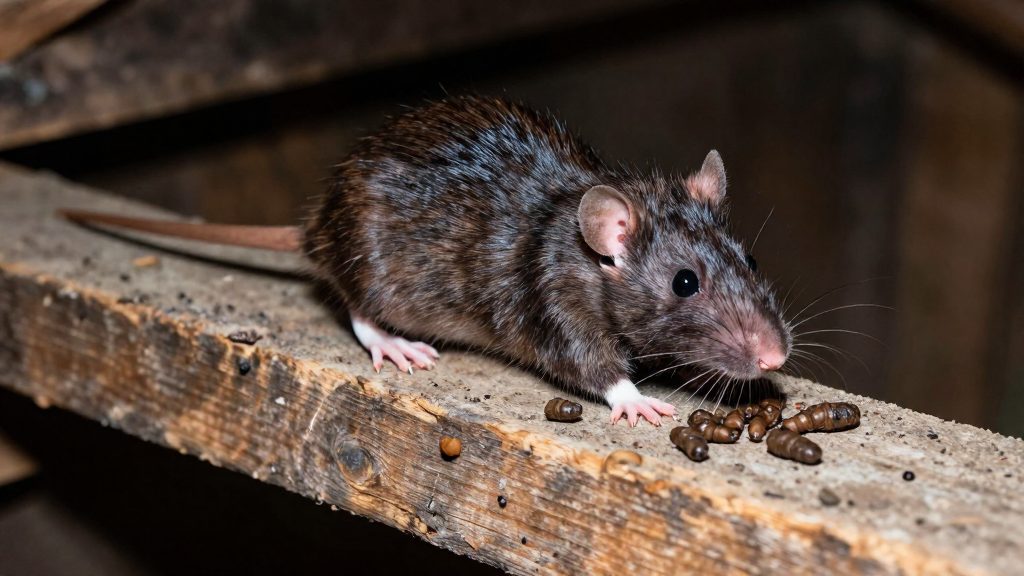
Norway rat droppings are brown with rounded ends (Tomcat, 2026). Fresh droppings are dark and moist. They harden and turn grey over time, so their colour is a rough guide to how old they are. Count and clear droppings at a fixed point, then recheck that point after several days to see whether activity continues.
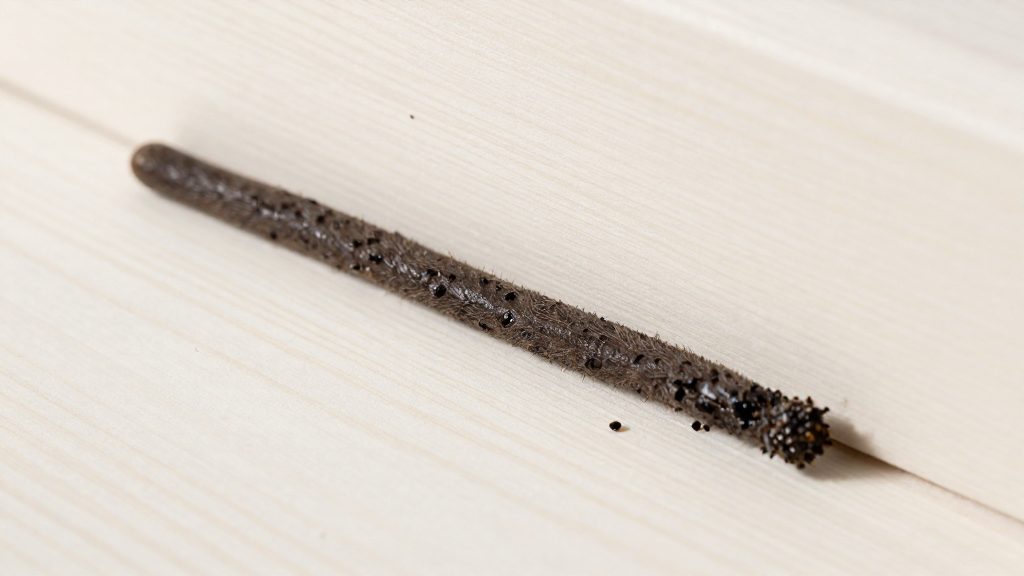
Rub marks are dark, greasy smears left by fur at entry points, vents, along walls and on runways (Colonial Pest Control, 2026). Because rats reuse the same routes, rub marks show where to look next.
Burrows, runways and nests
In a crawl space with a dirt floor, a burrow appears as a hole ringed by loose, freshly disturbed soil (Colonial Pest Control, 2026). Check the perimeter first, since burrows and runways are most visible along the foundation. Runways are cleared, packed trails that run along the foundations.
Rats build nests from shredded paper, fabric or insulation in attics, wall voids and crawl spaces (Skedaddle Humane Wildlife Control, 2024). Insulation that sags, or that has pulled free of its staples, can indicate a nest behind it (Colonial Pest Control, 2026).
Gnaw marks, holes and measurable clues
Rats chew through wires and packaging (Skedaddle Humane Wildlife Control, 2024). The table below lists the measurable clues.
| Clue | Rat indicator |
|---|---|
| Hole in drywall | About the size of a 25-cent Canadian coin, against about a 10-cent coin for a mouse hole (Tomcat, 2026) |
| Tooth marks | About 1/8 inch (Tomcat, 2026) |
| Droppings | About 40 to 50 a day from a brown (Norway) rat, usually concentrated in a few spots (Colonial Pest Control, 2026) |
A hole of this size points to a rat, but confirm the finding with at least one other sign before acting on it.
Noise, odour and how to inspect
Rats make scratching and squeaking sounds, mostly at night, and leave a musky odour (Skedaddle Humane Wildlife Control, 2024). Return after dark to listen, because activity is most frequent then.
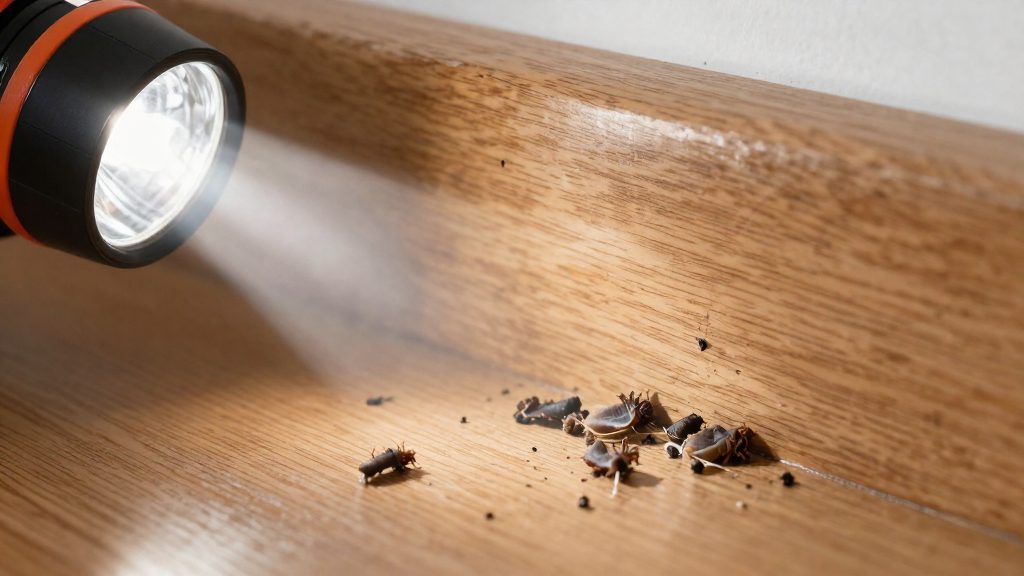
Hold a flashlight close to the floor and work along the foundations. Runways and footprints show most clearly at a low angle. Check vents and entry points first, since rub marks concentrate there. Make a note of each sign’s location so that later inspections can be compared with the first.
Health risks
Droppings, nesting material and gnawed debris are the main points of contact with rats in a crawl space. Treat every droppings deposit, shredded nest and grease-marked surface as contaminated.
Ventilate the crawl space before entering if possible. Wear disposable or rubber gloves, a fitted mask and eye protection. Clean in this order:
- Spray droppings and nesting material with disinfectant until fully wet.
- Once soaked, pick them up with paper towels or a scoop and seal them in a bag.
- Wipe the surrounding surfaces with disinfectant.
- Remove your gloves and wash your hands with soap and water.
Insulation that is soaked, matted or heavily soiled should be removed and replaced rather than cleaned, because it cannot be fully disinfected.
Prevention and when to call a professional
Prevention starts with closing the routes rats use to get in. Walk the foundation perimeter and mark every vent, gap around pipes and cables, and opening where the wall meets the floor. Seal these with materials rats cannot chew through, such as metal mesh or concrete, rather than foam or fabric alone. Check vent screens and access-door seals at the same time.
Remove what draws rats in. Store food in sealed containers, clear cardboard and paper from the crawl space, and keep firewood and vegetation away from the foundation.
Repeat the inspection on a fixed schedule, such as every season, and compare each check with the last. If signs return after sealing, a route is still open, so inspect the sealed points again.
Call a pest control or wildlife removal professional when you find:
- Nesting material in the crawl space or in wall voids
- Insulation that sags or has pulled free of its staples
- Gnawed wiring, which is a fire hazard and should also be inspected by an electrician
- Signs that return after all visible entry points have been sealed
- Droppings or rub marks in the living areas above the crawl space
Conclusion
Rat signs in a crawl space follow a pattern. Rub marks and runways reveal the routes, burrows and nests show where rats shelter, and gnawed material and droppings show that rats have been present. Fresh droppings or signs that reappear on a recheck suggest the activity is current. Checking these signs at each inspection shows whether sealing and cleaning have worked.
Frequently asked questions
How can I tell fresh rat droppings from old ones?
Fresh droppings are dark and moist, while older ones harden and turn grey, according to Skedaddle Humane Wildlife Control (2024). Colour is only a rough guide to age, so recheck the same spot after several days to see whether new droppings appear.
How do I tell a rat hole from a mouse hole in drywall?
Measure the hole size. A rat hole in drywall is about the size of a 25-cent Canadian coin, while a mouse hole is about the size of a 10-cent coin, according to Tomcat, Canadian edition (2026). Treat this as one indication and confirm it with other signs.
Which sign should I check first in a crawl space with a dirt floor?
Look for a burrow: a hole ringed by loose, freshly disturbed soil. Colonial Pest Control (2026) notes that burrows are most visible along the foundation, so start your inspection there.