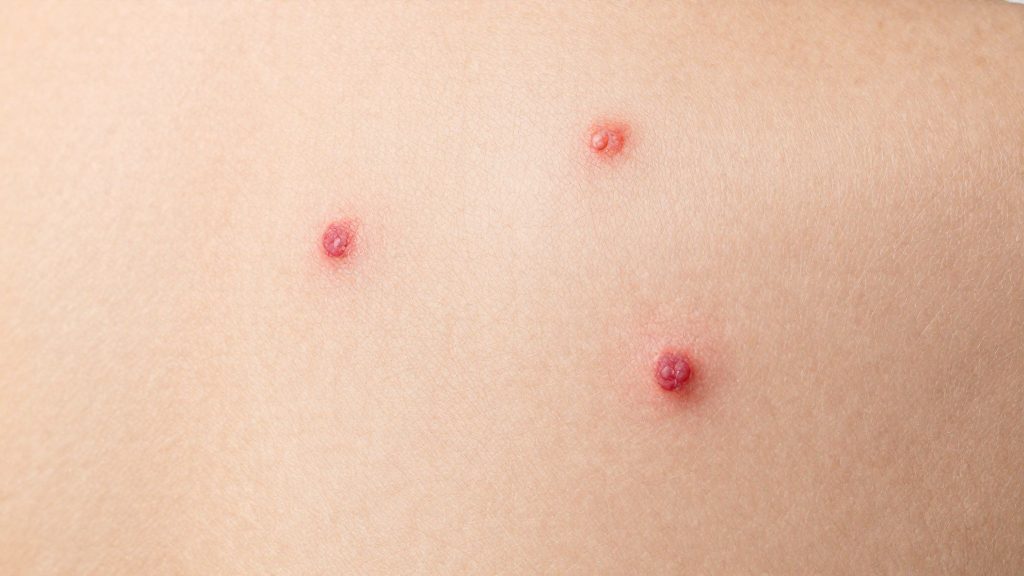
Bed bug bites look much like mosquito bites: both form red, raised welts. Bed bug welts are often numerous and appear on skin left uncovered during sleep, particularly the arms, shoulders, back, belly and legs. Their itch is often strongest early in the morning. Because the welts look alike, appearance alone cannot settle the question: where the bites are and how they itch do not reliably separate bed bug bites from mosquito bites. The reliable confirmation is finding the insects or their traces.
How to Recognise a Bed Bug Bite
Where and how bites appear
Bites are often numerous and sit on exposed skin. The face, neck, arms, legs and chest are also common sites, according to Health Canada (2022). Bites can take up to 14 days to appear, so a lack of welts after one night does not rule out bed bugs.
Itching and individual reactions
The itch can be strong, especially in the early morning. Reactions vary between people. Some show no visible reaction, while others develop allergic reaction symptoms such as hives or a more intense swelling (Government of Quebec, 2026).
Caring for bites and avoiding infection
Bed bugs do not transmit disease. The main risk is a skin infection caused by scratching. To limit this:
- Avoid scratching the welts.
- Wash the area with cool water and a mild, unscented soap.
- If the itch persists, a doctor can prescribe an antiseptic lotion, a cream or an antihistamine.
Without new bites, the marks fade within hours or days (Government of Quebec, 2026).
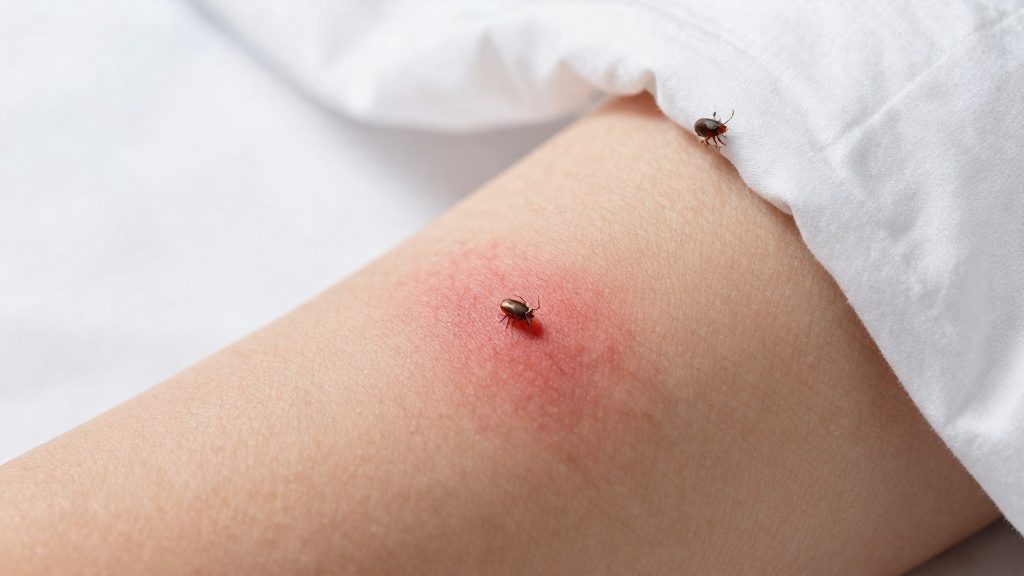
Why bed bug bites are mistaken for mosquito bites
Bed bug bites are often confused with mosquito bites because both produce red, raised welts. According to the Gouvernement du Québec (2026), the welts are often numerous and appear on skin left uncovered during sleep, mainly the arms, shoulders, back, abdomen and legs. Health Canada (2022-12-15) adds that they can also appear on the face, neck and chest. Bites can take up to 14 days to appear, so a mark noticed after a trip or a stay in a new place may not match the date of the bite.
Reactions vary between people:
- Some people show no reaction at all.
- Others develop itching, which can be strong, especially early in the morning.
- Some develop hives or a more intense allergic reaction.
Bed bugs do not transmit disease to the person they bite. The main risk is a skin infection caused by scratching, so the priority is to avoid scratching the bites.
Bed Bugs or Mosquitoes: What Are the Differences?
Bed bug bites cause red welts that look much like mosquito bites, so appearance alone rarely identifies the culprit. According to Gouvernement du Québec (2026), bed bug welts are often numerous and affect skin left uncovered during sleep. The source does not present this as a way to rule out mosquitoes. Bed bug welts are often numerous and appear on skin left uncovered during sleep, such as the arms, shoulders, back, belly and legs. According to Health Canada (2022-12-15), bites mainly affect the face, neck, arms, legs and chest, and can take up to 14 days to appear. A welt that surfaces days after a suspected night is therefore not unusual.
Other features to check:
- Number: bed bug welts are often numerous and on exposed skin, which does not by itself distinguish them from mosquito bites.
- Itch timing: itching can be strongest early in the morning.
- Individual reaction: some people show no reaction, while others develop hives or a stronger allergic reaction.
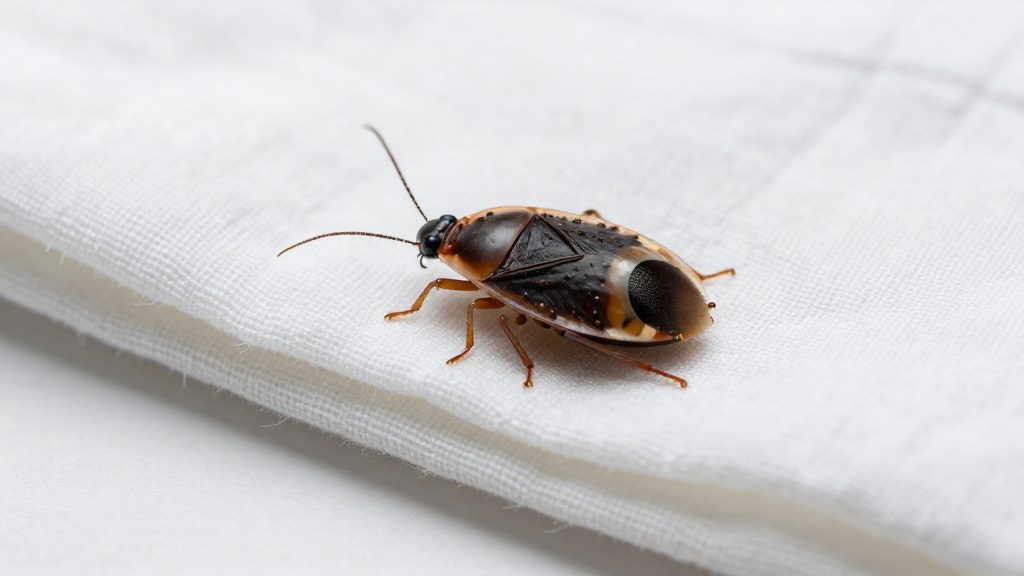
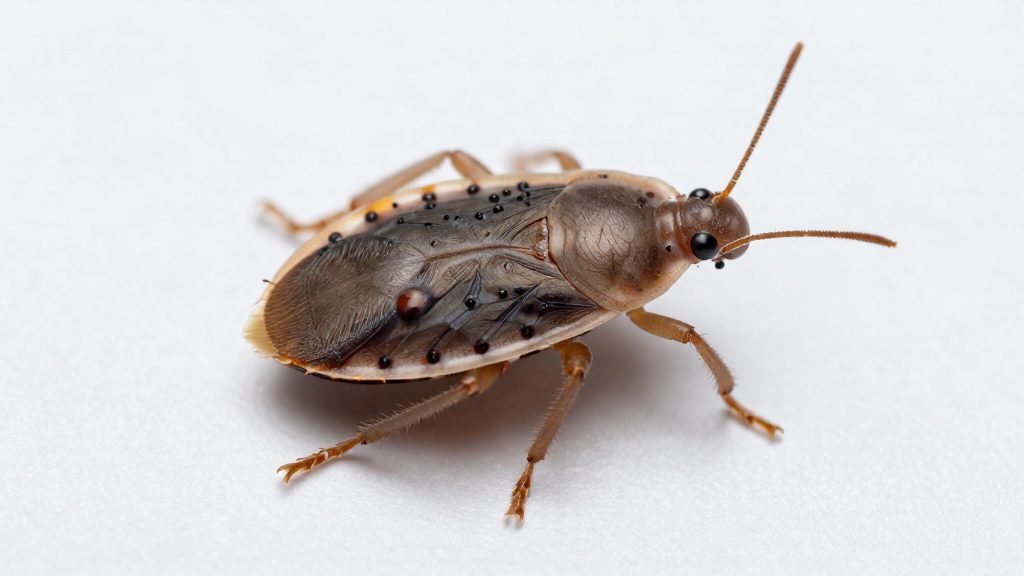
Identifying the insect itself gives a firmer answer. An adult bed bug measures up to 10 mm, with a flat, oval, brownish body that turns dark blood red after a meal. Its eggs measure about 1 mm, and a female lays about 200 of them.
Bed bugs do not transmit disease to the person bitten. The main risk is a secondary infection caused by scratching, so the bites need care rather than alarm.
What Health Risks Do Bed Bugs Pose?
Bed bug bites do not transmit disease to the person bitten. According to Gouvernement du Québec (2026), the main health risk is a skin infection caused by scratching. Reactions vary: some people show no visible response, others develop hives, and some have a stronger allergic reaction. Bites are usually numerous and appear on skin left exposed during sleep, such as the arms, shoulders, back, stomach and legs.
| Risk | What the data shows |
|---|---|
| Disease transmission | None: bed bugs do not transmit disease to the person bitten |
| Skin infection | Main risk, caused by scratching the bites |
| Allergic reaction | Hives or a more intense reaction in some people, none in others |
| Psychological effects | Anxiety and insomnia reported in infested homes (Health Canada, 2022) |
Infection From Scratching
Scratching is the step that turns a bite into a health problem. Itching can be strong, particularly early in the morning. To limit the risk, wash the bites with cool water and a mild, unscented soap, and avoid scratching them. If the itch persists, a doctor can prescribe an antiseptic lotion, a cream or an antihistamine. Without new bites, the marks fade within hours or days.
Timing and Sleep Disruption
Bites can take up to 14 days to appear, so the first sign of an infestation may come well after bed bugs were introduced. Health Canada (2022) reports that in infested homes, some people experience anxiety and insomnia. Health Canada does not say how long these effects last, but dealing with the infestation is the logical step.
How to relieve the itching
Bed bug bites itch most in the early morning. Reactions vary: some people show no visible reaction, while others develop hives or a stronger allergic response. The main risk is not disease, because bed bugs do not transmit illness. It is a skin infection caused by scratching, so the first aim of treatment is to keep the skin intact. According to the Gouvernement du Québec (2026), bites disappear within hours or a few days if no new bites appear.
Basic care
- Cool water wash: clean each bite with cool water and a mild, unscented soap.
- No scratching: avoid scratching, which can break the skin and allow infection to set in.
- Monitor the bites: if no new bites appear, the marks should fade on their own within hours or a few days.
When itching persists
If the itching continues, a doctor can prescribe one of the following:
- An antiseptic lotion
- A cream
- An antihistamine
Consult a doctor rather than self-medicating with these products, since the choice depends on the individual’s reaction. Stronger allergic reactions, such as widespread hives, also warrant prompt medical advice.
How to Tell Whether It Is an Infestation
A single bite does not confirm a bed bug infestation. Bed bug bites cause red welts that look much like mosquito bites, and they are often numerous, appearing on skin left uncovered during sleep, such as the arms, shoulders, back, stomach and legs, according to Gouvernement du Québec (2026). Bites can take up to 14 days to appear, according to Health Canada (2022-12-15), so a welt noticed today may come from a stay up to two weeks earlier. The reliable test is finding the insects or their traces.
Look for the Insects
Inspect the bed in the evening with a flashlight, focusing on the mattress seams, the bed frame joints and the headboard. Check the area around the sleeping place as well. Compare what you find with the reference features below.
| Sign | What to look for |
|---|---|
| Adult bed bug | Flat, oval body up to 10 mm long, brownish; turns dark red after a blood meal |
| Eggs | About 1 mm long |
| Egg output | A single female lays about 200 eggs |
Assess the Bite Pattern
Bites on uncovered skin are a warning sign, but they are not proof on their own. Bed bug itching is often strongest early in the morning. Some people do not react at all, while others develop hives or a stronger allergic reaction, so the absence of symptoms does not rule out an infestation, according to Gouvernement du Québec (2026). If bites appear while you find no insects, look for a second cause before concluding.
When to See a Doctor or Call an Exterminator
Bed bug bites look like mosquito bites, so a bite alone cannot confirm an infestation. According to Gouvernement du Québec (2026), bed bug bites form red swellings that are often numerous and appear on skin left uncovered during sleep, such as the arms, shoulders, back, stomach and legs. Bites can take up to 14 days to appear, according to Health Canada (2022-12-15), so a few bite-free nights do not rule out an infestation.
Signs that call for medical advice
The main medical risk is a secondary skin infection caused by scratching, not disease transmission, since bed bugs do not transmit illness to the person bitten. Some people react strongly, with hives or an allergic reaction, while others show no reaction at all.
| Situation | Action |
|---|---|
| Itching persists despite basic care | See a doctor, who can prescribe an antiseptic lotion, a cream or an antihistamine |
| Hives or a stronger allergic reaction | Seek medical advice promptly; if there is difficulty breathing or swelling of the face or throat, call 911 |
| Bites become infected from scratching | See a doctor |
Basic care consists of avoiding scratching and washing the bites with cool water and a mild, unscented soap. Without new bites, the marks disappear within hours or days.
When to call an exterminator
Start by checking the bed for signs of bed bugs, then consider professional help if new bites keep appearing after you have checked the bed and its surroundings. Keep a simple log of the date and body area of each new bite, since this helps the exterminator and your doctor track the problem. Infestations also take a toll beyond the skin: Health Canada (2022-12-15) reports anxiety and insomnia among people living in infested dwellings, which is a reason not to wait while the problem persists.
Frequently asked questions
How can I tell a bed bug bite from a mosquito bite at home?
Appearance is not a reliable test, since both leave similar raised marks, and the location of the bites and the timing of the itch do not clearly separate the two. The only dependable way to confirm bed bugs is to locate the insects themselves or their telltale traces on bedding, mattress seams or furniture.
Why might I not see any bites after sleeping in an infested bed?
Bites can take up to 14 days to show up on the skin, so a clear bed after one night does not rule out bed bugs. Reactions also vary widely, and some people never develop a visible welt.
Do bed bug bites carry disease, and how should I treat them?
Bed bugs are not known to transmit disease to the people they bite. The real concern is a bacterial skin infection that can follow scratching, so keep the area clean and avoid picking at it. If the itching persists, a doctor can recommend a topical treatment or an antihistamine.