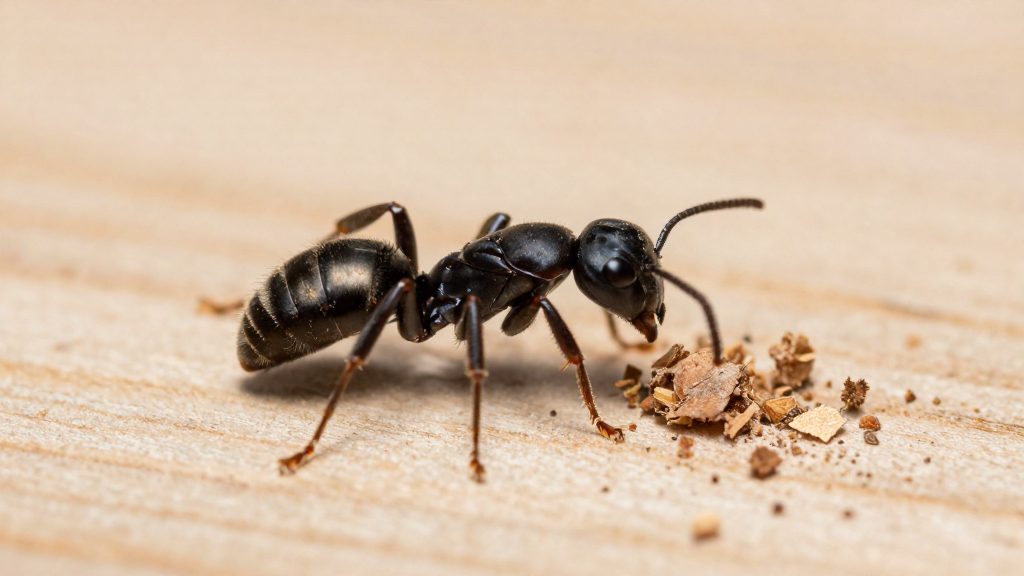
Carpenter ants are identified mainly by the debris they leave behind rather than by the insects themselves. They dig galleries into wood without eating it and push out fine shavings that collect below cracks and trim. Activity is most visible in spring, when winged swarms appear. Red and black species are among the most common carpenter ants in Canada, according to Health Canada (2026).
How to Recognize a Carpenter Ant
Look for Fine Shavings
Check windowsills, the base of door frames, and the ground beside wooden posts or decks for piles of fine, sawdust-like material. This frass is a key sign of an active colony. Inspect cracks in wood trim, since these often mark entry or exit points.
Check Damp Areas
Carpenter ants are drawn to moisture and decaying wood. Search under sinks, around leaking pipes, and near foundation cracks, where many ants may gather. Health Canada (2026) notes that they often enter through windows, foundation cracks, pipes, and contact points with trees or attached wooden structures, and that they can arrive with firewood.
Listen at Night
Carpenter ants are mostly active at night. In quiet rooms, a faint dry rustling inside a wall or wooden structure can indicate colony activity. Check this when the house is silent, as the sound is easily masked by daytime noise.
Identify the Insect
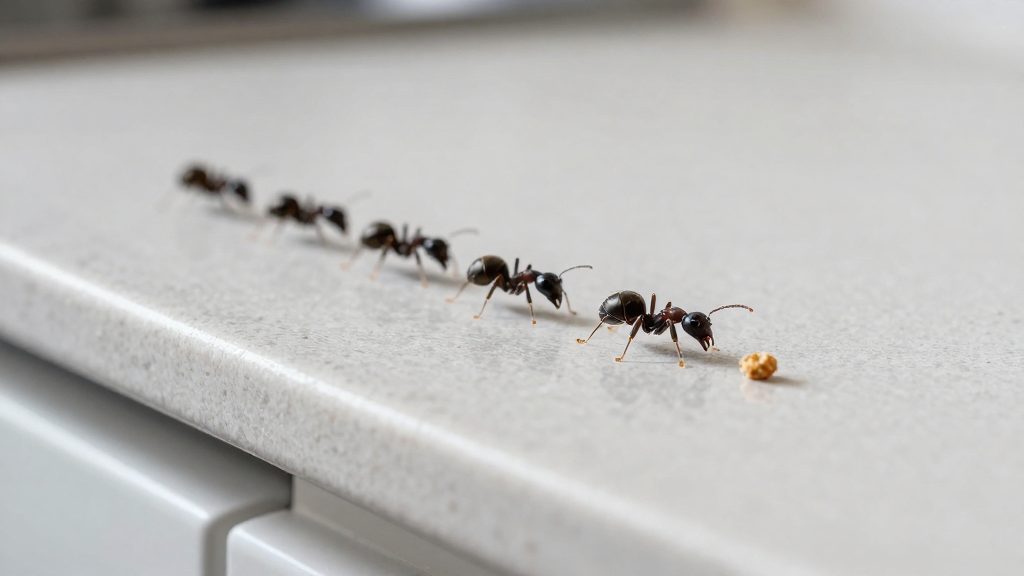
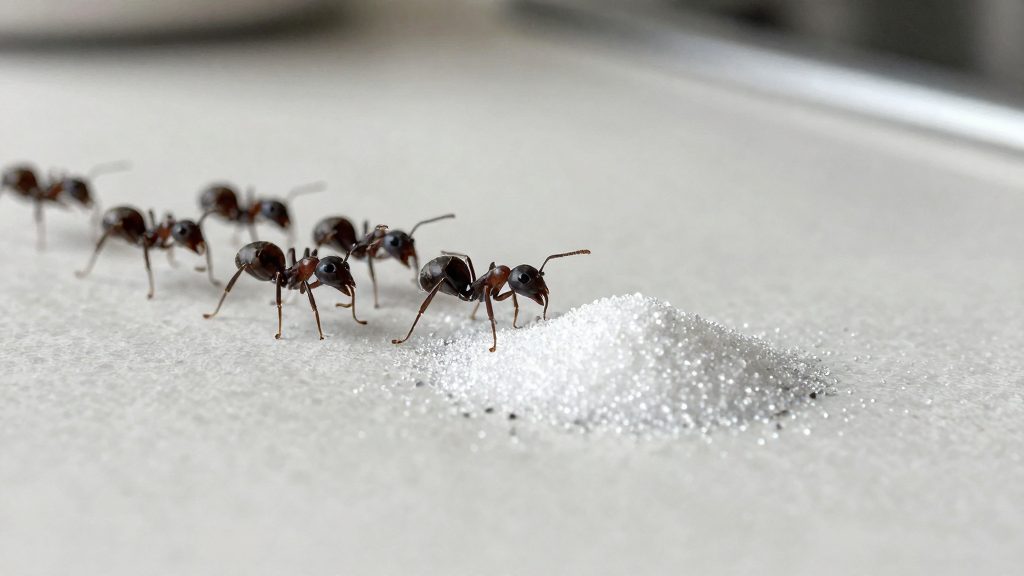
Adults measure 6 to 25 mm, with a very narrow waist and elbowed antennae. The Canadian Conservation Institute (2017) describes them as large black ants usually seen in spring. Termites are often confused with them, but termites have straight antennae and a thick body, which helps distinguish the two.
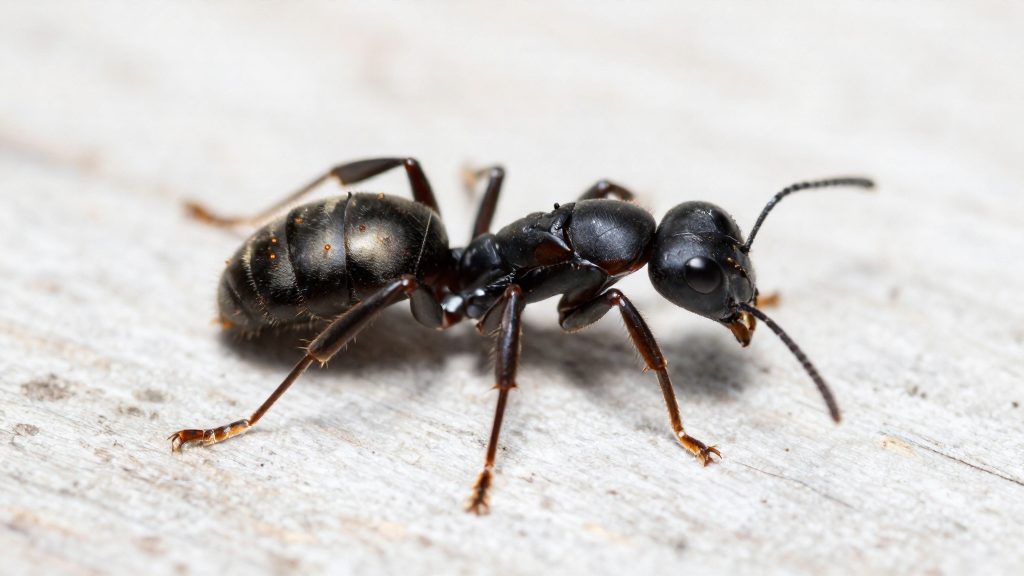
Sawdust and shavings: what they reveal
Carpenter ants dig galleries into wood without eating it, and they push out fine shavings that resemble sawdust. According to Health Canada (2026), this debris is a key sign of activity. Piles of it near window frames, along woodwork, or beneath joists show where the excavation is happening.
To confirm an infestation, look for three signs together: sawdust, cracks in woodwork, and large numbers of ants in damp areas, such as under sinks. Activity peaks at night, when a faint dry rustling inside the wall may be audible. Winged swarms often appear in spring.
Carpenter ants are drawn to moisture and decaying wood. They enter through windows, foundation cracks, pipe openings, and contact points with trees or adjoining wooden structures. They can also arrive with firewood. Storing firewood away from the building and correcting moisture problems removes the conditions that attract them.
Because termite damage is easily confused with carpenter ant damage, the two insects are best told apart by their body features:
| Feature | Carpenter ant | Termite |
|---|---|---|
| Antennae | Elbowed | Straight |
| Body | Narrow waist | Thick body |
Noises in the walls: are they a sign?
Yes, but a noise alone does not confirm an infestation. Carpenter ants dig galleries into wood without eating it, and the sound they make is a faint dry rustling, mostly heard at night when they are most active (Health Canada, 2026). Because the sound is so faint, it should be confirmed with physical evidence before you decide on treatment.
To check, listen in a quiet room at night, then look for the signs below in the same area.
| Sign | Where or when |
|---|---|
| Sawdust-like shavings (frass) | Near galleries in wood or below cracks in woodwork |
| Cracks in woodwork | On wooden trim, beams, and structures where the ants work |
| Many ants in damp areas | Under sinks and in other moist spots |
| Winged swarms | Often appear in spring |
Shavings are a key sign of activity. Carpenter ants push out fine debris as they excavate, so fresh shavings suggest active tunnelling. Ants are typically 6 to 25 mm long, with a narrow waist and bent antennae. Termites have straight antennae and a thicker body, so a close look at a specimen helps confirm the species (Health Canada, 2026).
If you hear rustling and find shavings together, treat the infestation as active. Health Canada notes that destroying the parent colony is the most effective approach, and that a pest control professional is recommended in difficult cases (Health Canada, 2026).
Why does moisture attract carpenter ants?
Carpenter ants are drawn to moisture and rotting wood. According to Health Canada (2026), they often enter buildings through windows, foundation cracks, pipes, and contact points with trees or adjoining wooden structures. The Canadian Conservation Institute (2017) reports that they tunnel into rotting wood or beams, so decayed timber is a primary target for nesting.
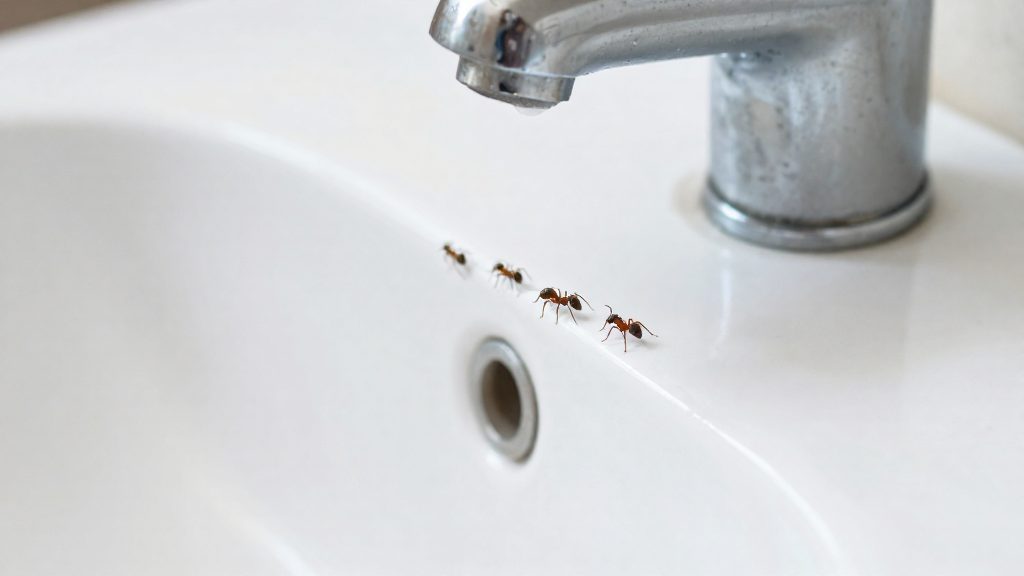
Moisture problems in a building therefore act as an invitation. Wet areas such as the space under kitchen and bathroom sinks are where ants gather in numbers, which makes them the first places to inspect. Check these spots, along with the lower sections of walls near the foundation and any plumbing that runs through wooden framing.
Firewood also brings ants indoors. Health Canada (2026) notes that colonies can arrive with firewood, so stacking it against the exterior of a building provides a direct route in.
The main corrective measures are:
- Correct moisture problems, such as leaks near the foundation.
- Remove rotten or infested wood.
- Replace damaged structural wood.
- Store firewood away from buildings.
- Seal entry points such as cracks and gaps around windows and pipes.
Health Canada (2026) identifies destroying the parent colony as the most effective control. For severe infestations, it recommends hiring a pest control professional.
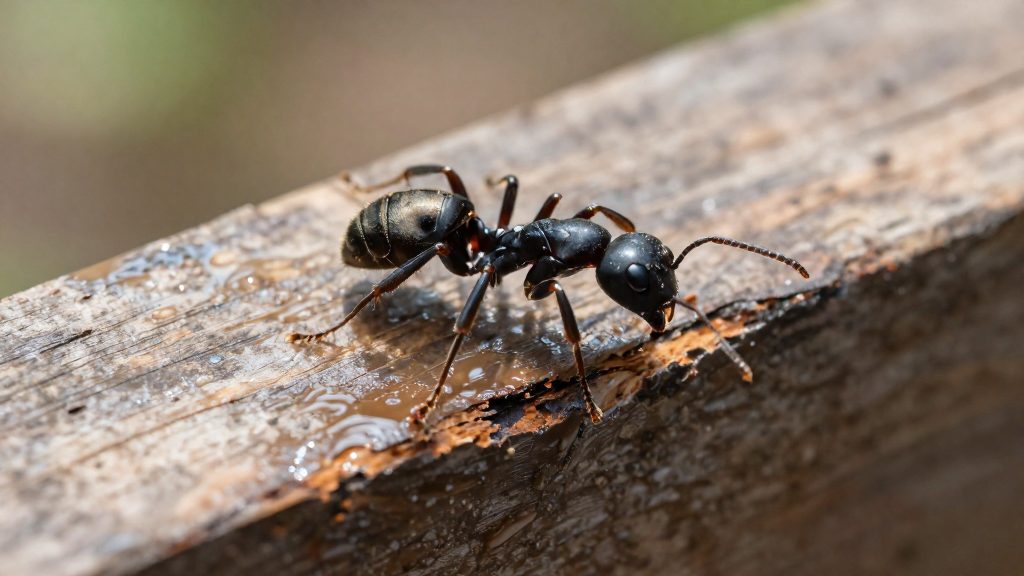
Carpenter ants or termites?
Carpenter ants and termites can look alike, but their bodies differ in ways you can check directly. Carpenter ants measure 6 to 25 mm and have a very narrow waist with elbowed antennae. Termites have straight antennae and a thick body. Colour alone is not a reliable guide, since Health Canada (2026) lists red and black species among the most common, while the Canadian Conservation Institute (2017) describes large black ants. Rely on the waist and antennae.
| Feature | Carpenter ants | Termites |
|---|---|---|
| Antennae | Elbowed | Straight |
| Body | Very narrow waist | Thick |
Signs of activity in wood
The clearest evidence of carpenter ant activity is frass, the fine, sawdust-like shavings they push out of their galleries. They dig into the wood without eating it, so the tunnels are clean and the shavings accumulate below the entry point. Look for these shavings near window frames, trim, and wooden beams, and check for small cracks in painted wood where the insects come and go.
Where and when to look
Carpenter ants favour damp places. Inspect the areas under sinks and around pipes, where large numbers of ants may gather. Their activity peaks at night, so inspecting with a flashlight after dark may be more productive than a daytime check. Listen as well: a faint, dry rustling inside wooden walls or floors can indicate an active colony.
Winged swarms often appear in spring. Seeing winged ants indoors at that time of year is a strong reason to examine nearby wood, so check nearby wood for signs of activity.
What to do if you spot a colony?
Treatment has three priorities: confirm the activity, remove what attracts the ants, and eliminate the parent colony, which is the most effective measure. According to Health Canada (2026), destroying the parent colony is the most effective measure, so treating only the visible workers or trails is unlikely to solve the problem.
Start by confirming the infestation. Look for fine, sawdust-like shavings, cracks in wood trim, and large numbers of ants in damp areas such as under sinks. Because these ants are mostly active at night, a faint dry rustling inside a wall can also indicate a colony.
Next, correct the conditions that drew them in:
- Remove rotten or infested wood, and replace damaged structural timber.
- Store firewood away from buildings, since it can carry ants indoors.
- Fix moisture problems. Carpenter ants are drawn to damp and decaying wood.
- Check the common entry points: window openings, foundation cracks, pipe penetrations, and places where trees or neighbouring wooden structures touch the building.
- Keep food in closed containers to limit indoor foraging.
If you use a pesticide, confirm that it carries a Health Canada registration number before applying it. In difficult cases, hire a pest control professional rather than relying on surface treatments.
Preventing Carpenter Ants From Returning
Carpenter ants keep coming back when the conditions that drew them in remain. They are attracted to moisture and decaying wood, and they often enter through windows, foundation cracks, pipes, or contact points with trees and adjacent wooden structures. They can also arrive inside firewood. Prevention therefore focuses on removing nesting material, cutting off entry routes, and eliminating moisture, as Health Canada recommends (2026).
The table below groups the main measures by the condition each one removes.
| Measure | Condition it removes |
|---|---|
| Remove rotten or infested wood | Nesting and feeding galleries |
| Replace damaged structural wood | Weakened timber that the colony can hollow out |
| Store firewood away from buildings | Entry route carried in by wood |
| Correct moisture problems | The damp conditions that attract the colony |
| Keep food in closed containers | Food sources inside the home |
Address moisture control alongside nest elimination, since carpenter ants are drawn to moisture and decaying wood. Check areas under sinks, around exterior downspouts, and along the foundation, and repair leaks. Inspect exposed wood in spring, when winged swarms often appear and the presence of frass, the fine sawdust-like debris carpenter ants push out of their galleries, signals an active nest.
Eliminating the nest itself matters most. Health Canada identifies destroying the parent colony as the most effective approach. Surface treatments that kill only the workers you see leave the source in place. When the nest is hidden in structural timber, or when the infestation keeps returning, hire a professional exterminator.
Frequently asked questions
Can I treat carpenter ants myself, or do I need a professional?
Health Canada (2026) identifies destroying the parent colony as the most effective control, and an exterminator is recommended for difficult infestations. For any product you use yourself, check its registration number on the label, which confirms Health Canada approval.
How do I keep carpenter ants from coming back after the nest is gone?
Remove rotten or infested wood, store firewood away from the building, and correct moisture problems. Replace damaged structural wood and keep food in closed containers.
Are carpenter ants chewing through my wood like termites do?
No. Carpenter ants excavate galleries without eating the wood, so their tunnels weaken timber mainly through the space they hollow out.