Is it really a cockroach egg case?
An ootheca is the protective capsule that holds a cockroach’s eggs. Genuine cases are firm, brownish, and ridged, with a visible seam along one edge. A case found loose in the kitchen has often been detached from a female. Compare the object against the lookalikes below before you act.
| Object | Typical appearance | Key difference from an ootheca |
|---|---|---|
| Ootheca | Firm, brown, ridged, purse-shaped capsule | Single compact unit with a seam along one edge |
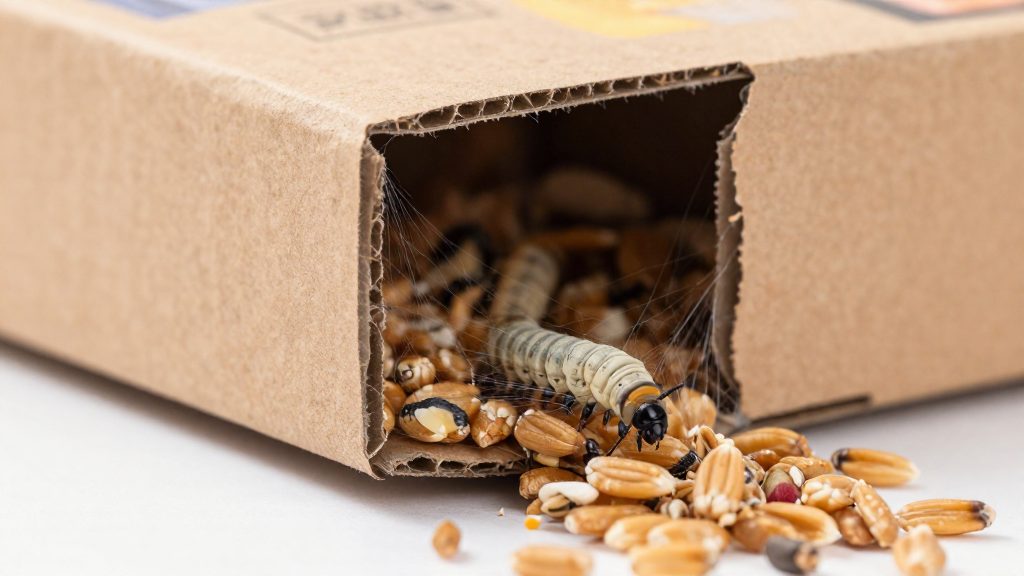
| Seed or grain | Hard, smooth, often rounded or elongated | No ridges or seam; usually found near open pantry food |
| Droppings | Small dark specks or granules | Scattered in small clusters, not a single solid unit |
| Insect casing | Pale, thin, shed skin left after a molt | Hollow and lightweight, with no solid body |
Seeds and grains are the most common mix-up. Check whether the object sits next to an opened bag of rice, pasta, or birdseed, and whether it has a ridged outline. Droppings are easier to rule out because they are dark specks rather than a single capsule. Casings are light and hollow, and they tend to appear in the same places as live insects.
Where to look in the kitchen
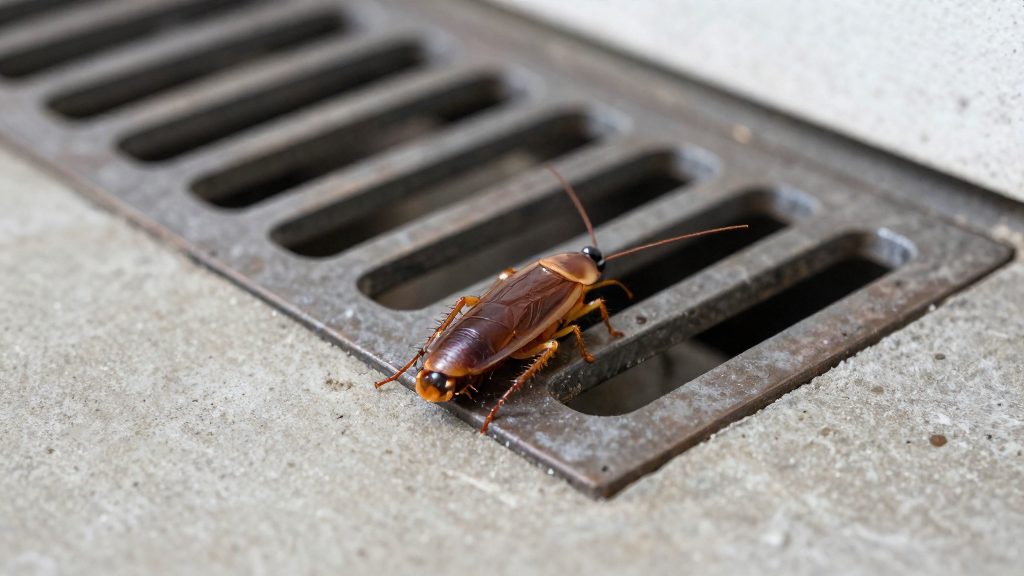
Hiding places are the first place to check. Cockroaches favour warm, dark, and humid spots close to food and water, so inspect these areas first:
- Inside cabinets and drawers near the sink
- Behind and beneath the refrigerator and stove
- Inside or underneath the dishwasher
- Along the back of countertops and where walls meet the floor
- Inside cardboard boxes and stored clutter near food
Rutgers Cooperative Extension (NJAES) (2026) notes that clutter provides hiding places, so inspect these spots carefully.

What does an egg case tell you about an infestation?
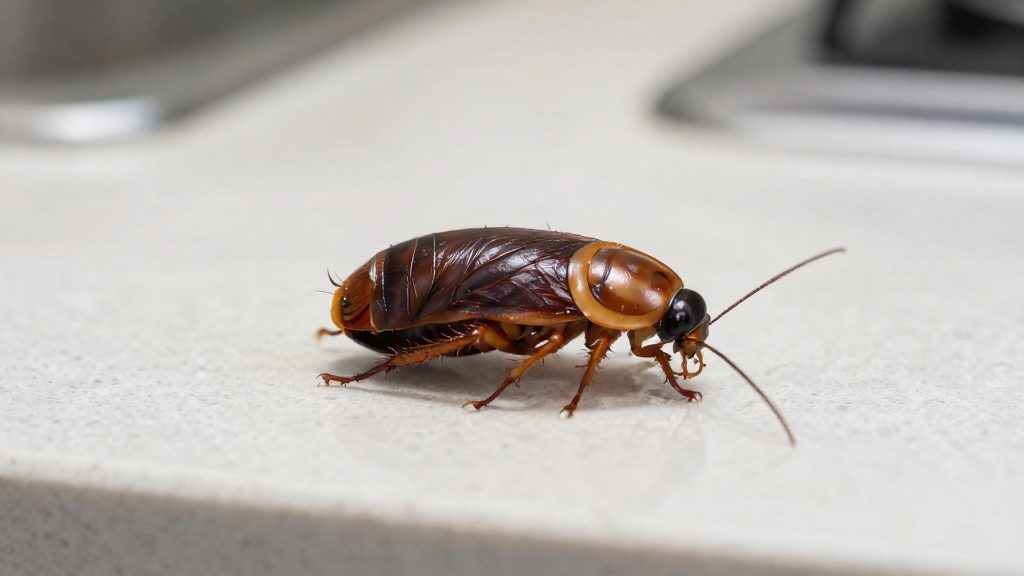
An egg case, or ootheca, is direct evidence of breeding, and the number and condition of the cases you find show how established an infestation is. According to Rutgers Cooperative Extension (NJAES) (2026), the female carries the egg case until just before hatching. A case still attached to a female therefore shows that breeding is happening at that spot now. A loose case tells a different story. An empty-looking or loose case still needs to be removed and recorded.
Using case count
The case count is the first measure. Search the kitchen systematically: behind and under appliances, along pipe runs, inside cabinet hinges, and in the gaps behind drawers. Record how many cases you find and where. Several cases clustered in one area suggest a population that has been established for some time. A single case usually points to a smaller or more recent presence.
Case counts do not convert into a reliable number of adults, so treat them as a relative indicator. Compare counts from one visit to the next rather than trying to calculate a total.
Judging freshness
Freshness indicates how recently breeding occurred. A whole case that is still attached to a surface is the most recent sign. A loose case is not necessarily old: Rutgers reports a single observation of about 33 nymphs hatching from a case detached from a female, so treat it as a possible active source without assuming every case yields that many. An empty case shows that nymphs have already emerged. Note the condition of each case alongside its location, because the same condition can mean different things in different places.
Monitoring over time
Rutgers recommends repeating follow-up treatments every 2–4 weeks. The infestation can be considered eliminated only when no cockroaches are found over a 4-week period. Keep the same search route at each visit so that the results are comparable.
How many eggs are inside one case?
A typical German cockroach egg case, called an ootheca, contains about 40 eggs. Each case is a single packet, so one ootheca holds a large share of a female’s offspring. Counting eggs per case is the quickest way to estimate how much one overlooked egg case can add to an infestation.
A female German cockroach produces five to eight oothecae over her life. According to Rutgers Cooperative Extension (NJAES) (2026), this adds up to a total of 200 to 250 eggs per female. These are the figures to use when judging how quickly a single undetected female can build a population, because the output comes in repeated batches rather than all at once.
Hatching can still produce many young. Rutgers Cooperative Extension (NJAES) (2026) reports that a case detached from a female produced about 33 nymphs. This was a single observation rather than a typical rate, but it shows that a loose case can still release a group of young.
Estimating the count helps you decide how seriously to treat a finding. A single case found in a kitchen may represent a population that has already begun to grow.
What should you do right after finding one?
A cockroach egg case, or ootheca, is direct evidence of breeding, so inspect the area for further signs rather than assuming it is a single stray find. A case found loose may already contain young insects.
Seal and dispose of the case first. Pick it up with a tissue or a gloved hand, drop it into a plastic bag, and close the bag before putting it into an outside bin. Avoid crushing it in the open room, since that spreads any eggs or nymphs it contains.
Check the immediate area for live nymphs and adults. Look along the wall, floor, and cabinet edges within a short distance of the discovery point. Nymphs are smaller than adults and move quickly when disturbed, so search with a light and check the surfaces closely rather than scanning from a distance.
Map the likely hiding places near the discovery point. Cockroaches tend to stay close to the spots where they were found, so record the nearby areas before you start any treatment:
- Gaps around pipes and under the sink
- Spaces behind and under the fridge and stove
- Cabinet hinges, drawer runners, and door frames
- Wall voids and cracks within reach of the discovery point
Note each spot on paper or in a phone note with a short description. This record shows where activity is concentrated and where later checks should focus.
Is gel bait more effective than bait stations?
According to Rutgers Cooperative Extension (NJAES, 2026), gel bait is usually more effective than bait stations, and sticky traps are recommended where cockroaches are likely to be. Rutgers recommends gel bait, sticky traps where cockroaches are likely to be, and repeated follow-up treatments.
Gel bait placement
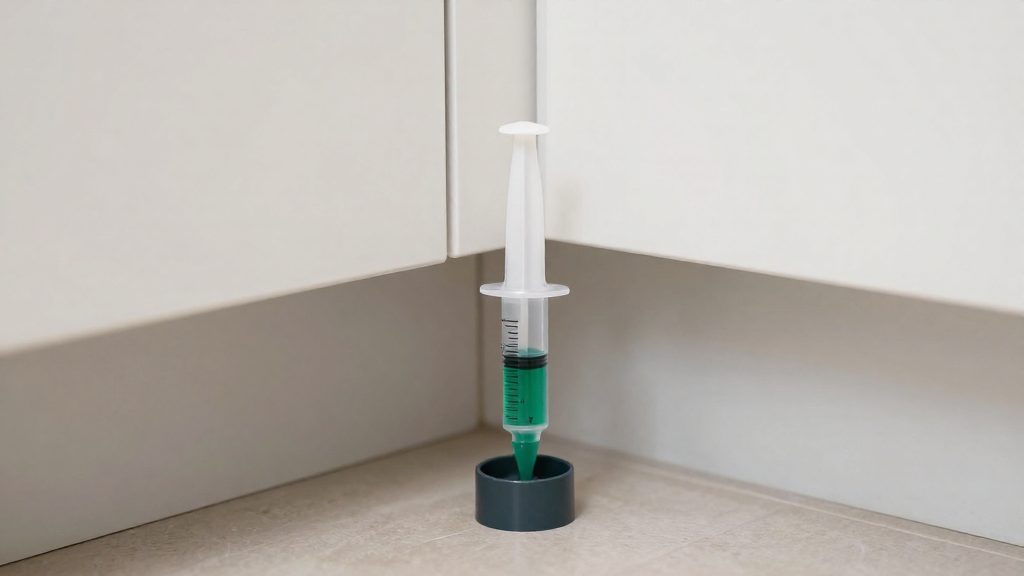
Apply gel bait as pea-sized dots at hiding places, such as cracks, gaps behind appliances, and inside cabinets. Cockroaches feed where they shelter, so dots placed in open floor areas are less likely to be found. Replace the dots during follow-up checks rather than letting them dry out in place.
Stations and traps compared
| Method | Placement | Rutgers guidance |
|---|---|---|
| Gel bait | Pea-sized dots at hiding places | Usually more effective than bait stations |
| Bait stations | Enclosed units | Usually less effective than gel bait |
| Sticky traps | Where cockroaches are likely to be | Recommended as a monitoring and control tool |
Follow-up schedule
Repeat treatments every 2–4 weeks until cockroaches are eliminated. Elimination means no cockroaches are found over a 4-week period, so any sighting restarts the count. Timing matters with egg cases: checks should continue through the period when nymphs can emerge, not stop once adults disappear.
How to clean and prevent a return
After treatment, the aim is to remove what keeps cockroaches fed, watered and hidden. According to Rutgers Cooperative Extension (NJAES) (2026), removing trash and recycling daily and reducing clutter limits hiding places. These habits prevent reinfestation only when they cover every room where food is prepared, stored or eaten.
Daily removal of trash and recycling
- Empty kitchen bins every day and keep their lids closed.
- Take recycling out daily as well, and rinse containers before storing them, since food residue attracts cockroaches.
- Wipe up crumbs and food spills at the end of each day, including inside cupboards and under appliances.
Reducing clutter to limit hiding places
Cockroaches shelter in the gaps created by stored items. Clear counters, under-sink cupboards and the space behind appliances. Store dry food in sealed containers rather than cardboard boxes, and reduce stacks of paper, cardboard and plastic bags, which offer both shelter and food residue.
Sealing cracks and fixing moisture sources
Cockroaches need moisture as well as food. Seal cracks and gaps around pipes, sinks and cabinets with a suitable sealant, and repair leaking taps, pipes and drains. Dry sink areas overnight, wipe up standing water (especially under sinks and around dishwashers), and ventilate damp rooms such as bathrooms and laundry areas.
When to call a pest professional
Move from do-it-yourself control to a licensed pest management service when the problem persists after your own efforts or spreads beyond one room. Several egg cases found in a short period point to an established population, not a single stray insect.
Repeated egg cases despite cleaning and baiting
Finding new egg cases after you have cleared hiding places and set baits is the clearest sign that DIY methods are not reaching the colony. If new cases keep appearing on successive checks, request a professional inspection.
Infestations spreading to multiple rooms or floors
Egg cases in several rooms, or on more than one floor, mean the spread has moved past a single area, and treating one room is unlikely to resolve it. Sticky traps placed where cockroaches are likely to travel help map the spread. Catches in rooms where no egg cases have been found are evidence that the infestation has expanded.
Choosing a licensed pest control operator
Before booking, confirm that the operator holds a valid pest control license for your state and ask for the license number. Request a written inspection report that identifies the pest and the locations of egg cases, not just a general quote. Ask which products they plan to use, how many visits the price includes, and how they will verify results. Compare several written quotes, and confirm whether follow-up visits are included in the fee.
Frequently asked questions
Does a loose egg case mean the cockroaches have already hatched?
Not necessarily. A female carries the case until just before hatching, so a detached case can still release nymphs. Only an empty case shows that hatching has already happened.
How many eggs does one egg case hold?
A typical German cockroach ootheca holds about 40 eggs. A female produces 5–8 cases, for a total output of 200–250 eggs.
Does finding one case mean a large infestation?
Not by itself. One detached case produced about 33 nymphs, but that is a single observation, not a typical hatch rate, so the number of young from any one case cannot be predicted from it.