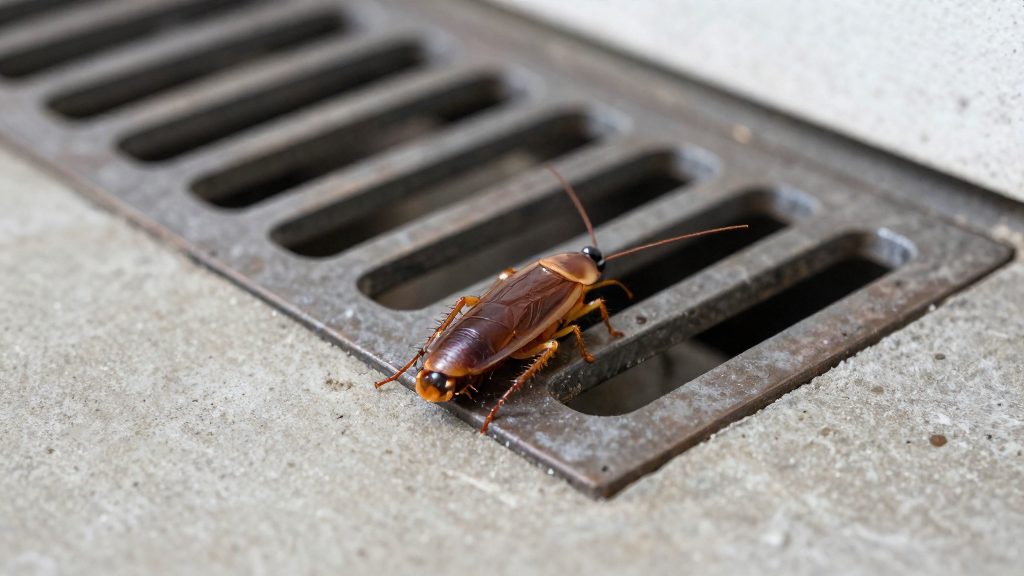
Why are American cockroaches in my basement drains?
American cockroaches live mostly outdoors, and basement drains attract them because they resemble the sewer environment the species normally uses. According to Orkin (2026), the insects can move into basements and other damp, dark areas, entering through sewer drain pipes and appearing in bathtubs and kitchen sinks. The draw is the same combination of conditions found underground: heat, moisture and organic matter.
Sewers as their natural habitat
In the Northeast, the American cockroach lives in sewer tunnels and storm drains, which provide heat, moisture and organic matter, according to Colonial Pest Control (2026). Because these networks connect directly to building plumbing, the insects can enter a structure from sewer lines without crossing any outdoor barrier. A basement drain is one point where that network connects to the building.
Why basements attract them
Basements offer conditions close to those of the sewer. Colonial Pest Control (2026) reports that infestations usually appear on lower floors, in warm, dark, damp places such as basements, boiler rooms, garbage rooms and storage rooms.
An outdoor insect with a large body
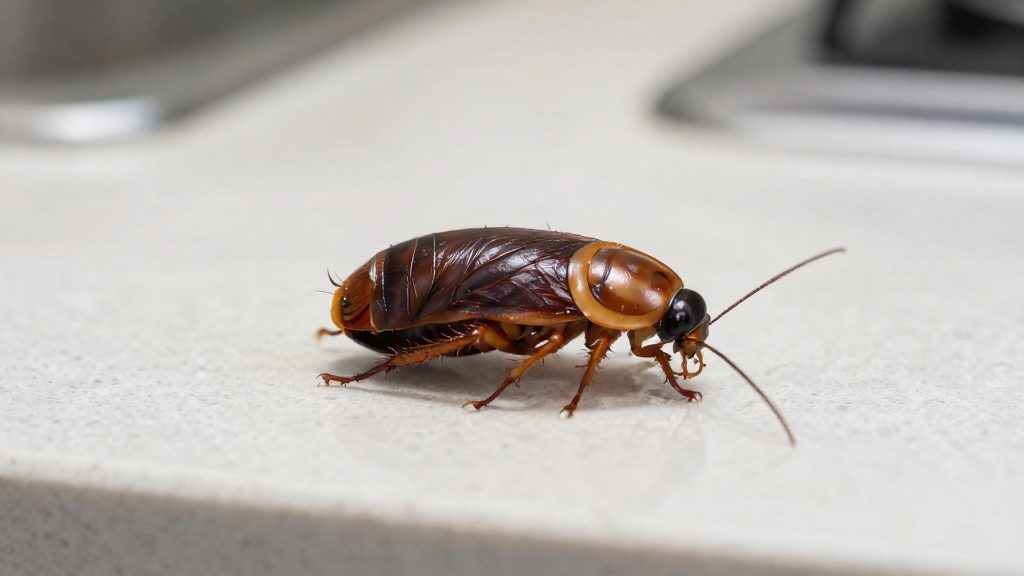
The American cockroach is the largest roach that commonly enters buildings (Colonial Pest Control, 2026). Its size is worth noting for identification: a large roach seen near a basement drain may be an American cockroach, but size alone does not confirm the species. Its outdoor habits explain its behavior indoors. The insect spends most of its life outside, The insect lives mostly outdoors, so an indoor sighting often points to an outdoor or sewer source.
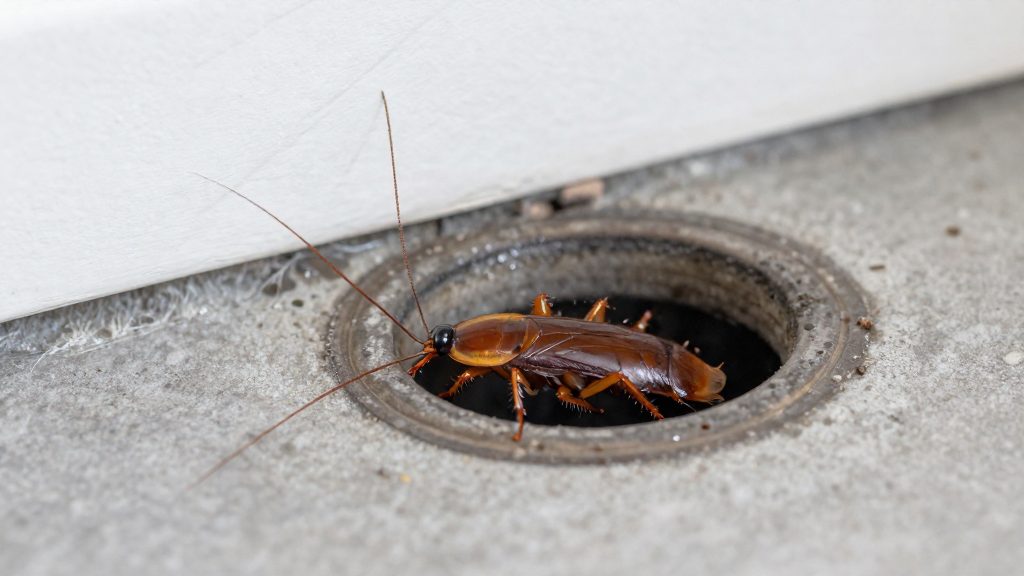
How do roaches get in through floor drains?
Two physical routes lead indoors through floor drains.
Route 1: climbing up a dry trap
A floor drain with a dry floor-drain trap leaves an open pipe between the sewer and the room above. Roaches living in the sewer climb up these pipes and emerge through the drain opening.
Route 2: sewer backups
When sewer lines back up, the flow pushes water and any roaches within the pipes back up through the drains and into the building. Colonial Pest Control (2026) identifies sewer backups as one of the two main entry routes. Because the roaches arrive with the water, drains on lower floors are the most exposed.
Access through manhole vents and direct sewer lines
Sewer-dwelling roaches can also leave the network without passing through a floor drain. According to Colonial Pest Control (2026), they can reach the street through manhole vent holes in the manhole cover, or enter buildings directly from sewer lines. These are two separate paths. Manhole vent holes let roaches from the sewer reach the street, and direct sewer lines can bring them into buildings.
Are they a sign of a sewer problem?
A single sighting does not prove a sewer source, but a pattern of the signs below does.
| Sign | What it indicates |
|---|---|
| Roaches emerging from bathtub or kitchen sink drains | Entry through the drain pipe system |
| Roaches appearing after a sewer backup | The backup flushed them into the building |
| Higher activity in late summer and fall | Roaches leaving the sewers in search of food and winter shelter |
| Roaches near manhole-cover vent holes | A route from the sewer to the street |
The distinction matters because it sets the scope of the response. If the sewer is the source, treating only the home will not permanently solve the problem, since the population keeps living in the drain network. Severe cases may require sewer-population control, which must be coordinated and authorized by the sewer operator, such as Public Works (Colonial Pest Control, 2026). A building with recurring drain-level sightings or backups should therefore treat the problem as a shared drain issue, not only an interior pest problem, and bring the sewer operator into the response.
How to keep floor drain traps from drying out
A floor drain’s water seal is the only barrier between the sewer and the room. According to Colonial Pest Control (2026), American cockroaches can climb up dry floor-drain traps, so keeping each trap full is the main way to block this entry route in basements. Trap upkeep is a recurring task, because the water evaporates between uses.
Flush each drain weekly
Flush every floor drain about once a week. The water refills the trap and restores the seal. Check drains in rarely used rooms too.
Add mineral oil to slow evaporation
Add about one tablespoon of mineral oil to each drain after flushing. The oil forms a layer on the water surface that slows evaporation, so the seal lasts longer between weekly flushes (Colonial Pest Control, 2026).
Limits of trap maintenance
A full trap does not stop the second entry route. Colonial Pest Control (2026) describes sewer backups that flush roaches into buildings, and a water seal cannot prevent that.
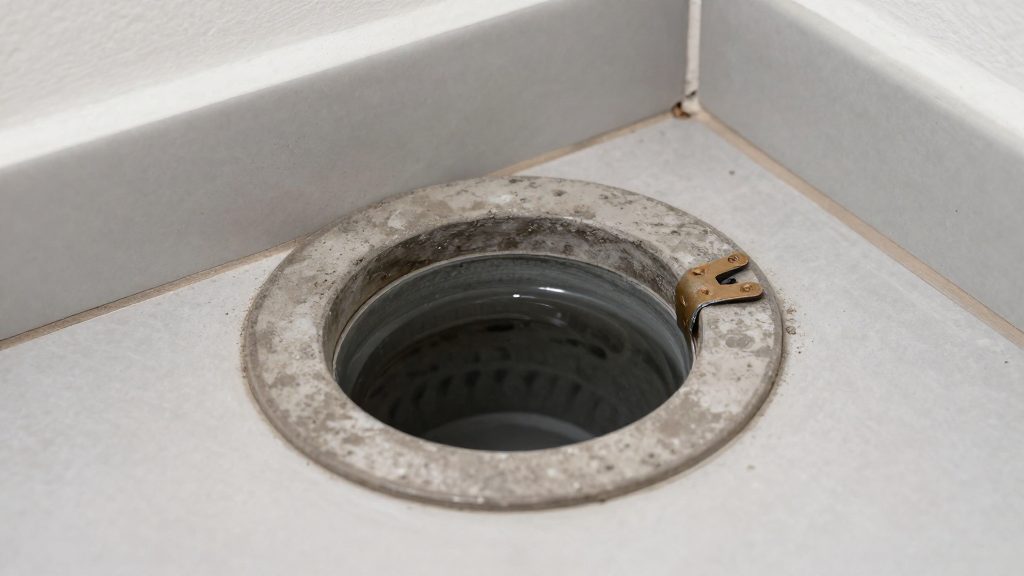
Seal entry points and cut moisture
According to Orkin (2026), prevention means reducing food, water and shelter and sealing cracks and crevices. In practice, this comes down to closing gaps, removing standing water, and clearing the storage areas where these insects hide.
Sealing cracks and crevices around drains and pipes
- Check the basement floor, the lower walls and the joints around floor drains, pipe penetrations and utility lines.
- Fill cracks in concrete with a masonry filler, and seal gaps around pipes with a flexible sealant rated for the surface.
- Pay particular attention to drains. Colonial Pest Control (2026) notes that roaches climb up dry floor-drain traps and enter through sewer backups, so openings at drain outlets matter most.
Sealing the walls does not block the sewer route on its own.
Reducing standing water and leaks
- Repair dripping pipes, leaking drain connections and condensation sources.
- Clear puddles and wet spots on the floor, and dry any damp areas after cleaning.
- Lower the humidity in the basement where possible. The species favors warm, damp conditions, and those conditions are what draw it indoors.
Removing food, clutter and shelter
- Store food and pet food in sealed containers, and keep garbage bins lidded and emptied.
- Remove food residue and spills near drains and sinks.
- Clear cardboard, stacked paper and loose debris from storage rooms, and keep stored items off the floor and away from walls so there are fewer hiding places.
What treatments work, and when to call a pro?
Controlling American cockroaches in basement drains works best as an integrated control plan that combines several methods. Orkin advises layering treatments rather than relying on one product. A single spray or a single trap leaves the other conditions that attract the roaches in place, so the drain area is likely to be reinfested.
Baits fit into that plan where needed. Orkin recommends using them as one component alongside the other methods, not as a standalone fix. Because the basement is a warm, dark, damp space, the aim is to combine the measures so that the roaches lose both their food sources and their hiding places.
When to call a pest specialist
Orkin recommends calling a pest specialist for an inspection, followed by a written treatment plan. The inspection identifies which methods suit the building, and the plan sets out how they will be combined and in what order. This step is the point at which a homeowner should move from do-it-yourself measures to professional treatment.
Infestations that originate in the sewer require a different level of response. Sewer-population control cannot be started by a homeowner, because it must be coordinated and authorized by the sewer operator, such as Public Works. A pest specialist inspection is the recommended next step if activity continues.
A practical sequence is:
- Apply the combined home measures and place baits where needed.
- Book a specialist inspection if activity continues.
- Follow the written treatment plan.
- If the specialist identifies a sewer source, arrange sewer-population control through the operator.
Seasonal timing: why fall sightings spike
Their yearly cycle explains when indoor sightings rise. Nymphs hatch in early summer within sewer populations (Colonial Pest Control, 2026). The adults that emerge from this population are easy to spot once they reach living areas.
In late summer and fall, the roaches often leave the sewers in search of food and winter shelter (Colonial Pest Control, 2026). This seasonal movement is why sightings cluster in these months rather than evenly across the year.
Frequently asked questions
How do I stop roaches coming up a basement drain?
Keep the drain’s water seal from drying out by running water through it about once a week. Adding roughly one tablespoon of mineral oil to the standing water slows evaporation, according to Colonial Pest Control (2026). Without that seal, a water-filled trap is what blocks the pipe.
If the roaches come from the sewer, is treating my basement enough?
No. Colonial Pest Control (2026) notes that treating only the home will not permanently fix a sewer-sourced problem. Severe cases may require sewer-population control, which the sewer operator, such as Public Works, must coordinate and authorize.
When should I call a professional?
Orkin (2026) recommends combining methods, such as reducing food, water and shelter, sealing cracks and using baits where needed. If the problem continues, a pest specialist inspection followed by a written treatment plan is its suggested next step.