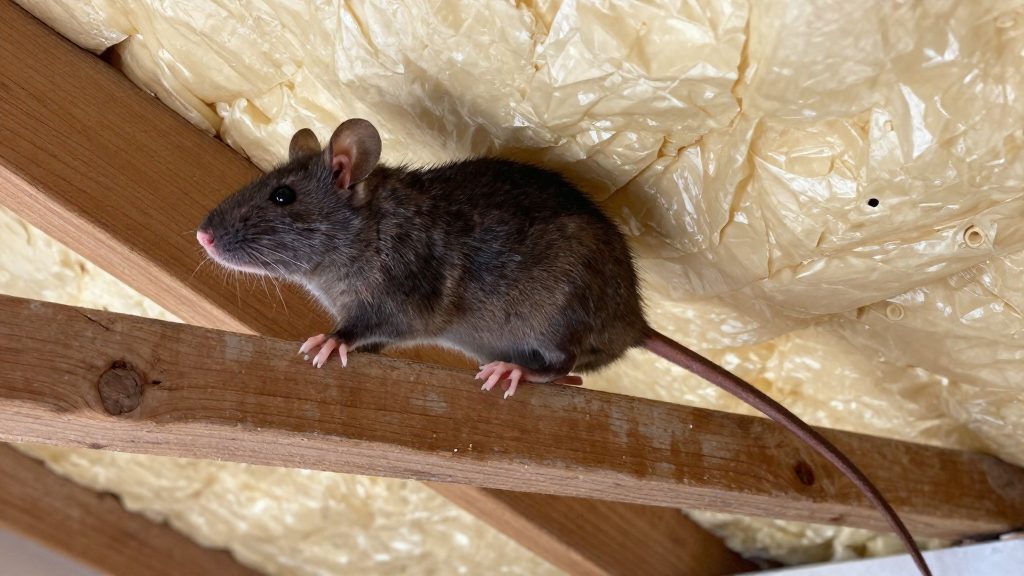
Roof Rat vs Norway Rat: Key Differences
Scientific Names and Adult Weight
The roof rat is Rattus rattus, and the Norway rat is Rattus norvegicus, according to the City and County of San Francisco, Department of the Environment.
| Species | Scientific name | Adult weight (UC IPM) |
|---|---|---|
| Roof rat | Rattus rattus | 5–10 ounces |
| Norway rat | Rattus norvegicus | 7–18 ounces |
The weight overlap lies between 7 and 10 ounces, so an adult rat in that band may belong to either species. Weight figures also vary by source. The Internet Center for Wildlife Damage Management (ICWDM) gives a narrower roof rat range of about 5–9 ounces, occasionally reaching 12 ounces.
Which Rat Has the Longer Tail?
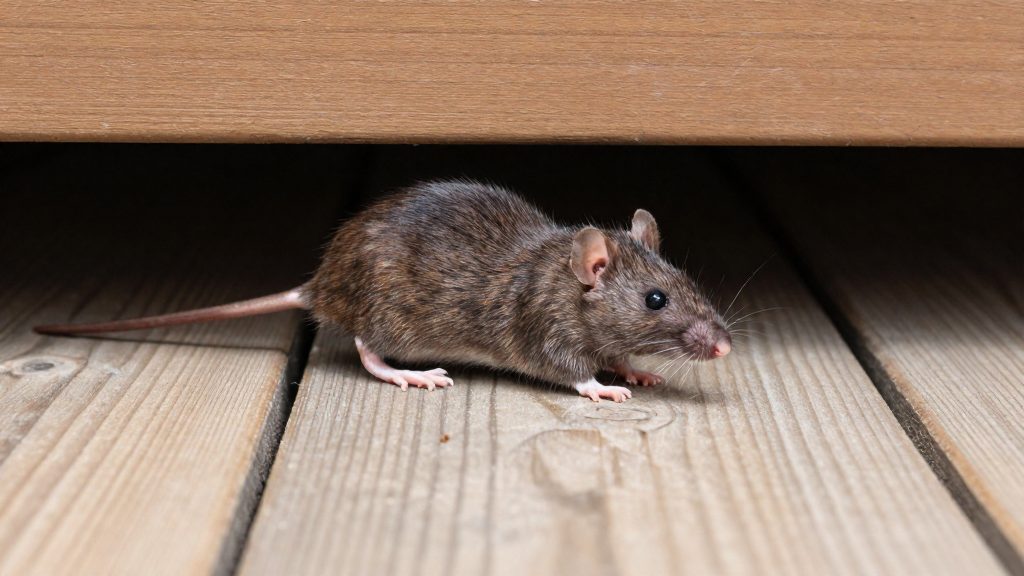
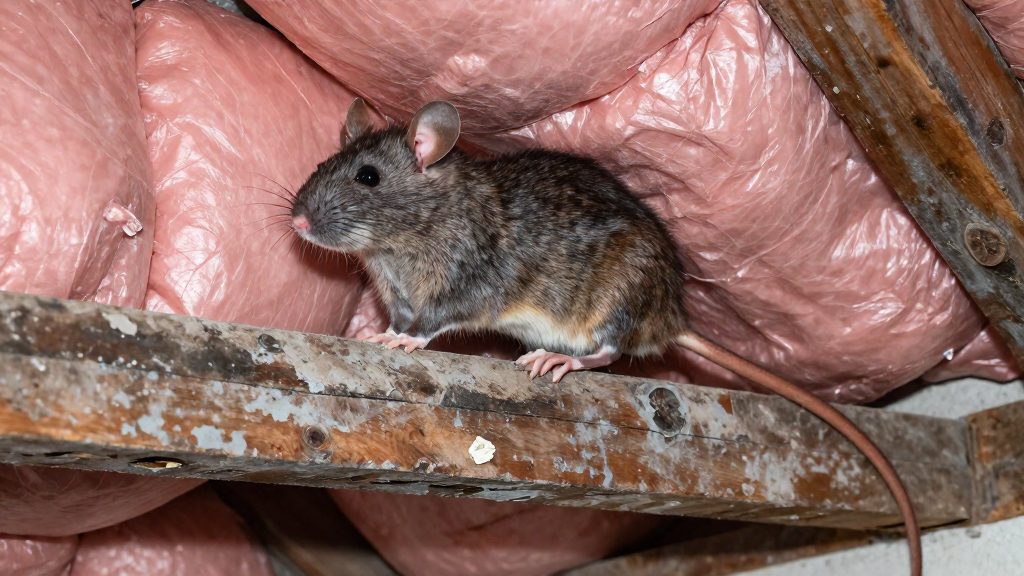
Tail length relative to body length is the main field check for telling these two species apart. According to the University of California Statewide IPM Program (UC IPM), a roof rat (Rattus rattus) has a tail longer than its head and body combined. The City and County of San Francisco, Department of the Environment, describes the opposite proportion in the Norway rat (Rattus norvegicus), whose tail is shorter than its head and body combined.
To apply the rule:
- Compare the tail with the head and body, measured from the tip of the nose to the base of the tail.
- Look at the animal from the side, with the tail extended, ideally while it is still.
- A tail clearly longer than the head and body suggests a roof rat; a shorter tail suggests a Norway rat. Check body build, ears, eyes and nose before confirming the identification.
A partly hidden or moving rat makes this comparison hard to judge. If you can, photograph the animal from the side and compare the proportions in the image before deciding.
Compare Body Shape, Ears, and Nose
Three visible traits separate adult roof rats (Rattus rattus) from Norway rats (Rattus norvegicus): overall build, the size of the ears and eyes, and the shape of the nose.
| Trait | Roof rat | Norway rat |
|---|---|---|
| Body build | Slimmer | Heavy-bodied |
| Ears | Larger | Small |
| Eyes | Larger | Small |
| Nose | Pointed | Blunt |
According to the City and County of San Francisco, Department of the Environment, the Norway rat’s blunt nose and small ears and eyes are the features that most often separate it from the roof rat’s pointed nose and larger ears and eyes.
To compare, look at a rat from the side and from the front. Check whether the body looks lean or stocky, then compare the ears and eyes with the head size, and finally look at the snout tip. Use a photo taken at close range, or compare against a rat caught in a trap.
Key terms: slimmer build, pointed nose, blunt nose
What Do Their Droppings Look Like?
Droppings are a quick way to narrow down which species left them. Cornell University IPM and the City and County of San Francisco Department of the Environment both use length and shape for identification.
| Feature | Roof rat (Rattus rattus) | Norway rat (Rattus norvegicus) |
|---|---|---|
| Length | About 1/2 inch | 3/4 to 1 inch |
| Shape | Spindle-shaped | Capsule-shaped |
Measuring droppings to confirm species
- Estimate the length of several droppings visually without touching or disturbing them, and keep measuring equipment away from the waste. Do not sweep or vacuum droppings. For cleanup, wear rubber or plastic gloves and thoroughly wet the waste with a household disinfectant, following its label instructions before wiping it up.
- Compare the measurements with the typical lengths: about 1/2 inch suggests a roof rat, while 3/4 to 1 inch suggests a Norway rat. Dropping size and shape provide clues but do not conclusively identify the species; check other identifying features.
- Check the shape: a roof rat dropping tapers to a point at both ends, while a Norway rat dropping has rounded ends.
Where Each Species Nests and Travels
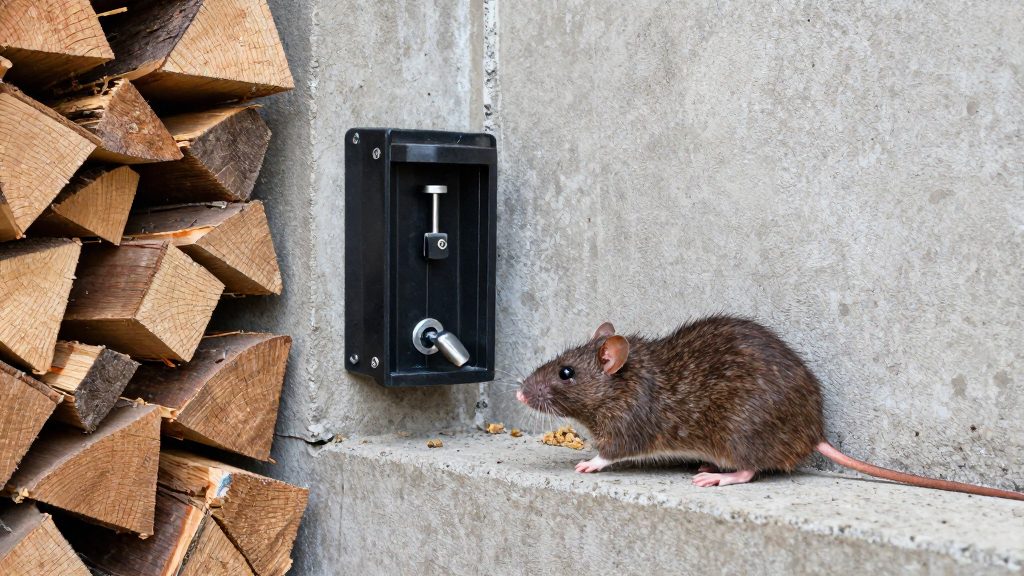
According to the University of California Statewide IPM Program, roof rats commonly nest in elevated spaces such as attics, ceiling voids and trees, but they can also burrow or occupy sewers. Norway rats commonly burrow beside foundations and beneath rubbish or woodpiles.
| Feature | Roof rat (Rattus rattus) | Norway rat (Rattus norvegicus) |
|---|---|---|
| Typical nest sites | Attics, ceiling voids, trees | Burrows beside foundations, beneath rubbish or woodpiles |
| Burrowing | Can burrow | Commonly burrows |
| Usual indoor level | Elevated spaces | Basements and ground floors |
| Climbing | Particularly active climber | Can climb |
Indoors, Norway rats usually occupy basements and ground floors, though ceiling infestations also occur. Roof rats are especially active climbers, so they move along elevated routes more readily than Norway rats do.
Roof rats are associated with warmer coastal and southern regions of the United States, although isolated populations can appear outside that range. The documented range is expanding, so a regional map should be checked against local reports rather than used alone to rule a species in or out.
Young Rats vs House Mice
Young rats have proportionally larger heads and feet than adult house mice, according to the University of California Statewide IPM Program (UC IPM). Overall size is unreliable here, because a young rat and an adult house mouse can both look small. Compare the head and feet against the rest of the body instead.
When inspecting a sighting, look at the head first, then at the feet, relative to the body. A disproportionately large head and feet point to a young rat, while a small head and feet on a compact body are consistent with an adult house mouse.
How Identification Guides Trapping and Prevention
Matching placement, trap type and sealing to the likely species improves control.
| Species | Trap placement | Prevention priority |
|---|---|---|
| Roof rat | Ground level and elevated travel routes, secured to the supporting surface | Openings above ground, because roof rats are particularly active climbers; ground-level gaps |
| Norway rat | Along walls and near signs of activity | Gaps beside foundations and at ground level; openings above ground |
Trap placement
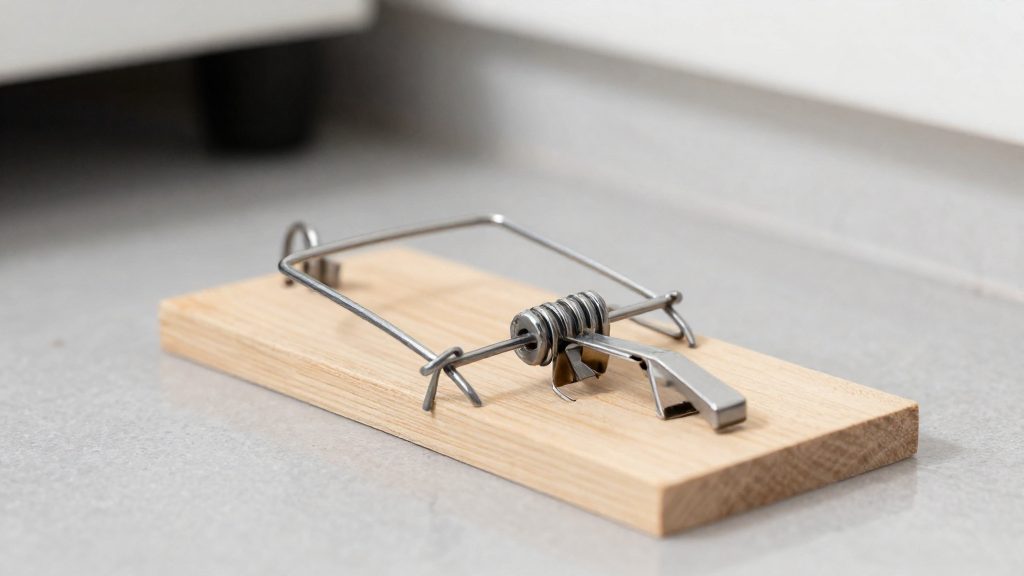
For Norway rats, place traps along walls and close to droppings, gnaw marks or runways. For roof rats, add traps on elevated travel routes and secure them to the supporting surface so they stay in place when an animal is caught.
Choosing trap types by build
Use build rather than weight to guide trap choice. Rat-sized traps can be used for both species; a slim or stocky build does not by itself establish a need for a different trap type. Follow the manufacturer’s instructions for the intended animal and adapt placement to the species’ travel routes. Check each trap’s label or manufacturer instructions for the size of animal it is designed to catch.
Entry-point prevention
Seal openings according to how each species gets in. Roof rats and Norway rats can both climb, so seal utility lines, vents and gaps at roof level. Seal ground-level gaps along the foundation edge. San Francisco’s Department of the Environment recommends pairing exclusion with sanitation, preventive maintenance and trapping to keep rodents from establishing in a building.