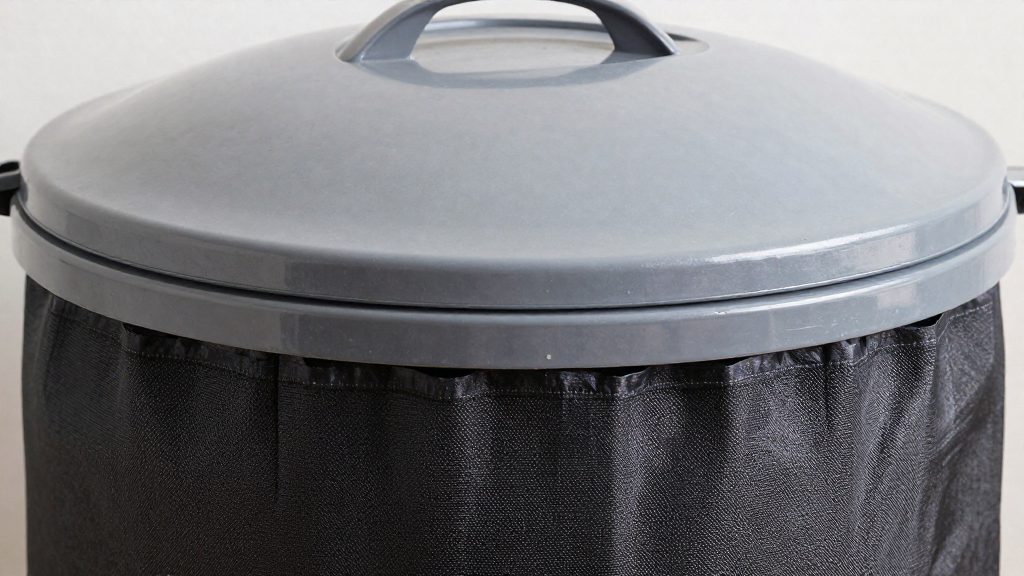
Rats are drawn to compost bins because the bin combines food, shelter and an undisturbed nesting site at ground level. Washington State University Extension notes that a backyard compost pile is almost impossible to rat-proof completely, but moisture control, regular turning and burying food scraps reduce the problem. Understanding each attractant shows where the problem starts.
Why do rats go for compost bins?
Food residue within reach at ground level
Food scraps are a major attractant. Scraps near the surface or at the bin’s edge are easy to reach. Because the pile sits on the ground, rats can reach it without climbing.
Dry, undisturbed piles as nesting sites
Washington State University Extension states that dry, undisturbed piles make attractive nesting spots. A pile that stays dry and is rarely turned gives rats a sheltered place to build a nest and raise young.
Burrowing into the pile from below
Rats also use the ground beneath the bin. Washington State University Extension describes rats burrowing under the bin, which gives them a route into the pile that bypasses the lid and sides. This entry point explains why a bin with a closed lid can still be invaded.
Mesh specifications for rat-proofing a compost bin, from the verified extension guidance:
| Use | Mesh specification | Where to apply | Source |
|---|---|---|---|
| Barrier against burrowing | ¼-inch strong wire mesh | Under the bin | Washington State University Extension |
| Repair of a gnawed plastic bin | ¼-inch strong wire mesh | All sides, top and bottom | Washington State University Extension |
| Un-chewable exclusion | ½-inch welded hardware cloth | Bin exclusion | Cooperative Extension (eXtension, Ask an Expert) |
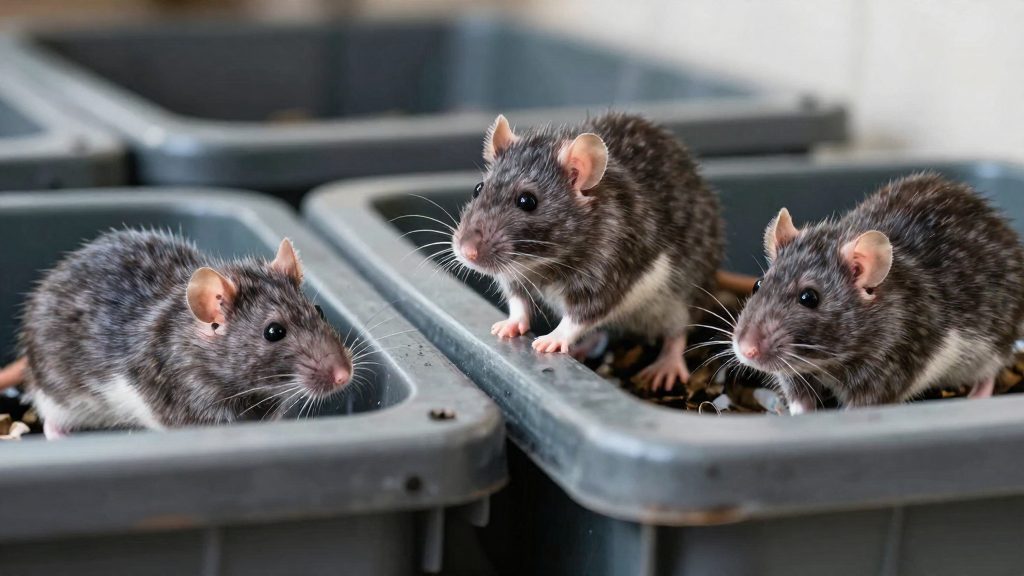
What should never go in the bin
Three kitchen categories should stay out of a backyard compost bin: meat and fish scraps, greasy and fatty foods, and dairy products. Washington State University Extension advises keeping all three out, because each one draws rats and adds a separate problem.
Meat and fish scraps
Meat is the first category on the exclusion list. Fish scraps belong to the same category and should be kept out for the same reason.
Meat residue is a rat attractant and should not go in the bin.
Greasy and fatty foods
Greasy and fatty foods, including cooking oil, cause two problems. They attract rats and they produce odor.
Dairy products such as cheese and milk
Dairy is the third category. Cheese and milk attract rats, and Washington State University Extension notes that dairy can also carry pathogens. Because of this pathogen risk, dairy adds a health concern on top of the pest problem.
How do you rat-proof a compost bin?
Rats are drawn to the food in a compost system, so the practical approach is to keep food waste out of the open heap. Washington State University Extension recommends separating the two types of material: kitchen scraps go into an enclosed bin, while the open pile is reserved for yard waste. Each material then has a fixed location, which limits what rats can reach.
Use an enclosed bin with a securely fastened lid
Place all kitchen scraps in a closed bin, never on the surface of the open pile. The lid must be fastened securely, not left resting on the container, because an unsecured lid leaves food accessible. Check the fastening regularly, particularly after adding scraps, and keep the bin in a location you can monitor.
Reserve the open pile for yard waste only
Use the open pile only for yard waste such as grass clippings. Keeping this pile free of kitchen food means it does not provide a food source, which is the main attraction for rats. Do not add scraps to it, even occasionally, as a single exposed item can draw activity.
Bury kitchen scraps deep in the pile
Inside the enclosed bin, bury each addition of kitchen scraps within the existing material rather than leaving it exposed on top. Cover every addition fully so no food remains visible or accessible at the surface.
Hardware cloth: which mesh size works
Two mesh sizes cover backyard compost bins, and each has a different job. According to Washington State University Extension, a ¼-inch strong wire mesh handles burrowing and reinforcement. Cooperative Extension (eXtension, Ask an Expert) identifies ½-inch welded hardware cloth as the un-chewable exclusion mesh. Each size has its own job, so match the mesh to where it is used.
¼-inch strong wire mesh under and around the bin
If rats burrow under the bin, stand it on ¼-inch strong wire mesh. Lay the mesh flat on the ground before setting the bin on top, so it covers the full footprint with no gap at the edges.
If rats have gnawed through a plastic bin, reinforce all sides, the top and the bottom with the same ¼-inch mesh. Cover the whole bin rather than only the damaged area.
½-inch welded hardware cloth as exclusion mesh
Use ½-inch welded hardware cloth where the goal is to keep rats out of the compost itself. Cut it to fit each opening of the bin so no unprotected edge remains. Use it for openings and lids.
Keep the pile hot, moist and turned
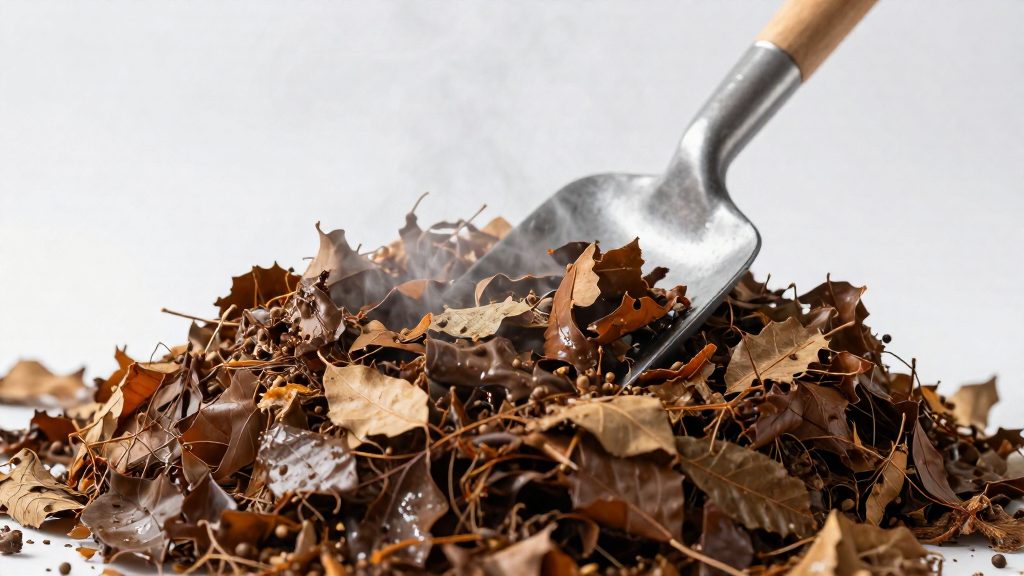
Keeping the pile hot is the top priority. According to Cooperative Extension (eXtension, Ask an Expert), it is the most important practice, because a cold pile still holds food scraps that attract rats. Heat and moisture work together, so the two routines below should be run as one maintenance habit.
Maintain moisture
Check the pile’s moisture when you turn it. Add water when the material looks dry or crumbly, and stop once it is evenly damp rather than soaked.
Turn at regular intervals
A fixed bin, meaning one that does not tumble, must be turned regularly to build and hold heat, according to Cooperative Extension (eXtension, Ask an Expert). Use a garden fork and move material from the outer edges into the centre, and the warmer core material toward the outside. This mixes the pile so that all of it heats evenly and no cold pocket remains where scraps can sit undisturbed.
Remove other food sources nearby
A compost bin with no food in it can still draw rats if food is available nearby. The Cooperative Extension (eXtension, Ask an Expert) notes that mesh alone is not enough: other food sources must also be removed. That means securing bird feeders, cleaning up spills, and keeping pet or livestock food and garbage out of reach. Cleanup should cover the whole area around the bin, not only the bin itself.
Pet food left outdoors
Pet or livestock food left out overnight is a food source. Pick up uneaten food and water bowls at the end of each day. Store feed in a sealed container indoors or in a closed structure that rats cannot enter.
Birdseed spilled beneath feeders
Seed that falls to the ground under feeders is a steady food supply. Choose feeders that hold seed inside and fasten them securely to a fixed support. Sweep up spilled seed from the ground beneath feeders regularly, so that nothing accumulates.
Fallen fruit and open garbage
Fruit that drops from trees and stays on the ground is another food source. Pick up fallen fruit as soon as it drops, and remove it from the area rather than leaving it near the bin. Garbage containers need lids that fit tightly and stay closed. Bags should not be left out in the open, because rats can reach food stored in them.
What if rats are already in the bin?
If rats are already feeding from or nesting in the bin, start by cutting off their food supply. Stop adding any food.
Next, inspect the bin and the ground around it. Check for:
- Burrows at the base of the bin or in the soil beneath it, often with fresh, disturbed earth at the entrance.
- Chewed plastic on the lid, sides or bottom, including gnawed edges around vents and seams.
- Droppings or gnaw marks near the bin, or a worn path leading to it along a fence or wall.
If you find an active burrow, evidence of nesting inside the bin, or chewed plastic that gives rats access to the contents, contact a professional pest control service. A technician can assess the infestation, check the nest and burrow system, and advise on removal before you resume normal composting. Attempting to dig out an active burrow or handle a nest yourself can expose you to rats and their droppings, so leave that work to a trained operator.
Is a tumbler a better option?
A tumbler is more enclosed than an open pile, which can reduce rodents’ access to food and shelter if it is kept closed and its base is checked. An enclosed static bin closes the top, but its base and seams remain possible entry points.
A tumbler’s sealed drum limits how much of the contents is exposed, but the supplied extension sources do not show that any bin format is rat-proof. Gaps at the lid, seams and base still need checking, and mesh and food-source control still apply.
Base clearance is where tumblers need the closest check. Most units sit on a frame or stand, which leaves a gap underneath. The space under the drum must be assessed before use, whatever the frame height.
Capacity should match the volume of scraps the household produces. A drum that fills quickly invites overflow onto the ground, which creates a feeding site outside the enclosure. Choose a size that can be cleared at the intended rate.
Turning effort is the practical trade-off. A tumbler is rotated by hand rather than forked, which avoids opening a heap at every turn. However, a fully loaded drum is heavier to rotate, so a model should be chosen that can be turned by hand without strain.
Compared with an open pile, a tumbler offers the most complete enclosure. Compared with a static bin, it adds a sealed drum but needs the same attention to the base.
Frequently asked questions
Can I put bread in my compost bin?
No. Cooperative Extension (eXtension, Ask an Expert) lists bread with meat, dairy and oil as items never to add to the heap. Keep it out of the bin entirely.
Why does keeping the pile hot matter for rats?
A cold pile still holds food scraps that attract rats, so Cooperative Extension (eXtension, Ask an Expert) describes keeping the pile hot as the most important practice. A fixed bin must be turned regularly to build and hold that heat.
Do other food sources in the garden matter if the bin is sealed?
Yes. Mesh alone is not enough, so secure bird feeders, clean up spills, and keep pet or livestock food and garbage out of reach. Rats that find food sources nearby will still search the area around the bin.