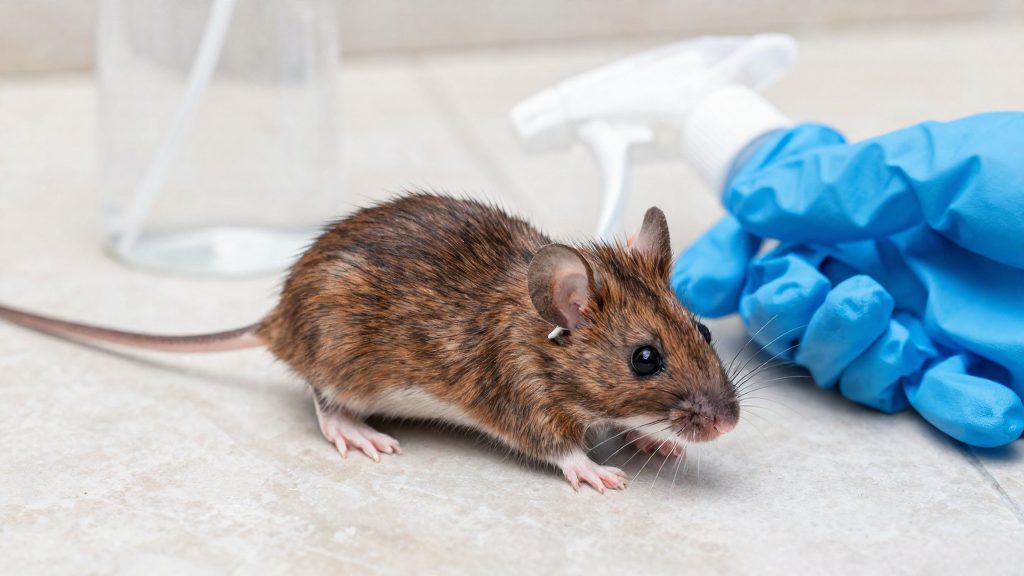
Rodent urine, droppings, saliva and nesting material can carry viruses. The CDC (2024) warns that disturbing these materials can release virus-containing particles into the air, where they can be breathed in. The health risk therefore comes from two routes: direct contact with contaminated material, and inhalation of particles raised by movement. How much exposure a person receives depends largely on the environment. Enclosed, poorly ventilated rooms keep particles in the air where people breathe, which raises the risk.
Why mouse droppings are a health risk
Sources of contamination
Four types of rodent material are identified as carriers of viruses:
- Droppings: a source of virus-containing particles when disturbed.
- Urine: the CDC advises avoiding contact with it, and disinfection instructions cover urine-soaked areas as well as droppings.
- Saliva: linked to rodents and their nesting areas.
- Nesting materials: shredded fabric, paper or insulation that rodents have soiled.
Fresh material deserves particular caution. Stirring up fresh droppings or nests can send the virus into the air, so fresh droppings and nests call for particular care.
Routes of exposure
According to the CDC (2024), there are two main ways people are exposed:
- Direct contact with urine, droppings, saliva or nesting materials, for example when touching a surface or object without gloves.
- Inhalation of virus-containing particles that become airborne when material is disturbed.
Why enclosed spaces increase exposure
The CDC advises opening doors and windows for 30 minutes before cleanup and leaving the area during that time. This instruction reflects the principle that particles remain available to breathe in a closed room. Attics, crawl spaces, sheds, garages and basements combine limited airflow with nesting sites, which makes them higher-risk settings.
Can you sweep or vacuum mouse droppings?
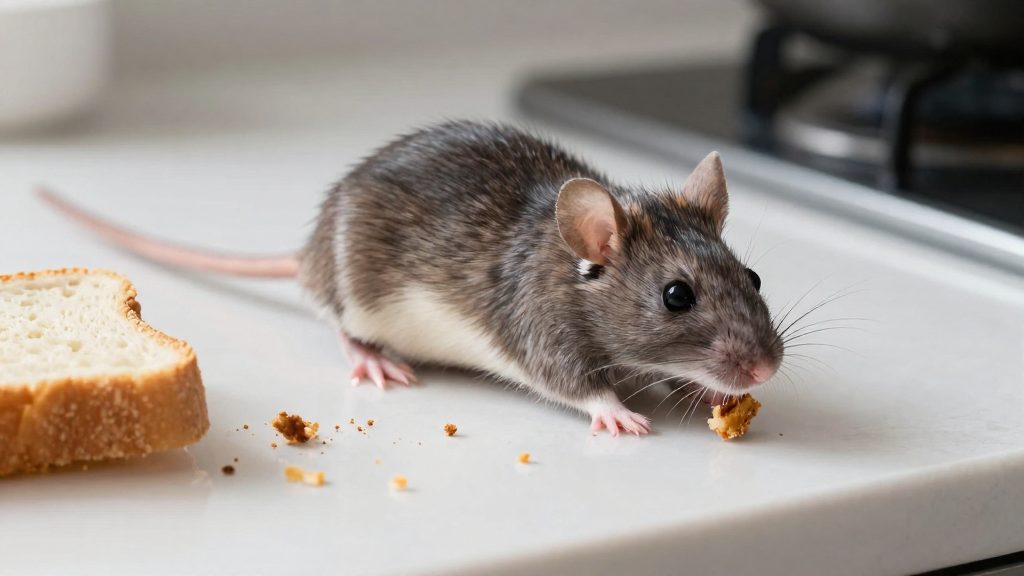
No. The CDC advises against sweeping or vacuuming rodent droppings because both actions can spread virus-containing particles into the air (CDC, 2024-04-08). The risk comes from disturbing the material. Once particles are airborne, they can be breathed in, so the goal is to avoid disturbing droppings at all.
Why dry sweeping lifts particles into the air
Dry sweeping moves air across the surface and breaks droppings into smaller fragments. These fragments, along with any dust mixed in with them, rise with the air currents the broom creates. A broom therefore turns a small, localised deposit into an airborne exposure.
Why vacuuming spreads particles as well
Vacuuming can look like the safer choice because it collects debris, but the CDC does not treat it that way. The airflow that draws material into the machine also disturbs the surrounding material, and particles the machine does not capture can be released back into the room.
Tools to avoid on droppings
| Tool | Why it is unsafe on droppings |
|---|---|
| Broom | Dry sweeping lifts particles into the air |
| Dry duster or dry cloth | Dry wiping disturbs the material, with the same mechanism as sweeping |
| Vacuum cleaner | Vacuuming can spread virus-containing particles into the air |
What to wear before you start
Protective clothing is the first barrier between you and rodent droppings. According to the CDC (2024), people should avoid contact with rodent urine, droppings, saliva and nesting materials. Dressing before you open a door or touch a surface limits direct skin and eye contact with this material. Put on the gear before you start and keep it on until the cleanup and disinfection are finished.
The three items below cover hands, eyes and body. Each one addresses a different route of exposure.
| Item | What it protects | When to use it |
|---|---|---|
| Disposable or waterproof gloves | Hands, from droppings, urine and nesting material | Every cleanup, from the first pick-up to the last wipe |
| Goggles | Eyes, from splashes when droppings and urine are sprayed with disinfectant | Heavy infestations, according to the CDC (2024); consider them whenever you spray until the material is very wet |
| Coveralls | Clothing and skin, from contamination | Heavy infestations, according to the CDC (2024) |
Gloves
Gloves are the most direct barrier because your hands will handle the droppings, paper towels and contaminated surfaces. Check each pair for tears or holes before you put it on. A damaged glove offers no protection. Use a fresh pair for each cleanup rather than reusing the same pair across different rooms, so contamination does not spread between areas.
Goggles
Goggles protect your eyes when you spray droppings and urine with disinfectant. Spraying produces droplets that can splash back toward the face. Choose goggles that fit close to the face rather than open-sided glasses, because splashes can reach the eyes from the side and from below.
Coveralls
The CDC (2024) calls for coveralls in heavy infestations, alongside goggles. Coveralls cover clothing that would otherwise be exposed to droppings and urine. Wear them over everyday clothes, and keep this outer layer dedicated to cleanup so that contaminated fabric does not travel through the rest of the home.
How do you clean mouse droppings step by step?
Cleaning mouse droppings safely depends mostly on order. Before step 1, open doors and windows for 30 minutes and leave the area during that time (CDC, 2024). Then wet the material first so it does not become airborne, and finish with handwashing.
| Step | Action | Key detail |
|---|---|---|
| 1 | Soak | Spray droppings and any urine until they are very wet |
| 2 | Wait | Let the material sit for 5 minutes, or as the product label directs |
| 3 | Pick up | Lift the material with paper towels and place it in a covered trash can |
| 4 | Disinfect surfaces | Mop or wipe hard surfaces such as floors, countertops, cabinets and drawers |
| 5 | Remove gloves | Wash gloved hands first, then take the gloves off |
| 6 | Wash hands | Use soap and warm water |
The soaking stage is the wet-first principle. Spraying until material is saturated, rather than lightly misting it, is what keeps particles from lifting when they are handled. Timing matters as well. The 5-minute wait is the CDC’s default, but if a disinfectant label specifies a different contact time, the label governs.
Because gloves are removed only after they have been washed, any residue on the outside of the gloves is rinsed away before they come off. Handwashing with soap and warm water is the final step, and it closes the sequence. Any tools or cloths used during cleanup should be treated as contaminated and disposed of or cleaned with the same care.
What bleach mix should you use?
For cleaning up rodent droppings, the CDC’s disinfectant recipe is 1.5 cups per gallon of household bleach mixed with water. The same mix is written as 1 part bleach to 9 parts water (CDC, 2024-04-08). Both formats describe the same solution, so you can use whichever measuring tool you have on hand.
| Format | Recipe |
|---|---|
| Volume | 1.5 cups household bleach per 1 gallon of water |
| Ratio | 1 part bleach to 9 parts water |
Measure the bleach and water before you start, and pour the solution into a container you will use only for this task. The CDC specifies that the solution should be mixed fresh each time rather than stored and reused, so prepare a new batch for each cleaning session instead of saving leftovers from an earlier one.
If you do not want to use bleach, the CDC states that an EPA-registered disinfectant also works (CDC, 2024-04-08). Look for the EPA registration on the product label and follow the label’s dilution instructions. The CDC’s recipe does not apply to these products, because each one has its own mixing directions. Do not substitute a different ratio from another source for a registered product.
When do you need a respirator?
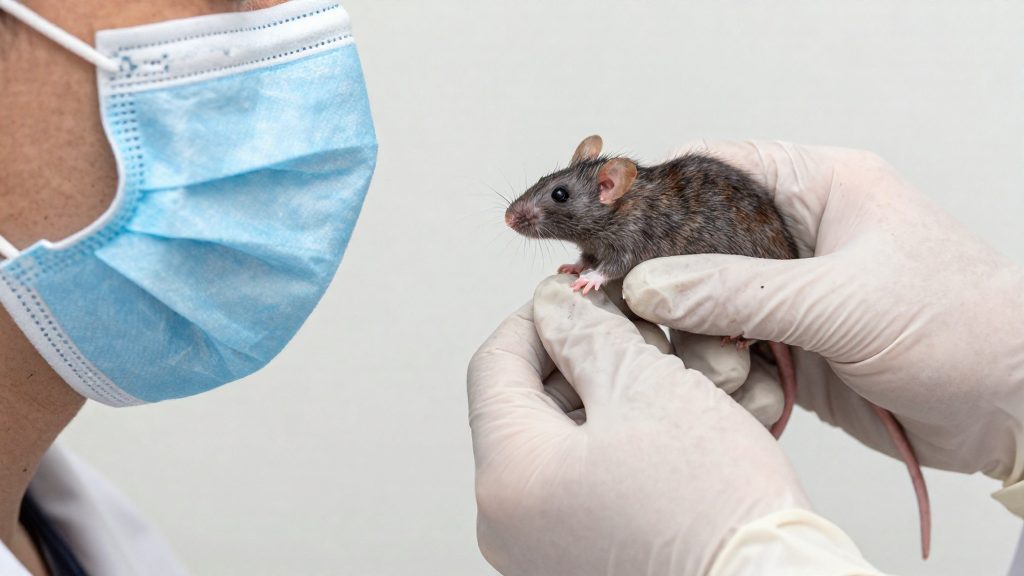
For a small cleanup, the CDC steps call for gloves and the disinfecting routine described in this guide; extra protection is called for in heavy infestations. A respirator becomes necessary when the amount of contamination, or the way you disturb it, raises the chance that infectious particles reach the air you breathe. The CDC (2024) calls for a respirator, coveralls and goggles in heavy infestations. For fresh droppings or nests, it advises avoiding stirring them up, because the virus can then become airborne and be breathed in.
Heavy infestations
When rodent activity is widespread, the CDC (2024) calls for extra protection beyond gloves. This set includes a half-mask respirator with HEPA filters, coveralls, and goggles. The respirator is the only item in that set that protects the airway, so it is the component most directly linked to breathing in airborne particles.
Disturbing fresh droppings and nests
Protection needs go up whenever you handle material that may be fresh. Nesting material is a particular concern, so a respirator is worth considering before you clear an attic, wall void, or stored box that shows signs of nesting.
| Situation | Protection the CDC describes |
|---|---|
| Few droppings, no nests disturbed | Gloves and the standard cleaning steps |
| Heavy infestation | Half-mask respirator with HEPA filters, coveralls, goggles |
| Fresh droppings or nests | Avoid stirring them up (CDC); wet them thoroughly before handling, and use the heavy-infestation protection if infestation is heavy |
Fit testing
The CDC (2024) advises following local rules on fit testing, which confirms that a respirator seals properly to the face. A respirator that does not seal will not filter the air you breathe as intended, even with HEPA filters fitted. Check the fit-testing requirements that apply where you live or work before relying on a respirator for a heavy cleanup.
How do you stop mice coming back?
Cleaning up droppings removes the evidence but not the cause. A mouse that found shelter and food once will tend to return, so the lasting fix is to cut off the routes into the building and the resources inside it. Prevention works in three parts: blocking entry points, removing food, water and nesting access, and checking for new activity over time.
Sealing entry points
Mice can pass through very small openings, so the work starts with a full inspection of the outside and the inside of the building. Look for gaps around pipes and cables, under doors, at the edges of windows, behind appliances, and where utility lines enter the walls. Seal these openings with materials that mice cannot chew through, such as steel wool, metal mesh or cement-based filler. Foam alone is not a reliable barrier because mice can gnaw through it. Treat any opening you can push a pencil into as worth sealing.
Removing food, water and nesting access
Mice need only small amounts of food and water, so the aim is to leave them nothing reachable:
- Store dry food, pet food and birdseed in sealed containers made of glass, metal or thick plastic.
- Wipe up crumbs and spills at once, and do not leave dishes or pet bowls out overnight.
- Fix leaking faucets, pipes and condensation trays, since standing water is an easy source.
- Clear clutter in cupboards, garages, sheds and under sinks, where mice build nests from paper, fabric and insulation.
- Keep firewood, boxes and stored items off the floor and away from walls.
Monitoring for new droppings
After cleanup, check the same areas on a regular schedule. Compare them with the previous check: new droppings or gnaw marks mean the problem is still active or has returned. Use a flashlight and look along walls, behind appliances and inside cabinets, rather than moving items and raising dust.
Frequently asked questions
Can I sweep or vacuum rodent droppings to save time?
No. Dry sweeping or vacuuming can send virus-containing particles into the air, where they can be breathed in. Soak the droppings with disinfectant until they are very wet, wait 5 minutes or the time on the product label, then pick them up with paper towels and place them in a covered trash can (CDC, 2024).
Do I need a respirator for a small amount of fresh droppings?
The CDC (2024) does not require a respirator for fresh droppings or nests. It advises avoiding stirring them up in the first place, and recommends gloves and handwashing with soap and warm water afterward. For heavy infestations, the CDC advises a half-mask respirator with HEPA filters, plus coveralls and goggles, with fit testing done according to local rules.
Which disinfectant should I use, and how should I mix it?
The CDC (2024) recommends mixing 1 part household bleach with 9 parts water, and making a fresh batch each time. An EPA-registered disinfectant is an accepted alternative, so follow its label for dilution and contact time.