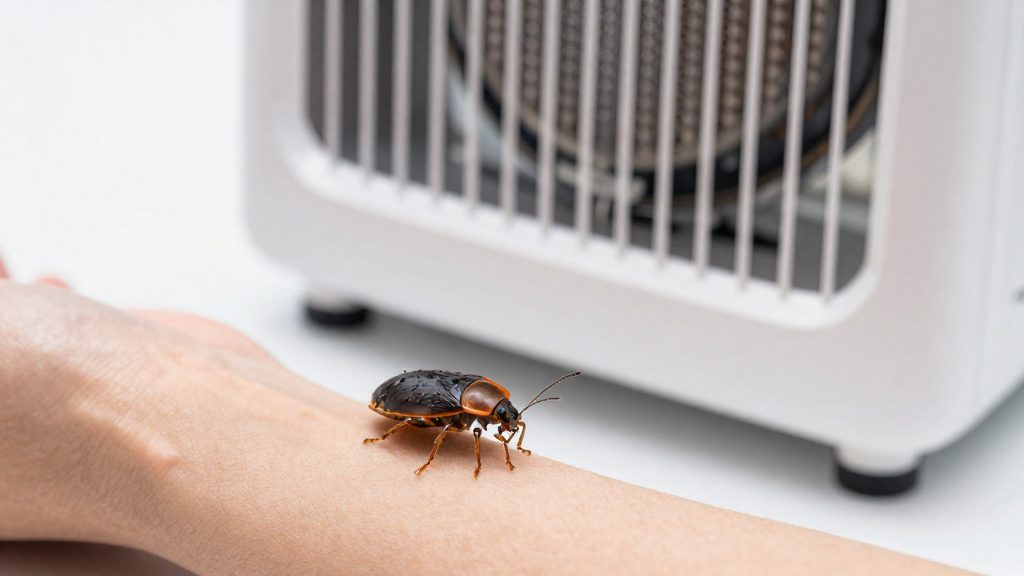
Heat can kill bed bugs at home, but DIY methods are less reliable than professional treatment. According to the US EPA (2026), DIY heat treatments might not work, and professionals use more intensive methods, including whole-house heat treatment. A household appliance heats only what it holds, and its results depend on whether every bug and egg reaches a lethal temperature for long enough. Without measurement, that outcome is hard to confirm.
Does heat kill bed bugs at home?
Where DIY heat falls short
The main limitation is coverage. A dryer or steam cleaner treats only the item or surface it reaches, so bugs in walls, furniture joints or adjoining rooms are not affected. Room-level heating is not a workaround: the US EPA (2026) says raising indoor temperature with a thermostat, propane space heater or fireplace “does not work and is dangerous.”
DIY heat options and their conditions
| DIY option | Condition stated in sources | What to verify |
|---|---|---|
| Clothes dryer on high heat | A Cornell-cited study found about 120°F for 30 minutes killed all life stages, eggs included (Cornell University IPM, 2011) | Actual drum temperature, because dryers vary |
| Steam cleaner | Steam of at least 130°F, used with a diffuser (US EPA, 2026) | Diffuser in place, so airflow does not scatter bugs |
Combining heat with inspection and monitoring
Heat works as one step in a sequence, not a finished job. Inspect the bed, furniture and nearby surfaces after treatment, and check the same spots again on a regular schedule. If live bugs or fresh signs appear, the treatment has not fully worked and the area needs professional assessment.
Keep treated items separate from untreated belongings, using sealed bags, so they are not re-exposed. Repeat inspections and monitoring are what show whether the infestation is actually gone.
What temperature and time kill bed bugs and eggs?
The documented target for heat treatment is 120°F (about 49°C) sustained for 30 minutes. A study cited by Cornell University IPM (Cornell Cooperative Extension, 2011) found that a dryer reaching about 120°F for 30 minutes killed all bed bug life stages.
Target values
- Temperature: about 120°F (49°C)
- Duration: 30 minutes, counted once the target is reached and held
- Outcome: all life stages killed under these conditions
The 30 minutes must be sustained at temperature. A cycle that drops below 120°F partway through, or that stops before 30 minutes at temperature, does not meet the documented target, even if the item feels hot to the touch. Surface warmth alone is not a reliable sign that the contents have reached the target.
Eggs share the adult threshold
Bed bug eggs are killed at the same 120°F, 30-minute target as adults and other life stages. A treatment built around this target therefore does not need a separate, longer exposure to control eggs. The main risk is an incomplete treatment, not a different threshold for eggs.
Applying the target to items
Items should be treated as a whole, with the target held for the full period. Loosely packed items heat more evenly than tightly packed ones, and an item that is only partly reached by heat cannot be counted as treated.
How to heat-treat bedding and clothes in the dryer
The US EPA (2026) lists a clothes dryer on high heat among practical home heat options. Use the dryer for individual washable items such as bedding, clothing and removable fabric covers, not for furniture or the room itself.
Verify the dryer temperature first
Dryers vary, so the dial setting does not confirm what happens inside the drum. Cornell University IPM (Cornell Cooperative Extension, 2011) advises checking the temperature with an infrared thermometer before treating any load.
- Run the dryer empty on its hottest setting until the drum is fully heated.
- Point the infrared thermometer at the drum’s interior surface and record the reading.
- If the reading stays below the target temperature, do not rely on that dryer for treatment.
Control load size and tumbling
Load size determines whether heat reaches every item:
- Fill the drum loosely. Packed items block airflow and tumbling, so thick items can stay cooler at their center than at their surface.
- Treat bulky items such as duvets and pillows in separate runs, and do not mix them with thin items that heat quickly.
- Shake out folded or bunched items before loading so that tumbling exposes all surfaces to the hot air.
- Keep the lint filter clean, since a blocked filter reduces airflow and lowers the drum temperature.
Seal treated items
Heat treatment only protects items that stay clean afterwards. Once an item leaves the dryer, place it straight into a sealed, clean plastic bag and keep it closed until it is used or stored. Use separate bags for treated and untreated items, and never move treated items through an infested room without bagging them first. This prevents the items from picking up bed bugs again before they reach the bed or wardrobe.
Can you heat a whole room yourself?
A whole-room attempt faces two problems: reaching a lethal temperature throughout the room, and confirming that it was reached.
Room volume and heat loss set the difficulty. The air volume of the room, its insulation and its air leakage determine how much heat is needed and how quickly it escapes. Gaps around windows, doors, outlets and ceiling fixtures let warm air out and cooler air in. The thermostat or a single air reading can show the target reached while the rest of the room stays cooler. Sealing leaks does not make a DIY whole-room attempt reliable or safe: the US EPA (2026) says raising indoor temperature yourself does not work and is dangerous, and whole-house heat treatment is a professional method.
Hot spots and cold corners are the main failure point. Warm air rises, so the upper part of a room heats faster than the floor. The inside of a wardrobe, the back of a bed frame, the cavity behind a baseboard and the underside of a sofa heat more slowly. Bed bugs hide in these same sheltered places, so a reading taken in open air says little about conditions where they live.
Verification is the core problem. Even with several thermometers, a homeowner cannot reliably confirm that every hidden spot reached a lethal temperature for long enough. This is why room and whole-house heating should be left to professionals, who can document temperature readings.
The study cited by Cornell measured a clothes dryer, not a room. That result describes the sealed drum of an appliance, where temperature is controlled and uniform. An open room has none of those conditions, so the figure cannot be transferred to a whole-room attempt.
Why thermostats and space heaters are dangerous
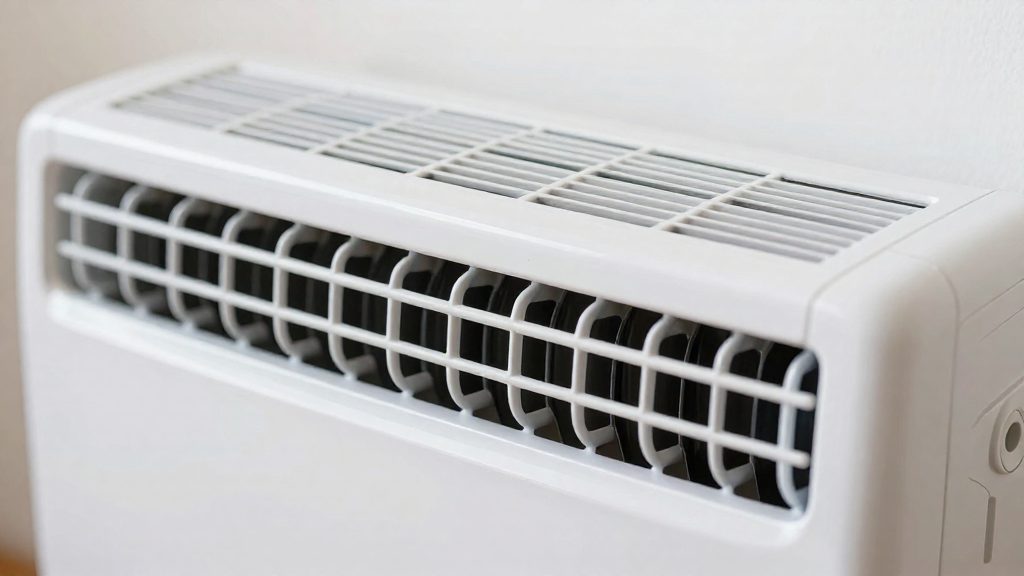
Raising indoor temperature with a thermostat, a propane space heater or a fireplace is a common do-it-yourself idea for bed bug control. The method fails because bed bugs hide in mattress seams, furniture joints and wall voids, where the room air temperature does not reach a lethal level. The equipment also introduces risks to the people in the home.
Carbon monoxide from propane and fireplaces
Propane heaters and fireplaces burn fuel, and combustion releases carbon monoxide, a colorless and odorless gas. In a closed bedroom or a room with little ventilation, it can build up to harmful concentrations without any warning smell. Anyone using a fuel-burning appliance indoors should keep the room ventilated and have a working carbon monoxide alarm installed.
Fire hazards from unattended heaters
Heaters that are left running while nobody is in the room, or that sit near furniture, are a fire hazard. The main risks are:
- Bedding, curtains or upholstery placed within reach of the heater’s surface or flame
- Heaters left on overnight or while the occupant is out of the room
- Heaters placed on uneven floors or near walls where they can tip over
Keep heaters clear of beds, sofas and drapes, and switch them off before leaving the room or going to sleep.
Is steam a safe DIY option?
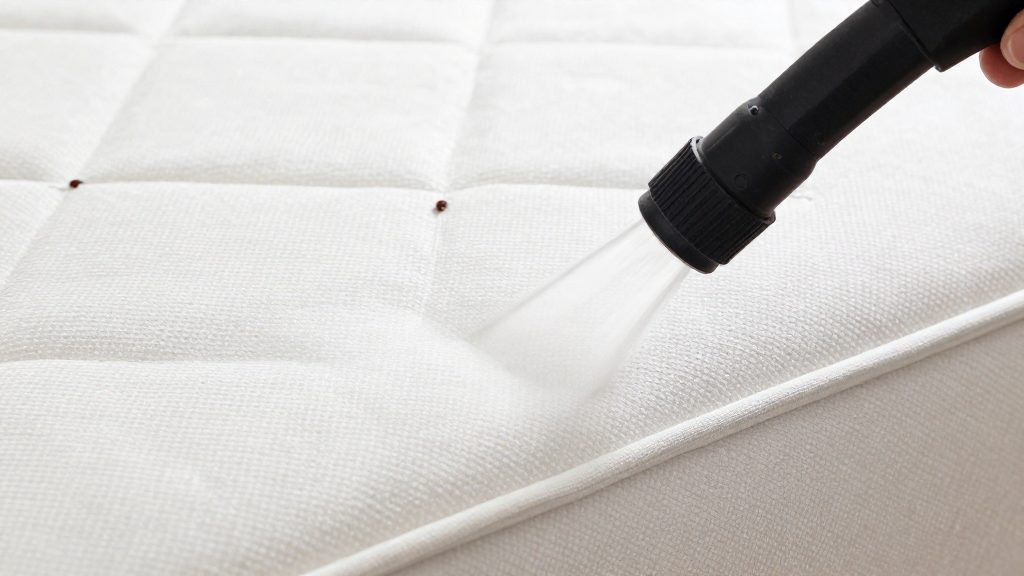
According to the US EPA (2026), a consumer steam cleaner is only a usable home heat tool if it produces steam of at least 130°F, and the unit should use a diffuser so the airflow does not scatter bugs across the room.
To apply steam, move the diffuser slowly along each mattress seam, tuft and furniture joint, since these are where bugs hide. Work across the whole piece rather than only the visible areas, and keep the nozzle at each spot long enough for the steam to penetrate the fabric.
Moisture damage
Steam adds water to every surface it touches. Mattresses can stay damp in the core for a long time, and wood furniture can swell, stain or warp when exposed to repeated moisture. Keep the steam moving, avoid saturating any one area, and let items dry fully before use. Test a hidden spot on finished wood first.
Scalding and electrical hazards
Steam leaves the nozzle hot and under pressure, so keep hands, face and bare skin clear of the outlet. Keep the cord away from the treated area, and unplug the unit before refilling water. Do not operate steam equipment near water, and do not use a unit with a damaged cord or casing.
When to call a professional
DIY heat attempts can fail without any visible sign, so keep inspecting and monitoring after treatment, and call a pest control operator if you see live bugs or fresh signs, or if you cannot be sure every item reached the target.
Professional whole-house heat treatment
A professional whole-house heat treatment covers the entire dwelling rather than a single item or room. Because the operator controls the equipment and temperature settings, homeowners cannot replicate it with domestic appliances. Before booking, ask the provider to describe the method in writing so you can judge whether it covers the areas where bugs were found.
Signs that a DIY heat attempt has failed
- Live bed bugs or shed skins still found in the same places after a DIY treatment
- Bites appearing on sleepers after the treatment is complete
- Signs of activity spreading to rooms or units that were not treated
- Reappearance of bugs after you believed the treatment had cleared them
If any of these appear, stop repeating DIY heat attempts and contact a licensed pest control operator. Repeated home attempts can delay effective treatment.
Questions to ask before booking heat treatment
- Is the treatment whole-house, or limited to one room or item?
- Which equipment will be used, and how is temperature monitored throughout the building?
- What target temperature will be reached, and for how long?
- Will the provider check for live bugs after treatment, and is follow-up included?
- Is the operator licensed, and can they provide proof of license and insurance?
- What preparation is required from occupants?
Frequently asked questions
Can I kill bed bugs on clothes and linens in a standard clothes dryer?
The US EPA lists a clothes dryer on high heat as a home option. The Cornell-cited study behind the commonly quoted figure found that about 120°F held for 30 minutes killed every life stage, eggs included, but dryers vary, so check the drum temperature with an infrared thermometer rather than trusting the dial.
Does a steam cleaner work on a mattress, frame and upholstery?
It can, provided the steam leaving the nozzle is at least 130°F and a diffuser is attached so the airflow does not scatter bugs into other areas. Steam only reaches what the nozzle touches, so seams, joints and folds need to be treated one by one.
When should I stop treating at home and call a pest professional?
If you find live bugs or fresh signs after a heat session, the treatment has not finished the job. The EPA (2026) notes that professionals can use whole-house heat treatment, a more intensive method than DIY options.