Diatomaceous earth (DE) can kill bed bugs, but only those that walk through the powder. Its effect depends on thorough, sustained application, so it works best as one part of a broader control program rather than as a standalone treatment. The sections below cover how DE compares with insecticide sprays, why eggs and newly hatched bugs set the treatment timeline, and what a realistic verdict looks like.
Does diatomaceous earth kill bed bugs?
Yes, under specific conditions. DE kills through contact, so coverage determines results.
Dusting versus insecticide sprays
Changlu Wang, a Rutgers University entomologist, says that thorough application of DE dust is usually more effective than insect sprays against bed bugs, as quoted by AOL. The emphasis falls on how completely the dust is applied. A careful, complete dusting of the areas bugs travel through tends to outperform a spray applied less thoroughly.
Effect on eggs
DE does not kill eggs. Eggs left in place after dusting remain viable, so the powder cannot eliminate an infestation in one pass. The practical target is the newly hatched bugs: once an egg hatches, the young bug emerges and can be killed if it walks through the dust.
How long treatment must continue
Because hatching happens after the initial dusting, treatment must continue until newly hatched bugs contact the powder. Stopping when adult bugs are no longer seen risks leaving hatchlings that have not yet reached the dust.
Verdict
DE is a supplement with real but conditional efficacy. It kills adult bugs and hatchlings that contact the powder, and needs weeks of consistent use to reach the whole population.
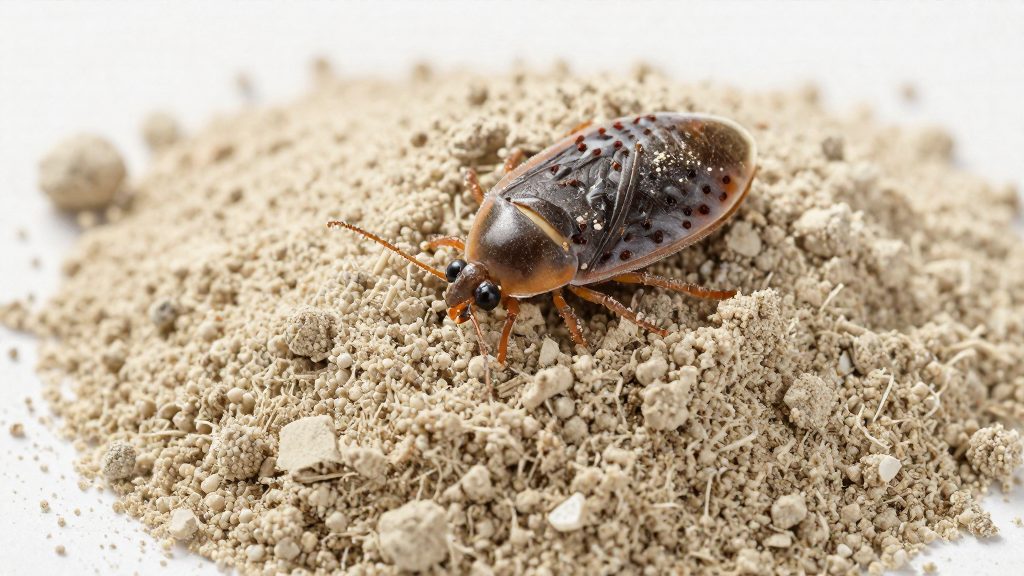
How diatomaceous earth works on bed bugs
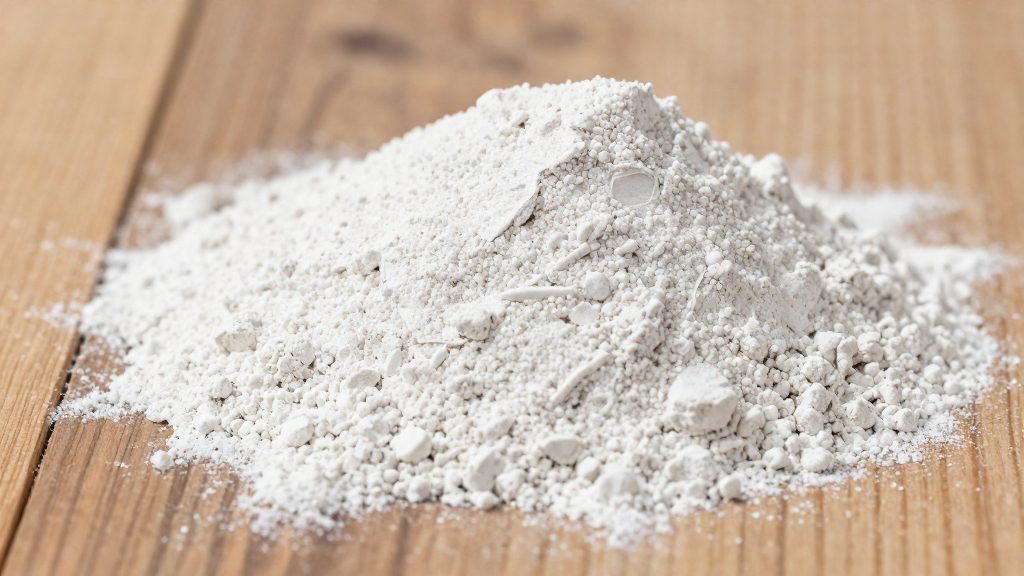
Diatomaceous earth (DE) kills bed bugs through physical desiccation, not chemical toxicity. Bob Vila describes DE as a desiccant rather than a conventional insecticide, so its effect depends on mechanical damage to the insect’s body.
Abrasive particles scratch the exoskeleton. DE is made of fine particles with sharp edges. When a bed bug crawls across the powder, these particles scratch its exoskeleton. The cuticle is covered by a thin waxy layer that limits water loss. Once that layer is breached, the bug loses moisture through its body surface and dehydrates.
Direct contact is required. Because the damage is purely physical, the bug must walk through the powder itself. Dust that the insect never crosses, or particles it cannot reach, have no effect on it. Coverage therefore depends on where bed bugs actually travel, not on how much powder is spread across the room.
Desiccant, not insecticide. A conventional insecticide acts on the insect’s biology after it is absorbed or ingested. DE has no such mode of action. It removes water from the bug’s body, and that loss builds up with each pass through the powder. This slow, cumulative process is why DE treatment must be sustained over weeks rather than applied once.
Food-grade or insect-grade DE: which to use?
Food-grade diatomaceous earth contains no more than 1% crystalline silica, which makes it the safer choice in homes with children and pets, according to Bob Vila. Insect-grade DE can be less pure, so it is the wrong default when young children or animals share the treated rooms.
Because both grades are sold as dusts that look alike, check the packaging before buying:
- Confirm the food-grade designation. The label should state that the product is food-grade, not only “for pest control.”
- Look for the silica limit. Food-grade DE contains no more than 1% crystalline silica, while insect-grade DE can be less pure.
- Do not assume compliance. If the label gives no purity information, do not assume it meets the food-grade limit.
- Match the grade to the household. Use food-grade DE wherever children or pets can reach dusted areas, such as bedroom floors, baseboards and under furniture.
The grade affects who is exposed to the dust, not how the product works, so placement matters more than brand once the correct grade is chosen.
How to apply DE for bed bugs
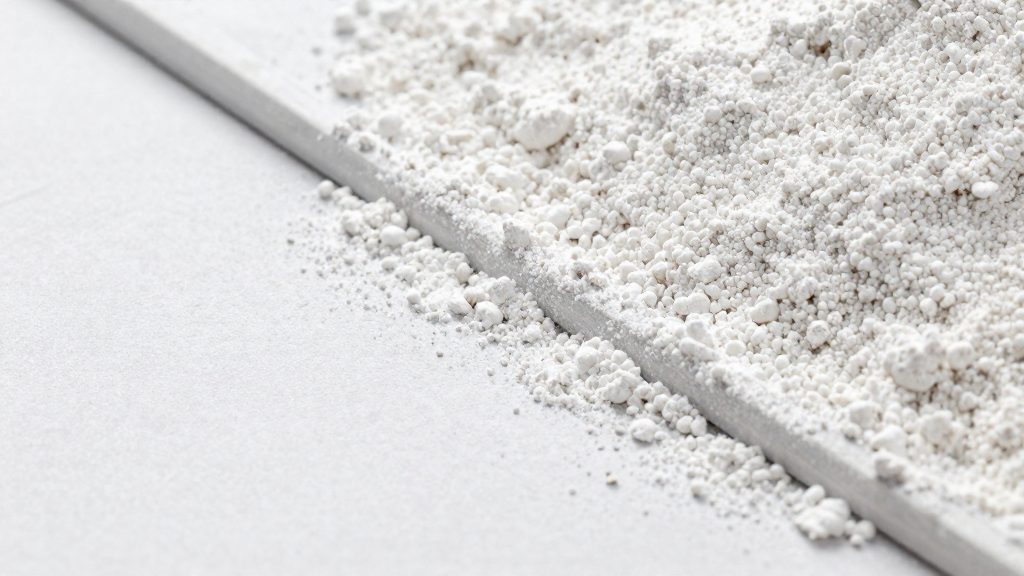
Effective application depends on dust thickness, placement, and upkeep. Aim for a thin, even layer. Too much dust may repel bed bugs, which then avoid the treated area instead of walking through it.
Preparation
- Strip the bed and wash all linens in hot water.
- Clear clutter from the floor and around the bed so the powder can reach the frame and baseboards.
- Vacuum seams and baseboards before dusting.
- Wear a mask and gloves.
Where to dust
Focus on the places bed bugs hide and travel:
- Seams and bed frame: mattress and box spring seams, plus the frame and headboard joints
- Cracks: gaps along baseboards and in furniture
- Furniture legs: the bases of bed and nearby furniture, where bugs climb
- Surrounding areas: the mattress surroundings, drawers, and windowsills
Apply the powder with a duster or applicator, pushing it into seams and cracks. Keep the coverage light across the rest of the area.
Maintenance
Maintenance is what keeps the treatment working: leave the dust undisturbed for about 7 to 10 days, then vacuum the treated areas and reapply.
To combine DE with other methods:
- Steam the seams, frame, and cracks before applying the powder.
- Encase the mattress and box spring to limit bugs’ access to the sleeping area.
How long does it take to work?
Diatomaceous earth (DE) is a slow treatment. According to AOL, a full course takes roughly 3 to 4 weeks of consistent application, and it cannot be judged from one dusting. The course is built from repeated cycles, each with a fixed waiting period before the dust is removed.
Each cycle follows the same sequence:
| Step | Timing | Action |
|---|---|---|
| Apply | Day 0 | Dust thinly over all treated areas |
| Wait | 7 to 10 days | Leave the dust undisturbed; do not sweep, wipe or move it |
| Vacuum | End of the wait | Remove the old dust and debris, including along seams and baseboards |
| Reapply | Right after vacuuming | Dust again and start the next cycle |
Some guidance calls for vacuuming and reapplying every 7 days, which falls at the short end of this 7-to-10-day window. Either way, do not disturb the dust before day 7, and plan each cycle within that range.
Keep a dated log of each application and vacuuming session, so the 3-to-4-week window is easy to track. Continue repeating the cycle until no live bugs appear.
Is diatomaceous earth safe at home?
Fine DE dust is an airborne irritant. The main risks come from breathing it and from contact with skin and eyes during application.
Respiratory irritation
Respiratory irritation is the most significant hazard. Airborne particles reach the nose, throat and lungs, and the effect is stronger in people with asthma. Anyone with asthma or another breathing condition should not apply DE themselves.
Skin and eye contact
Repeated contact with DE can dry out the skin and eyes. Handling the powder without protection exposes the hands and face to the same drying effect, so skin and eye contact should be treated as part of the same exposure risk.
Protective equipment
- Mask and gloves: wear a mask to limit inhalation and gloves to protect the skin whenever you are applying or handling DE dust.
- Wash hands after handling the powder, before touching your face or eyes.
- Clean up dust promptly, so it does not stay airborne in the room.
Re-entry timing
Let the dust settle before re-entering the room. Keep people, especially those with asthma, out of the treated area until airborne dust has had time to settle. Judge this by visibility: if dust is still visible in the air, wait longer.
When to seek emergency help
Severe breathing difficulty requires immediate emergency care. Call 911 rather than treating it as minor irritation.
When to call a professional
Do-it-yourself diatomaceous earth (DE) treatment is a reasonable first step, but it has clear limits. Bob Vila describes a professional exterminator as the most reliable permanent solution for bed bugs, so the decision to escalate should rest on what you observe during and after treatment.
Escalation signals
- Persistence after the full course: If live bugs are still found after you have completed the full, consistent treatment course, vacuumed and reapplied as directed, DIY treatment has not controlled the infestation.
- Spread to multiple rooms: Activity in rooms beyond the bed area, or in several rooms at once, means the infestation is no longer confined to one spot and needs treatment across the whole dwelling.
- Spread to adjoining units: Bugs moving between your home and neighbouring apartments or rooms cannot be cleared by treating one unit alone.
Choosing a licensed pest control operator
Before booking, confirm that the company holds a pest control license for your state or locality. Ask for an on-site inspection before accepting a quote, since the inspection determines which rooms and adjoining spaces need treatment.
Once the inspection is done, ask the operator to explain:
- Which treatment methods they plan to use, and whether they include DE or other dust-based products.
- Which rooms and areas will be treated.
- How they will confirm the infestation has been cleared after treatment.
Compare written quotes that list the same scope of work, so you can see exactly what each company includes.
Frequently asked questions
Is food-grade diatomaceous earth safe to use around children and pets?
Food-grade DE contains no more than 1% crystalline silica, which makes it the safer choice in homes with children and pets, according to Bob Vila. Insect-grade DE can be less pure, so check the label before buying. Inhaling the dust can irritate the nose, throat and lungs, so wear a mask and gloves during application.
How long does a DE treatment take before bed bugs are gone?
Plan for roughly 3 to 4 weeks of consistent application, according to AOL. Leave the dust undisturbed for about 7 to 10 days, then vacuum and reapply, combining each round with steam, mattress encasements and vacuuming.
Can I apply too much diatomaceous earth?
Yes. AOL reports that heavy layers can repel bed bugs, which then avoid the powder instead of walking through it. A light, even film is more effective than a thick pile.