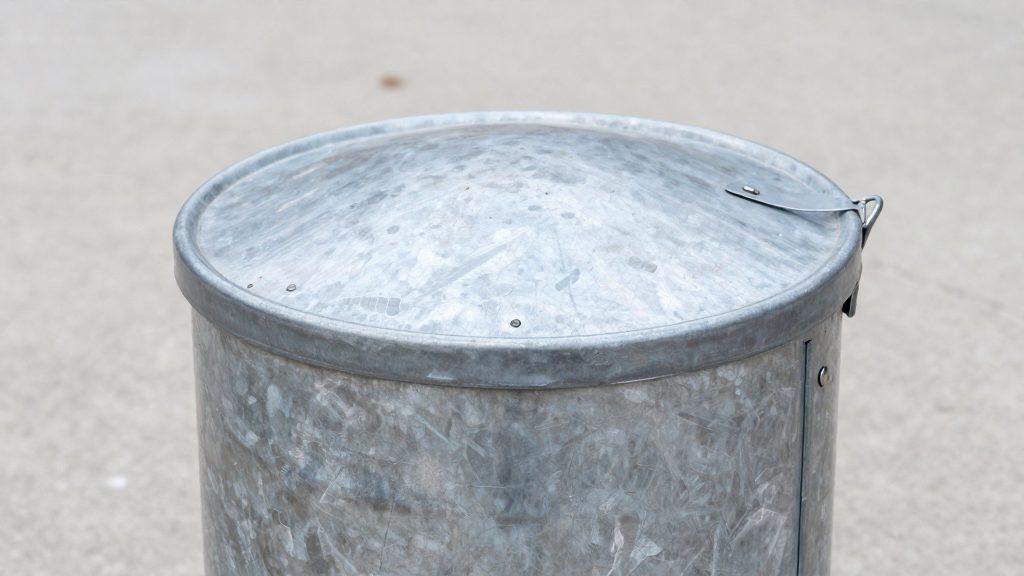
Pests head for outdoor trash cans because food residue and its odours carry over distance, and a can holding leftovers offers a steady meal. Rodents, raccoons and flies all respond to these cues, and the attraction builds when scraps stay in the can for days. Reducing the food and odour inside the can, by bagging food waste in heavy-duty bags and limiting how long those bags sit outside, removes most of the draw at its source.
Why do pests raid outdoor trash cans?
Food residue is the main draw. Rats, mice, raccoons and flies all feed on leftovers, and a can holding scraps, meat trimmings or dairy gives them a repeated food source. Raccoons locate cans by smell and will tip them over to reach what is inside, so residue that remains on the walls and base continues to attract them after the visible food is removed.
Odours make a can detectable from a distance. Food waste releases volatile compounds that spread through the air and escape through gaps around the lid.
Bagging food waste before disposal
Place all food waste in heavy-duty bags before it goes into the can. Bagging keeps residue off the can walls and seals odours inside the bag. Tie each bag closed, and never drop loose scraps directly into the can.
Timing the move to the curb
According to Aptive Pest Control (2026), bags containing food should be moved to the outdoor trash can only one or two nights before pickup. Each extra night a food bag sits outside extends the period in which pests can detect it, so holding bags indoors until shortly before collection reduces that window.
Outdoor bin securing and maintenance methods, with their key specifications.
| Method | Use or target | Specification | Source |
|---|---|---|---|
| Ratchet straps with two hooks | Locking the bin lid | Run side to side, not front to back, for the strongest seal; installation takes about five minutes | Hunker (2025-12-14) |
| Bungee cord across the lid | Smaller pests | Blocks access to the bin | Aptive Pest Control (2026-05-21) |
| Tying cans to a pole or tree, or storing them in a metal or plastic shed | Raccoons tipping cans | Prevents raccoons from knocking the bin over | Aptive Pest Control (2026-05-21) |
| Heavy-duty bags for food waste | Food waste | Bag all food waste; move food-containing bags to the outdoor bin only one or two nights before pickup | Aptive Pest Control (2026-05-21) |
| Fiberglass tape and epoxy | Damaged bins | Clean the can and patch holes; replace the bin if repair is not possible | Aptive Pest Control (2026-05-21) |
| Ammonia and water, 1:1 | Outdoor bins only | Can irritate people and pets; never mix with bleach, as the mix produces toxic gases | Aptive Pest Control (2026-05-21); general chemical safety guidance |
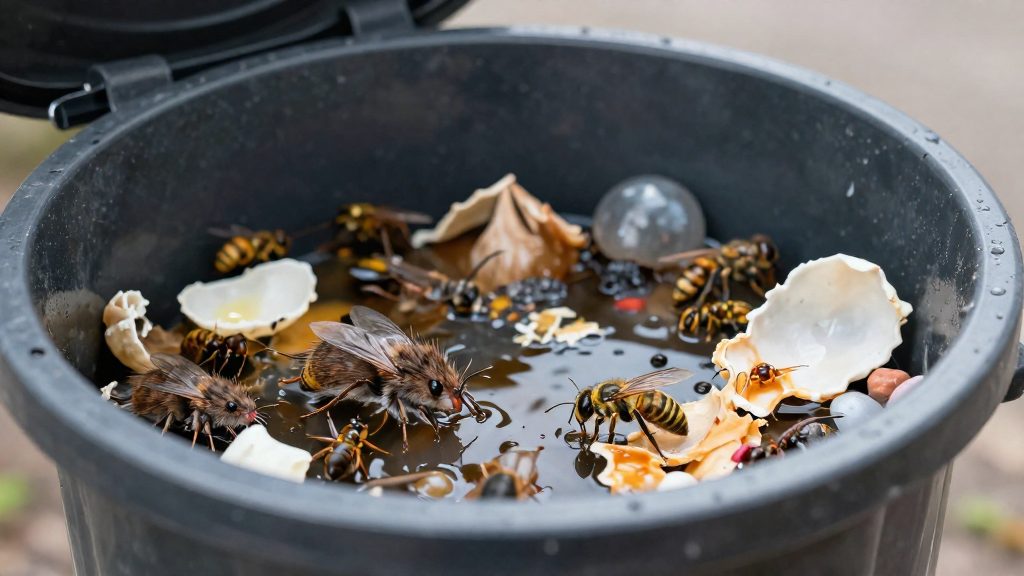
What makes a trash can truly pest proof?
A pest-proof outdoor bin depends on three physical conditions: the lid seats fully against the body, the walls and base have no openings, and the volume is large enough for the lid to close over the contents. Pests enter through any gap they can reach, so the test is a hands-on inspection of the bin rather than a check of its label.
Lid seal fit
Check that the lid sits flush on the rim all the way around. Press down on each side in turn and look for daylight at the edge. A lid that rocks, sits unevenly, or lifts at one corner leaves a path for insects and rodents.
Wall integrity and seams
Walk around the body and inspect for holes, cracks, and split seams, including at the base where water collects. Holes can be cleaned and patched. If the damage is too large or too widespread to repair, replace the bin.
Capacity matched to waste volume
Choose a bin large enough that household waste does not press against the lid. An overfilled bin cannot close fully, which leaves an opening that a fully sealed lid would prevent. Estimate how much waste the household produces between pickups and select a size that holds that volume with room for the lid to close. Confirm with the waste hauler that the bin is accepted before purchase, because many municipal or private haulers collect only bins bearing their own logo, according to Hunker (Static Media, 2025-12-14).
Does bin material and wall condition matter for rodents?
The sources do not compare bin materials for rodent resistance, so the practical step is to check the condition of every bin. Check every bin for cracks, chewed or torn edges, split seams and gaps, and repair or replace any bin that shows them.
Openings around the rim, handles and base
Inspect the points where a bin is most likely to open: the rim where the lid seats, the handles, every seam and the base. Look for cracks, splits and gaps at each. Any opening the lid cannot cover should be patched or the bin replaced, following the steps in the repair section below.
Repeat the check after each collection, and after any impact or fall that could crack the walls or base.
How do you secure a lid that doesn’t lock?
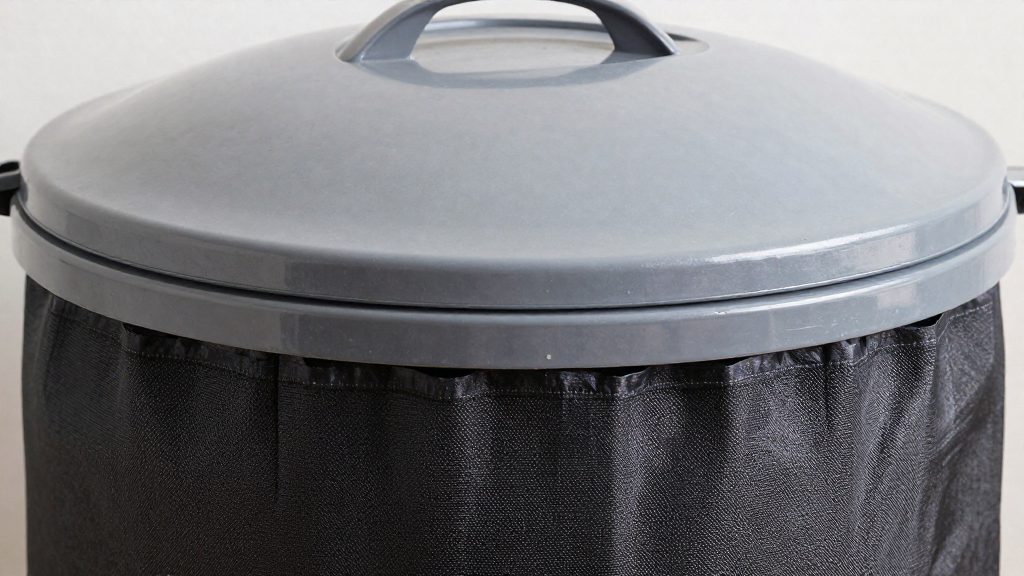
A bin with a lid that has no latch can still be held shut with ratchet straps or a bungee cord. Ratchet straps hold the lid firmly, while a bungee cord is the lighter option. A bungee cord stretched across the lid is the lighter option. Both methods work on the lid as it is, so the bin itself does not need modification.
Two-hook ratchet straps
Two-hook ratchet straps can lock a bin lid. Fix one hook to a fixed point on one side of the bin, pass the strap over the closed lid, and fix the second hook on the opposite side. Tighten the ratchet until the lid sits flat against the rim with no visible gap, then check that both hooks are fully seated.
Installation takes about five minutes per bin, according to Hunker (Static Media, 2025-12-14). Repeat the steps for each bin.
Bungee cord across the lid
A bungee cord stretched across the lid blocks smaller pests, according to Aptive Pest Control (2026-05-21). Hook one end to the bin on one side, press the lid down, and stretch the cord to the opposite side. Keep the cord taut enough that the lid cannot lift at the edges.
Because a bungee cord is easier to stretch than a ratchet strap is to tighten, it is quicker to fit and to remove. For bins where raccoons are present, also tie the bin to a fixed point or store it in a shed.
Keep bins from tipping and away from the house
Raccoons are the pest most likely to knock over an outdoor bin, so the first step is to stop the bin from moving. According to Aptive Pest Control (2026), tying the bin to a pole, tree or fence keeps raccoons from tipping it. Wrap a strap or chain around both the bin handle and the fixed post, and check the knot after each collection so it stays tight.
Storage in a shed removes the bin from reach altogether. Aptive Pest Control (2026) also lists a metal or plastic shed as a way to keep raccoons from tipping bins. Keep the bins inside the shed between collection days, not only on the day of pickup, and make sure the door closes fully.
Placement reduces how often pests reach the bin in the first place. Position bins away from house walls, windows, doors and vents, so that rodents and insects drawn to food waste are not led toward entry points. Keep the ground around the bins clear of debris, stacked firewood and tall vegetation, which give animals cover while they work at the lid or base.
Clean and repair your bins
Keeping an outdoor bin sealed depends on two routine tasks: removing food residue from the can and lid, and closing any hole before pests use it. Residue builds up on the inner walls and underside of the lid.
Routine cleaning of the can and lid
Empty the bin completely, then scrub the interior and the underside of the lid with hot water and dish soap. Pay particular attention to the seam where the lid meets the rim, because residue collects there. Rinse thoroughly and leave the bin to dry with the lid open before closing it. Residue and moisture left inside give pests a food source, so drying matters as much as washing. Clean again whenever residue is visible, including after a spill.
Patching holes with fiberglass tape and epoxy
Clean the area around the hole and let it dry completely, since epoxy will not bond to a wet or greasy surface. Cut a piece of fiberglass tape large enough to cover the hole with a margin on every side. Apply epoxy to the bin around the hole, press the tape into it, and coat the tape with more epoxy so it is fully sealed. Follow the cure time printed on the epoxy packaging before putting the bin back into use. Check the patch after the first few collections.
Replacing a bin when repair is not viable
Replace the bin when damage is too large or too widespread to patch, or when a patch no longer holds. Before buying a new bin, confirm with your collection service which containers it accepts. According to Hunker (2025), many municipal or private haulers collect only bins bearing their own logo, so a lockable bin may not be an option in your area.
Keeping the lid closed
A repaired or replacement bin only stays sealed if the lid stays shut. For a stronger hold, Hunker (2025) reports that ratchet straps with two hooks can lock the lid. Run the straps side to side rather than front to back for the strongest seal. Installation takes about five minutes.
Do ammonia or bleach keep pests away from trash cans?
Ammonia and bleach are common cleaners for outdoor bins, but the cited guidance does not support either one as a pest repellent. According to Aptive Pest Control (2026), a 1:1 mix of ammonia and water may be used on outdoor bins only, because it can irritate people and pets. The source does not present the mix as a way to keep animals away, so treat it as a cleaning step, not a barrier against raccoons, rats or insects.
If you use the ammonia mix, follow these limits:
- Measure equal volumes of ammonia and water.
- Use it only on outdoor bins, never on indoor containers or surfaces that touch food.
- Keep children and pets away from the bin until the surface is dry.
- Work in a ventilated area.
Bleach has no repellent role in the cited guidance, so it should not replace the physical methods covered elsewhere in this article, such as securing lids and limiting access to food waste.
Frequently asked questions
Do ammonia or bleach keep pests away from outdoor trash cans?
Ammonia is not a documented repellent. A 1:1 mix of ammonia and water is limited to outdoor bins because it can irritate people and pets. Never mix ammonia with bleach, since the combination releases toxic gases.
What stops raccoons from tipping a trash can over?
Tying the can to a pole or tree, or storing it in a metal or plastic shed, keeps raccoons from tipping it. For smaller pests, a bungee cord stretched across the lid blocks access to the bin.
How do I tell whether an outdoor bin is still pest-proof?
Check the lid, rim, seams and base for cracks, chewed edges, thin spots and gaps. Small holes can be cleaned and patched with fiberglass tape and epoxy. A bin that is too damaged to repair should be replaced (Aptive Pest Control, 2026).