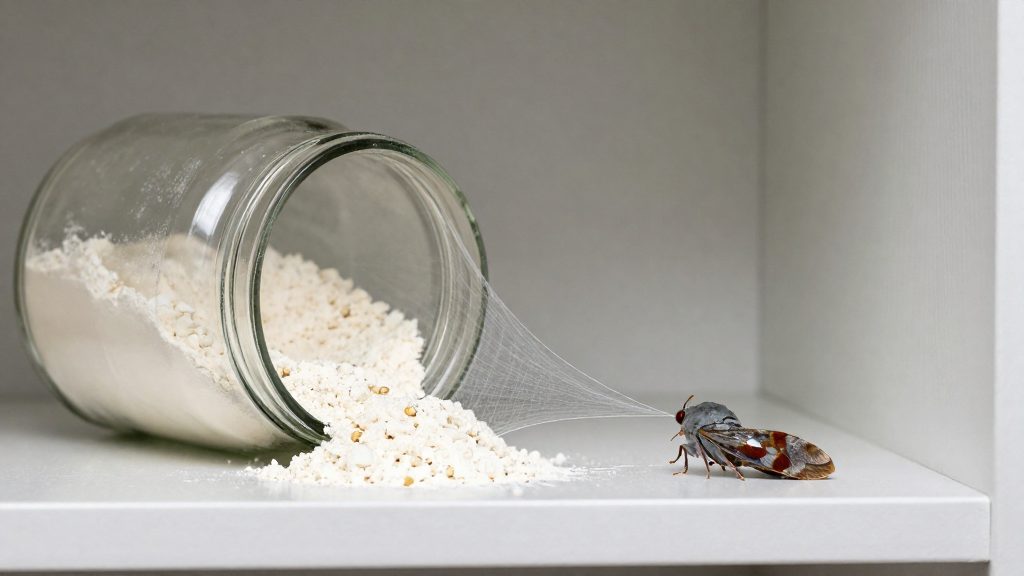
Are Pantry Moths Harmful to Eat?
Accidental ingestion of a pantry moth is generally not harmful, according to Utah State University Extension (2013-01-11). This is a general finding, not a guarantee for every case, and it does not mean infested food should routinely be eaten.
Pathogen transmission is the second point. Cornell University Integrated Pest Management states that pantry moths are not known to transmit human pathogens.
Contaminated food carries the real risk.
How Larvae Damage Stored Foods
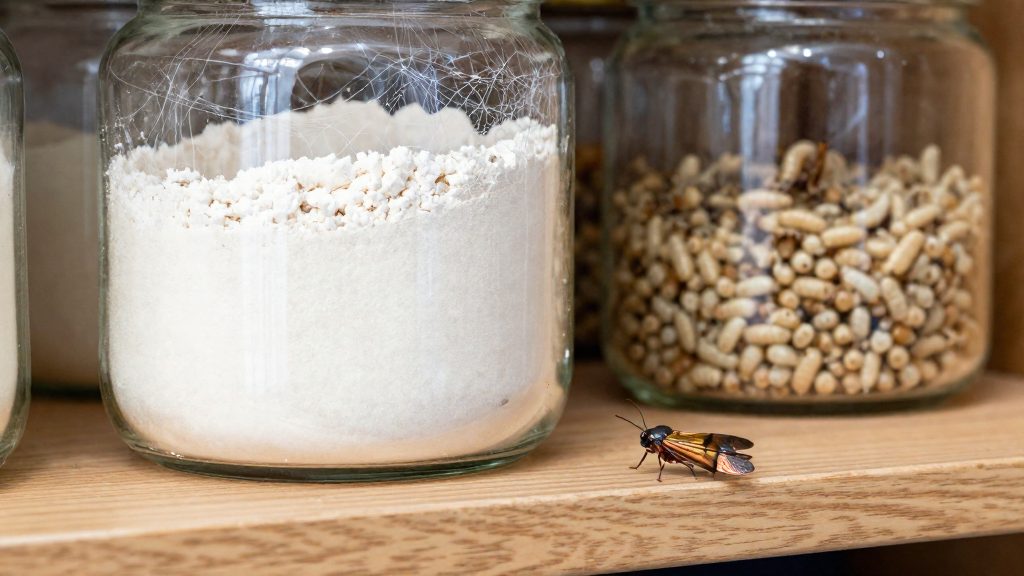
The larval stage is where the damage to food happens, so the key distinction is between the insect itself and the food it has altered.
In Indianmeal moths, only the larvae feed on stored foods; the adults do not. Other pantry moth species also have larvae that feed on stored products. Susceptible products include grains, cereals, dried fruit, seeds, nuts, powdered milk, chocolate, spices, dry pet food and birdseed.
How Pantry Moths Contaminate Food
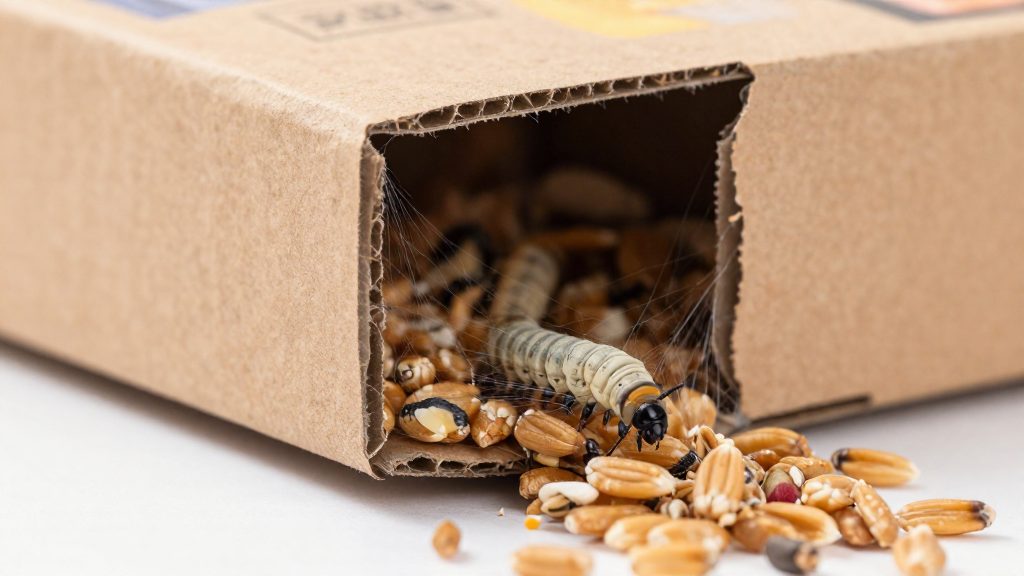
Pantry moths contaminate food mainly through what they leave behind and how they move through it. According to Cornell University Integrated Pest Management, they contaminate food with droppings, shed exoskeletons and insect life stages at every stage of development, from egg to adult. The contamination is physical: the material is mixed into the grain, flour, nuts or dried fruit and cannot be separated by simply shaking the package.
Droppings, Shed Skins and Life Stages
The larvae feed on the stored product and produce frass, the solid waste that accumulates inside packaging and in the corners of containers. Each larval molt leaves behind a cast skin, and the larvae, pupae and adults themselves end up in the food. Contamination therefore increases as the infestation grows, because every generation adds more waste and remains.
Molds and Bacteria Spread by Insect Activity
Insect activity in stored food can introduce and spread molds and bacteria, according to Utah State University Extension (2013). The risk comes from the spoilage and secondary organisms that the insects introduce.
Practical Checks
- Inspect incoming products before storing them.
- Look for frass or small larvae in the seams, corners and lids of packages.
- Vacuum cabinets, shelves, cracks and corners, and empty the vacuum outside the home to prevent reinfestation.
Signs Your Pantry Food Is Infested
Start with the packages that are open, torn or resealed. Check these first, then the items stored nearby.
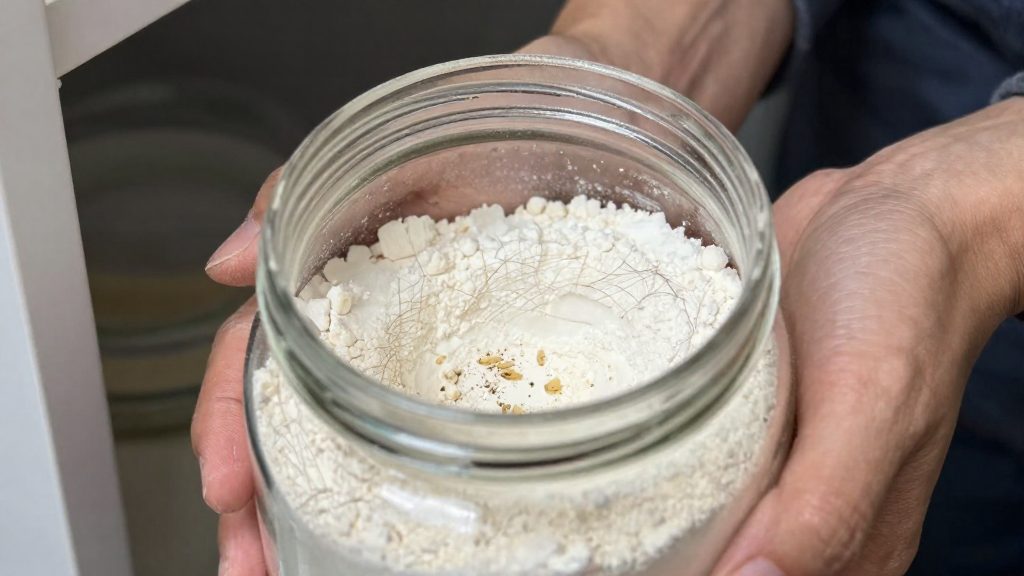
Silk webbing is the clearest visual sign. According to University of Minnesota Extension, silk webbing on a product’s surface indicates infestation. Look for fine threads or clumps on the surface of flour, cereal, nuts and dried fruit, and inside the folds and seams of packaging. Indian meal moths also leave webbing, according to Cornell University Integrated Pest Management.
Damaged food may also show abnormal colors, flavors or odors. Treat any product with an off smell, unusual discoloration or a sour or musty taste as suspect, even if no insects are visible.
| Food type | What to inspect |
|---|---|
| Grains, cereals, flour | Webbing on the surface, clumps, off odor |
| Dried fruit, nuts, seeds | Webbing in packaging folds, discoloration |
| Chocolate, spices | Webbing, changes in color or smell |
| Powdered milk, dry pet food, birdseed | Webbing and surface disturbance |
Check the food after inspecting the packaging, since moths and larvae can be hidden inside sealed bags. If infestation is confirmed, follow the cleaning steps covered in the removal section.
Should You Throw Infested Food Away?
University of Minnesota Extension recommends discarding infested food.
| Food condition | Action |
|---|---|
| Droppings, shed exoskeletons or insect life stages present | Discard |
| Contact with a household insecticide | Discard |
Household insecticides do not reach insects inside food packages, so spraying an infested product does not make it safe to keep. Killing the insects does not prove that the food is safe.
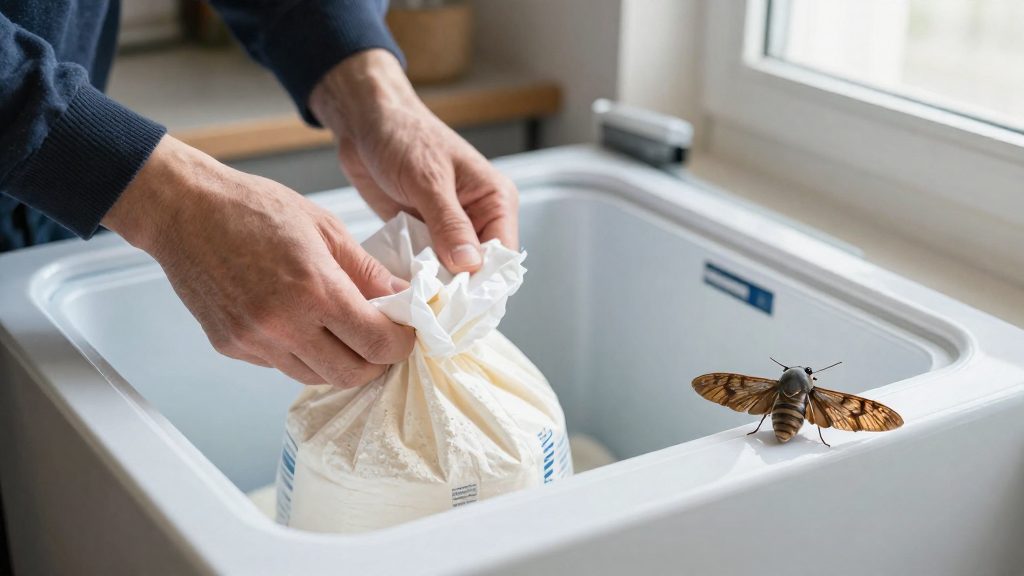
To dispose of infested products, seal them in a bag before placing them in an outdoor waste bin, so that adult moths and larvae cannot escape inside the house. Check the manufacturer’s instructions on the product label for any specific disposal guidance.
How to Remove Pantry Moths
Removal combines physical cleaning with monitoring. Pantry moths leave droppings, shed exoskeletons and insect life stages behind, so cleaning has to reach every surface where these residues collect. Monitoring then shows whether any adults are still active.
Vacuum Cabinets, Shelves, Cracks and Corners
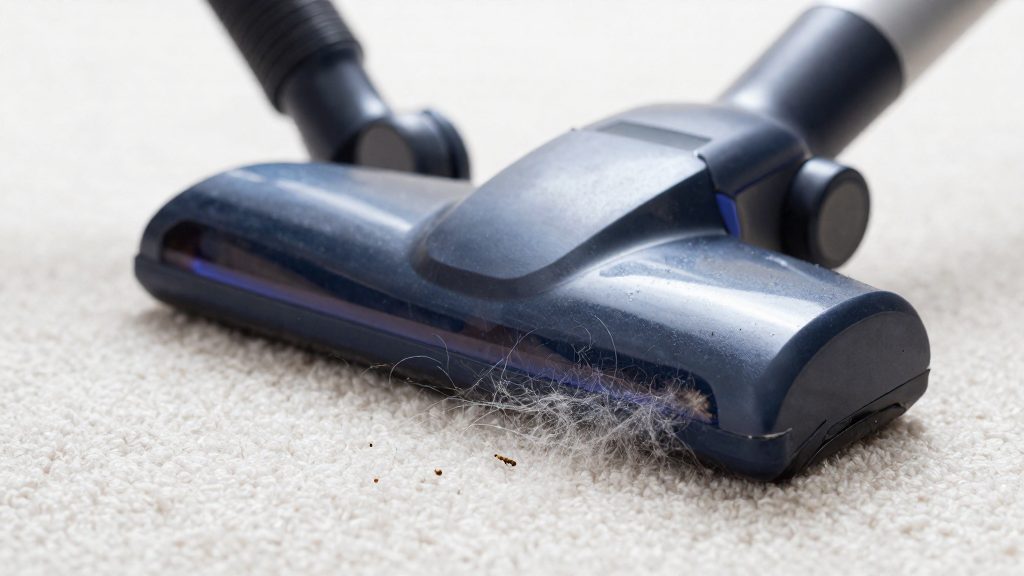
According to the University of Minnesota Extension, vacuuming cabinets, shelves, cracks and corners is the recommended cleanup step. Work through each area in this order:
- Cabinet interiors, including the back wall and the floor
- Shelves, including the front edges and undersides
- Cracks and corners, where shelves meet walls and where seams and joints open up
A narrow crevice nozzle reaches cracks and corners better than a standard floor head. Vacuum slowly so that loose debris is lifted rather than pushed along the surface.
Empty the Vacuum Right Away
Empty the vacuum after each cleaning session, not later. Insects and debris collected in the canister can otherwise be released back into the kitchen, which can restart the infestation. Seal the contents in a bag and place it in an outside bin.
Use Pheromone Traps to Monitor
Indian meal moth pheromone traps attract adult males, not females, so they show male activity rather than the full population. According to the University of California Statewide Integrated Pest Management Program, they can help detect moths that remain after the infestation source has been removed. Check them regularly after cleaning. Continued catches indicate that adults are still present and that cleaning or inspection should be repeated.
Preventing Another Pantry Moth Infestation
Long-term prevention depends on three habits: checking food before it enters the pantry, keeping vulnerable products sealed, and using older packages first. Utah State University Extension identifies these three measures as helping to prevent pantry moth infestations.
Inspecting Incoming Food
Check every new bag, box and package before shelving it. Look for moth life stages, droppings or shed skins. Reject or return any package that shows these signs, and do not place it beside unopened stock. Pantry moths can arrive inside products bought from a store, so inspection at the point of purchase is the first control.
Storing Susceptible Products in Pest-Proof Containers
Transfer susceptible products from thin paper or cardboard packaging into rigid, sealed containers. Pest-proof containers prevent larvae from reaching the food and stop adults from laying eggs inside an opened package.
Using Older Stock First
Stock rotation means moving older packages to the front and placing new purchases behind them. Using older food first helps reduce prolonged storage, but foods of any age can become infested. Label containers with purchase dates and check older items first during each restocking.
| Measure | Target | Purpose |
|---|---|---|
| Inspection | Every incoming package | Stops infested goods from entering the pantry |
| Sealed containers | Susceptible products | Blocks larvae and adult access |
| Stock rotation | All stored products | Limits time that food remains undisturbed |