Is This a Bald-Faced Hornet Nest?
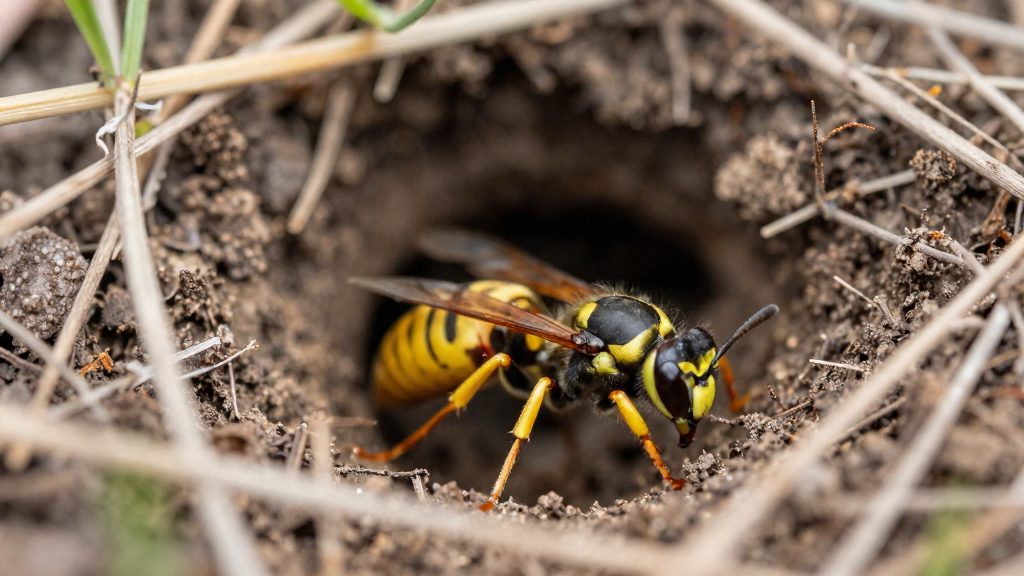
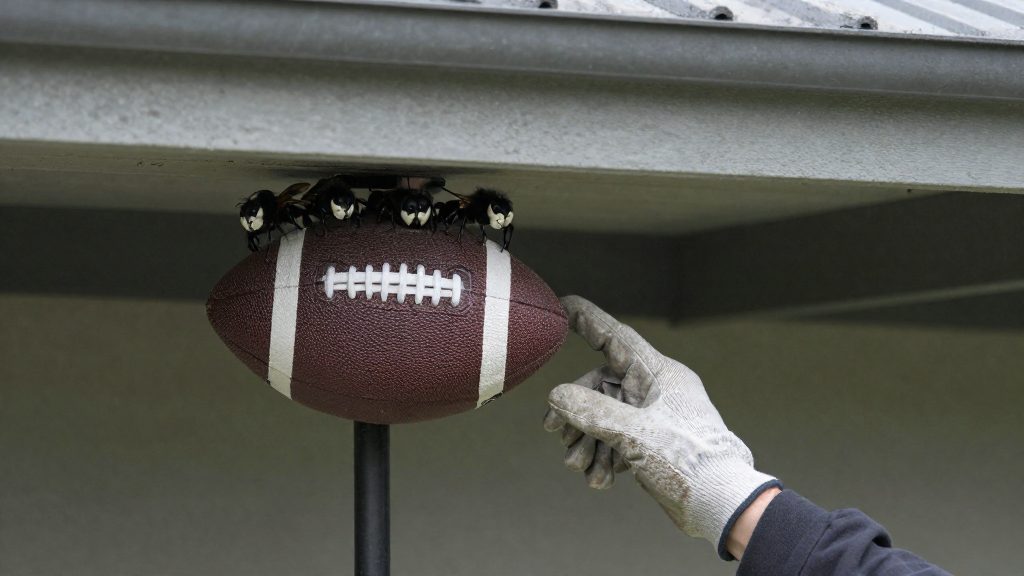
Bald-faced hornets are aerial yellowjackets with black-and-white coloring and a mostly white face. Their nest is recognizable by its shape, position and outer covering, and these three features can be checked from a distance before anyone approaches it.
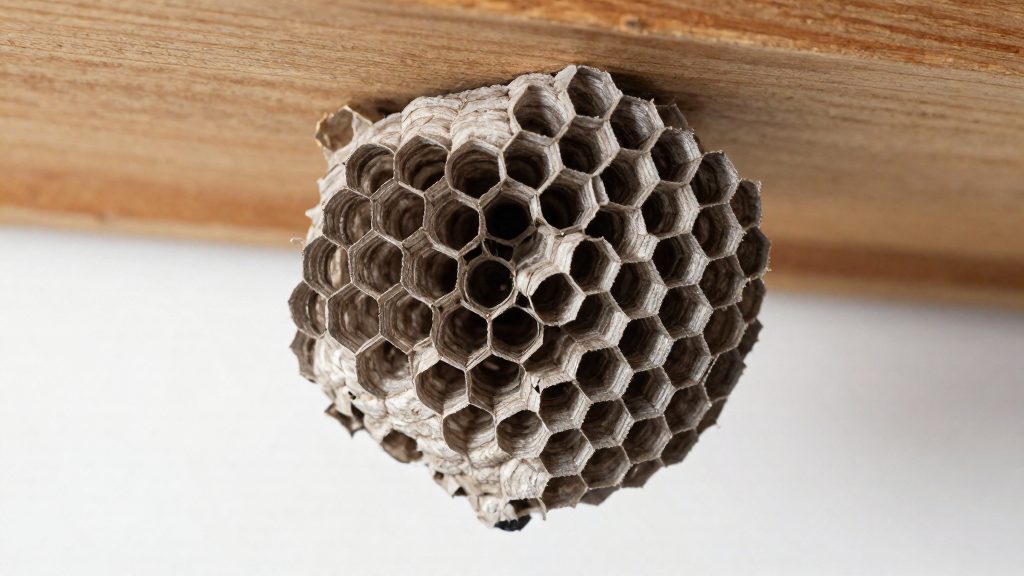
The nest has a thick, paper-like outer envelope that encloses the comb, so the inner structure is not visible from outside. According to Virginia Cooperative Extension (2020), this papery envelope is the key visual marker.
Look for the nest where it hangs. Bald-faced hornets build beneath eaves or on other sheltered structures. On a shed, that means the underside of the roof overhang, the edges of the eaves and any sheltered ledge or fixture. Iowa State University Extension and Outreach (2023) describes these nests as hanging in these locations, and the University of Minnesota Extension notes that they may be on or around buildings and can be inside a building when the nest is within it.
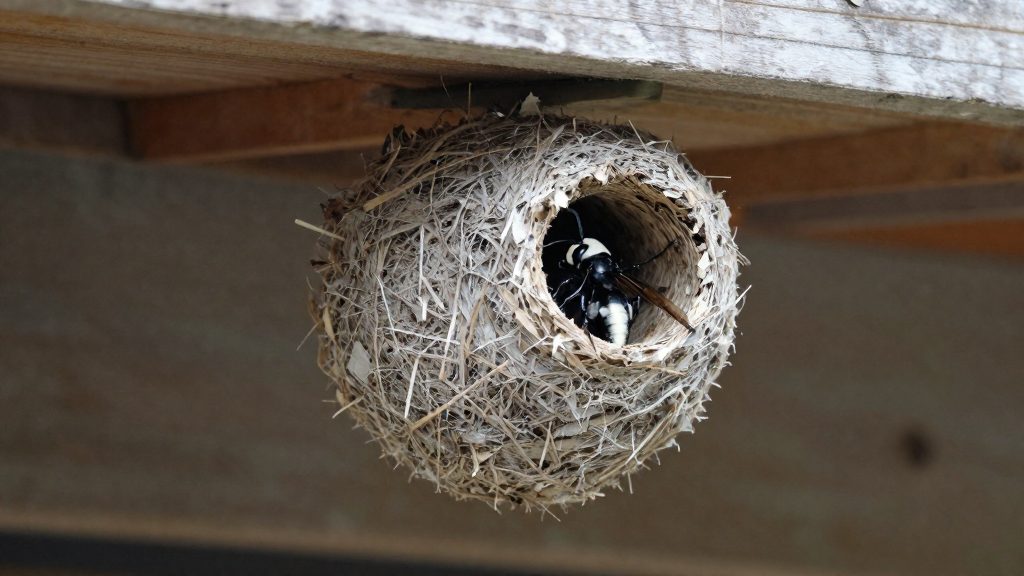
Check the bottom of the envelope. The nest has a single entrance near the bottom, which is the opening workers use to come and go. A nest with one opening at its base, hanging under cover, matches the bald-faced hornet pattern.
| Feature | What to look for |
|---|---|
| Insect | Black-and-white body, mostly white face |
| Nest envelope | Enclosed, thick, paper-like outer layer |
| Location | Beneath eaves or other sheltered structures |
| Entrance | One opening near the bottom of the envelope |
Does Your Shed Nest Need Removal?
Whether a bald-faced hornet nest in a shed needs control depends mainly on how close it sits to routes that people use. Bald-faced hornets are aerial yellowjackets. Locating the entrance tells you which doorway, window or work surface lies in the insects’ flight path.
Nests Near Frequently Used Doorways
According to Iowa State University Extension and Outreach (2021), a nest near a frequently used doorway or another busy area can justify control. A shed nest can be reached by anyone who opens the door.
Disturbance is the trigger for stinging. Iowa State University Extension and Outreach (2023) states that disturbing a bald-faced hornet or its nest can provoke stinging. University of Maine Cooperative Extension reports that attacks may occur with little provocation, so the entrance area should be treated as a hazard zone regardless.
When a Nest Can Be Left Alone
Iowa State University Extension and Outreach (2021) states that nests away from human activity should generally be left undisturbed. A nest from a previous season in a rarely opened shed does not pose the same ongoing exposure as an active one.
Matching the Decision to Shed Use
| Shed use | Nest location | Suggested approach |
|---|---|---|
| Routine entry, such as daily tool or bike retrieval | Entrance on or beside the usual path to the door | Control can be justified under the doorway guidance |
| Workshop with regular occupancy | Nest within sight of the work area | Control can be justified; treat as a busy area |
| Storage only, rarely entered | Nest high on a far wall or eave, away from the door | Generally leave undisturbed and avoid disturbing the entrance |
Before deciding, count how often the shed is opened in a typical week and note the nest’s distance from the door. A nest that people pass within arm’s reach of every day falls under the control guidance, while one that is seldom approached generally does not.
When Should You Call a Professional?
Three situations justify handing a bald-faced hornet nest in a shed to a pest control professional. The first is a known sting allergy in anyone who uses the shed. Iowa State University Extension and Outreach (2023) recommends professional help for people with known sting allergies. Check the allergy status of everyone who regularly enters the shed, not only the owner.
The second is uncertainty about whether treatment killed every wasp. Iowa State also recommends professional help when you cannot tell whether all the wasps are dead. If you are unsure whether treatment killed all the wasps, Iowa State recommends professional help before the nest is removed.
The third is a nest that cannot be reached safely from the ground. A nest high on a gable or under a roof edge usually requires a ladder and close access to the nest, which combines fall risk with stinging risk.
A nest inside a wall or ceiling needs separate handling. University of Maine Cooperative Extension advises against plugging the active entrance of a wall nest, because insects may then appear inside the structure.
Treatment Precautions Around Your Shed
Treat a bald-faced hornet nest only when it sits beside a frequently used doorway or another busy part of the shed. According to Iowa State University Extension and Outreach (2021), nests away from human activity should generally be left undisturbed. University of Maine Cooperative Extension notes that attacks can occur with little provocation, so approach the nest as if it may respond at any time.
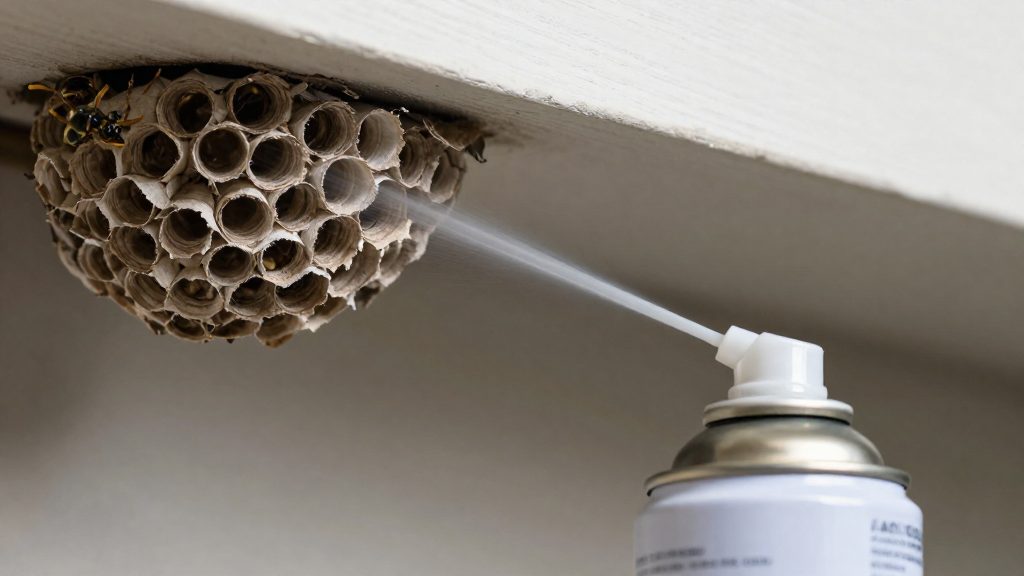
When insecticide is necessary, Iowa State recommends nighttime treatment, along with protective clothing and following every direction on the insecticide label. Wear clothing that covers the whole body, including the face, neck, and hands, and keep it fastened throughout the operation.
Label directions set the product’s permitted use. Check the label for the target pest, application method, and any required distance or waiting period before opening the container. Where the label is unclear, contact your local extension office or the manufacturer rather than improvising a dose.
Removing the Nest After Treatment
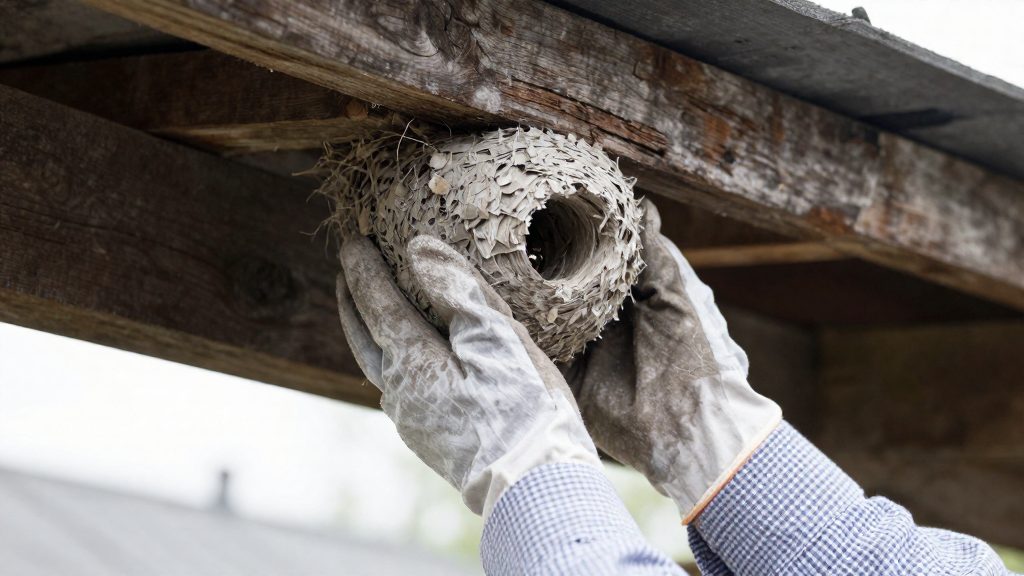
Leave the nest in place after treatment. According to Iowa State University Extension and Outreach (2021), a treated nest should remain until all wasps are dead, which may take a day or two because some foraging workers are absent during treatment and return to the nest afterward.
Waiting for Returning Workers
Workers that were away from the nest when the insecticide was applied are not dead yet. They may come back over the following day or two, so a nest that appears quiet immediately after treatment may still hold live hornets. Removing it early means disturbing the colony while these workers are still active.
Checking the Entrance Before Removal
Before removal:
- Watch the entrance from a safe distance at intervals across the waiting period.
- Watch for hornets entering, leaving, or moving at the opening, but do not treat an apparently quiet entrance as proof that all wasps are dead. If you cannot determine whether treatment killed all the wasps, contact a pest control professional before removing the nest.
- If activity continues at the end of the waiting period, do not remove the nest yet. Keep watching and wait longer.
- Keep disturbance to the nest as low as possible once you begin.
Wait times vary by product, so follow the interval printed on the insecticide label.
Can You Wait Until Winter?
Leaving an unremoved nest until colder months is possible, but the colony does not stay static. According to Virginia Cooperative Extension (2020), bald-faced hornet workers die in autumn frosts, so the colony shrinks through the season rather than persisting at full strength.
The colony’s future depends on mated queens. Fertilized future queens leave the nest and overwinter in sheltered places, then start new nests in spring. The original nest does not survive as a home for them, and the old nest is not reused the following year.
This has two practical consequences:
- The nest is not a permanent problem. Once the workers die off, the remaining activity is limited to the queens, who leave the nest in autumn rather than staying in it.
- The calendar is not a reliable guide. No date guarantees that a nest is inactive across the United States, so a nest should not be assumed empty because the season has changed.
Before deciding to wait, check whether the nest is still active by watching the entrance during warm daytime hours. An active nest will show regular traffic of workers flying in and out.
Preventing Wasp Problems Around Your Shed
Prevention targets the overwintered queens that start new nests in spring, and the food sources that draw foraging workers to the shed.
Inspecting eaves and sheltered structures early in the season
Check the shed’s eaves and other sheltered spots in spring, when fertilized queens begin new nests. Nests can also be built on or around buildings, so inspect the full roofline and any ledges or overhangs.
Sealing entry points
Close gaps in the shed’s walls and structure so wasps cannot reach enclosed voids where a nest could be built. Concealed cavities are the main concern.
Do not plug an active entrance. University of Maine Cooperative Extension advises against this for nests inside walls, because insects may then appear inside the structure. Seal a gap only once the nest is no longer active.
Removing attractants
Remove food waste from the area around the shed frequently, and keep trash cans tightly covered. Frequent waste removal and covered cans reduce encounters with yellowjackets and other stinging wasps, according to University of Maine Cooperative Extension. Clean up sugary residues such as spilled drinks, fruit and food scraps near the shed, since these draw foraging wasps.