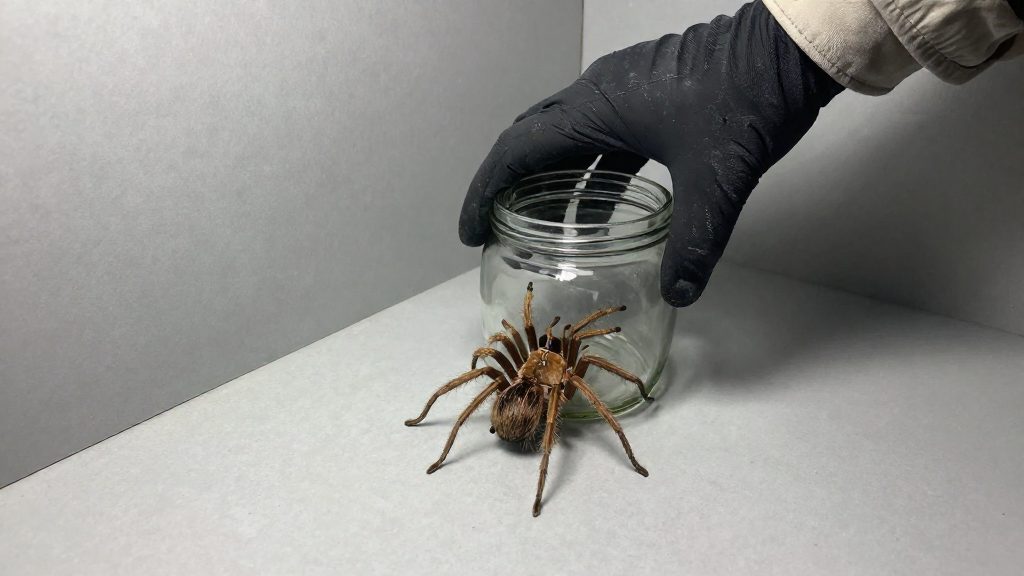
When you find a suspected brown recluse, the first priorities are to contain it, document it, and have it identified before drawing conclusions about your home. Containing the spider prevents it from escaping or reaching you, and clear photographs give an expert something to assess. The steps below focus on containment, photography, and professional confirmation, in that order.
Found a Brown Recluse? Start Here
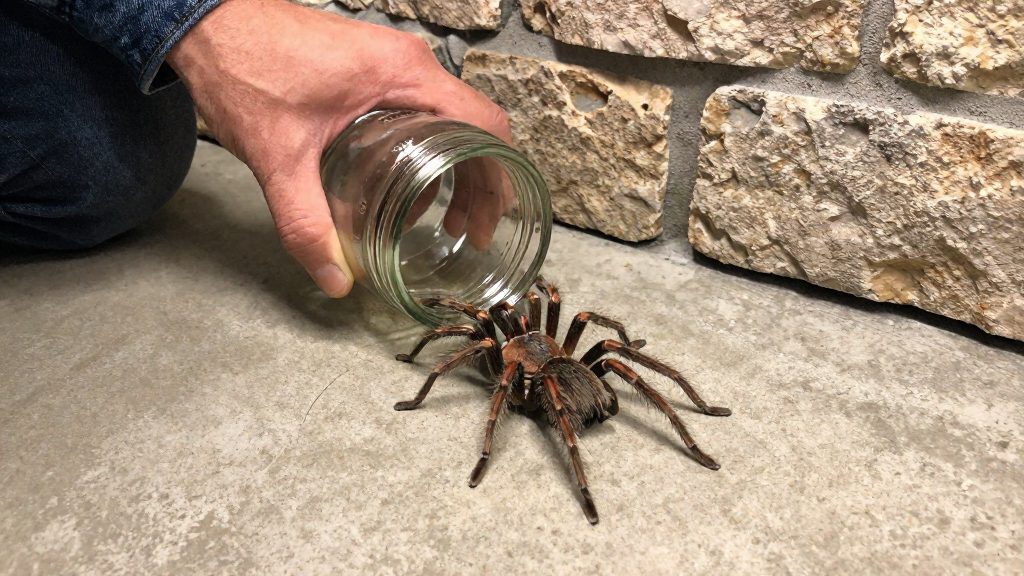
Capture the spider in a sealed container
- Place a clear jar or other rigid container with a lid over the spider.
- Slide a stiff card or sheet of paper underneath it, then turn the container upright.
- Close the lid tightly so the sealed container holds the spider for inspection.
- Write down the room and the spot where you found it.
Photograph the spider
Take sharp photos from above and from the side while the spider is in the container, then take a close-up with a coin beside it for scale. Send these images along with the container so the identifier can compare the specimen with your photos.
Check whether you live in its native range
Brown recluses occur primarily in the south-central and Midwestern United States and are rare outside their native range (University of Kentucky Department of Entomology, 2026). If you live elsewhere, a suspected specimen is less likely to be a brown recluse, but only identification can confirm it.
Request professional identification
Ask an entomologist or a knowledgeable pest control professional to identify the specimen before you assume an infestation (University of Kentucky Department of Entomology, 2026). Your local university extension service can also point you to qualified identifiers.
Control measures from the reviewed sources, with the reported effect of each:
| Measure | Action | Reported effect |
|---|---|---|
| Bed placement | Move beds away from walls; remove bed skirts and under-bed storage | Reduces bedroom encounters (University of California IPM Program, 2018) |
| Clothing and shoes | Keep off the floor or shake out before use | Reduces bedroom encounters (University of California IPM Program, 2018) |
| Storage | Declutter and store belongings in tightly sealed containers | Reduces hiding places (Illinois Department of Public Health) |
| Structural access | Seal cracks and gaps | Limits access to structural voids (Illinois Department of Public Health) |
| Sticky traps | Place against walls, behind furniture and on travel routes, out of reach of children and pets | Captures spiders and identifies activity hotspots (Illinois Department of Public Health) |
| Aerosol foggers | Avoid using as a primary control | Generally ineffective; may drive spiders deeper into hiding (Illinois Department of Public Health) |
| Established infestation | Combine several control methods; use a professional | Eradication is difficult (University of Kentucky Department of Entomology, 2026) |
Is It Really a Brown Recluse?
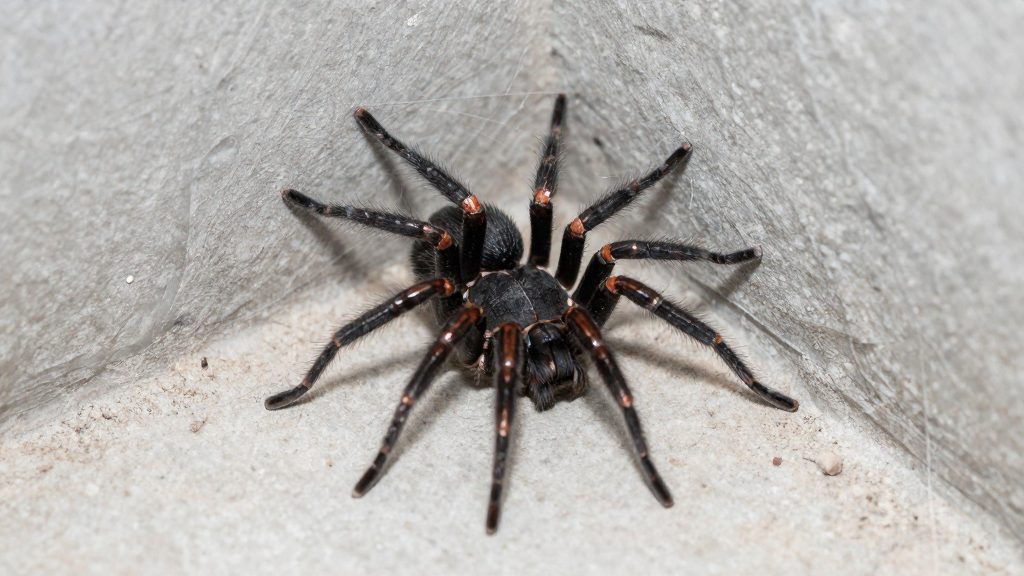
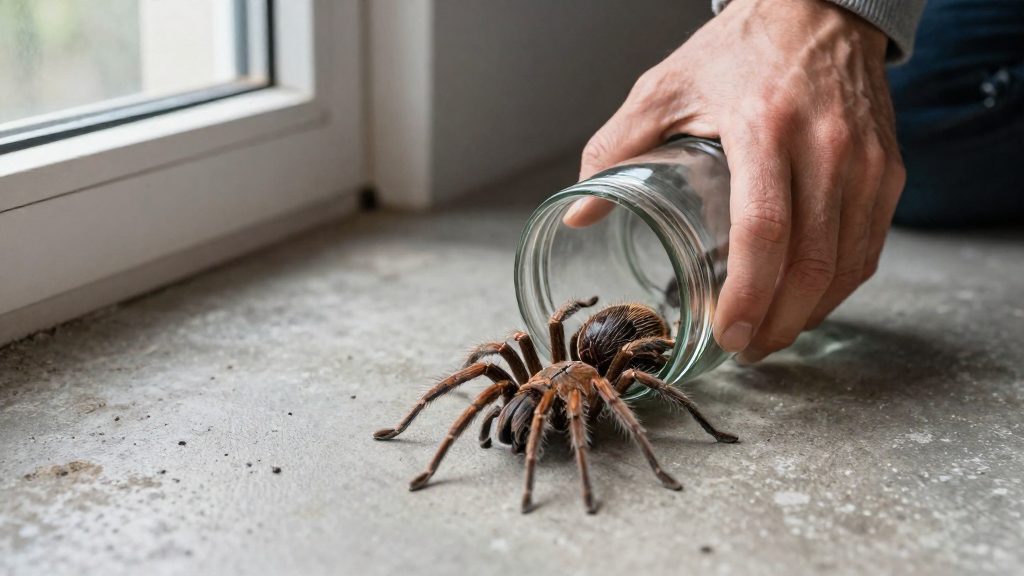
Identification depends on anatomical features that can be checked under magnification, not on a single marking. According to the University of California Statewide Integrated Pest Management Program (2018), recluse spiders have three features that set them apart:
- Six eyes arranged in three pairs. Count the eyes under a hand lens or magnifier.
- Uniform leg color. All legs share one consistent color rather than contrasting bands or rings.
- An unpatterned abdomen. The abdomen has no distinct markings.
The dark violin-shaped mark on the front of the body is the feature most people look for first, but it is unreliable on its own. A spider with a violin mark can still lack the recluse’s eye arrangement or show a patterned abdomen, so the mark should only be treated as a prompt to check the other three features.
Keep the specimen, or a clear photo showing the eyes and legs.
Where Brown Recluses Hide Indoors
Brown recluses are most active at night and hide during the day in furniture, cardboard boxes, wall voids, basements, crawlspaces and attics, according to the Illinois Department of Public Health. Checking these spots during daylight hours is the most direct way to find where a spider is sheltering.
Daytime Hiding Places
Brown recluses are most active at night and typically shelter in dark, secluded places during the day. Its daytime shelters are typically:
- Furniture: the undersides, backs and gaps of couches, chairs and other pieces where a spider can stay out of sight.
- Cardboard boxes: stored boxes, especially those left undisturbed for long periods.
- Stored belongings: items kept in closets, under furniture or in other rarely moved areas.
Structural Voids
Several concealed areas of a house offer shelter throughout the day:
- Wall voids between the interior and exterior walls.
- Basements and crawlspaces, which are often dark and rarely disturbed.
- Attics.
Monitoring Hotspots
Reduce Bite Risks at Home
Bites usually happen when a brown recluse is trapped against skin inside clothing or bedding, and brown recluses are not aggressive toward people (University of Kentucky Department of Entomology, 2026). The practical changes below therefore focus on the bed and the clothing you put on.
Move the Bed and Remove Bed Skirts
Keep the bed away from walls, and remove bed skirts and under-bed storage. These measures reduce bedroom encounters (University of California Statewide Integrated Pest Management Program, 2018). Brown recluses hide during the day in furniture, so a bed with a skirt and stored items gives them a sheltered space right beside where you sleep.
Shake Clothing and Shoes Before Use
Keep clothing and shoes off the floor. Shake them out before wearing them, especially items that have been stored or left on the floor.
Seal Cracks and Declutter Storage Areas
Seal cracks and gaps to limit access to structural voids. Decluttering removes hiding places.
Place Sticky Traps and Monitor Activity
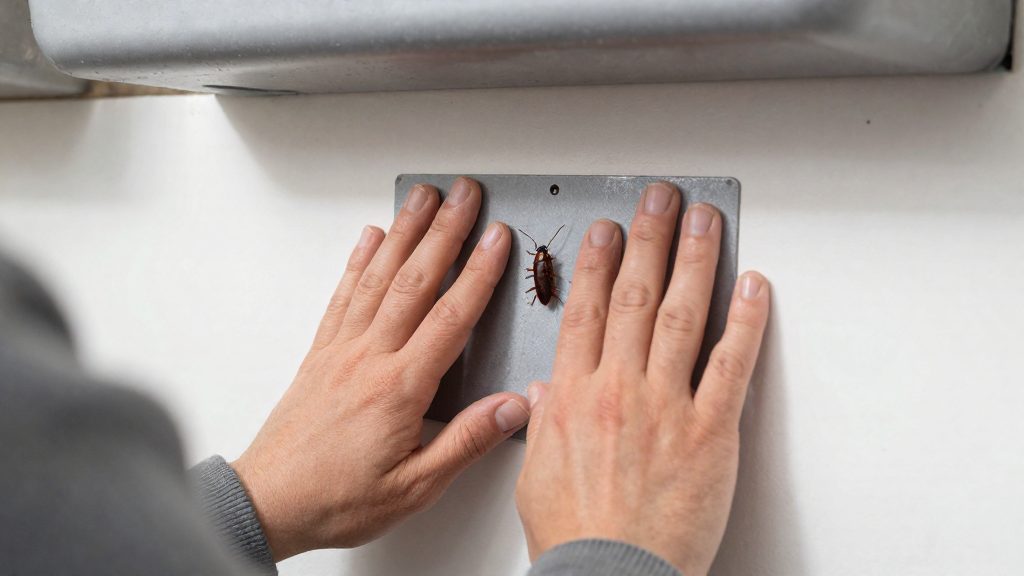
Place sticky traps against walls, behind furniture and along other sheltered travel routes, since these spots sit between the places where brown recluses hide and the places they forage. Keep every trap beyond the reach of children and pets. Traps capture spiders and reveal activity hotspots, so treat each one as a monitoring point rather than a cure.
Positioning Sticky Traps
- Set each trap flat against a wall at floor level, and place others behind and beside furniture.
- Add traps in basements, crawlspaces and attics.
- Mark each trap’s position on a simple floor plan so every placement can be identified later.
Checking Traps and Recording Catch Dates
- Check traps on a regular schedule and note the date, trap location and number of spiders caught.
- Keep the catch log in one place, such as a notebook or spreadsheet, so entries accumulate over time.
- Send any suspected brown recluse to an entomologist or pest control professional for identification before assuming an infestation.
Replacing Traps and Tracking Activity Over Time
- Replace a trap once it is full of debris or no longer sticky, and return it to the same spot so counts stay comparable.
- Compare counts across checks: falling catches at a location suggest fewer spiders on that route, while rising catches indicate continued activity.
- Trap counts show activity at each spot, not the total population.
When Should You Call Pest Control?
Call a licensed pest control operator when sightings continue after you have decluttered, sealed entry points and monitored activity. Brown recluse infestations are difficult to eradicate, and treatment is best performed by professionals, according to the University of Kentucky Department of Entomology (2026).
Signs That Justify a Professional Inspection
A single spider does not establish the size of an infestation. Repeated finds in these hiding places justify an inspection to determine its extent.
What a Licensed Inspection and Treatment Involve
- Several control methods are needed for an established infestation, so ask the operator for a plan that combines methods rather than relying on one product.
- Ask whether the plan uses aerosol foggers.
- Verify the operator’s pest control license with your state’s licensing authority.
- Request a written quote and ask whether follow-up inspections are included.
Persistent Sightings After Trap and Sealing Measures
If sightings continue after you have decluttered, stored belongings in tightly sealed containers and sealed cracks and gaps, hiding places or access points likely remain. This is the point to call a professional for an inspection, rather than adding more home measures.
What If You Suspect a Bite?
A skin wound alone cannot reliably establish a brown recluse bite. Bacterial infections and other medical conditions can produce similar lesions, so a sore or lesion is not proof of a bite.
Recognizing Possible Bite Signs
A suspected bite is most likely where skin was covered during sleep or dressing. Watch for systemic symptoms following a suspected bite: fever, chills, excessive nausea or vomiting, and severe muscle aches.
First Steps at Home
- Wash the area with soap and water.
- Call Poison Control at 1-800-222-1222 for advice.
According to NC Poison Control (2023), these steps are the recommended first response to a suspected bite.
When to Seek Medical Care
If you have been bitten by a brown recluse, seek medical attention immediately. For a suspected bite, contact Poison Control for advice and seek medical attention if fever, chills, excessive nausea or vomiting, or severe muscle aches occur.
Symptom onset and healing times vary widely between people, so a fixed timeline cannot confirm or rule out a bite. A doctor can distinguish a bite from an infection or another condition that produces similar lesions.
Documenting a Suspected Bite
Keep a written record from the first day you notice the wound:
- Date and time you found the wound, and the body location
- Date and time any symptoms began, and their type and severity
- Photos of the wound taken at the same time of day and under the same lighting, with a coin or ruler beside it for scale