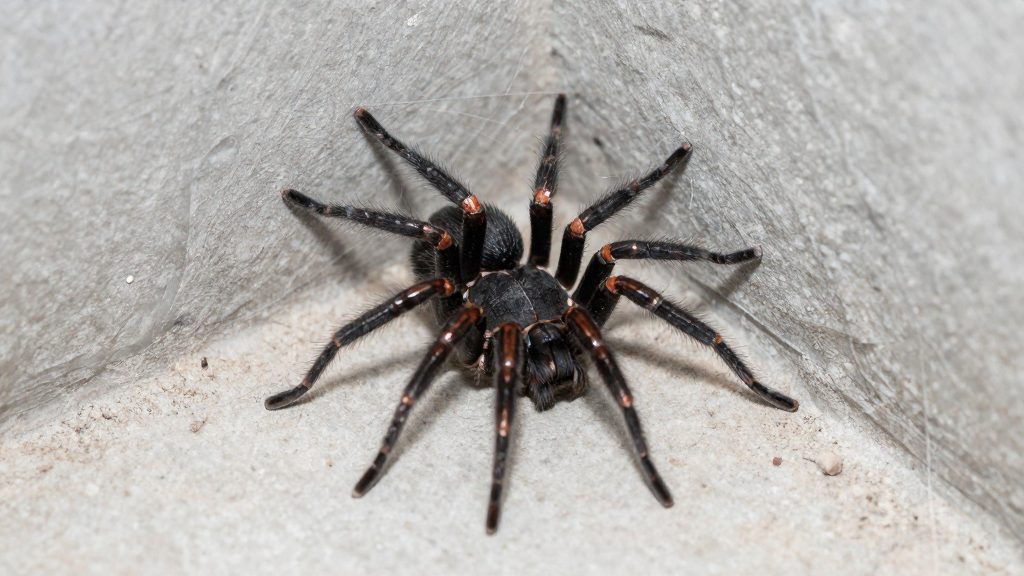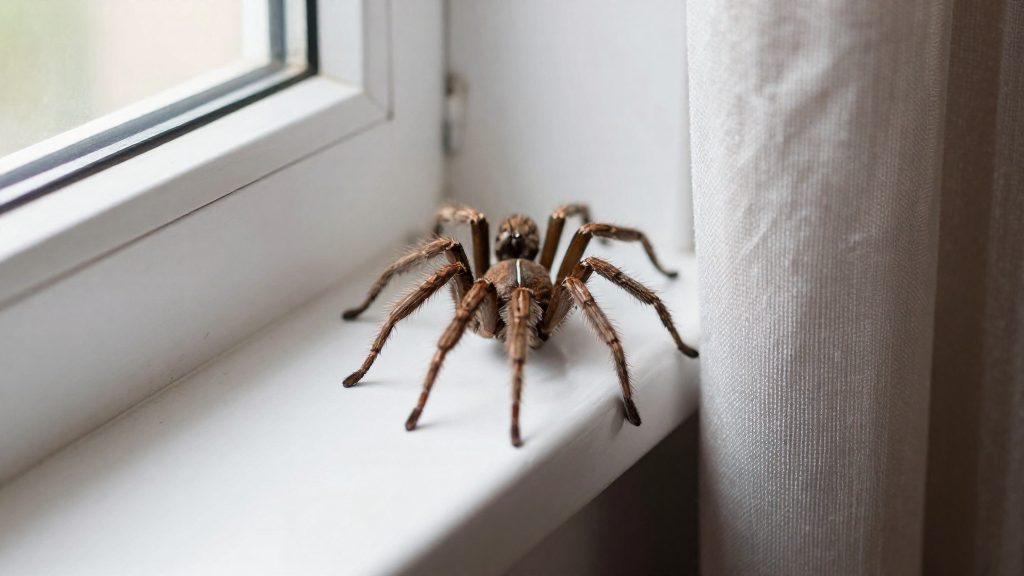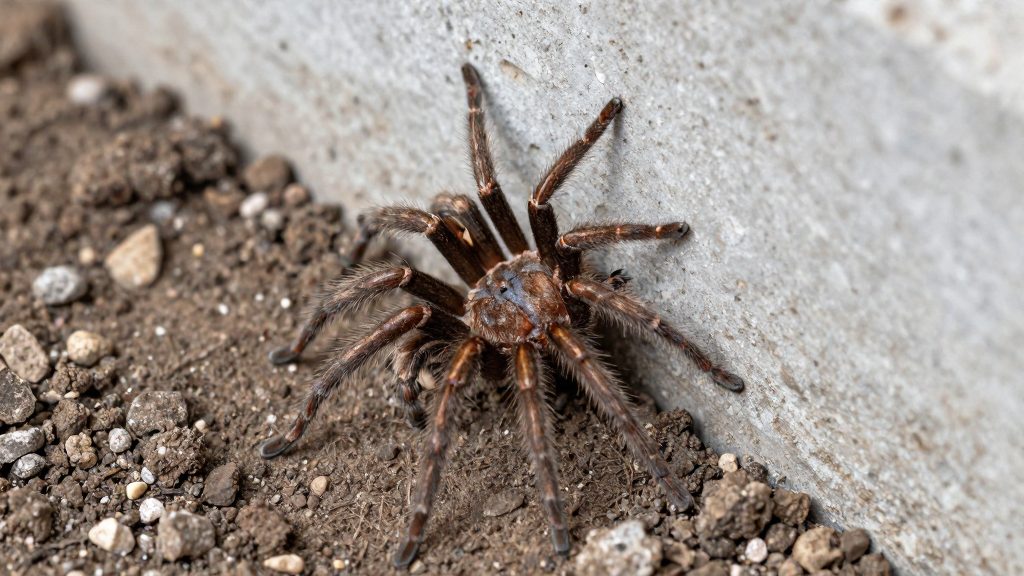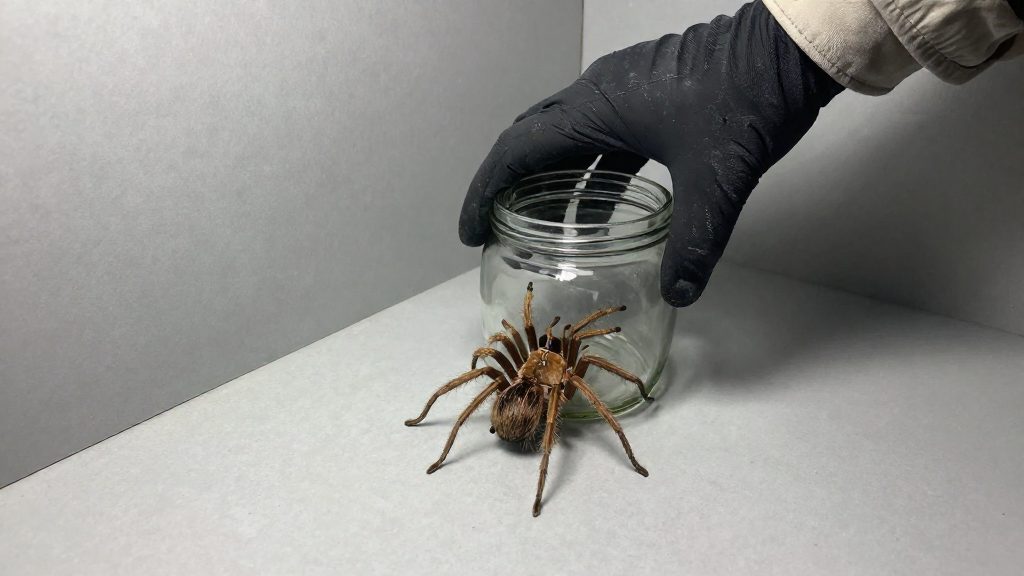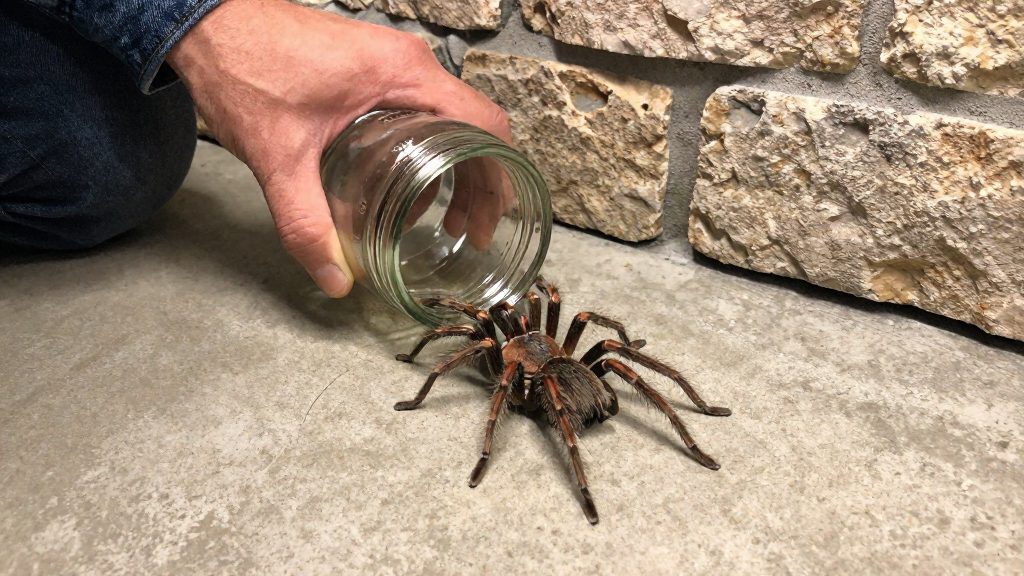
Wolf spiders found indoors can be removed alive without pesticides. The University of California Statewide Integrated Pest Management Program (2020) describes covering the spider with a jar, sliding paper underneath, and carrying it outside. For occasional spiders that wander inside, Iowa State University Extension and Outreach (2007) identifies a vacuum or broom as an effective option. Wolf spiders are normally shy and not considered dangerous to humans, so relocation is a low-risk task, but large species can bite.
How to Remove a Wolf Spider
Jar-and-Paper Relocation
- Place a clear jar over the spider and keep the rim against the floor or wall.
- Slide a stiff sheet of paper under the opening, keeping the spider inside the jar.
- Lift the jar with the paper held flat against the rim.
- Carry the spider outdoors and release it away from the entrance.
Use a jar-and-paper method as the default when the spider is visible and stationary, because it keeps the spider contained without crushing it.
Vacuum or Broom Removal
A vacuum or broom works for spiders that wander across floors or walls. Sweep the spider onto a dustpan, or place the vacuum hose directly over it and switch on the suction. Dispose of the vacuum contents or dustpan contents outdoors, and do not reuse them indoors until they are emptied.
Handling Safety for Large Species
Use a jar and paper or a broom rather than direct contact.
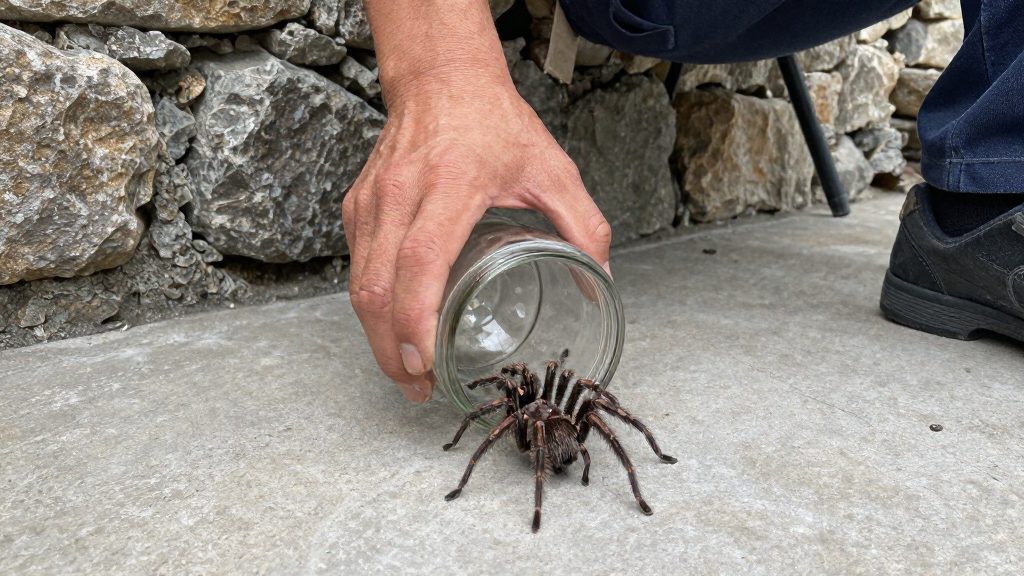
Is It Really a Wolf Spider?
According to Colorado State University Extension (2025), most wolf spiders are gray or brown, so color alone does not identify one. Hunting behavior is the more useful check: wolf spiders actively chase prey rather than building webs to catch it.
- Wolf spider: roams across floors, walls, and baseboards, or waits at a hiding spot without a web.
- Web-building look-alike: stays in a tangled or sheet-like web in a corner, behind furniture, or in a window frame.
To check the eyes and body markings, examine the spider with a magnifying glass or a close-up photo in good light. Compare the eye pattern and markings with identification photos published by a university extension service, since coloring varies between individuals. Judge size by placing a coin or ruler beside the spider in a photo rather than estimating from memory, because size alone is an unreliable guide.
Why Are Wolf Spiders Coming Inside?
Their indoor entry is usually incidental: they sometimes enter homes accidentally through gaps around windows, doors, and other openings while hunting, according to Iowa State University Extension and Outreach (2007). They are normally shy and are not considered dangerous to humans, according to Colorado State University Extension (2025).
Outdoor Conditions Near the Foundation
Three outdoor conditions near the house create the outdoor hiding places and attractions that bring spiders to the walls.
| Outdoor condition | Action | Source |
|---|---|---|
| Firewood and debris piled against the foundation | Move them away from foundations | Iowa State University Extension and Outreach (2007) |
| Shrubs and vines growing near the house | Trim them to reduce hiding places | Iowa State University Extension and Outreach (2007) |
| Outdoor lighting that attracts insects | Position lights away from windows and doorways | University of California Statewide Integrated Pest Management Program (2020) |
Seal Gaps Around Doors and Windows
Iowa State University Extension and Outreach (2007) recommends sealing cracks and gaps and repairing poorly fitting windows, doors and door sweeps. Work from the outside in, because each opening is sealed differently.
Inspection points
Check these points with a flashlight held on the outside of the frame at night. Light showing through a gap marks an opening.
| Opening | Material or part | Sign it needs attention |
|---|---|---|
| Gaps between exterior wall and window or door frame | Caulk | Light visible through the joint, or cracked or missing sealant |
| Bottom of exterior door | Door sweep | Sweep is split, bent, or no longer touches the threshold |
| Edges of opening sashes and door edges | Weatherstripping | Light or draft at the closed edge |
| Window screens | Mesh patch or replacement | Tears, holes, or a loose edge in the frame |
Caulk and weatherstripping
Apply exterior caulk to fixed joints where the frame meets the wall, and remove loose or cracked sealant before applying new caulk. Use weatherstripping on moving parts, such as sashes and door edges, because caulk would stop them from opening and closing. Check the product label for exterior use and for the surfaces it bonds to.
Door sweeps and window screens
Replace a door sweep that no longer touches the threshold, using the sweep length and mounting method given by the manufacturer. Repair a screen by patching small tears or re-seating loose mesh in its frame. Replace the screen when the damage is too large to patch.
Remove Clutter and Reduce Insect Prey
Reducing indoor clutter and the insects that spiders eat is part of integrated spider management, according to the University of Minnesota Extension (2019).
Clear Stored Boxes in Basements and Garages
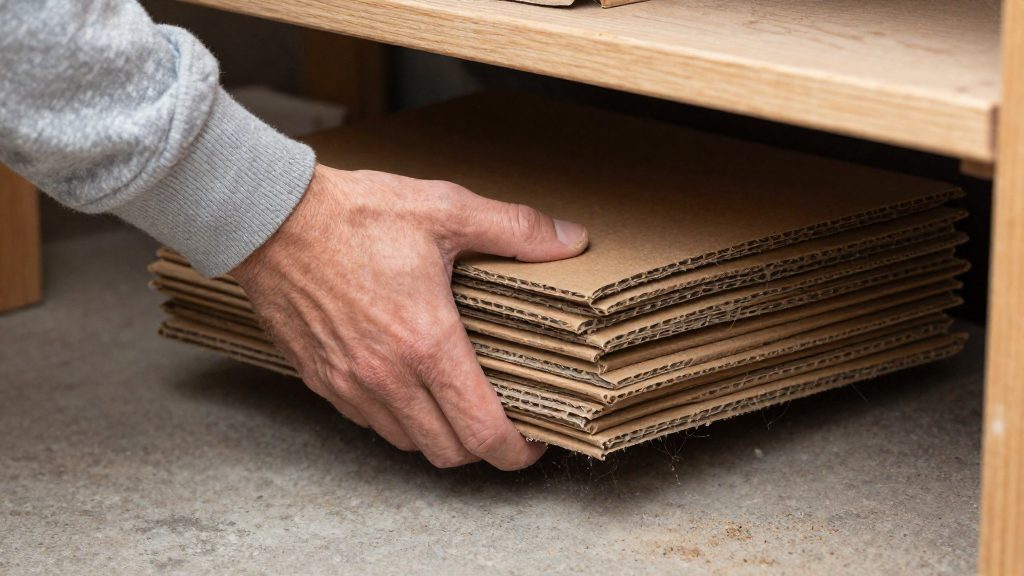
Basements and garages are the areas where stacked cardboard boxes, stored furniture, and loose materials create hiding spots. Keep stored items in lidded plastic containers, raise them off the floor, and leave a clear gap along walls so that you can inspect the area and spot spiders quickly.
Eliminate Indoor Prey Insects
Flies and roaches are common prey insects indoors. Keep food in sealed containers, clean up spills promptly, empty trash regularly, and fix leaks that provide moisture for insects.
Pesticides alone do not solve the problem. According to Colorado State University Extension (2025), pesticides are ineffective without removing or modifying favorable spider habitats, and total-release foggers probably have little effect on spiders.
Maintain Storage and Cleaning Routines
Set a recurring check of basements, garages, and storage closets. During each check:
- Remove boxes and debris that have accumulated against walls or in corners.
- Re-seal food and pet supplies in containers.
- Check for dead or live prey insects that indicate a food source.
Consistent routines keep hiding places and prey from building up again after clutter is cleared.
Use Sticky Traps to Monitor Activity
Sticky traps show where wolf spiders are active indoors. According to the University of Minnesota Extension (2019), sticky traps can monitor spiders along walls, under furniture, and beneath appliances.
Where to Place Traps
- Walls: along baseboards and wall edges.
- Under furniture: beneath beds, sofas, and cabinets.
- Beneath appliances: under refrigerators, washing machines, and similar units.
Keeping Traps Away from Children and Pets
The University of California Statewide Integrated Pest Management Program (2020) advises placing sticky traps where children and pets cannot tamper with them. Choose spots they cannot reach or knock over, and check each placement against that rule before leaving it.
Reading Catches Over Time
Compare catches from the same spot across successive checks rather than reading a single result. A rising count at one location points to activity near that spot, while a count that stays at zero suggests little movement there. No catch count is established as the point that requires treatment, so use the trend, not a fixed number, to judge whether a problem is growing.
Do You Need Sprays or Repellents?
Chemical products add little on their own against wolf spiders. According to Colorado State University Extension (2025), pesticides alone are ineffective unless favorable spider habitats are removed or modified, so treat any spray as a supplement to habitat changes, not a replacement.
| Option | Documented result |
|---|---|
| Total-release foggers | Probably little effect on spiders (Colorado State University Extension, 2025) |
| Outdoor insecticide applications | Limited or temporary benefit (Iowa State University Extension and Outreach, 2007). The University of California IPM Program (2020) generally discourages them, while the University of Minnesota Extension (2019) allows labeled exterior applications |
| Hedge apples (Osage oranges) | Ineffective for spider control (University of Minnesota Extension, 2019) |
| Homemade repellents (peppermint oil, vinegar, ultrasonic devices) | Reliable wolf spider control not established |
Reading the Label and Following Directions
Any pesticide used for spider control must be applied according to its container label directions (University of Minnesota Extension, 2019). Before buying, confirm that the label lists spiders or a closely related pest and the site where you plan to apply it, whether indoors, outdoors, or both. Use only the dose and application method the manufacturer specifies, and do not treat areas the label does not cover.
Protecting Children and Pets
Keep all chemical products in their original containers, stored out of reach of children and pets. Before application, remove children and pets from the treatment area. Follow all label instructions for keeping them away and allowing them back, including any ventilation requirements. If the label gives no specific re-entry instructions, keep them away until sprays have dried or dusts have settled.
When to Contact a Professional
Base the decision on results rather than a sighting count. If wolf spiders keep appearing after you have changed the habitat around the home, contact a licensed local pest control service. Ask the provider which products they intend to use.