Do cedar blocks really repel clothes moths?
Repellent, not lethal. The cedar scent deters adult clothes moths from settling in a space. Cedar therefore protects only against new arrivals, and only while the scent is strong enough to deter them.
Why cedar-lined closets and chests lose effectiveness. The wood’s aromatic oils evaporate over time, so a cedar-lined closet or chest that repelled moths when new protects less as it ages. Utah State University Extension (2026) notes that cedar-lined closets and chests have limited value against clothes moths because repellent concentrations are hard to maintain over time. Bob Vila (2026) notes that the scent fades in the same way on loose blocks.
Concentration loss makes protection unreliable. Because deterrence depends entirely on scent strength, a storage space can appear protected while its repellent level has already dropped below the point that deters moths. The drop is gradual and easy to miss, so cedar should not be relied on as a dependable barrier.
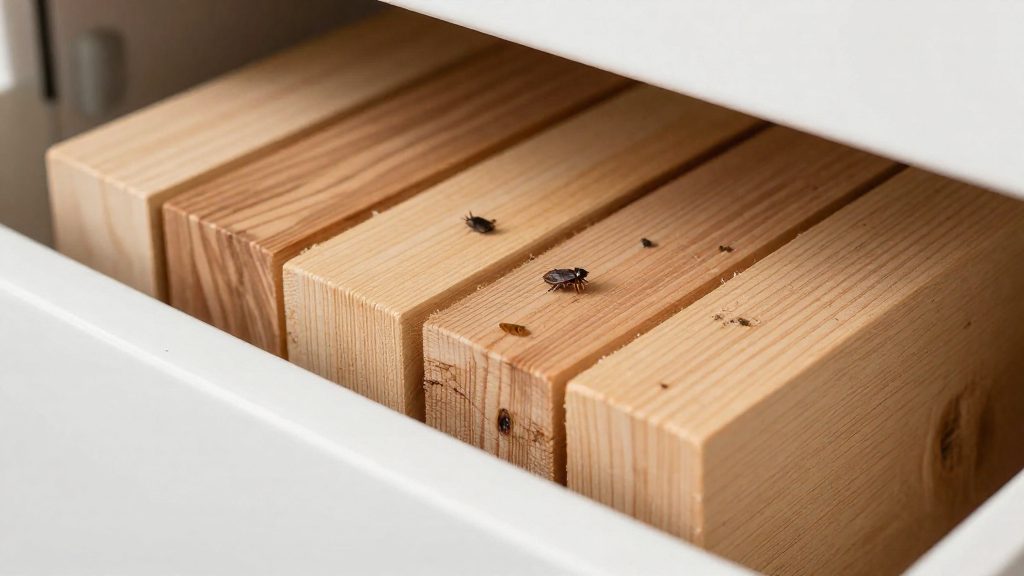
How cedar is thought to work
Cedar blocks are believed to repel clothes moths through volatile aromatic compounds released by the wood. Cedar blocks are believed to repel moths through the aromatic oils in the wood.
The distinction matters in practice. Vapour-phase action means the compounds spread through the air inside a closet, chest or drawer and reach moths in that space. Contact toxicity would require the insect to touch or ingest a treated surface. The supplied sources do not describe the exact mechanism. The scent is generally understood to act through the air, so protection is likely limited to the space the scent reaches.
The vapour is released by diffusion from the exposed wood surface. Volatile molecules leave the surface and disperse into the surrounding air. The amount entering the space therefore depends on how much wood is exposed and how freely air moves across it. Once the compounds have dispersed, they no longer sit on the wood as a residue, which is why the effect depends on a continuous release rather than a single application.
The limits follow from this mechanism:
- Dependence on the airborne zone: fabric outside the vapour path receives no protection from the wood.
Why the scent fades and how to refresh blocks
Cedar blocks work through their aroma, and the aroma weakens over time. The scent comes from volatile oils in the wood, which evaporate gradually, so a block that smelled strong when new loses effectiveness as those oils leave the wood.
The scent can be restored with two methods.
Sanding the block
Sanding removes the surface wood and exposes cedar that has not yet released its oils. Sand the faces of the block lightly, then brush off the dust before returning the block to the closet. Repeat the process when the scent becomes faint. Each session removes a small amount of wood, so the block gradually gets smaller.
Applying cedar oil
Adding a few drops of cedar oil to the block restores its aroma without removing any wood. This method restores the aroma without removing any wood. Bob Vila (2026) identifies both sanding and cedar oil as ways to restore the scent.
To check whether a block needs refreshing, smell it directly. When the cedar aroma is no longer noticeable, the block has lost most of its repellent effect and should be sanded or treated with oil.
Can cedar stop an active infestation?
No. Cedar blocks do not eliminate an active clothes moth infestation.
Why blocks leave eggs and larvae untouched
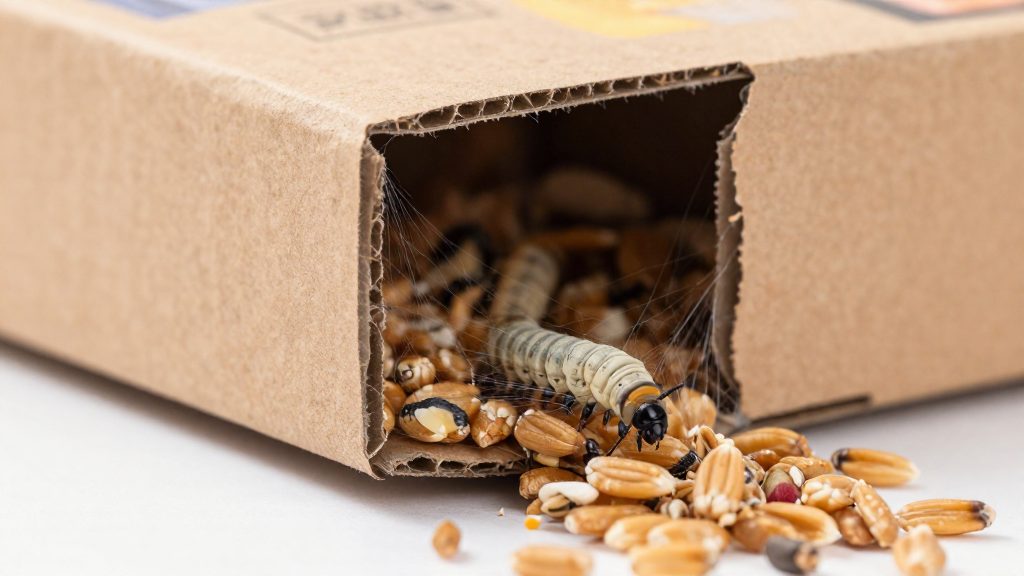
The damage to fabric comes from larvae, which feed on wool, silk and other natural fibers, and from the eggs that hatch into them. Cedar repels moths but does not kill them, so it is not enough once an infestation is active. Eggs and larvae already in the fabric are not removed by the blocks.
Why blocks cannot replace direct fabric treatment
Cedar’s protection is also weak over time. The scent fades, and restoring it requires sanding the blocks or adding a few drops of cedar oil, according to Bob Vila (2026). Restoring the scent only renews repellency. It does not remove what is already in the fabric.
Infested items need freezing for a few days or dry cleaning, according to Utah State University Extension (2026). Storage changes alone do not address existing eggs and larvae.
Consequences of relying on blocks for control
- Unchecked development: eggs and larvae continue to develop and feed on textiles, so damage accumulates without any visible sign of repellent action.
- Lost time: while the block’s scent fades, the infestation grows and the items become harder to save.
- False confidence: a closet that smells of cedar may look protected while live moths and larvae remain in it.
Clean, freeze and store clothes first
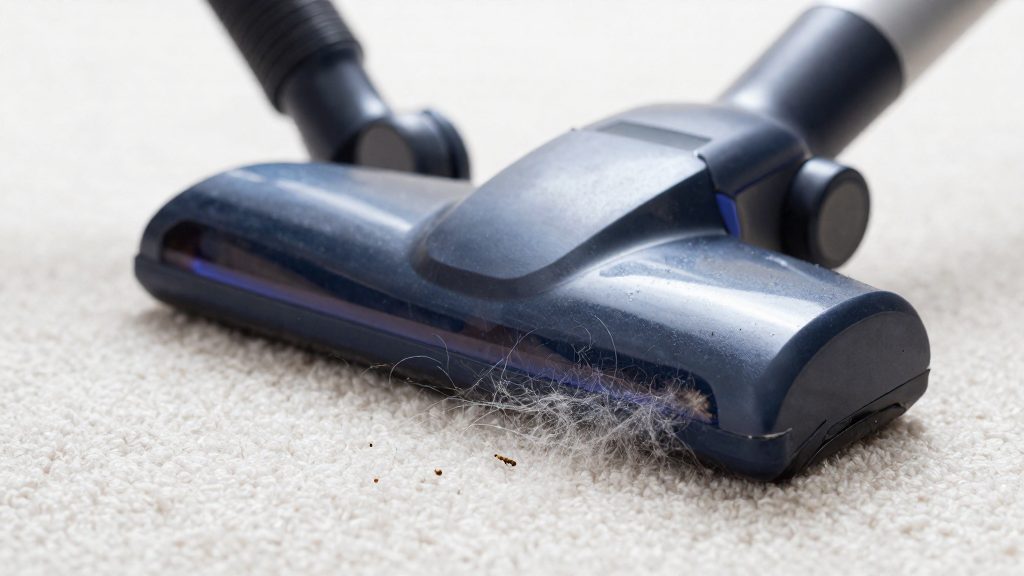
Repellents work best once the fabric and the storage space have been cleaned and any eggs and larvae treated. According to Utah State University Extension (2026), occasionally cleaning the areas where clothes moths are likely to live discourages infestations. The core of that routine is vacuuming thoroughly: closet floors, shelf edges, corners, baseboards, and the gaps under and behind stored garments, where fabric debris and lint collect. Empty the vacuum bag afterward and dispose of it, rather than leaving it in the home.
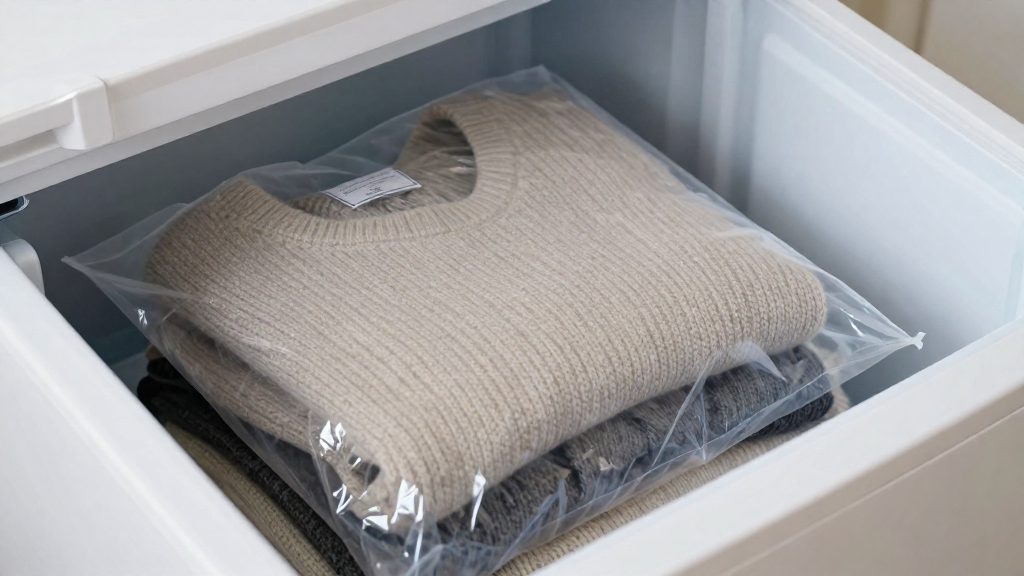
Next, treat the items themselves. If practical, freezing infested fabrics for a few days kills eggs and feeding larvae. Freezing is practical only if the items fit in a freezer. Periodic dry cleaning (above 120ºF) is also suggested by Utah State University Extension (2026).
Only then should garments go into storage. Keep them in a clean, pest-free, airtight container. Storing items in a clean, pest-free, airtight container helps keep females from laying eggs on them. Check the container before loading it, and do not add items that have not been vacuumed or treated first.
Pheromone traps for monitoring
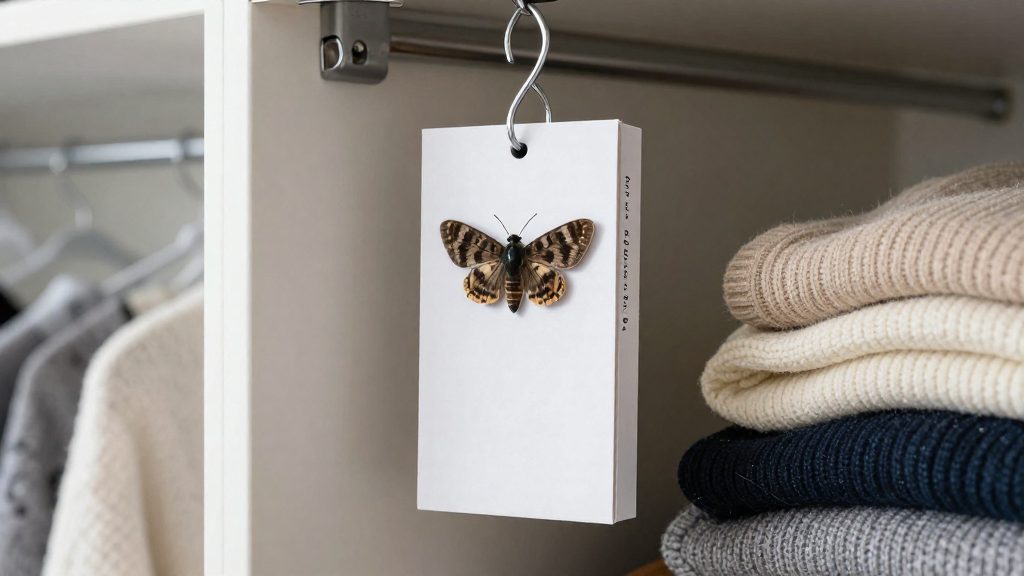
Pheromone sticky traps are a way to check whether webbing clothes moths are active before fabric damage appears. According to Utah State University Extension (2026), the pheromones in these traps attract male webbing clothes moths, so the trap works as a detector, not a killer. Place them in closets and other fabric storage areas.
How the lure works
The pheromone draws in adult male moths only. A trap catch therefore shows that male moths are active in that spot. It does not show whether females, eggs, or larvae are present nearby.
Using the sticky surface to count
The adhesive holds each moth that lands on it, so the surface doubles as a tally. Check the trap at regular intervals, count the moths stuck to it, and write down the count and date each time. Compare the counts across checks, since a rising number may suggest more male activity in that spot. Replace the trap once the surface is covered with moths or debris, because a full surface cannot catch more.
Detecting activity before damage
A trap catch reflects adult moths flying in the area, not damage to fabric. A trap can therefore show activity in a closet where no holes or chewed fibers have appeared yet. Read the trap results together with a visual check of stored textiles. An empty trap over a short period does not confirm that the area is clear, so keep monitoring for several weeks before drawing conclusions.
Where to place cedar blocks in closets and drawers (general practice)
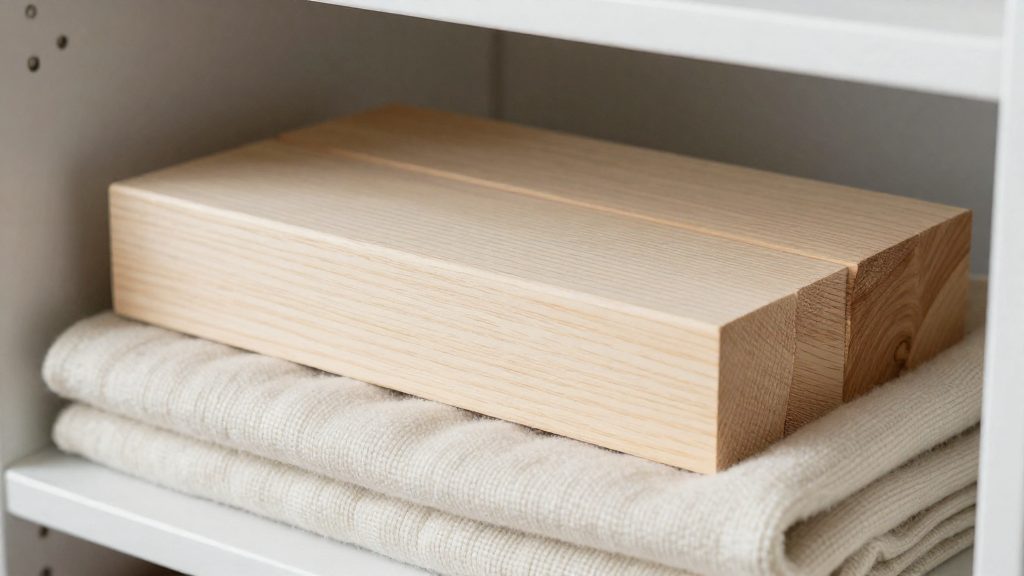
Cedar blocks should sit near the stored textiles without touching them, so placement depends on where you keep each item. In a closet, set the blocks on a shelf or on the floor beneath the hanging garments, not on the clothes themselves. Spread them across the space instead of grouping them in one spot, so the scent reaches more of the stored items.
In drawers, put the blocks in a corner or along the back, and fold knitwear, wool and blankets so that no layer rests against a block. Keep wool in its own drawer or container where possible, since its location determines which items are close to the scent.
To prevent contact between blocks and fabric:
- Keep blocks in an open dish, tray or small box rather than loose among garments.
- Do not wrap blocks in cloth or tuck them into pockets, sleeves or folds.
- Check that no block is pressed against a garment bag, the lining of a chest or a folded sweater.
Check the placement periodically, especially after you add or remove items, and move any block that has been displaced onto a textile.
When to call a pro or use other products
Home measures work against light, localised activity. When moths keep appearing after the basic steps are done, the next step is a different product or a professional assessment.
Signs that DIY measures have failed
- Adult moths or larvae still appear after the closets and storage areas have been cleaned and vacuumed.
- Damage keeps appearing on clothing that has already been treated or stored.
Alternative products
Sticky pheromone traps can be used at any stage to monitor activity, since the lure attracts adult male moths and a catch shows that males are active in that area. Traps do not reach larvae feeding inside fabrics, so they complement the treatment of infested items rather than replacing it.
| Situation | Next step |
|---|---|
| Activity limited to a few closets | Clean and vacuum, then dispose of the vacuum bag |
| Moths persist after these steps | Add sticky pheromone traps in closets and storage areas |
Professional assessment
When activity continues across several areas, a pest control operator can inspect the home and confirm the species before treatment. Ask the operator to:
- Identify the moth species and locate the likely source of larvae.
- Provide a written plan listing the areas to be treated, the products used and any follow-up visit.
- Explain how infested textiles will be handled, whether by freezing, dry cleaning or disposal.
- Confirm that any product proposed is labelled for indoor use in the rooms concerned.
Keep the inspection report, as it documents the infestation for any later monitoring.
Frequently asked questions
If moths have already damaged my wool, will cedar blocks fix it?
No. Cedar blocks are a preventive measure: they repel adult moths but do not kill them, so they cannot clear an active problem. For existing infestations, Utah State University Extension (2026) lists freezing the affected items for a few days, which kills eggs and feeding larvae, if the items fit in a freezer, or periodic dry cleaning above 120ºF.
Can I refresh cedar blocks instead of replacing them?
Yes. Sanding the block or adding a few drops of cedar oil restores the scent, according to Bob Vila (2026). Repeat this whenever the aroma fades, because the blocks’ protection depends entirely on scent strength.
Do pheromone traps show whether moths are still active?
They show male activity. The lure attracts adult male webbing clothes moths, so a catch indicates that males are present in that spot. Treat trap counts as a rough indicator, since lure age and trap placement affect results, and check stored textiles visually alongside them.