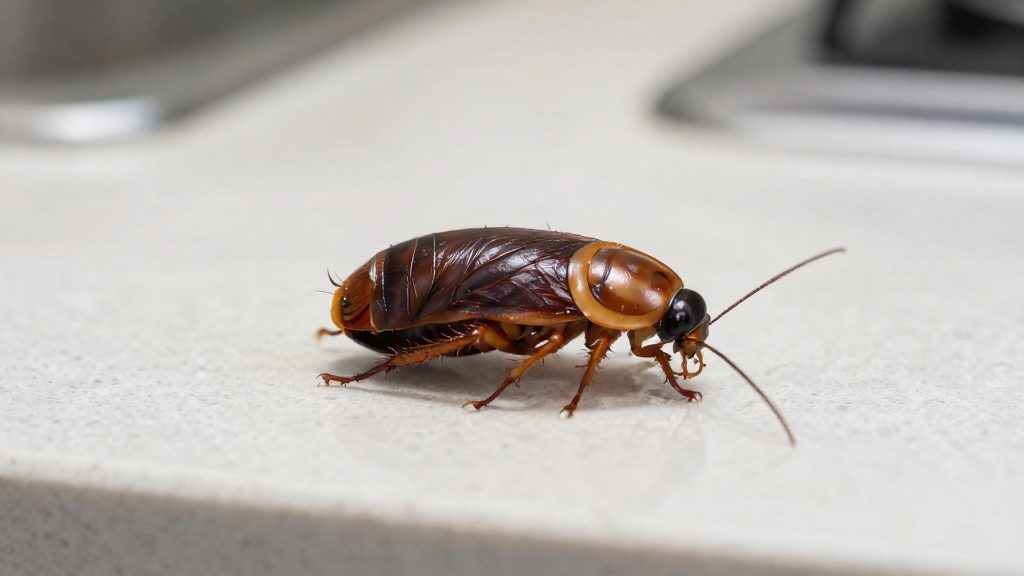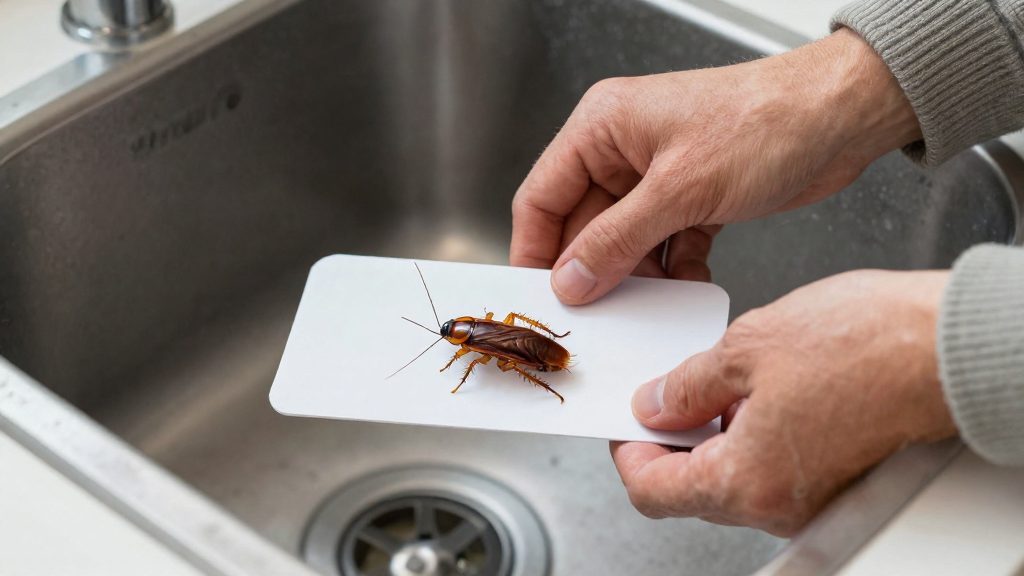
Adult German cockroaches are about 1/2 inch long, light brown or tan, with two dark lengthwise stripes behind the head, according to University of Minnesota Extension (2024). Checking these three traits on the same specimen gives a reliable first identification. Habitat is a useful second check: German cockroaches favor kitchens and bathrooms.
Are These German Cockroaches?
| Trait | German cockroach (adult) |
|---|---|
| Length | About 1/2 inch |
| Body color | Light brown or tan |
| Markings | Two dark stripes running lengthwise behind the head |
Look for all three traits on one insect. A single matching feature, such as a tan color, is not enough, because other roaches can share it.
Sightings in kitchens and bathrooms, particularly near sinks, appliances and food storage, are consistent with this species, according to the University of California Statewide IPM Program. Confirm the identification before you choose a product, since a treatment selected for the wrong pest may not work. If you remain unsure, ask your local extension service or a pest professional to identify the insect.
Why Are Roaches in Your Apartment?
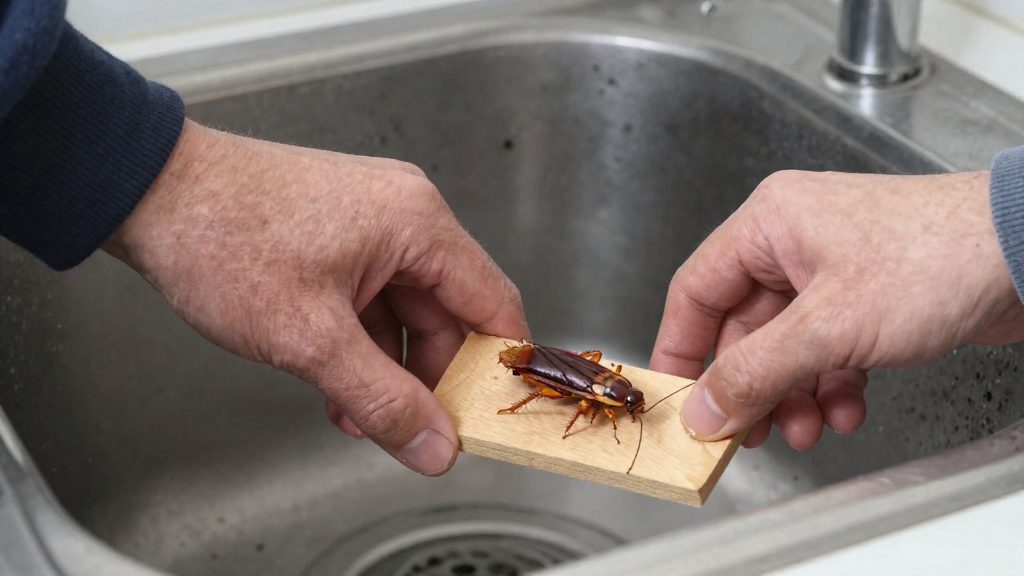
German cockroaches can enter an apartment on infested goods. According to the University of Kentucky Department of Entomology (2026), they can arrive in grocery bags, beverage cartons or furniture.
Movement Between Units
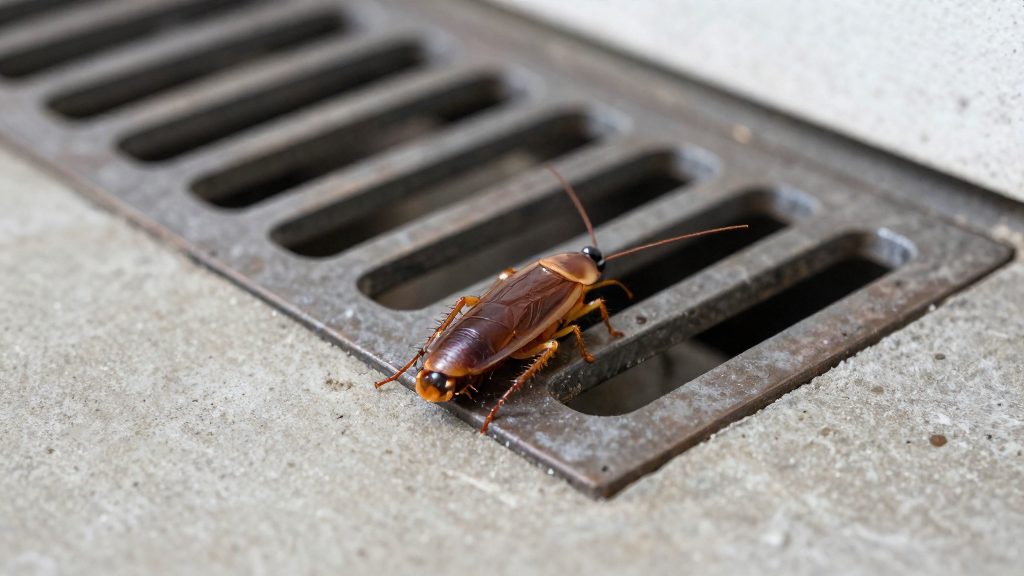
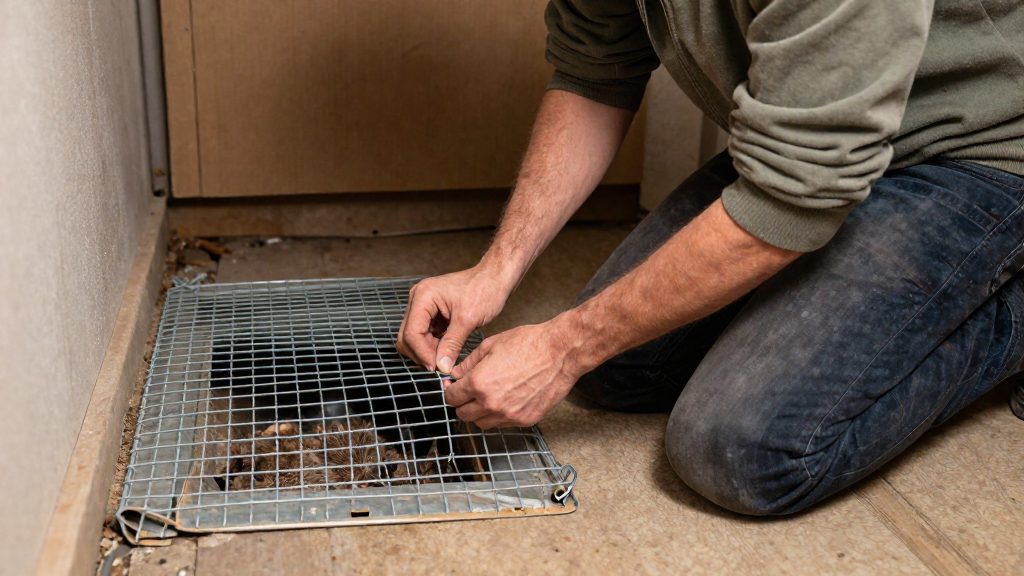
Cockroaches do not need to enter from outside to reach your unit. The University of Kentucky Department of Entomology (2026) notes that in apartments they can also travel between units through shared walls and ceilings. Gaps around plumbing that runs through these walls create routes between apartments, according to the Illinois Department of Public Health.
Why Kitchens and Bathrooms Attract Them
German cockroaches favor warm, humid hiding places near food and water. The University of California Statewide IPM Program identifies kitchens and bathrooms as the areas where they are most often found, which is why these rooms are the main focus of inspection and control.
Start With Monitoring and Building Management
Before choosing a control method, map where German cockroaches are active. Place monitoring traps tightly against walls or objects, then record catches for each location. According to University of Minnesota Extension (2024), the locations with the largest catches show where treatment should go.
- Placement: Put traps in kitchens and bathrooms (University of California Statewide IPM Program).
- Recording: Log each catch by location and date, so counts can be compared over time.
- Targeting: Direct treatment first to the spots with the largest catches.
If catches suggest movement from a neighboring unit, raise it with building management.
Treatment in apartment buildings is coordinated across units. University of Minnesota Extension (2024) recommends professional treatment of the infested apartment and all adjacent units. Ask building management who arranges treatment of those units and who seals plumbing gaps. Who pays for treatment and how quickly a landlord must act depend on your lease and local rules, so check your lease and contact your local housing or health authority.
Remove Food, Water, and Hiding Places
In kitchens and bathrooms, cut off food, water and hiding places in the areas where the insects forage.
Store Food in Sealed Containers
Move dry goods such as cereal, flour, pet food and snacks into sealed containers with tight-fitting lids instead of leaving them in paper or cardboard packaging. Wipe up crumbs, grease and spills after cooking and eating, and do not leave dirty dishes sitting overnight. Inspect grocery bags and beverage cartons before bringing them into the kitchen.
Fix Leaks and Dry Sink Areas
Repair dripping taps, leaking pipes under sinks and running toilets, because these water sources draw German cockroaches. Dry sink basins, tub surrounds and shower floors after use, and wring out sponges and dishcloths rather than leaving them damp.
Reduce Clutter and Cardboard Harborage
Cardboard boxes, stacked paper and clutter create harborage, meaning hiding places where German cockroaches rest during the day. Remove cardboard from kitchens and bathrooms and store items in plastic or sealed bins. Keep the space behind and under refrigerators, stoves and dishwashers clear, and avoid storing items directly against walls. Where the appliance can be safely pulled out, clean the gaps behind it so fewer hiding places remain.
Use Cockroach Baits Correctly
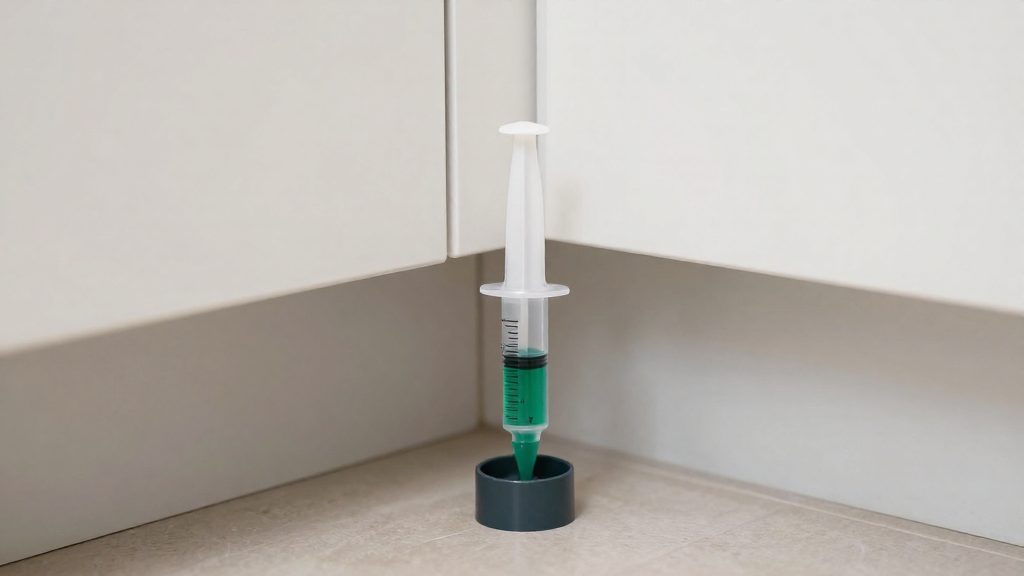
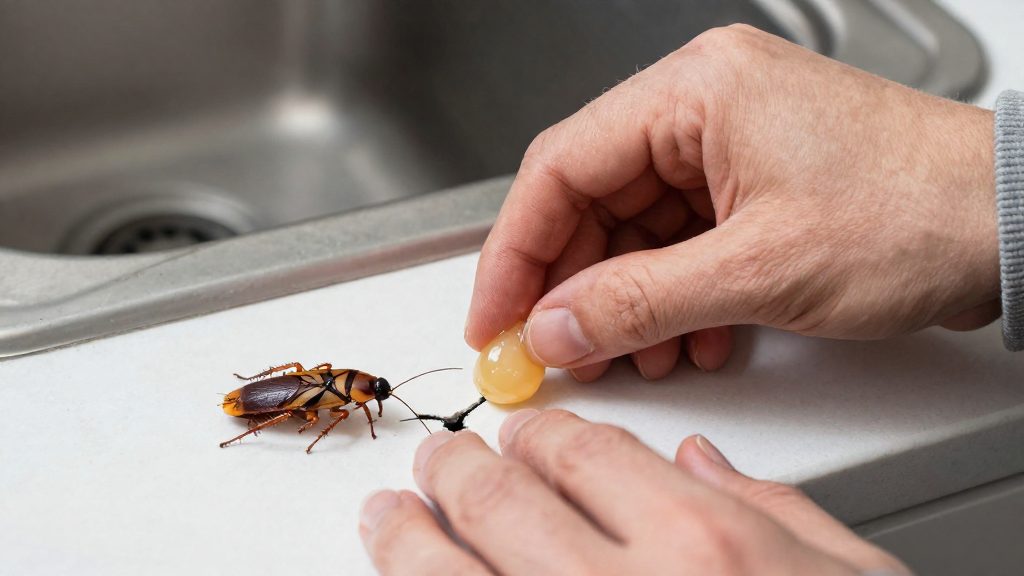
Gel baits work best when they sit where German cockroaches already feed and hide.
Place Gel Baits Near Hiding and Foraging Areas
- Hiding areas: Put baits close to the warm, humid harborages in kitchens and bathrooms rather than in open floor space.
- Patience: Baits act slowly, so cockroach activity may not drop right away (University of Minnesota Extension, 2024).
Replace Deposits Once They Harden
Gel deposits lose effectiveness once they dry out and harden. The University of California Statewide IPM Program notes that deposits may need replacement when this happens. Check placements regularly and swap in fresh deposits, rather than leaving hardened ones in place.
Keep Insecticide Sprays Away from Baits
Do not spray insecticide on or near bait placements, because the spray can contaminate the bait, according to the Illinois Department of Public Health. Treat other areas with sprays if needed, but keep the bait points clear.
Always follow the pesticide label. The U.S. Environmental Protection Agency advises using only products approved for the intended indoor location and keeping baits out of reach of children and pets.
Why Should You Avoid Bug Bombs?
Total-release foggers are not recommended for German cockroach control. According to the University of Kentucky Department of Entomology (2026), little insecticide reaches concealed harborages, and the repellent ingredients in many foggers can scatter cockroaches deeper into inaccessible spaces such as wall voids. A fog settles mainly on open floors and surfaces, so it misses the cockroaches that stay hidden.
Why Sprays Alone Fall Short
Insecticide sprays alone will not eliminate German cockroaches, according to the University of California Statewide IPM Program. Spraying visible cockroaches may provide temporary knockdown, but sprays alone do not provide long-term control and may disperse cockroaches to other areas. Repeated spraying of visible cockroaches therefore treats the symptom rather than the infestation.
The Integrated Pest Management Alternative
Integrated pest management (IPM) combines several methods instead of relying on one product. Effective control generally requires reducing food, water and hiding places together with appropriate control methods (UC Statewide IPM Program). The control methods include:
- Gel baits: place them near hiding or foraging areas and replace deposits when they harden. Baits act slowly, so results may not be immediately visible (University of Minnesota Extension, 2024).
Prevent Roaches From Returning
German cockroaches can be reintroduced on infested goods or move between apartments through shared walls and ceilings, including gaps around plumbing.
Inspect Items Before They Come Indoors
Check these items before bringing them inside, and inspect used furniture at the door or outdoors rather than in the living area.
Monitor for Reinfestation
Keep the traps in place after treatment ends so that new catches can be compared with earlier records.
Frequently asked questions
Can I use boric acid against German cockroaches in my apartment?
Apply boric acid dust as a thin, barely visible layer in cracks and voids rather than in piles. Keep it out of reach of children and pets.
Do baking soda, essential oils or ultrasonic repellents get rid of them?
Do not rely on them to eliminate an apartment infestation. Any use should accompany the monitoring, sanitation and bait steps described above, not replace them.
How long does it take to clear an apartment?
No guaranteed clearance date exists, because results depend on treating the infested unit and all adjacent units together. Judge progress by comparing trap counts across successive checks rather than by a single inspection.