Mosquitoes bite during daytime as well as at night, so tonight’s protection should not stop at sunset. Physical barriers and covered skin act as soon as they are in place, and a repellent on exposed skin works from the moment it is applied, following its label. Build the patio setup from the measures that act immediately.
How Can You Keep Mosquitoes Away Tonight?
Measures ranked by how quickly they act
- Physical barriers. Netting works as soon as it is installed around the seating.
- Covered skin. Wear loose-fitting, long-sleeved shirts and pants. Loose fabric keeps the body covered without needing any product applied.
- Repellent on exposed skin. Apply an EPA-registered repellent.
- Outdoor sprays and foggers. They do not provide lasting control, so they work best as a short-term addition to the measures above.
Items not recommended as primary protection
- Mosquito-repellent plants, bracelets, and many essential-oil products.
- Bug zappers: they do not control mosquitoes and kill many beneficial nighttime pollinators.
Layering the patio
Combine netting around the seating, covered clothing on the body, and label-directed repellent on any skin left uncovered. Add a spray only for short-term relief, and keep the non-recommended items out of the plan.
⚠️ Avoid: Permethrin products must never be applied directly to skin.
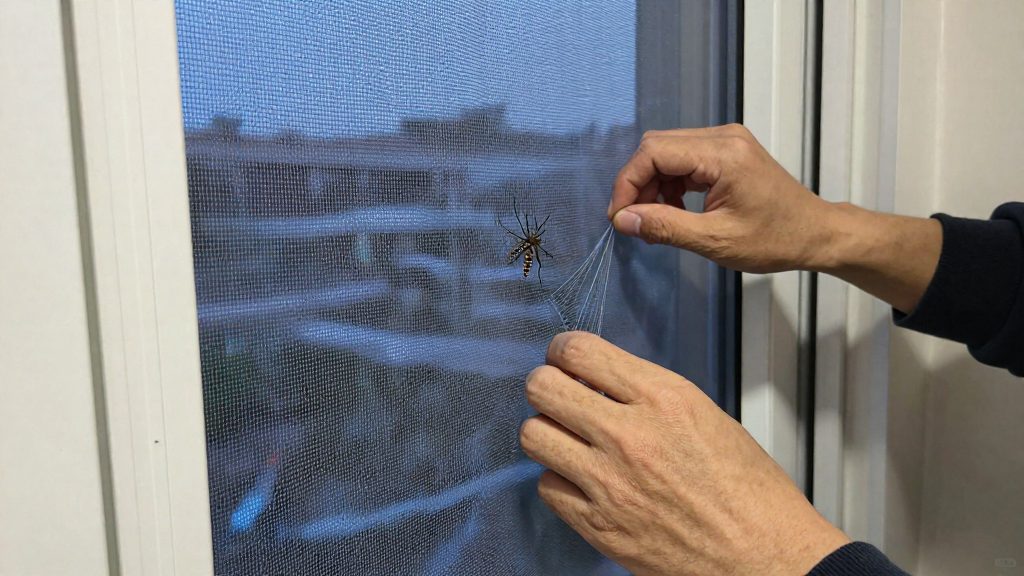
Use Fans Around Your Patio Seating
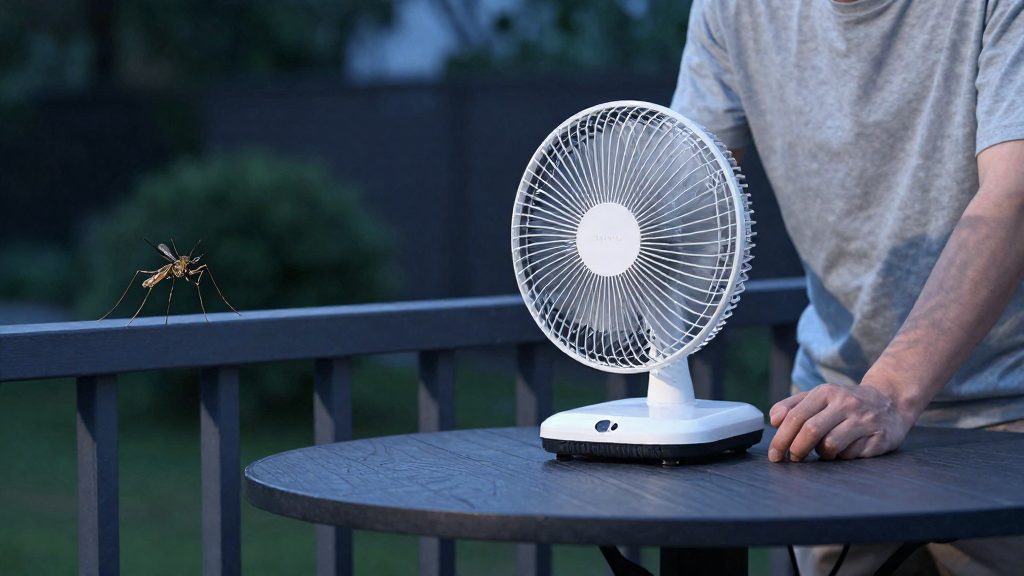
Placing an electric fan near patio seating is one way to make it harder for mosquitoes to land on you. The National Pesticide Information Center at Oregon State University (2026) describes this as a measure to help keep mosquitoes from flying onto you. The fan works by moving air across the seating area, which disturbs the flight path of mosquitoes approaching people.
To use this method:
- Place the fan beside or slightly behind the seats, aimed across the area where people sit, so the airflow passes over the sitters rather than blowing directly onto the table or the grill.
- Run the fan continuously during the evening.
- Keep the fan at a setting strong enough to create a steady breeze across the seats.
Check the fan’s manufacturer instructions for outdoor use and power safety.
Limits of a fan
A fan is a supplementary measure, not a complete barrier. It does not block mosquitoes from entering the patio area, and it does not replace physical screening, which is covered in the screens section. Bite protection on skin and clothing should follow the repellent section.
Choose an EPA-Registered Mosquito Repellent
Choose a repellent that is EPA-registered and contains one of the six active ingredients the CDC recommends. Check the active ingredient list on the label, since brand names do not indicate which ingredient a product contains.
CDC-recommended active ingredients (CDC, 2024):
- DEET
- Picaridin
- IR3535
- 2-undecanone
- Oil of lemon eucalyptus
- PMD
Application Rules
- Reapply according to the product label. Reapplication timing differs between products, so do not assume one interval applies to every repellent.
- Apply repellent to exposed skin only. Never apply it to skin underneath clothing (CDC, 2024).
Remove Standing Water Every Week
Mosquitoes develop in standing water, so checking and maintaining water-holding items around your home every week helps reduce breeding sites. According to the Centers for Disease Control and Prevention (2024), once a week you should empty and scrub, turn over, cover, or discard water-holding items. Most of these items take less than a few minutes to check, which makes the routine practical to repeat.
Flowerpot Saucers and Buckets
Empty flowerpot saucers and buckets to remove larvae, then scrub the inside to remove attached eggs. Store buckets upside down or discard them when they are no longer in use, so rainwater cannot collect in them.
Birdbaths and Toys
Empty birdbaths and scrub them weekly, or turn them over when they are not in use. Do the same for children’s toys, pool floats, and other water-holding objects left outdoors, because they collect rainwater quickly.
Rain Barrels and Water-Storage Containers
Tightly cover rain barrels and other water-storage containers so mosquitoes cannot enter to lay eggs. A loose lid or a gap at the rim leaves an access point, so check the seal during each weekly inspection.
Add Screens or Mosquito Netting
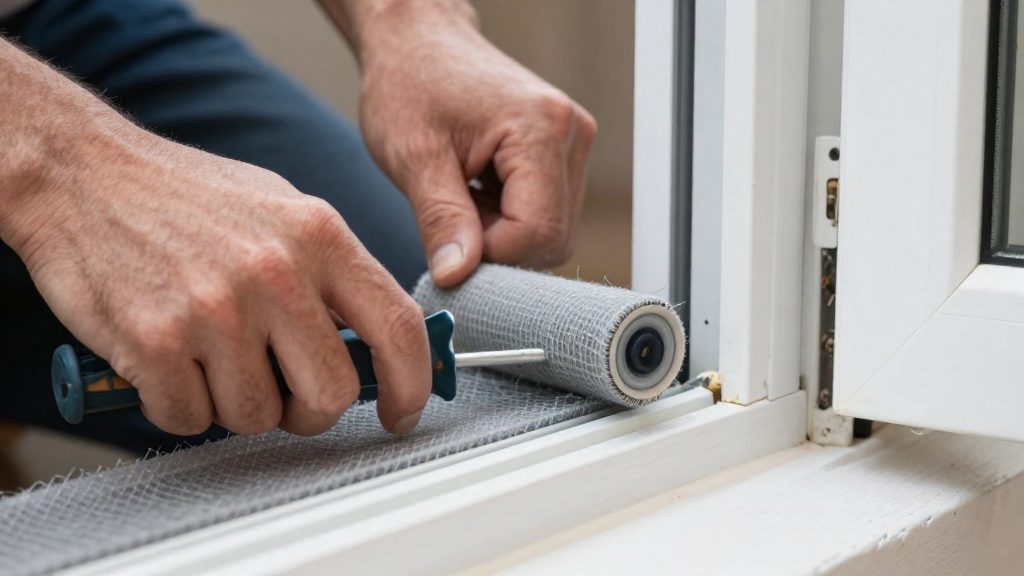
Mosquito netting is a physical barrier. According to the National Pesticide Information Center at Oregon State University (2026), netting can cover porches and other outdoor areas, which makes it the most direct way to keep mosquitoes off a seating area.
Fitting netting around porch entry points
- Measure the full perimeter of the porch and each door, window, or gap that connects it to the outside.
- Cover every porch entry point before using the space, not only the largest opening.
- Close doors fully after passing through, since a single open door leaves a gap in the barrier.
- Inspect the netting for tears or loose edges before each evening, and repair or replace damaged sections.
Enclosed porch versus open patio
| Setup | Protection method | Key consideration |
|---|---|---|
| Enclosed porch | Netting covers the porch as one continuous barrier | Entry points must be sealed to keep the barrier complete |
| Open patio | Netting must be hung around or over the seating area | No walls, so the netting must be positioned to close the open sides |
Keep the netting in place whenever the space is in use.
Do Citronella Candles and Plants Work?
Citronella candles, mosquito-repellent plants, bracelets, and many essential-oil products are not recommended as primary prevention against mosquito bites, according to the Alameda County Mosquito Abatement District. Treat them as supplements to other measures, not as replacements for them.
Citronella Candles
Citronella candles are the most common scent product on patios, but wind further limits their effectiveness. A candle will protect little on an open patio where air moves freely, so it should not be relied on for seating areas.
Potted Mosquito-Repellent Plants
The more reliable step is removing breeding sites. Potted plants sit in saucers that collect water.
Scent Products as a Supplement
Scent products fit into a layered approach only after the basics are in place. Mosquito-repellent plants may have only a small, temporary effect immediately around the plant, and wind limits citronella candles’ effectiveness; neither should replace established bite-prevention measures.
When Should You Consider Mosquito Treatments?
If bites continue on the patio after you have emptied, scrubbed, or covered water-holding items and covered rain barrels, a targeted treatment becomes a reasonable next step. Outdoor insecticide sprays and foggers can temporarily reduce adult mosquito populations, but longer-term management has to address standing water and larvae, according to the University of California Statewide Integrated Pest Management Program. A spray that ignores the breeding source gives short-lived relief.
| Treatment | What the evidence supports | Limit |
|---|---|---|
| Outdoor insecticide sprays and foggers | Temporarily reduce adult mosquitoes | Do not remove larvae or standing water |
| Larvicides | Treat water that will not be used for drinking | Only for water that cannot be covered or emptied |
Contacting Local Mosquito Control
When bites persist despite the measures above, contact your local mosquito control or abatement district. Use the district to identify the source of the problem and to confirm which treatments are appropriate for your area.
Checking the Product Label First
Read the product label before any application. Confirm that the product suits your specific situation before using it on the patio or in nearby water.