Why do mosquito bites itch?
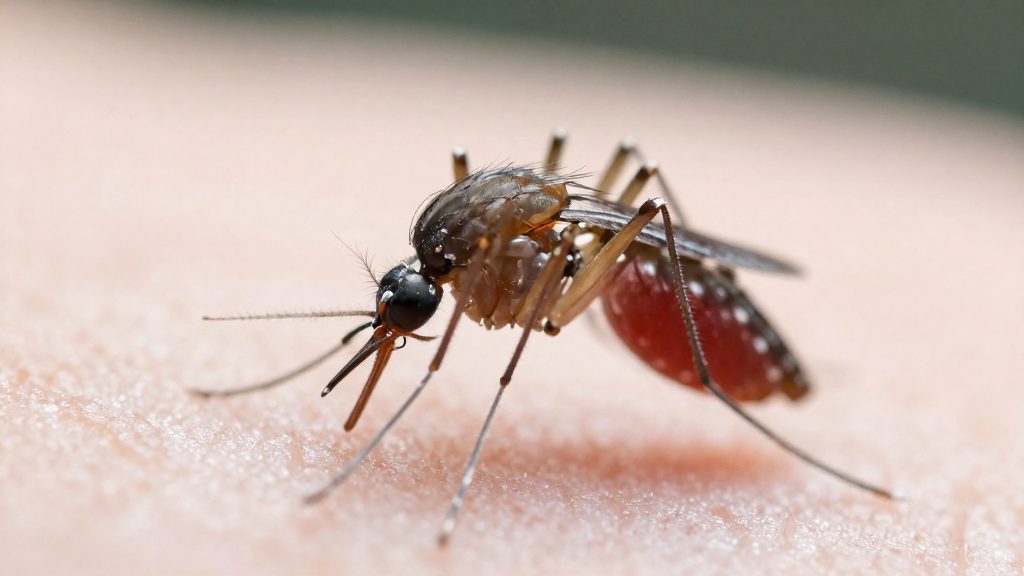
Mosquito bites itch because of the body’s immune response to the insect’s saliva. When a female mosquito feeds, she injects saliva containing anticoagulant proteins that keep the victim’s blood from clotting while she draws it. The immune system recognises these proteins as foreign, and cells in the skin, mainly mast cells, respond by releasing histamine. Histamine widens nearby blood vessels, which causes redness and swelling, and it stimulates sensory nerve endings, which produces the itch.
When the itch starts
The itch usually begins soon after the bite, as histamine acts on nerve endings near the skin surface. Some bites also produce a delayed reaction. The skin can become firmer, larger and itchier hours later, and the lump may persist longer than the initial welt.
Why reactions differ between people
Reaction strength depends on how sensitised the immune system is to mosquito saliva. People who have been bitten frequently often develop a weaker response over time. People with little prior exposure, such as young children or newcomers to an area with many mosquitoes, tend to react more strongly. Individual skin sensitivity and the number of bites in one area also affect how intense the itch becomes.
Cold and washing: the first steps
Washing the bite and applying cold are the two immediate home actions for a mosquito bite. Both need no prescription and act on the itch and swelling before any cream is used.
Washing with soap and water comes first. Cleveland Clinic (2026) lists washing with soap and water as the opening step of home care for an itchy bite, ahead of any topical product. Wash the area as soon as possible after the bite appears, clean the skin around it, and pat it dry. Washing is the first home-care step Cleveland Clinic (2026) lists for an itchy bite.
Cold comes second. The American Academy of Dermatology (2026) recommends an ice pack for itching and notes that it also helps with swelling, so one step addresses both symptoms. Apply the ice pack to the bite for itch and swelling, alone or alongside a cream. Place a thin cloth between the ice and the skin rather than putting ice directly on the bite. Keep the pack in place for as long as it gives relief, then remove it and check the skin.
A practical routine, though the source requires no strict order:
- Wash: clean the bite with soap and water as a practical first step.
- Cool: apply an ice pack to reduce itch and swelling; no strict order is required.
- Add other treatments as needed: cream or medication can be used on the washed bite, and ice can be used alongside them.
Following this sequence gives the bite a clean surface and a reduced temperature before any product touches it, This gives the bite a clean surface before any product is applied.
Over-the-counter creams that calm the itch
Two topical products are commonly used for itching from a mosquito bite: hydrocortisone cream and calamine lotion. The American Academy of Dermatology (2026) recommends an over-the-counter anti-itch cream containing an ingredient such as hydrocortisone, and Cleveland Clinic (2026) lists hydrocortisone cream and calamine lotion as the two topical steps in home care for an itchy bite. The two products work differently and are used differently.
Hydrocortisone cream
Hydrocortisone is the active ingredient in the anti-itch cream. Medical News Today (2026) advises using it sparingly and for short periods only. Use it sparingly and for short periods only, as the source advises.
Calamine lotion
Calamine lotion is the second topical product in the home-care routine. Cleveland Clinic (2026) describes it as containing a mild numbing agent, so its effect on itching comes from numbing the skin rather than from the anti-inflammatory action of hydrocortisone. Calamine lotion can be used as an alternative or an addition to hydrocortisone cream, following the product label.
How often to reapply
Cleveland Clinic (2026) says topical treatments can be reapplied about every four hours as needed. Because Medical News Today (2026) advises using hydrocortisone sparingly and for short periods, follow the product label for hydrocortisone, and stop once the itch has resolved.
Do oral antihistamines help?
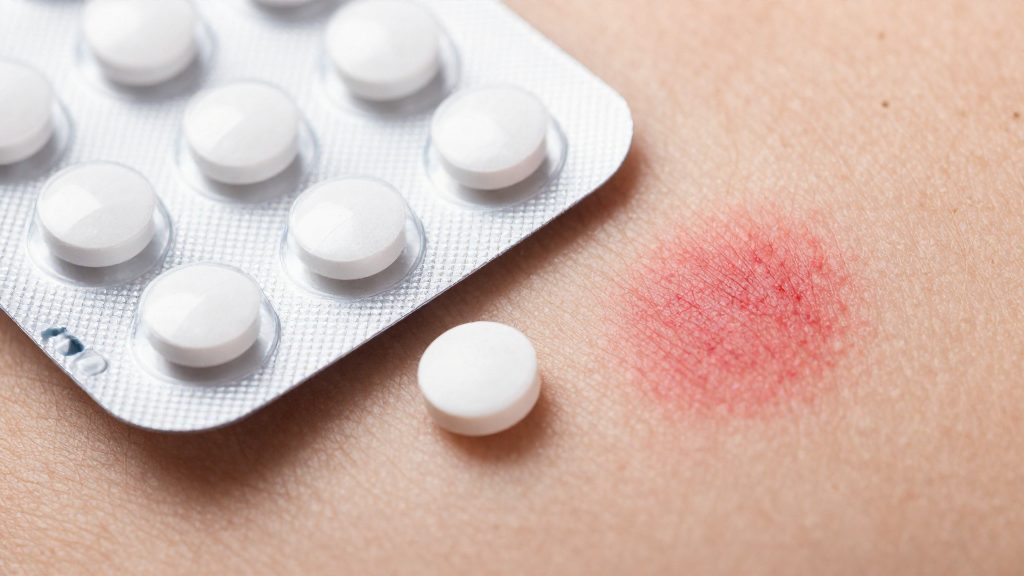
The American Academy of Dermatology (2026) lists an over-the-counter oral antihistamine as a possible option for an itchy bite, alongside an ice pack and an anti-itch cream. It is presented as an addition to local care, not a replacement for it. Oral products act on the whole body, while creams act only on the skin where they are applied.
For localized itch, a topical product is the more direct first step. An oral antihistamine is a better fit when itching is widespread or when a cream is hard to apply to the affected area.
Over-the-counter oral antihistamines are sold in several forms. Follow the product label. Follow the dosage on the product label for your age. For children, during pregnancy, or if you take other medication, check with a doctor or pharmacist first.
| Option | Where it acts | How it is used |
|---|---|---|
| Oral antihistamine | Whole body, taken by mouth | Tablet, capsule or liquid, per the label |
| Hydrocortisone cream | Skin, at the bite | Applied to the bite |
| Ice pack | Skin surface | Helps with itching and also reduces swelling (American Academy of Dermatology, 2026) |
Topical options are usually the first choice for a single bite. Combining an oral antihistamine with a topical product or an ice pack is a practical approach when one bite itches intensely or several bites are affected.
What the guidance says about honey, aloe and baking soda
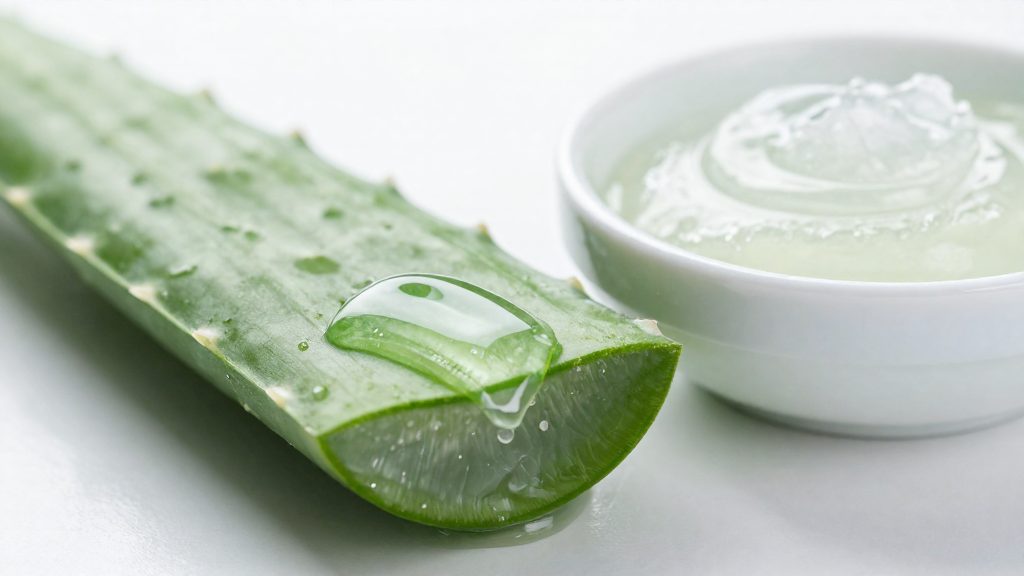
Honey, aloe vera and baking soda are often suggested as kitchen remedies for bite itch, but the cited sources do not cover them. The medical guidance cited for this article recommends different first-line options: an over-the-counter anti-itch cream containing an ingredient such as hydrocortisone, or an oral antihistamine. Kitchen remedies are not part of those recommendations, so they work best as soothing supplements rather than replacements.
Honey and aloe vera
Apply a thin layer of honey or aloe gel to the cleaned bite and let it dry. Neither product appears in the home-care steps for itchy bites from Cleveland Clinic (2026) or Medical News Today (2026), so they should not replace a treatment with proven anti-itch ingredients.
Baking soda paste
Mix baking soda with a small amount of water until it forms a thick paste. Spread it over the bite, leave it until dry, then rinse the area. Like honey and aloe, it is a comfort measure with no role in the cited treatment steps.
Comparison with hydrocortisone and calamine
| Option | What the cited guidance says |
|---|---|
| Hydrocortisone cream (over the counter) | Recommended by the AAD (2026) for itch. Not for children, pregnant women or people with skin infections (Medical News Today, 2026). |
| Honey, aloe vera, baking soda paste | Not included in the recommended treatment steps. Use only as an added, soothing layer. |
Hydrocortisone cream and oral antihistamines are the options in the sources with a named ingredient or class for itch. The cited sources say nothing about honey, aloe or baking soda, so no claim about their effect can be made. Rely on the options the sources do cover. If itching persists despite a recommended treatment, the medical options above should be used instead of, or before, kitchen remedies.
Stop scratching: avoiding infection
Scratching a mosquito bite can break the skin, and a broken bite gives bacteria a way in. Most bites heal without complications, but infection can develop, so it helps to know what to watch for in the days after a bite. Cleveland Clinic (2026) lists the signs of an infected bite, grouped below by whether they stay at the bite or affect the whole body.
Local signs appear at or around the bite:
- Redness spreading well beyond the bite
- Red streaks
- Pus or drainage
- Warmth in the surrounding skin
Systemic signs affect the whole body:
- Swollen lymph nodes
- Chills
- Fever over 100°F (37.7°C)
Keeping the skin intact is the simplest way to lower the risk. Keep fingernails short and clean to reduce skin damage from scratching. Wash your hands before touching a bite, and avoid picking at scabs or the bite itself.
When should you see a doctor?
Most mosquito bites settle with home care, but three patterns call for medical advice. Breathing problems, hives or swelling, nausea, vomiting or dizziness need immediate care. A rash, fever or body aches call for seeing a doctor or board-certified dermatologist right away. A bite lasting more than one week, or showing signs of infection, needs a doctor.
| Symptom after a bite | What to do |
|---|---|
| Trouble breathing, hives or swelling, nausea, vomiting, or dizziness | Seek immediate care |
| Rash, fever, or body aches | See a doctor or board-certified dermatologist right away |
| Bite lasting more than one week, or signs of infection (spreading redness, red streaks, pus, warmth, swollen lymph nodes, chills, fever over 100°F / 37.8°C) | See a doctor promptly. Infections such as cellulitis are typically treated with antibiotics |
Severe allergic reactions are the most time-sensitive case. According to Medical News Today (2026), breathing problems, hives or swelling, nausea, vomiting, and dizziness after a bite can signal one of these reactions. Treat any of these signs as an emergency, and do not wait to see whether the itch improves.
Rash, fever, or body aches after a bite are a different concern. The American Academy of Dermatology (2026) advises seeing a doctor or board-certified dermatologist right away in this situation, because a disease transmission may have occurred. Symptoms can appear days after the bite, so note the date of the bite, where it happened, and when each symptom started. This timeline helps the clinician assess possible causes.
A bite that still itches or hurts after more than one week needs a medical review, even without other symptoms. Likewise, any bite showing signs of infection should be assessed by a doctor rather than managed at home alone.
Frequently asked questions
How long can I keep using hydrocortisone cream on a mosquito bite?
Keep hydrocortisone use brief and limited, as Medical News Today (2026) advises. If the itch continues after a short course, ask a pharmacist or doctor about another option rather than applying more or for longer.
What should I do if a bite starts to look infected?
Spreading redness, red streaks, pus or a fever above 100°F (37.8°C) call for a prompt medical appointment, because cellulitis is typically treated with antibiotics (Cleveland Clinic, 2026). Do not wait for the bite to clear on its own in these cases.
Do honey or aloe vera stop bite itch?
They are popular home suggestions, but they are not among the options covered here, so they should not replace a product with a known use. An ice pack or an over-the-counter anti-itch product is a more reliable first choice.