Are Mosquito Foggers Safe for Indoor Use?
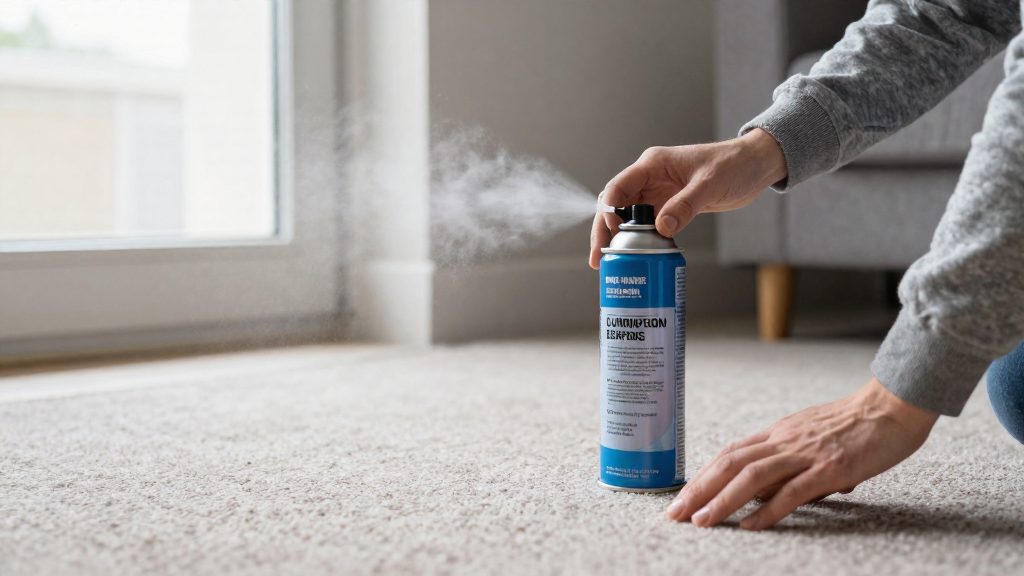
Mosquito foggers can be used indoors only as a supplement to other controls, never as a standalone solution. Indoor insect sprays and foggers can kill mosquitoes, but the Centers for Disease Control and Prevention (CDC) recommends applying an indoor insecticide only when mosquitoes remain after window and door screens have been repaired and water-holding containers have been removed. Not every mosquito fogger is suitable for indoor use, so each product must be checked against its own label before use.
Are Mosquito Foggers Safe for Indoor Use?
When the CDC Recommends an Indoor Insecticide
According to the CDC (2024), use follows this sequence:
- Repair window and door screens.
- Remove water-holding containers from the home.
- Check whether mosquitoes are still present.
- Apply an indoor insecticide only if mosquitoes remain.
Knockdown Speed and Reapplication
Indoor mosquito insecticides act quickly, but they may need reapplication. No universal retreatment interval applies, so the product label sets the interval for each product.
Why Foggers Cannot Replace Exclusion and Source Elimination
The CDC (2024) states that insecticide alone will not keep a home free of mosquitoes. Foggers do not block entry through open doors or unscreened windows, and they do not stop breeding in water-holding containers.
Exclusion and source elimination address the causes of an infestation, while a fogger only reduces the adults present at the time of treatment.
Outdoor, Thermal and ULV Foggers
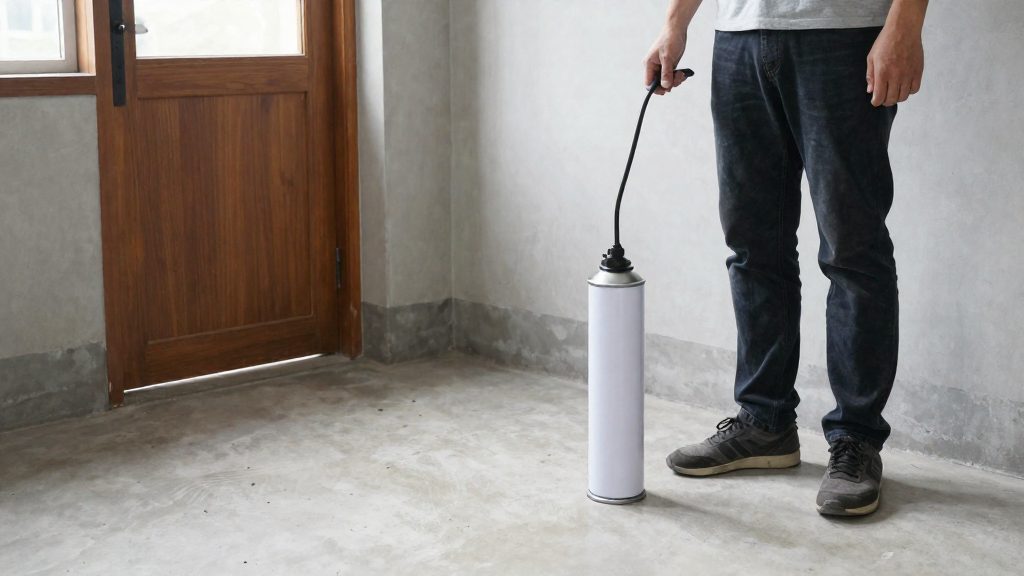
Indoor suitability of an outdoor, thermal or ULV mosquito fogger cannot be assumed. According to the U.S. Environmental Protection Agency, CDC and U.S. Department of Housing and Urban Development (2022), indoor fogging equipment must use a product registered for that application method, and the label’s instructions on ventilation, protective equipment and reentry must be followed.
Which Foggers Are Labeled for Indoor Mosquitoes?
Before buying, check the product label rather than the packaging headline. The label has to name indoor household or residential use and list mosquitoes among the insects it kills. The CDC states that indoor insect sprays and foggers can kill mosquitoes (CDC, 2024-04-16). The reviewed sources do not support a blanket claim that every mosquito fogger is safe for indoor use.
Reading the Label Statements
Three elements on the label determine indoor suitability:
- Use site: an explicit indoor household or residential use statement.
- Target pests: mosquitoes named in the list of insects killed.
- Application method: the label must cover the method used, such as total release fogging, and direct you to follow its ventilation, protective equipment and reentry instructions.
A fogger sold for outdoor use, or one whose label does not state an indoor use, cannot be assumed suitable indoors. For thermal or ULV (ultra-low-volume) outdoor foggers, indoor suitability cannot be established without the equipment instructions and the pesticide label.
Example: Hot Shot Fogger With Odor Neutralizer6
The Hot Shot Fogger With Odor Neutralizer6 label specifies indoor household/residential use and lists mosquitoes among the insects it kills (Spectrum Group / United Industries Corporation, 2022). Its label also requires removing or covering exposed food, dishes, utensils and food-processing surfaces, and covering aquariums and turning off their airflow systems before treatment. Use this list as a template when checking other products.
Matching Fogger Size and Quantity to the Room
EPA advises selecting fogger size and quantity according to the label (U.S. Environmental Protection Agency, 2026-07-06). No universal quantity per room size is established, so the figures on the specific product label are the only valid reference.
- Measure the room’s length, width and height.
- Compare the result with the coverage wording on the product label.
- Use the quantity the label specifies. Do not add units to cover a larger space unless the label allows it.
Prepare Your Home Before Fogging
Preparation starts with the room layout, before any fogger is placed or activated. Follow the product label: Hot Shot Fogger With Odor Neutralizer6 requires opening interior doors in treatment areas and closing exterior doors and windows. Check each room for gaps around door frames, window frames and utility openings, and seal them so the product does not drift into adjacent rooms or outside.
Air circulation also needs attention. Switch off ceiling fans, portable fans and the HVAC system so the fog is not pushed out of the room or dispersed unevenly. Confirm that the system is off at the thermostat and at the unit’s own switch, not only at a wall panel.
Plan the open-space placement room by room. Follow the label’s placement instructions. For Hot Shot Fogger With Odor Neutralizer6, use a chair, table or stand in the room’s center, protected with newspaper or paper towels.
Protect Children, Pets, Food, and Aquariums
Clear the treated space of people and animals, and remove or cover anything that touches food or drinking water, before you activate a fogger. According to the U.S. Environmental Protection Agency (2026), everyone, including pets, must leave the home immediately after activating a total release fogger and stay out for the period on the label. Children and other residents follow the same rule, so no one should stay inside to supervise.
Occupants and Pets
- Move all people, including children, out of the structure before activation.
- Take pets out as well. The label for Hot Shot Fogger With Odor Neutralizer6, which is registered for indoor household use, requires removing pets and birds (Spectrum Group / United Industries Corporation, 2022).
Food and Food-Contact Surfaces
The same Hot Shot label requires removing or covering exposed food, dishes, utensils and food-processing surfaces before treatment (Spectrum Group / United Industries Corporation, 2022). In practice:
- Put food into sealed containers, the refrigerator or closed cabinets.
- Move dishes and utensils off counters, tables and drying racks.
- Cover any counter or table that cannot be cleared.
Aquariums and Fish Tanks
Cover each aquarium or fish tank and turn off the airflow systems serving it, such as air pumps, before treatment (Spectrum Group / United Industries Corporation, 2022).
Prevent Fogger Fires and Explosions
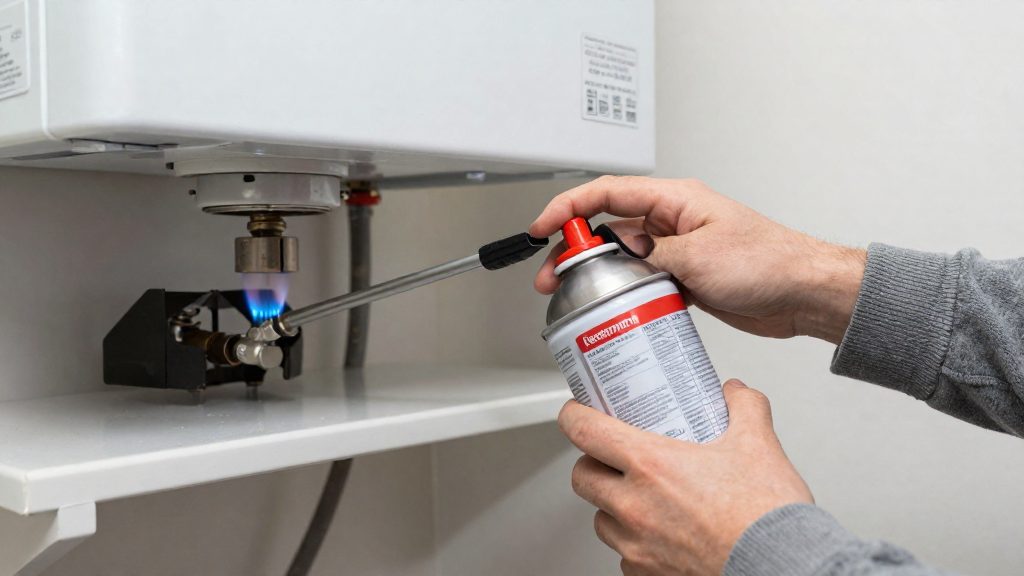
Total release foggers can cause fires or explosions when flammable vapors reach flames, pilot lights or electrical sparks, according to the U.S. Environmental Protection Agency (2026). The EPA recommends placing each fogger at least six feet (about 1.8 m) from every ignition source before activation.
Before activating a fogger, identify and neutralize the following sources:
| Ignition source | Action before activation |
|---|---|
| Pilot lights (for example, on gas water heaters or furnaces) | Shut off the pilot at the appliance |
| Open flames (candles, gas burners) | Extinguish them |
| Electrical sparks from switches and appliances | Check the product label for instructions on switches and appliances in the room |
Measure the six-foot distance from the fogger itself to each source, not from the room’s entrance or the fogger’s packaging.
When Can You Return After Fogging?
Reentry timing is set by each product’s label, not by a universal rule. For the Hot Shot Fogger With Odor Neutralizer, the label requires at least two hours without reentry after activation, followed by two hours of ventilation before anyone reoccupies the home (Spectrum Group / United Industries Corporation, 2022):
| Stage | Hot Shot label requirement |
|---|---|
| No-reentry period | At least two hours after activation |
| Ventilation | Two hours before reoccupying |
Extending Ventilation
If an odor remains after the two-hour ventilation period, the label requires additional ventilation before reoccupying the home. The two-hour figure is therefore a minimum, not a clearance point. Check for odor in the rooms that were treated, not only in the main living area.
Other Foggers
Other total release foggers have their own reentry and ventilation periods. Read the label before purchase and use only the times printed on it, since the Hot Shot values cannot be applied to other products. The U.S. Environmental Protection Agency (2026) directs occupants to stay out for the period specified on the label.
Keep Mosquitoes Out After Treatment
Fogging only reduces the adult mosquitoes present at the time of application. Keeping mosquitoes out depends on exclusion, which blocks entry, and on breeding-site control, which removes the places where larvae develop.
Exclude Mosquitoes From the Home
- Repair or replace window and door screens with holes or tears.
- Seal gaps around window and door frames.
- Keep doors closed when not in use.
The CDC recommends window and door screens and keeping doors closed to prevent mosquitoes from entering the home (Centers for Disease Control and Prevention, 2024).
Empty Water-Holding Containers
Indoors, the CDC recommends emptying and scrubbing water-holding containers weekly. Check plant saucers, pet water bowls, vases and any other container that collects water.
Clear Outdoor Standing Water
Outdoors, mosquitoes breed in standing water. Clear gutters and drains so water does not stagnate, and empty any outdoor container that holds water.