Which Pests Enter Homes Before Winter?
Overwintering insects
Brown marmorated stink bugs and Asian lady beetles commonly move indoors as temperatures fall. Start looking for them when daytime and nighttime temperatures begin to drop in your area, rather than waiting for a set date.
Rodents
Mice can enter homes through very small openings. Because rodent entry can happen through very small openings, include gaps that look too small to matter during a prewinter inspection.
Where Can Pests Enter Your Home?
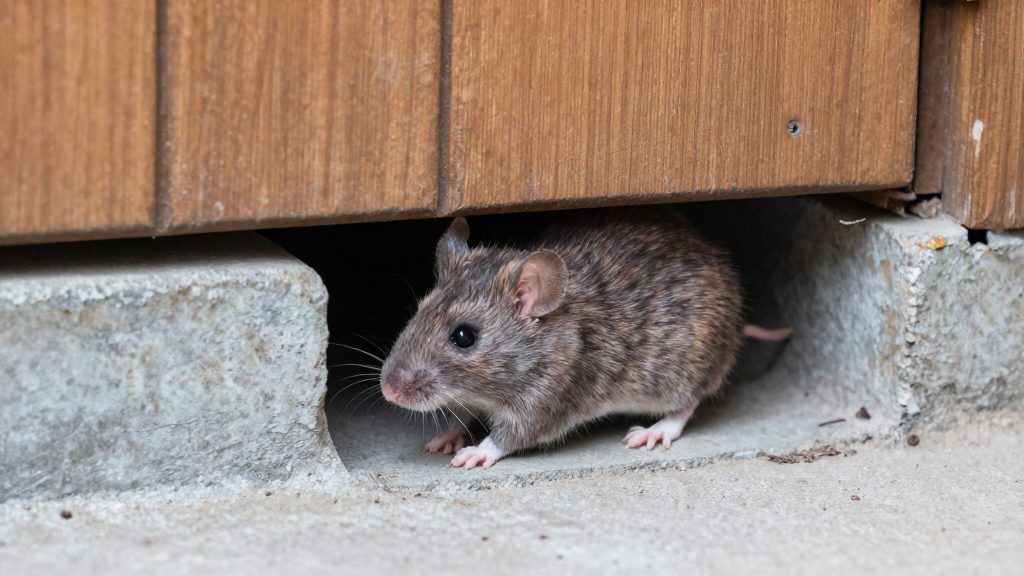
Mice can squeeze through an opening only 1/4 inch (6 mm) in diameter, so a gap that looks too small to matter can still be an entry point. According to the Centers for Disease Control and Prevention (2024), an inspection before winter should cover doors, windows, utility penetrations, attic and crawl-space vents, eaves, foundations, garages, and outbuildings. The table below lists what to check at each point.
| Entry point | What to inspect |
|---|---|
| Doors | Gaps under the door, condition of the weather stripping, and whether the door sits flush in its frame |
| Windows | Gaps between the frame and the wall, and the condition of the seals around the glass |
| Utility penetrations | Openings around pipes, cables, and vent lines where they enter the wall, floor, or roof |
| Eaves | Gaps where the roofline meets the wall, and the edges of soffits and fascia boards |
| Foundations | Cracks and gaps in the foundation wall, and openings where the siding meets the foundation |
| Attic and crawl-space vents | Vent screens that are torn, missing, or loose in their frames |
| Garages and outbuildings | Gaps under the garage door, door frames, and openings in walls or floors |
Test every suspect gap against the 1/4 inch threshold
Hold a 6 mm (1/4 inch) gauge or a 1/4 inch drill bit against each opening. If it fits, treat the gap as a mouse entry point. The CDC (2024) recommends inspecting for and sealing gaps and holes; it does not prescribe a gauge or drill-bit test. Measuring an opening can help identify potential mouse entry points, but smaller gaps may still admit insects.
Check for overwintering insects too
Focus the inspection on the same doors, windows, and vents, because these are the points where insects gain access as well.
Seal Gaps Around Doors and Utilities
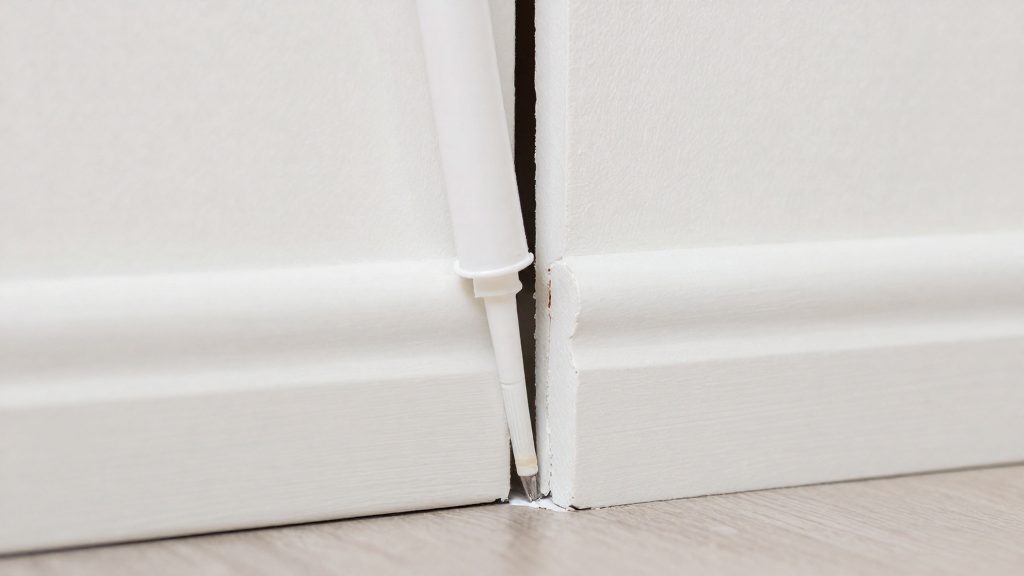
Match the sealing material to the size of the opening. The Centers for Disease Control and Prevention (2024) recommends filling small holes with steel wool secured with caulk or spray foam, and repairing larger openings with metal, cement, or hardware cloth.
| Opening size | Material | Typical location |
|---|---|---|
| Small holes | Steel wool secured with caulk or spray foam | Gaps around pipes and cables entering the wall |
| Larger openings | Metal, cement, or hardware cloth | Vents and gaps in the foundation |
For doors, the work is different because the gap is at the edges and the bottom:
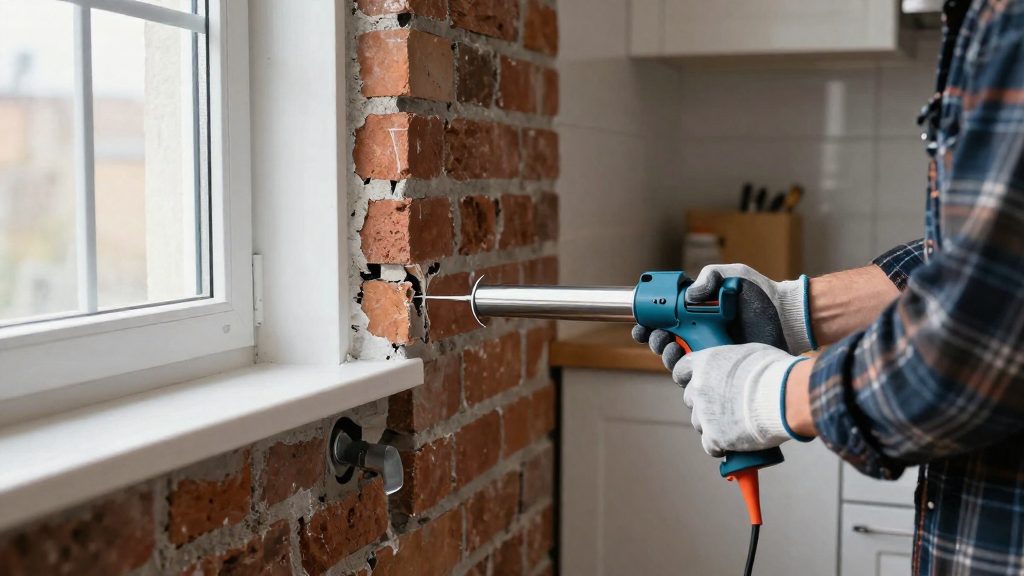
- Caulk the entry points around door and window frames.
- Replace weather stripping on doors that no longer close flush against the frame.
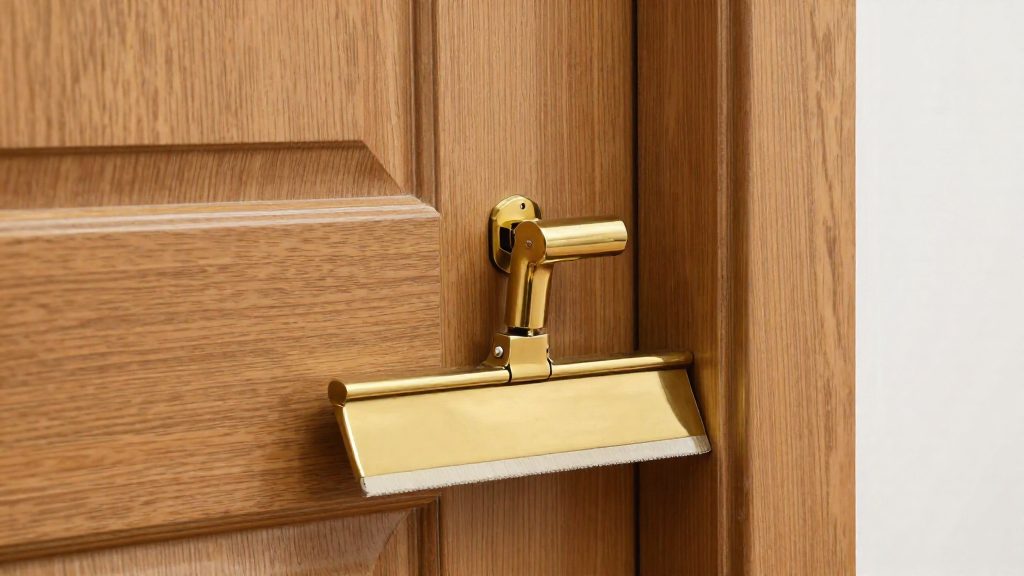
- Fit door sweeps to the bottom of exterior doors to close the gap at the threshold.
Caulking, new weather stripping, and door sweeps together block the routes overwintering insects use to enter a home. Check the product label for the caulk or spray foam’s application temperature and curing time before working in cold weather.
Remove Food, Water, and Indoor Clutter
Rodents and insects that move indoors need food, water and hiding places, and each of these can be reduced by changing how a home is kept.
Food Storage and Spills
According to the CDC (2024), food should be stored in tightly closed containers, spilled food should be cleaned up promptly, and garbage should be kept covered to reduce the food sources available to rodents.
Garbage Control
Water Sources and Clutter
The EPA (2026) recommends three measures to remove pest resources and hiding places:
- Repair leaking plumbing and eliminate accumulated water.
- Reduce clutter made of newspaper and cardboard, which provides shelter for pests.
- Check packages and boxes for pests before bringing them indoors.
Reduce Pest Shelter Around Your Yard
Vegetation and debris against the exterior of a house give insects and rodents sheltered places to overwinter and approach the walls unseen. The University of Missouri Extension (2024) states that trimming vegetation near the home and clearing yard waste can reduce insect hiding places, and the work is done in the same pre-winter inspection as the rest of the perimeter.
Trim Vegetation Away From Exterior Walls
Cut back shrubs, climbing plants and tree branches that touch the walls, roof or eaves. Branches that bridge the house give insects a direct route to the structure, and dense growth against the foundation keeps the soil and walls damp and shaded.
- Keep plants and branches clear of the exterior walls and roofline.
- Remove growth that rests on the foundation, so the wall and the area beside it stay visible for inspection.
- Trim vegetation around doors and windows, where insects gather before they enter.
Clear Yard Waste, Leaf Piles and Debris
Remove leaf piles, fallen branches, grass clippings and other debris from against the house and from the outbuilding walls. These materials hold moisture and offer shelter, which the University of Missouri Extension (2024) identifies as hiding places that clearing reduces.
- Rake leaves and remove them from the area next to the foundation.
- Clear wood piles, cardboard and stored materials away from the walls of the house, garage and outbuildings.
- Check garages and outbuildings during the same pass, since the CDC (2024) recommends inspecting them for rodent entry points.
Remove Food Sources Outside
Remove pet food left near the house.
Remove Asian Lady Beetles and Trap Rodents Already Inside
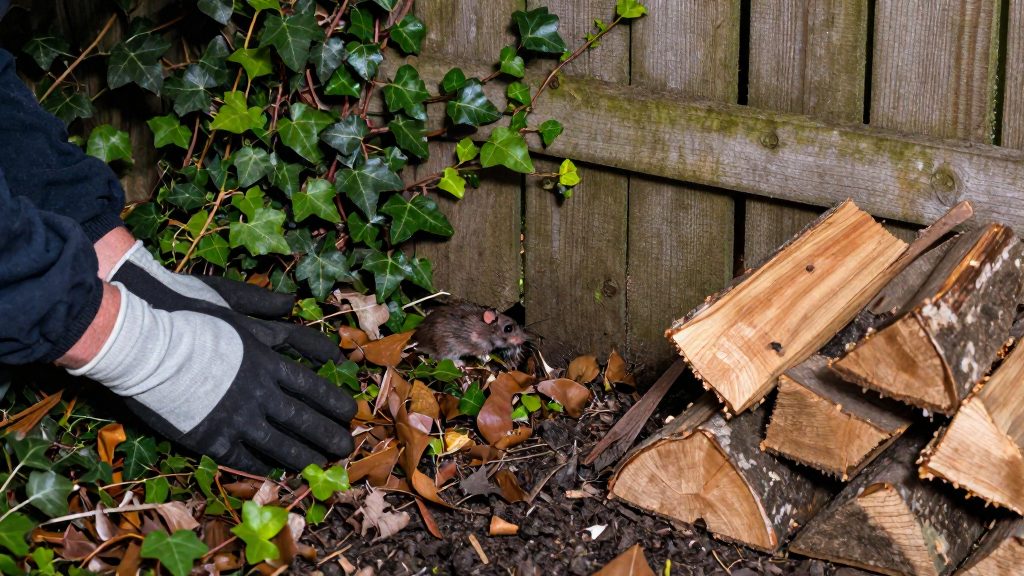
The right response depends on the pest. Asian lady beetles that have entered a home can be removed by hand or with a vacuum, while rodents call for traps. Trapping is the CDC’s recommended approach once rodents are present, and the choice of trap matters.
Removing Asian Lady Beetles
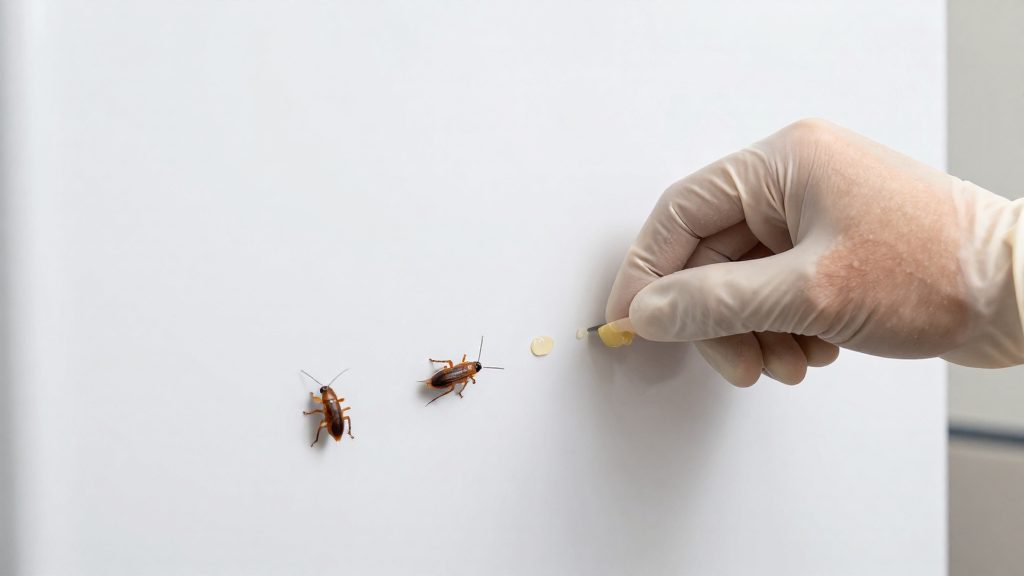
According to the University of Missouri Extension (2024), vacuuming can remove Asian lady beetles that enter a home. The same guidance states that indoor insecticides are generally ineffective against them, so spraying indoors is not a reliable fix.
Trapping Rodents
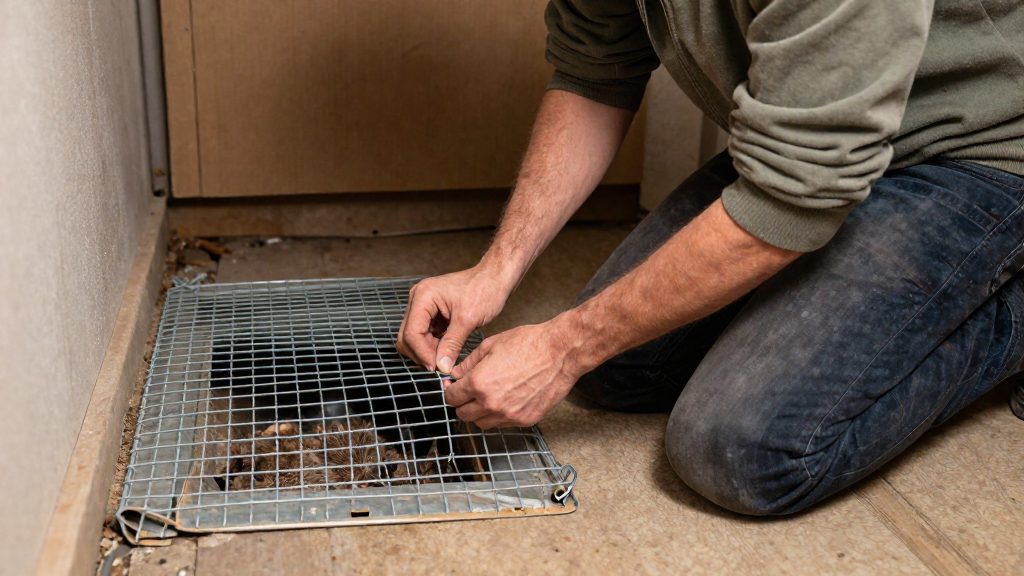
The CDC (2024) recommends snap traps sized appropriately for the rodent, placed where rodent activity occurs. Check them daily and keep them away from children and pets.
The CDC advises against glue traps and live traps. A frightened rodent may urinate, which increases exposure to disease.
| Pest | Recommended response | Source |
|---|---|---|
| Asian lady beetles | Vacuum them up | University of Missouri Extension (2024) |
| Rodents | Snap traps, placed where activity occurs, checked daily | CDC (2024) |
| Rodents | Avoid glue traps and live traps | CDC (2024) |
Use Pesticides Safely and Seek Help
Pesticide safety depends on how the product is used. The U.S. Environmental Protection Agency (2026) advises following pesticide labels and safety warnings and using only products approved for the application location. Read the product label before opening the container, and confirm that it lists your pest and your location.
Follow the Label and Manufacturer Directions
- Apply the product at the dilution, rate and location stated on the label. Do not increase the dose to speed up results.
- Follow the manufacturer’s instructions on ventilation and on when people and pets may return to a treated area.
- No single preventive treatment suits every home or pest. Check the label to confirm that the product targets your specific pest.
Store Pesticides Out of Reach
Keep products in their original labeled containers, never in food or drink containers. Store them where children and pets cannot reach them, such as a locked cabinet or a high shelf away from food supplies. Keep the label with the container so that first-aid and safety information is available.
When to Contact a Licensed Professional
Seek professional help when DIY measures do not resolve the problem. For rodents, the CDC (2024) identifies professional help as an option if trapping fails to resolve an infestation. When you choose a provider, look for a licensed professional who is registered with your state or local pesticide regulator. Ask which products they plan to use, and check each label before accepting treatment.