Why do roaches hide behind kitchen appliances?
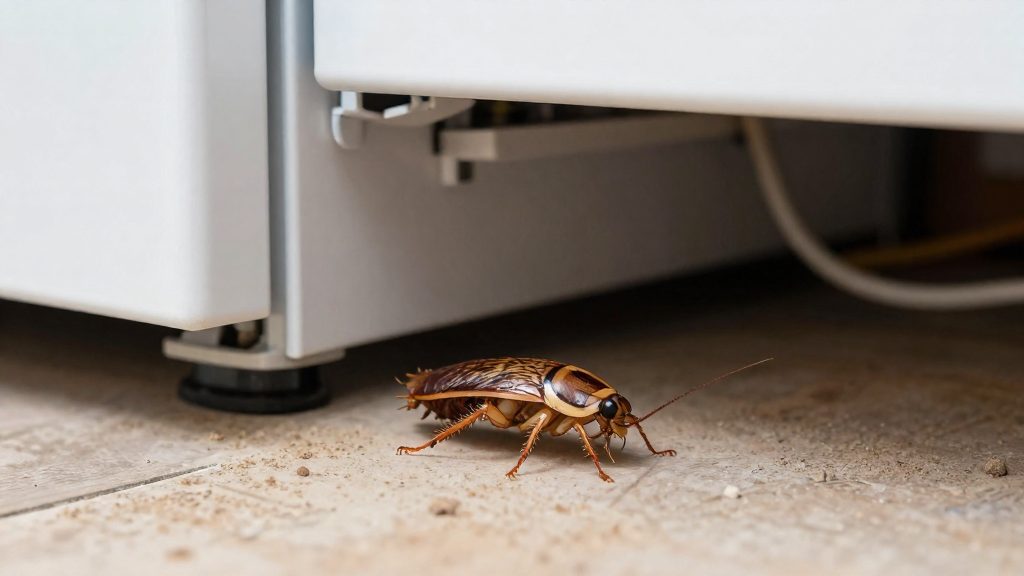
Cockroaches gather behind refrigerators, stoves and dishwashers because these spaces combine warm, damp shelter with nearby food. The void behind an appliance is rarely disturbed, so a population can build up there unnoticed.
Heat from motors and compressors
Refrigerator compressors, dishwasher motors and stove housings release heat into the surrounding cavity, which makes the space behind and beneath them warmer than the open floor. This is where cockroaches tend to settle.
Moisture from condensation and leaks
Condensation on refrigerator lines and leaking water connections under sinks and dishwashers supply the water cockroaches need. According to the University of California Statewide IPM Program (2019), repairing leaks is part of cockroach control, because a persistent water source keeps the hiding place attractive whatever bait is used.
Dark shelter close to food residues
Crumbs and spills that collect behind appliances give cockroaches a food supply inside the same shelter.
What this means for bait placement
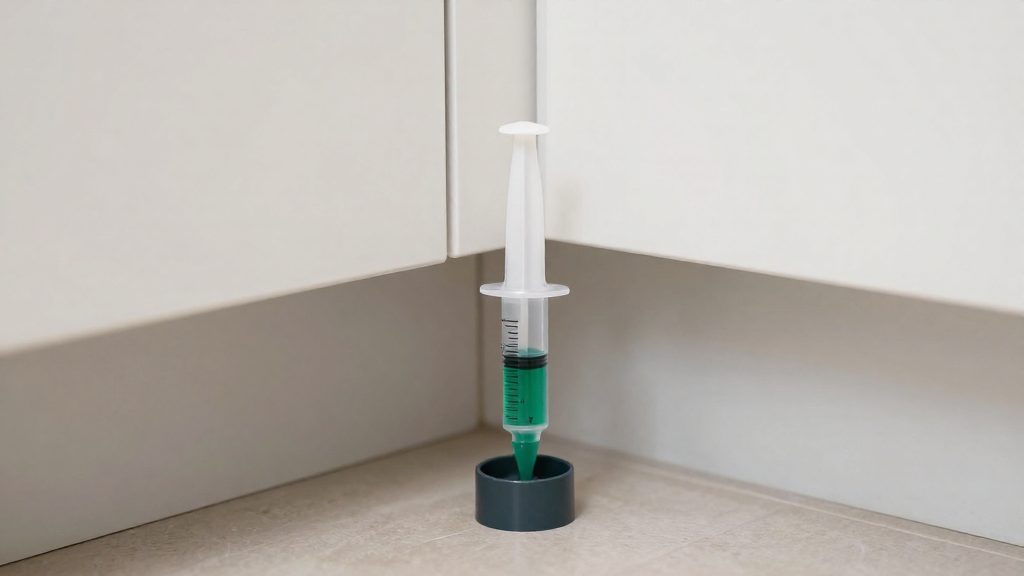
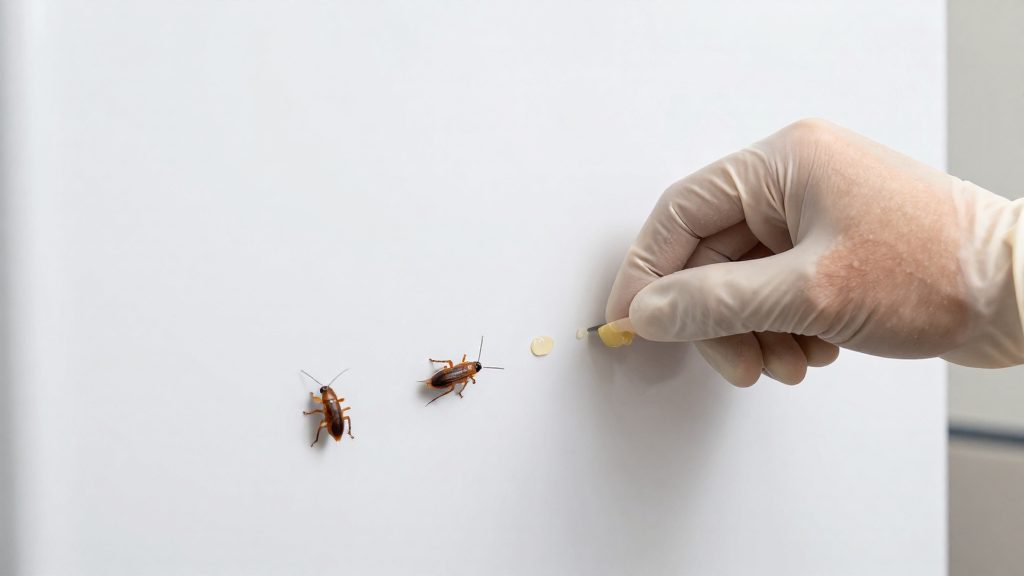
Place gel bait in cracks and crevices near hiding places or foraging routes. Confirm on the product label whether gel may be applied near motors, wiring or compressors.
Where should roach bait gel go?
Roach bait gel works only where cockroaches already walk, because baits do not attract them over long distances. Place it on the foraging routes and hiding places near food and water. According to the University of California Statewide IPM Program (2019), the space under and behind kitchen appliances is one of these locations.
- Cracks and crevices along appliance edges: Include the edges of appliances next to walls and cabinets.
- Wall joints behind appliances: The gap where an appliance meets the wall is a likely hiding place and a good bait site.
- Routes between shelter and food: Put bait on the paths cockroaches use to move from hiding places to food sources, not in open areas of the floor.
Inspect and clean before applying bait
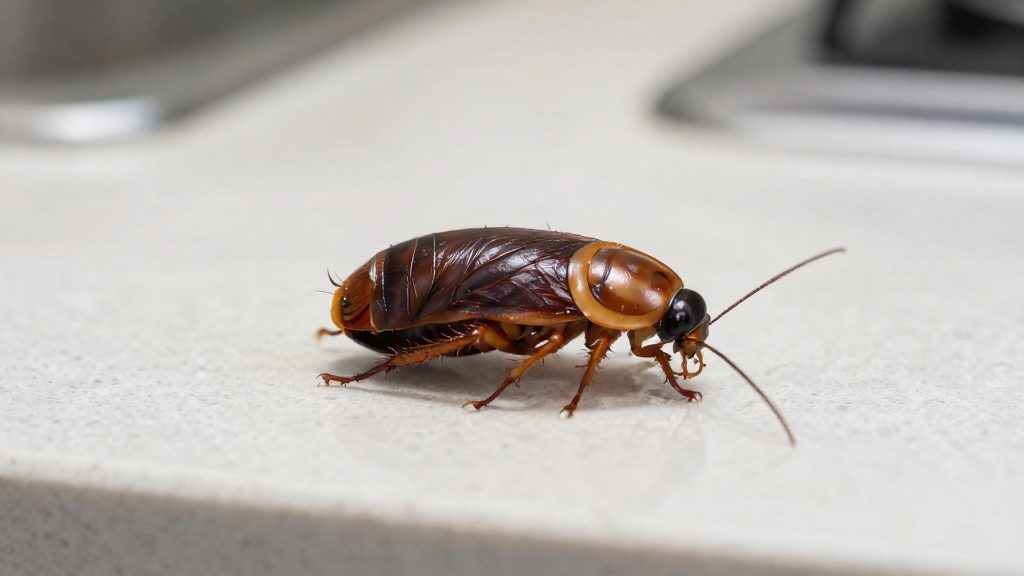
Identify the cockroach species before choosing a treatment, because species differ in their habits and preferred locations (University of Maryland Extension, 2024). Different species favor different hiding places, so identification helps guide inspection and treatment placement.
Map activity with sticky traps
Place sticky traps against edges near refrigerators, stoves and sinks. These spots show where cockroaches are active before any insecticide is applied (University of Minnesota Extension, 2024).
Remove competing food
Alternative food can reduce bait effectiveness, so remove competing food sources:
- Clean behind kitchen appliances, which is part of cockroach control (University of California Statewide IPM Program, 2019).
- Remove crumbs and spills from counters, floors and appliance surrounds (University of California Statewide IPM Program, 2019).
- Remove alternative food sources. Doing so improves bait effectiveness (University of California Statewide IPM Program, 2019).
- Repair leaks at sinks, dishwashers and other fixtures, since water is a resource that keeps cockroaches in the area (University of California Statewide IPM Program, 2019).
Apply gel according to the label
Gel bait works only when it sits where cockroaches will contact it, and the product label sets the dose and spacing. Apply the gel as small dabs in cracks and crevices where cockroaches will encounter it, according to the University of California Statewide IPM Program (2019).
Dab placement
- Dispense dabs into cracks, seams and crevices rather than onto open surfaces.
- Position each dab near confirmed hiding places or foraging routes where cockroaches can find and feed on it, following the product label.
Dosing and spacing
Apply the dose, dab size and spacing stated on the label, and do not adjust them to what seems convenient. Check the label before applying gel near motors, wiring or other appliance components, since permission for these locations varies by product.
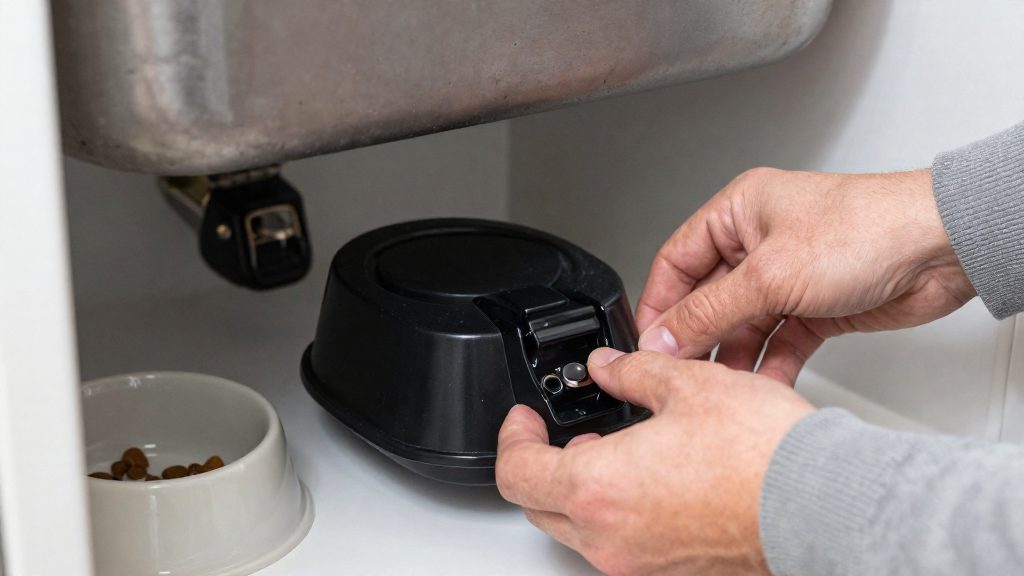
Tamper-resistant bait stations
Tamper-resistant bait stations confine insecticide to small areas and can reduce exposure to people and pets (UC IPM, 2019). Use a station where the label permits it, and load it only as the label directs.
Protect children, pets, and food surfaces
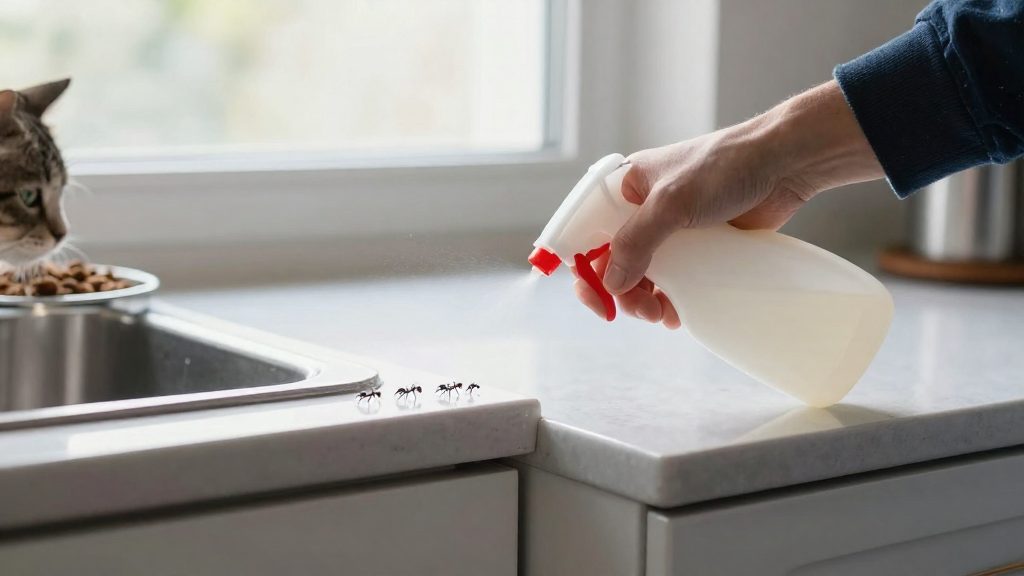
Gel bait is an insecticide, so the main safety measure is controlling where it sits.
Keeping gel away from children and pets
- Apply only in cracks and crevices, never as wide smears on exposed surfaces.
- Keep the container and any remaining gel out of reach of children and pets, and store it in a place they cannot access.
- Recheck treated areas after the gel has hardened, since deposits can harden over time and may need reapplication (UC IPM, 2019).
Keeping bait away from food surfaces
- Keep gel off food-contact surfaces, including counters, cutting boards and dishes, and prevent contamination of food and utensils. Apply inside food-storage cabinets only where the product label permits it.
- Keep gel in the enclosed spaces behind and beneath appliances rather than on the appliance surfaces where food is handled.
- Wash hands after application and before handling food or utensils.
Label precautionary statements and first aid
Each product’s label sets its own precautions, and the label is the authority on permitted use.
| Label section | What to check |
|---|---|
| Directions | Follow the application directions on the container |
| Precautionary statements | Read the hazards and handling rules before first use |
| First-aid instructions | Note the steps for accidental exposure and keep the label accessible |
How long does gel bait take?
According to the University of California Statewide IPM Program (2019), an effective bait program may take seven days or longer to produce noticeable results. The time to noticeable results varies; seven days is neither a universal minimum nor a guaranteed completion deadline.
Several factors can lengthen this timeline:
- Competing food: While crumbs, spills, or leaks remain, the gel competes with other food, so results take longer. Clean behind kitchen appliances, remove crumbs and spills, and repair leaks before relying on the bait.
- Placement: Dabs placed away from hiding places or foraging routes may take longer to be found.
- Pesticide-only control: a bait program without sanitation and exclusion work is likely to be slower.
Monitor activity and refresh bait
Each inspection should update a trap catch log. For every sticky trap, record the date, the number of cockroaches caught, and whether the trap sits near a bait spot. According to the University of Minnesota Extension (2024), insecticide applications should be targeted near the traps catching the most cockroaches, so the log shows where to add or move bait.
Check the traps with the highest counts first. New dabs belong near those hiding places or foraging routes.
At each visit, inspect every active bait spot and note its condition:
- Still soft and tacky: leave it in place.
- Dried, crusted or hardened: check the product label and monitoring results to determine whether reapplication is needed. Gel deposits can harden over time and may need reapplication (University of California Statewide IPM Program, 2019).
- Missing or disturbed: reapply at the same location, provided the spot is still a hiding place or route.
Track each spot’s status across visits. Continued trap catches indicate ongoing cockroach activity but do not establish whether a nearby bait deposit is working. If catches persist, inspect bait condition and placement, review sanitation and entry points, and follow the product label before changing the treatment.
When to call a pest professional
Gel bait works best as one part of a broader cockroach program. According to the University of California Statewide IPM Program (2019), pesticides alone will not resolve a cockroach problem. If activity continues after the bait has been applied correctly and the kitchen has been cleaned, the problem likely needs a licensed pest control operator.
Signs that DIY baiting has reached its limit include:
- Continued activity after the bait program has run its full course, with live cockroaches still found near the same appliances or cracks.
- Activity in an apartment building. The University of Minnesota Extension (2024) notes that control there can require treating the infested apartment and adjacent units through a pest management service.
When choosing an operator:
- Ask for an inspection that identifies the cockroach species first. Species differ in their habits and preferred locations, which determines where treatment is placed.
- Ask which products they intend to apply, and check each product’s label before work begins. The label states the approved treatment locations.
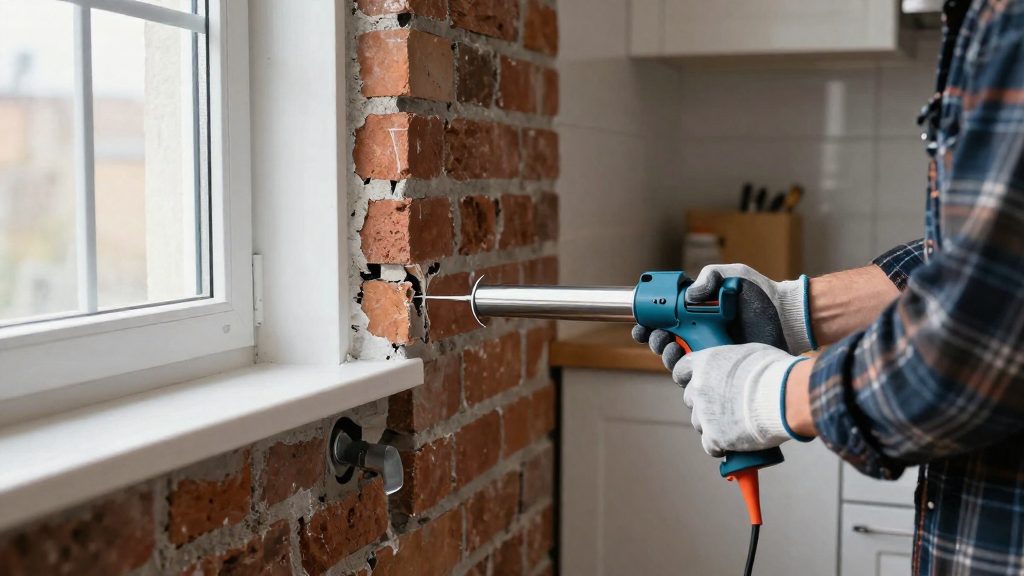
- Confirm the operator’s licence with your local authority before booking.