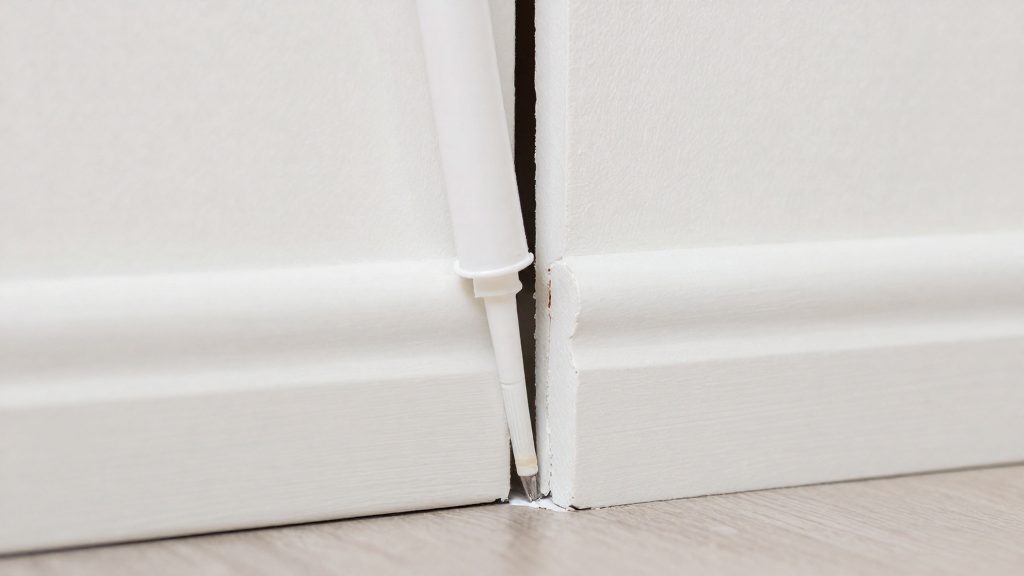
Why do small gaps let pests in?
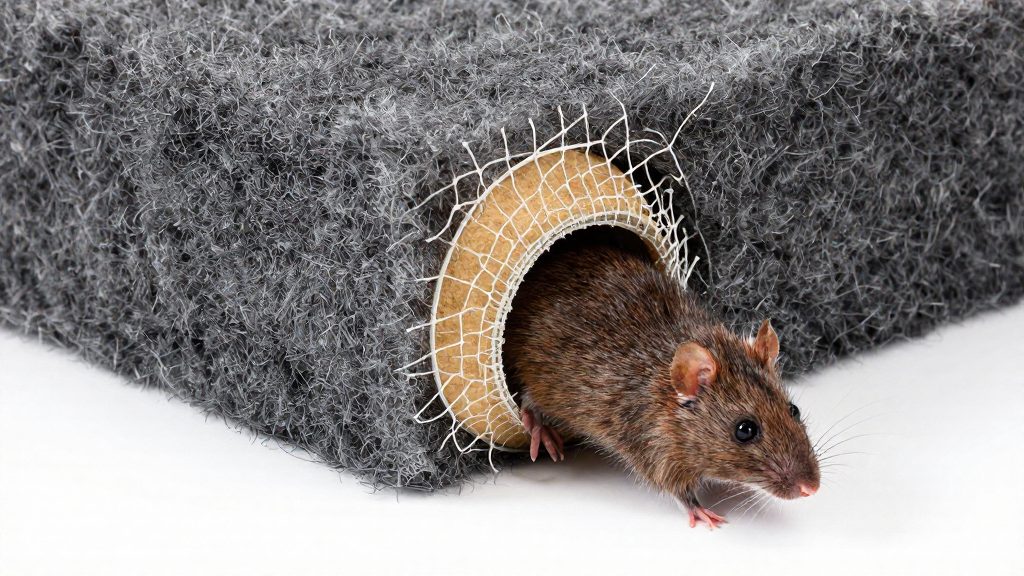
Small gaps matter because, according to This Old House, mice can pass through openings about 1/4 inch wide, and the National Pest Management Association (NPMA) says a mouse can squeeze through a hole the size of a dime. These two figures are not equivalent: a dime is about 0.705 inch wide, so the 1/4-inch figure is the much tighter threshold. A mouse needs very little room, so a gap that looks negligible can become an entry point. Checking openings at this scale is the first step in preventing rodent entry.
Using a dime as a size check
A dime is a rough visual reference only. A dime is about 0.705 inch wide, far wider than the 1/4-inch figure, so it is not a valid test for mouse-sized gaps. A gap that admits a dime is certainly large enough for a mouse and should be closed, but gaps too narrow for a dime can still let a mouse through. A dime is much wider than 1/4 inch, so a gap a dime cannot enter may still admit a mouse. Measure any suspicious opening with a ruler and treat anything about 1/4 inch or wider as a possible mouse route.
Measuring openings near the threshold
The 1/4-inch width is the lower bound to watch. Any opening at or above this width should be treated as a possible mouse route. The 1/4-inch figure is approximate, not a strict cutoff, and insects such as cockroaches, spiders and ants can use much narrower gaps. Record and seal narrower openings too, and give priority to those at or near 1/4 inch.
Check each side of a door, window frame or wall penetration separately, because one gap can vary in width along its length. Record the narrowest point, since a mouse must fit through that point to pass.
Where to look for entry points
Rodents, cockroaches and spiders seek shelter indoors in cold weather, so the inspection is most useful before temperatures drop. Work from the outside of the building inward, one location at a time.
Doors and windows
Inspect the gap under each exterior door, the edges of the frame and the threshold. On a windy day, run a hand along the frame to feel for drafts. Check the weatherstripping for cracks, flattened sections and missing strips, and look at the joint where each window frame meets the wall and the sill.
Pipe and utility penetrations
Pipes, cables and vents that pass through exterior walls leave openings around them. Check where each line enters the wall, both outside and inside. Interior points are often overlooked, including the space under sinks and behind appliances where a pipe emerges from the wall. Any space between the line and the surrounding material is a potential route for pests.
Wall and foundation junctions
Examine where the exterior walls meet the foundation, along with siding ends, corners and the base of brick or cladding. Look closely at vents and utility boxes mounted on the wall, and at any place where the ground has pulled away from the building. From the crawl space or basement side, look for daylight at the joint.
Best materials for sealing gaps
Choose the material by the size and location of the opening. The National Pest Management Association (January 2026) advises checking doors, windows and pipes for openings and closing them with caulk, weatherstripping or steel wool.
| Opening type | Recommended material |
|---|---|
| Holes too large for caulk to fill | Coarse steel wool or fine metal mesh |
| Gaps around pipes and utility lines | Silicone or polyurethane sealant |
| Door and window openings | Weatherstripping, caulk (back with metal mesh where rodents can reach) |
Metal mesh and steel wool for larger holes
Fine metal mesh and coarse steel wool are the options recommended for holes larger than a caulk bead can fill. Use the coarse grade of steel wool for bigger openings, and choose fine metal mesh where the opening needs a more uniform covering.
Silicone and polyurethane sealants
Silicone and polyurethane are the two sealant chemistries named for gaps around pipes and utility lines. Silicone and polyurethane sealants are recommended for gaps around pipes and utility lines. Because mice can chew through sealants used alone, back them with coarse steel wool or fine metal mesh where rodents can reach the opening.
Weatherstripping for doors and windows
Weatherstripping is listed as a closure option for door and window openings, alongside caulk. Apply it where the moving edge of a door or window meets its frame, since that is where gaps open and close with use.
Which materials fail: foam, steel wool and caulk?
Caulk, spray foam and steel wool are common choices for closing openings. Each one can fail against rodents, but in a different way: sealants and spray foam can be chewed through, while steel wool rusts and breaks down over time. A seal that was done correctly can therefore stop working, so inspect it regularly.
Sealants and spray foam: chewing through
Mice can chew through sealants and spray foams. According to This Old House (2026), these materials are easily chewed through when used alone. Caulk is a sealant, so it carries the same weakness. Where a rodent can reach the material with its teeth, the seal is only a temporary obstacle, and it should be backed by a more resistant material at any opening that mice can access.
Steel wool: rust and breakdown
Steel wool rusts and breaks down over time. A plug that is tight and solid when installed can crumble, lose density or develop rust, and it then stops closing the opening. Because the deterioration is gradual, the plug must be inspected rather than assumed to be intact. Any plug showing rust or loose, crumbling fibres should be replaced so the opening is closed again.
How do you seal doors, windows and pipes?
Caulking door and window frame gaps
- Locate the gaps. At night, shine a flashlight along the outside of each frame while someone inside watches for light showing through. Mark every point where light passes.
- Clean the surface. Remove dust, paint flakes and loose old caulk so the new bead bonds to both the frame and the wall.
- Apply the caulk. Run a continuous bead along the seam and press it into the gap so it fills the full depth, not just the surface.
- Smooth the bead. Tool it flat with a wet finger or a spatula, then allow it to cure fully before testing.
- Seal the bottom edge. Fit weatherstripping along the door bottom and the sides of the frame, where gaps are often widest.
Sealing pipe and utility line entries
Pipes, cables and vents passing through exterior walls often leave irregular holes around them, so check every entry point, not just the main openings.
- Clear the opening. Remove dust and loose debris around the line.
- Fill larger holes. Pack coarse steel wool or fine metal mesh into holes too big for caulk.
- Seal around the line. Apply silicone or polyurethane sealant around the pipe or utility line so it fills the gap.
- Recheck. Inspect the seal periodically, since steel wool rusts and breaks down and sealants can be chewed through.
Can sealing gaps stop ants, roaches and spiders?
Sealing gaps reduces indoor access for cockroaches and spiders, but it is one measure rather than a full control.
Cockroaches and spiders
Work through the same checkpoints each time:
- Door frames and thresholds: close gaps with caulk or weatherstripping.
- Window frames: seal visible openings with caulk.
- Pipe and utility openings: use silicone or polyurethane sealant around lines, and fill larger holes with coarse steel wool or fine metal mesh.
Seal each opening completely rather than partially. A partly closed gap still gives insects a route indoors.
Ants and remaining gaps
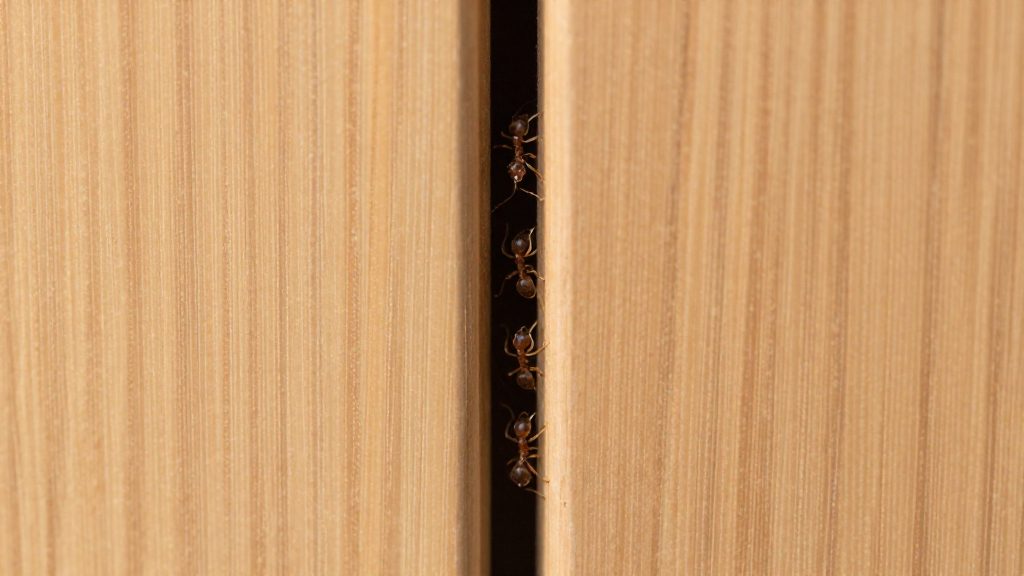
Ants use the same kinds of openings, so the same inspection applies. After sealing, check each frame and threshold again, and look for any remaining opening, including small gaps where light passes through from the other side. Reseal any gap you find before relying on the work. Ant control usually also depends on removing food and moisture sources, which sealing does not address.
When should you call a pro?
Sealing prevents entry, but it stops being a sufficient fix in three situations: persisting infestations, gaps too large for household materials, and structural gaps. In each case, the problem is no longer the openings you can see.
Activity continues after all openings are sealed
If signs of mice, cockroaches or spiders continue after every opening you can find has been closed, the pests are probably entering through a route you have not located, or they were already living inside the building. Look for droppings, gnaw marks, or new activity in the days after sealing. A pest professional can inspect the whole structure, including voids, crawl spaces and wall cavities that a homeowner cannot easily reach.
Gaps too large for do-it-yourself materials
Where a gap is wider than you can close with caulk, weatherstripping or steel wool, the repair should be assessed by someone who can match the material to the opening.
Structural gaps that need contractor repair
Some openings are part of the building’s construction: gaps at the foundation, around the sill plate, at roof lines, or where utility lines pass through walls. Sealant alone does not address these. Steel wool is not a permanent repair for a structural opening. A contractor can rebuild the damaged section with proper materials, and a pest professional can confirm the repair closes the route they used.
Frequently asked questions
Can I seal a mouse gap with caulk or spray foam alone?
No. Mice can chew through sealants and spray foam, so a chew-resistant layer such as coarse steel wool or fine metal mesh should sit where rodents can reach the opening, with sealant applied over or around it.
Do sealed gaps also keep out cockroaches and spiders?
Sealing helps. According to the NPMA (2026-01-07), it reduces entry for cockroaches and spiders that seek shelter indoors in cold weather. Ants and other insects can use narrower openings than mice, so sealing is not a complete barrier.
How long does steel wool keep a gap closed?
Steel wool is not a permanent plug. It corrodes over time, so check it for rust-coloured staining or crumbling fibres and replace it when either appears.