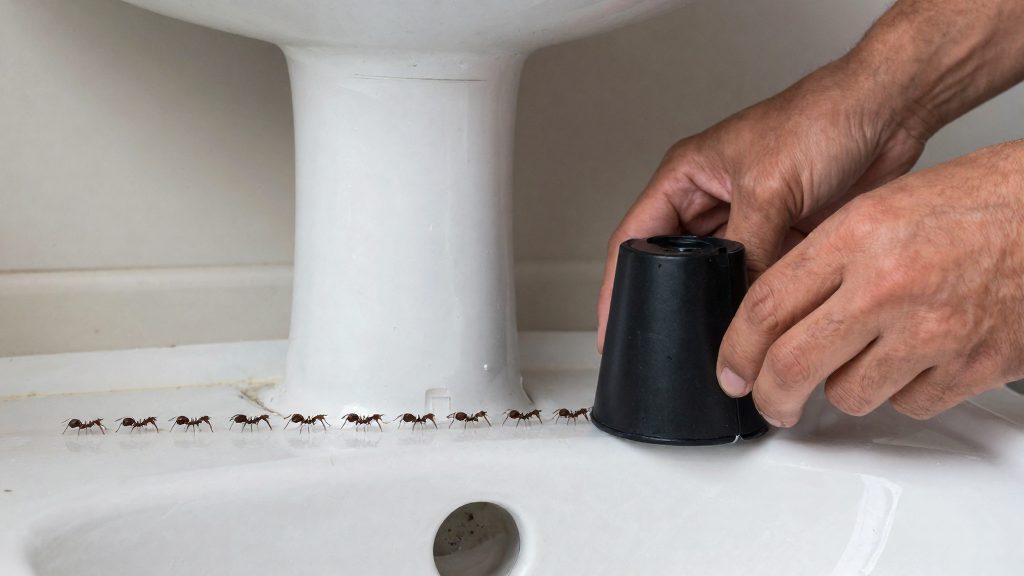
Odorous house ants (Tapinoma sessile) are drawn to bathrooms because the room combines the two things they need most: water and moist shelter. Knowing which conditions attract them shows where to look first.
Why Are Ants in My Bathroom?
Water and Moisture Draw Foragers
Foraging workers search for water, and a bathroom offers it at sinks, tubs, toilets and plumbing. Water attracts ants, so a dripping faucet or damp fixture can provide a steady water source that keeps them returning.
Nests Form in Wall Voids and Damp Wood
Odorous house ants prefer moist nesting sites. Indoors, they can nest in wall voids, damp wood, insulation and areas near plumbing fixtures. A colony close to the bathroom has shelter and moisture within a short distance of the fixtures they use.
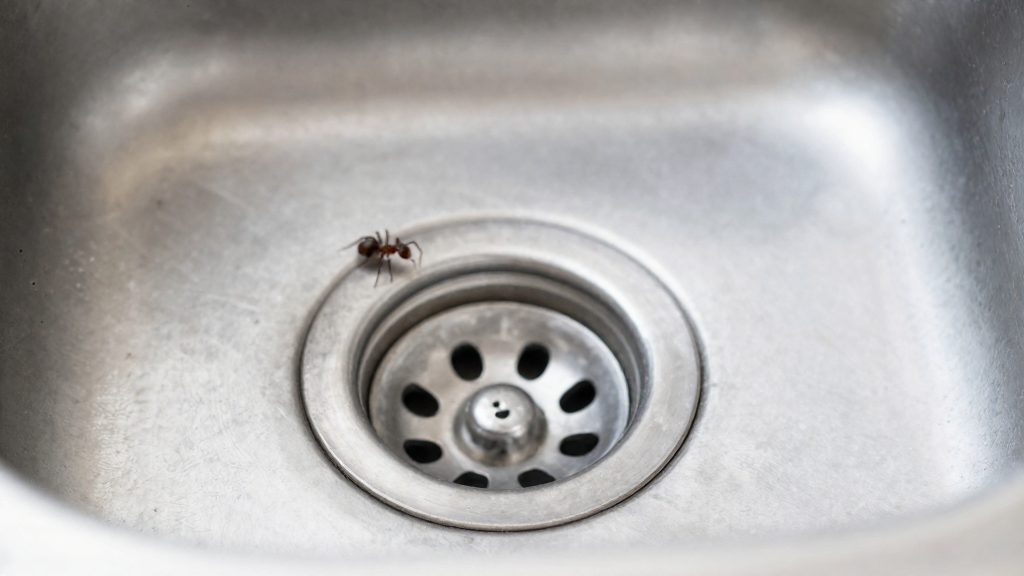
Ants seen near a bathroom drain do not by themselves show that a colony lives inside the drain. The nest may be in an adjacent wall void or damp material.
Warm-Season Indoor Ants Usually Come From Outdoor Nests
During warmer months, odorous house ants seen indoors often come from outdoor nests. Following their trail shows whether workers enter from outside or are already living inside the structure, which determines where the source is.
Are These Odorous House Ants?
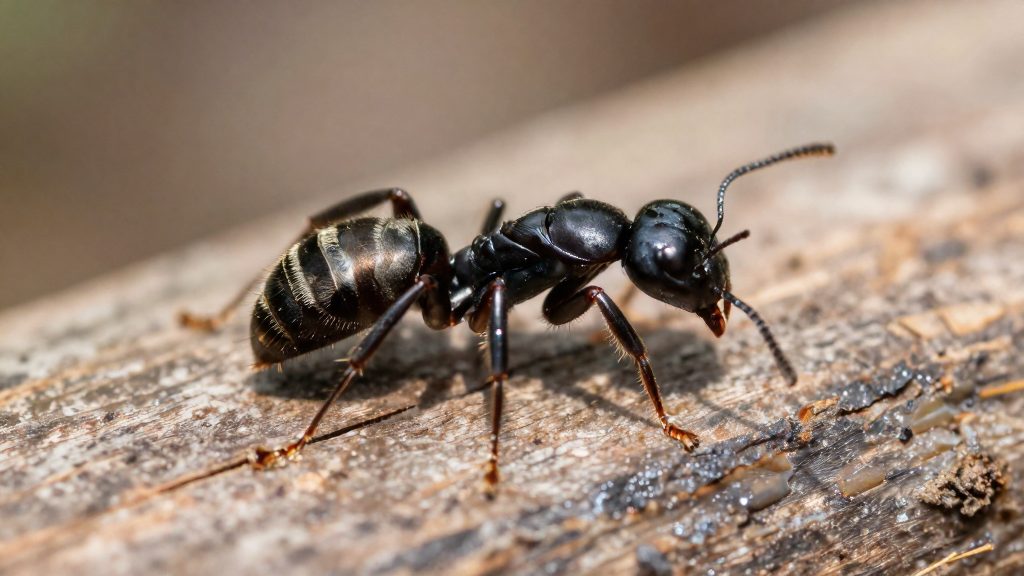
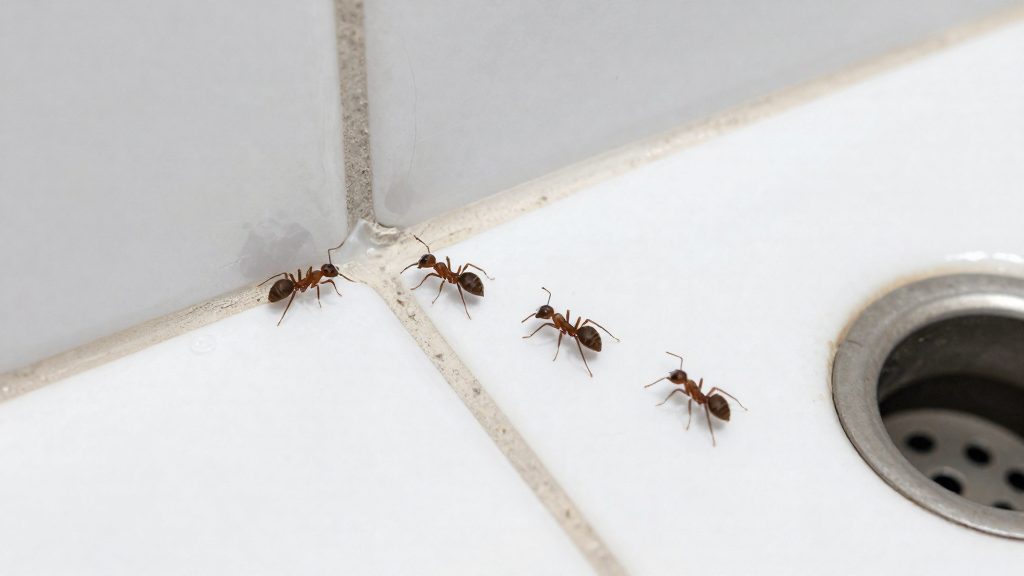
Three useful clues for identifying odorous house ants (Tapinoma sessile) are body color, body length and the odor released when one is crushed. Confirming the species first makes sure the treatment you choose targets the ants you are actually seeing.
| Trait | Odorous house ant |
|---|---|
| Color | Dark brown to black |
| Length | Approximately 1/8 inch (about 3 mm) |
| Odor when crushed | Rotten coconut or blue cheese |
To run the odor check, crush one worker ant on a white paper towel and smell it at a short distance. The University of Wisconsin–Madison Division of Extension (2021) describes a rotten coconut or blue cheese odor when these ants are crushed. Color, size and odor support identification; if you are unsure, have a specimen identified before choosing treatment. If the ants are a different color, size or smell, identify them before using any bait or spray, and check the product label for the pests it is approved for.
Find Leaks and Entry Points
Start under the bathroom sink, where the supply lines, drain pipe and cabinet back meet the wall. Remove the cabinet contents, shine a flashlight along each pipe, and look for drips, damp or stained wood, and ants moving along the pipe surfaces.
Follow the Foraging Trails
Ants on the floor are less useful than the line they follow. After cleaning the trail, watch where new ants emerge. Trace the foraging trails back to where they meet a gap, crack, or pipe penetration. That junction is the likely entry point.
If the trail runs in from outside the bathroom wall, check the exterior side of the wall and the openings where utilities enter the building.
Repair Leaks and Seal Gaps
Repair any leaking faucet or pipe joint before sealing, because the moisture keeps drawing foragers back to the same spot. Then seal each gap you traced, including cracks around pipe penetrations, gaps at the cabinet edge, and openings in the wall behind the fixtures. Choose a sealant suited to each surface and follow the product label.
Ants near the drain do not by themselves prove that a colony lives inside the drain. Check the wall void and the exterior gaps as well, since tracing and sealing entry points may resolve the intrusion when the nest is outside.
Clean Up Ants and Trails
Odorous house ants forage in visible lines, and the fastest way to interrupt one is to remove the workers and the chemical trail they leave behind. Soapy water works on both counts: it temporarily removes foraging ants and erases the scent trails that guide other workers to food and water sources. Wipe the affected surfaces, including the area beneath the bathroom sink and along pipes where moisture collects, then follow the line back toward its origin.
Soapy water removes foraging ants temporarily. According to the University of California Statewide Integrated Pest Management Program (2012), soapy water can remove foraging ants from surfaces, but the effect is temporary. Soapy water does not eliminate the colony, so ants may reappear; inspect entry points and address the nest if activity continues.
Scent trails guide new arrivals. Workers mark their routes with pheromones, so a trail that is not cleaned keeps directing ants to the same spot. Erasing the trail with soapy water prevents the next worker from following it, which is why cleaning should happen along the entire visible path, not only at the point where ants were seen.
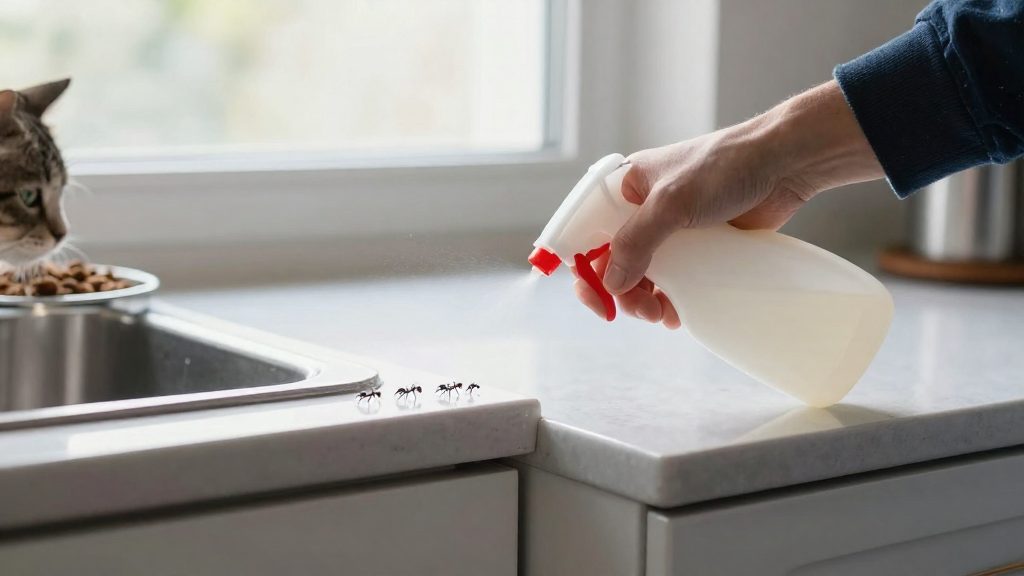
Spraying visible ants does not stop the intrusion. The same UC IPM source states that spraying visible ants indoors does not prevent additional ants from entering. Killing the workers on the counter leaves the nest intact and the trail active.
Use Bait to Target the Colony
Sugar-based bait placed near foraging trails is an option for odorous house ant nests that cannot be reached directly, such as nests inside wall voids, damp wood or insulation. Workers pick up the bait and carry it back to the colony. According to the University of Wisconsin–Madison Division of Extension (2021), this applies to inaccessible indoor nests.
- Locate the trail. Follow the ants to their entry point, where the trail leads toward the nest area.
- Place the bait beside the trail. Put it on the route foraging ants already use. Placement depends on the infestation and the product label.
- Allow feeding and monitor. Ant activity can rise around the bait at first. Let workers feed and return to the colony, watch activity, and replenish the bait as needed, according to Iowa State University Extension and Outreach (2025).
- Switch products if ignored. If ants ignore a bait, another product may be needed, because food preferences change throughout the year.
Why Isn’t the Bait Working?
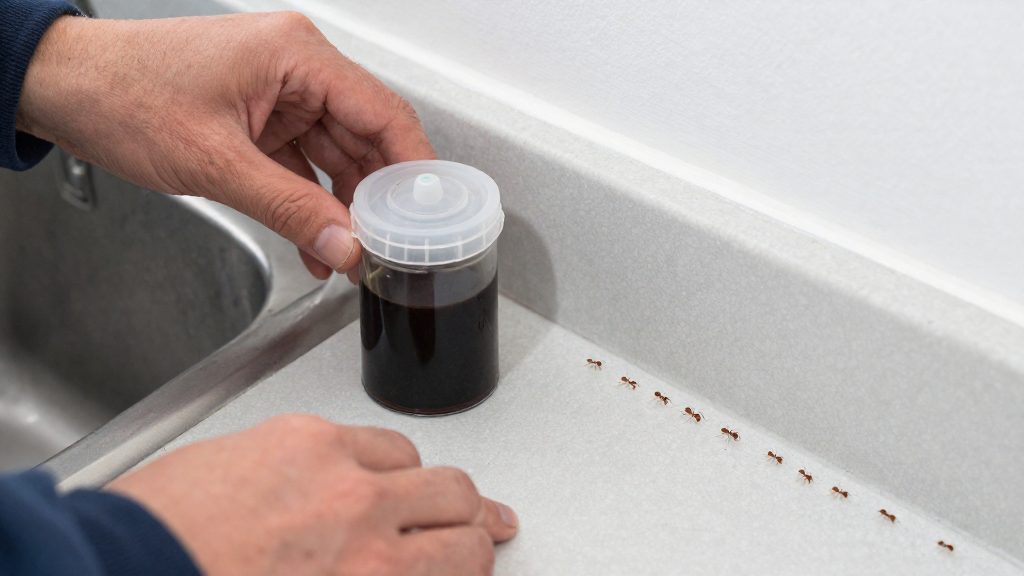
When an ant bait is ignored, cleaners or insecticide sprays near the feeding station may be discouraging feeding. According to Iowa State University Extension and Outreach (2025), cleaners and insecticide sprays placed around bait can discourage feeding, so the bait may go untouched even when odorous house ants are active nearby.
Cleaners and Sprays Near Bait Can Deter Feeding
Check the area around the bait for residue from recent cleaning or spraying. Disinfectants, multi-surface cleaners, and insecticide sprays left on or near the bait location can cause workers to ignore it. Bathroom surfaces such as the area beneath the sink, the tub edge, and tile near the drain are common places where these products are used, so inspect them before placing or replacing a bait.
Never Place Bait on Previously Sprayed Surfaces
Do not put bait on treated surfaces. Bait placed on a surface that has been sprayed may not be accepted by the ants. Choose an untreated spot instead, and keep cleaners and insecticide sprays away from the bait.
Avoid Insecticide Sprays Around Bait Stations
Keep insecticide sprays away from bait stations. If sprays are used elsewhere in the same room, make sure the spray does not reach the bait.
Prevent Ants From Coming Back
Keeping the bathroom dry and checking it on a routine basis is the main prevention habit.
Keep Sink Cabinets Dry and Inspect Them
- Check the area beneath the bathroom sink and along the pipes at regular intervals.
- Wipe up standing water and replace any damp materials you find in the cabinet.
- Note any ant activity during each check, so you can compare it with the next one.
Watch for New Trails in Warm Months
Follow each new trail to its entry point.
Check for Returning Trails After Repairs
After a repair, keep checking the same trail for ants. If the trail returns, the colony may be connected to other nests.
When to Call a Pest Professional
Call a pest control operator when home measures stop working. The University of Wisconsin–Madison Division of Extension (2021) notes that odorous house ants can occupy interconnected nests, so treating one nest may not eliminate the infestation. Extensive problems warrant an experienced pest control professional.
Signs That Bait and Cleaning Have Failed
- Trails persist after you have cleaned them, fixed leaking faucets and sealed the entry points you traced. Trails that return after repairs suggest the nest is not reached by your current measures.
- Ants ignore the bait.
- The infestation spreads beyond the bathroom into other rooms, even after the bathroom entry points are sealed.
Verify Licensing Before Hiring
Before any work starts, confirm the operator holds a current pest control license issued by your state or territory’s regulatory agency. Ask for the license number and check it directly with that agency.
Then ask the operator for:
- The product name and active ingredient, so you can read its label
- The treatment location and whether it is indoor or outdoor
- Confirmation that the operator will follow the label directions, which Iowa State University Extension and Outreach (2025) identifies as required
- Confirmation that baits will be kept away from children and pets