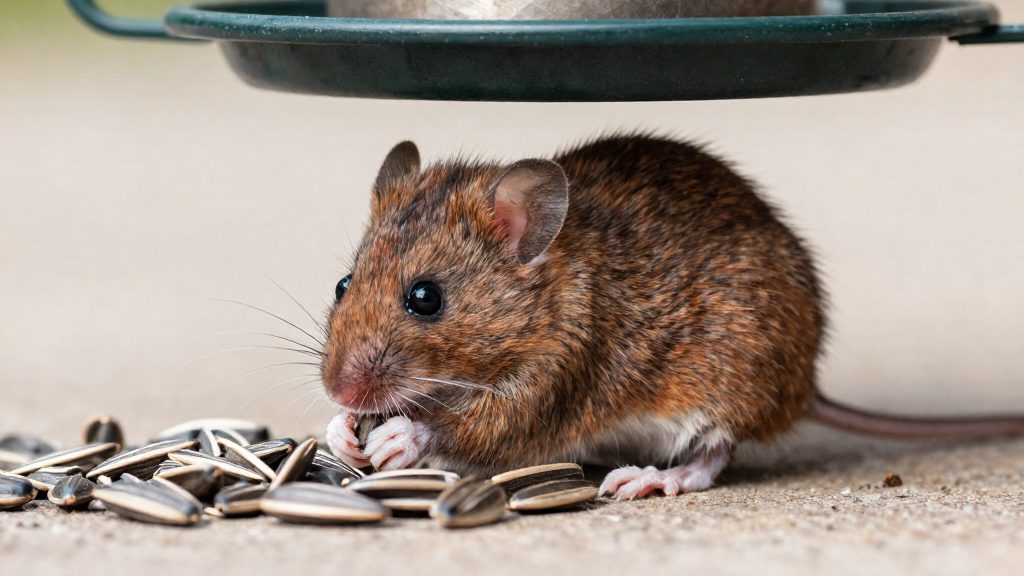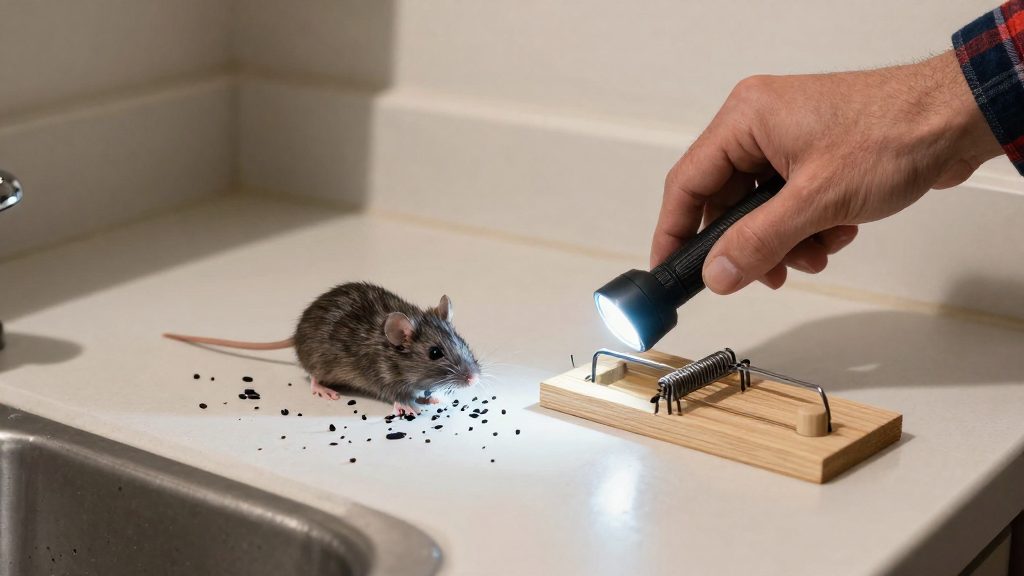
Not seeing mice does not mean they are gone. According to the U.S. Environmental Protection Agency (2026), mice and rats may remain unseen unless an infestation is severe. An empty trap or a quiet kitchen therefore does not confirm that a home is clear. Other signs of activity are more informative, especially those found in areas where mice hide out of sight.
How Can You Tell Mice Are Gone?
Unseen mice can still be present, so check for evidence rather than relying on sightings alone.
- Stale smells from concealed areas: The EPA lists stale smells from concealed areas among the signs of a rodent infestation (2026). A stale odor in concealed spaces warrants inspection, but does not by itself confirm that live mice remain; check for new droppings or newly damaged packaging.
- Chewed food packaging: The EPA also lists chewed food packaging as an infestation sign (2026). Inspect stored dry goods, such as cereal, pasta and pet food bags, during routine checks. Newly chewed packaging is evidence that mice are still active in the home.
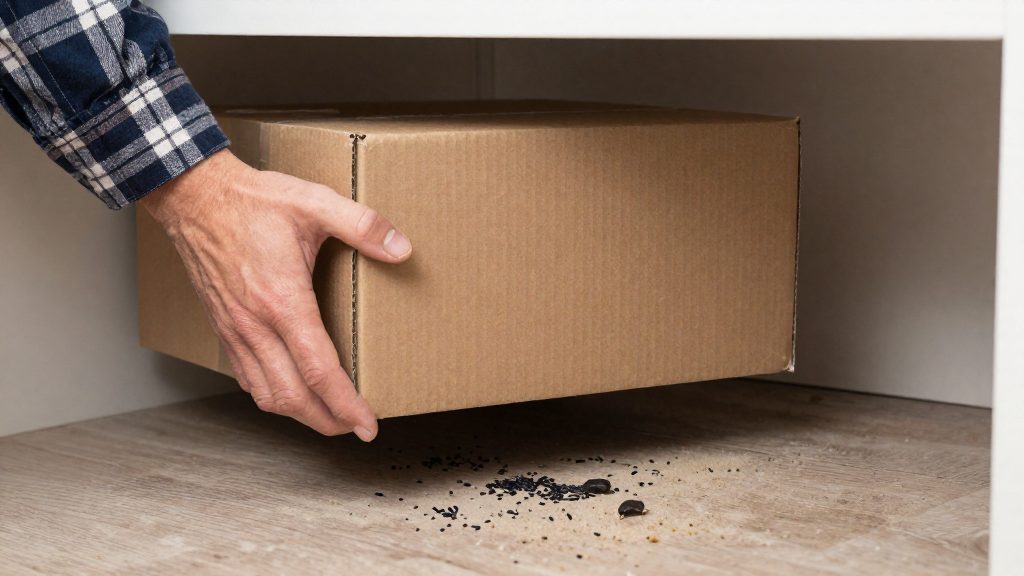
Check for New Droppings After Cleanup
New droppings that appear in an area after it has been cleaned are the clearest sign that rodents are still active. According to the Centers for Disease Control and Prevention (2024), droppings found after a safe cleaning mean rodents are still present. Fresh droppings are therefore a more direct test than visual checks.
Setting a Cleaning Date Baseline
Record the exact date of each cleaning and photograph the zone immediately afterward. Droppings found later are new if they appear after that date. Droppings present in the baseline photo were already there and should not be counted as evidence of current activity. Use the same photo angle at every check so changes are easy to spot.
Rechecking Cleaned Zones at Consistent Intervals
Inspect the same zones on a fixed schedule, using the same route each time. Prioritise the locations where rodent evidence was found. Note the location, count and date of any new droppings at each visit.
Inspect for Fresh Chewing and Nesting
Existing gnaw marks can persist after rodents have left. The Centers for Disease Control and Prevention (2024) notes that gnaw marks alone can indicate past rodent activity rather than a current infestation, so each mark needs to be judged by its condition.
Examine the edge of every mark with a flashlight held at a low angle, which makes texture and dust easier to see. Fresh chewing usually has a pale, sharp cut edge with loose shavings or crumbs nearby. Older marks have dull, darkened edges and are coated in dust or grime. Compare marks against one another, since the freshest ones show the most recent activity.
| Observation | Likely recent | Likely older |
|---|---|---|
| Cut edge colour | Pale, light wood or plastic | Darkened or grey |
| Surface | Sharp, with loose shavings | Smooth, dusty or greasy |
| Nearby debris | Fresh crumbs or shavings | Dust or cobwebs over debris |
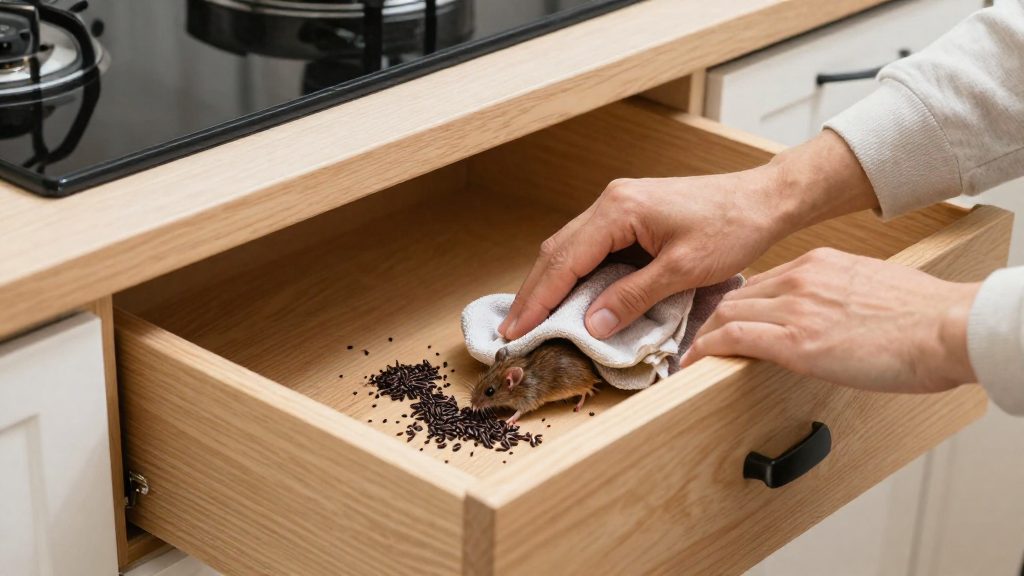
Shredded nesting material is one of the signs of rodent infestation listed by the U.S. Environmental Protection Agency (2026). Pieces found in a place that was clear at the last check, such as a cupboard, drawer or behind an appliance, point to current activity. Judge nesting material by whether it has appeared since the last documented inspection, rather than by softness, cleanliness or dust alone.
Record the new locations where material or marks appear and photograph them. Comparing photos at each check shows whether new nesting material or fresh chewing is still appearing.
Do Empty Traps Mean No Mice?
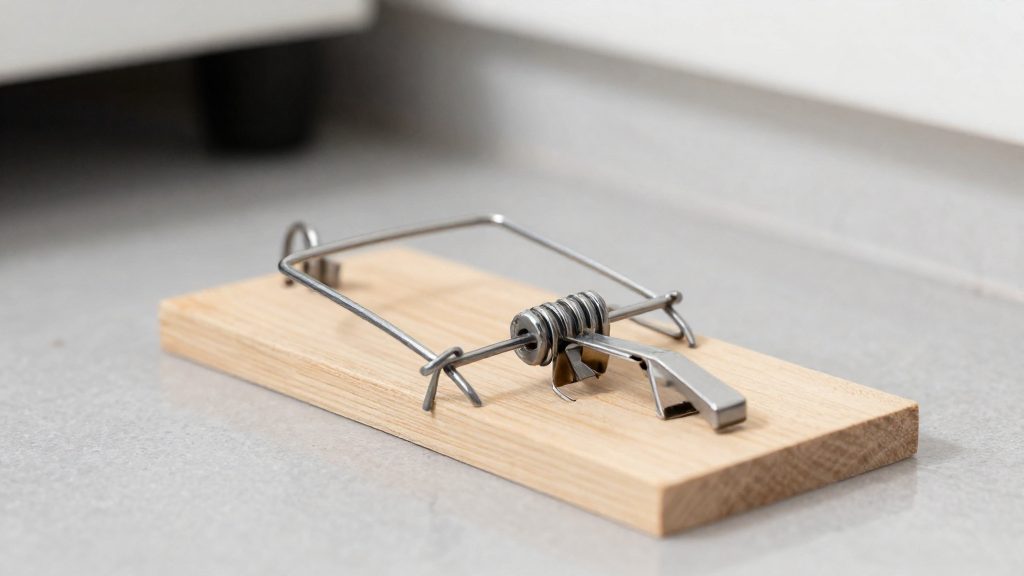
Not necessarily. Empty traps can coexist with an active infestation. Cornell University’s Integrated Pest Management program notes that mice may become accustomed to traps left in one place, or may actively avoid them. A trap that stays empty in the same spot therefore says little about whether mice still use the room.
Placement affects captures as much as the trap itself. The Centers for Disease Control and Prevention (2024) advises placing traps where rodent evidence has been found: behind appliances, at the backs of cabinets and drawers, and near suspected entry areas. These are the routes mice actually travel, so a trap there is more likely to intercept them than one set in an open, unused corner.
Because mice may learn to avoid fixed traps, moving traps between these locations is a practical way to keep them effective.
Keep traps and bait away from children and pets. Set traps in spaces they cannot reach, and store bait where they cannot access it.
How Long Should You Keep Monitoring?
Check traps daily and reset them until activity stops. According to the CDC’s rodent trapping guidance (2024), a one-week benchmark without captures and without new rodent signs marks the end of the count. That guidance is written for rats, so for mice treat one week as a working threshold, not a confirmed mouse deadline.
Daily Routine
- Inspect every trap once a day and reset any that were triggered or disturbed.
- Record each day’s captures and any new droppings or chewed packaging.
- Start the one-week count from the last day you saw any activity.
What Restarts the Count
| Observation | Effect on the count |
|---|---|
| Fresh droppings in an area already cleaned | Restart: activity is ongoing |
| New chewed food packaging | Restart |
| New shredded nesting material | Restart |
| Old gnaw marks with no new signs | Do not restart: they may reflect past activity |
Why Silence Is Not Proof
Treat a clear week as a new sign-free period, and confirm it with the daily routine above.
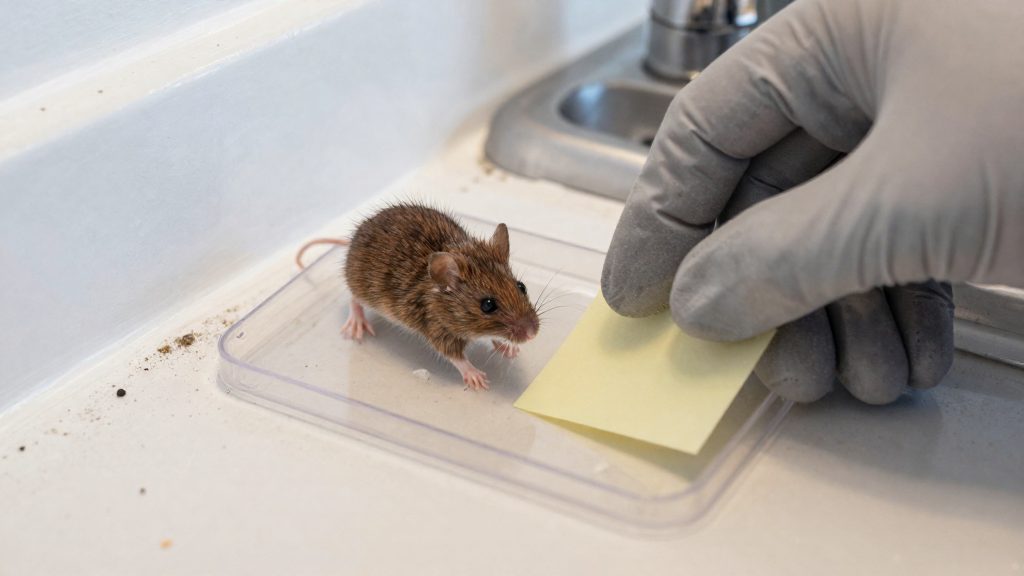
Clean Up Mouse Evidence Safely
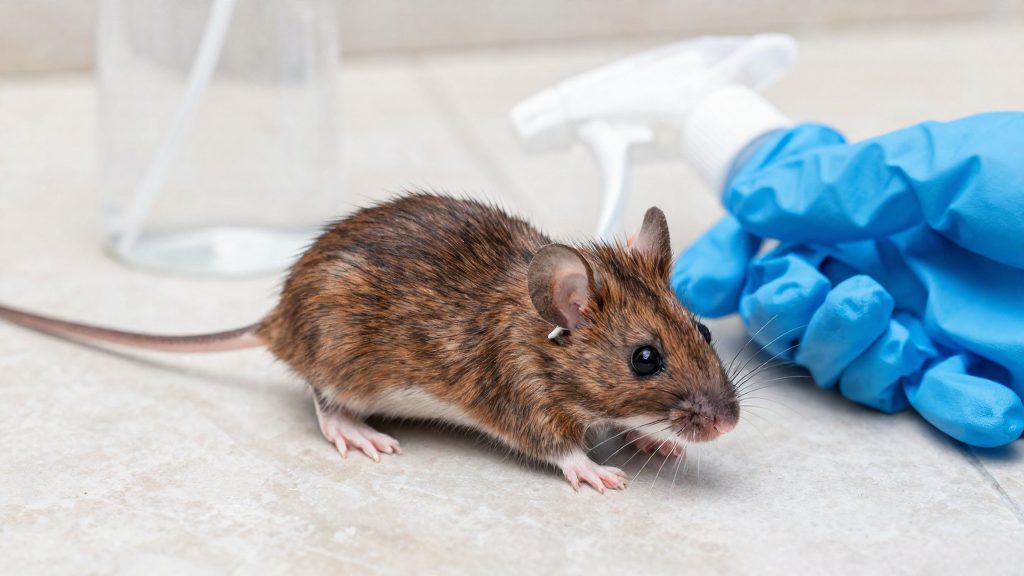
Clean up droppings, nesting material and contaminated items with wet methods, which keep particles out of the air. According to the CDC (2024), rodent waste should not be vacuumed or swept.
- Wear gloves. Use rubber or plastic gloves. Open doors and windows for 30 minutes before cleaning, and leave the area during this ventilation period.
- Wet the waste. Thoroughly soak urine and droppings with a disinfectant. A household bleach solution is a common choice, but mix it at the dilution stated on the product label or in the manufacturer’s instructions.
- Wait for contact time. Leave the disinfectant on for five minutes or the contact time specified on its label before wiping.
- Wipe up and bag. Wipe up disinfected waste with paper towels and discard them in a covered garbage can. Disinfect the cleaned hard surfaces. Double-bag nesting material before disposal. Wash gloved hands before removing gloves, then wash bare hands with soap and warm water. Seal the bag before removing it from the room, and place it in an outdoor bin.
Seal Entry Points to Prevent Returns
Preventing another infestation requires sealing holes both inside and outside the home, according to the U.S. Environmental Protection Agency (2026). Sealing is what keeps mice from re-entering through the openings they already used.
Identify Chewed Entry Holes
Check the base of exterior walls, the areas around utility pipes and cables, and the gaps under doors and along skirting boards.
Seal the Openings
- Work from outside inward: seal exterior openings first, then the interior gaps that connect to them.
- Fill gaps with steel wool or metal mesh: pack the material into each opening before applying a sealant over it.
- Remove the attractants: the EPA also recommends removing accessible food, water, and potential nesting sites, so a sealed house does not stay attractive to mice.
Re-inspect the sealed openings and any new holes.
When Should You Call a Professional?
Trapping has failed when rodent signs persist after a full monitoring period. The Centers for Disease Control and Prevention (CDC, 2024) advises seeking professional help if trapping does not resolve the infestation. Fresh signs are the clearest indicator.
Call a professional if trapping does not resolve the infestation, including when the following signs keep recurring; do not wait for a sign-free monitoring period to end:
- New droppings in areas that were previously cleaned and checked.
- Fresh gnaw marks on food packaging or entry holes, or shredded nesting material that reappears.
- Stale smells coming from concealed areas such as wall cavities, under appliances or in stored boxes.
Activity across several rooms or floors calls for inspection throughout those areas, but its distribution alone does not establish how many mice are present. Inspect and place traps wherever fresh evidence is found, and seek professional help if trapping does not resolve the infestation.
If signs persist, contact a licensed local pest control company, or your local health department if you need guidance on public health risks. Ask any provider for a written inspection report that identifies the species, the entry points and the treatment plan.