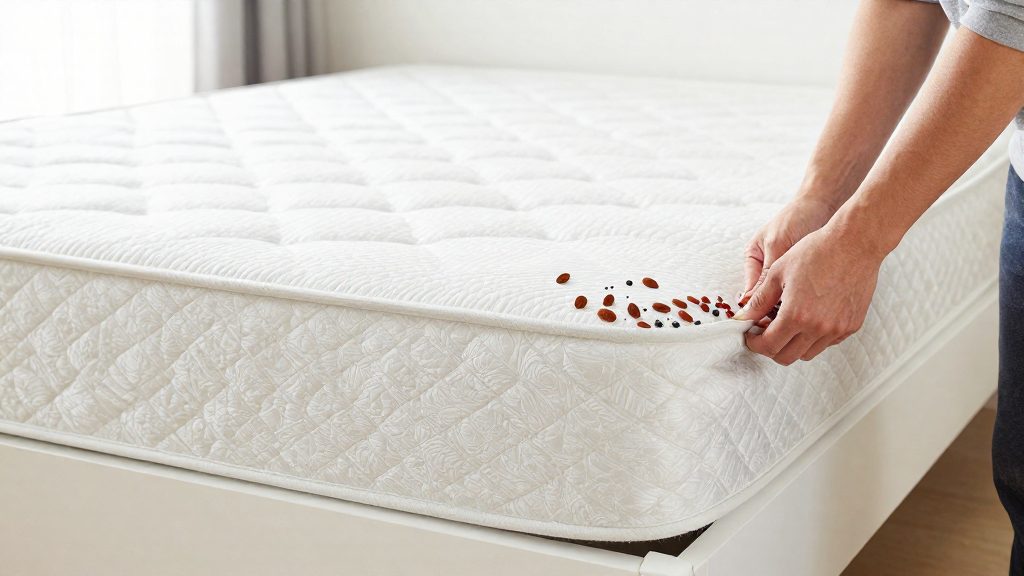
Bed bugs can be present in any hotel room, including five-star hotels and resorts, so a clean or upscale room is not evidence that it is free of them. The Centers for Disease Control and Prevention (CDC, 2024) states that cleanliness does not determine whether bed bugs are present.
What Are the Signs of Hotel Bed Bugs?
Star Rating and Cleanliness Are Not Reliable Indicators
Five-star hotels and resorts can host bed bugs. The CDC (2024) notes that cleanliness does not determine whether they are present, so room category and visible tidiness should not lower your guard during an inspection.
Low-Level Infestations Are Easy to Miss
According to the U.S. Environmental Protection Agency (EPA, 2026), low-level infestations are particularly difficult to find and identify correctly. A quick inspection that finds nothing cannot confirm that a room is bed-bug-free. Only a more thorough, systematic check can narrow the uncertainty, and even then the result is a reduction in risk rather than a guarantee.
Inspecting the Room on Arrival
The Texas Department of State Health Services advises inspecting the room before bringing luggage inside. Check beneath the bedding, along the mattress seams, between the mattress and box spring, and behind pictures and the headboard. Focus on these areas because they are where a limited infestation is most likely to be concealed.
Live Bugs, Eggs, and Shed Skins
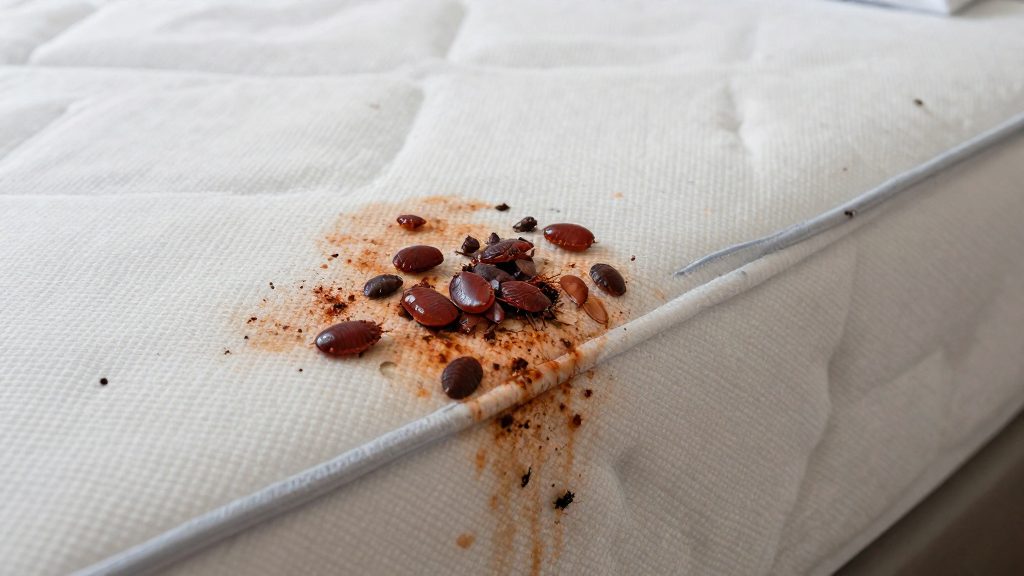
The U.S. Environmental Protection Agency (2026) lists three physical signs to look for: live bed bugs, tiny eggs and eggshells, and shed skins. These specimens come from the insect itself.
Live bugs
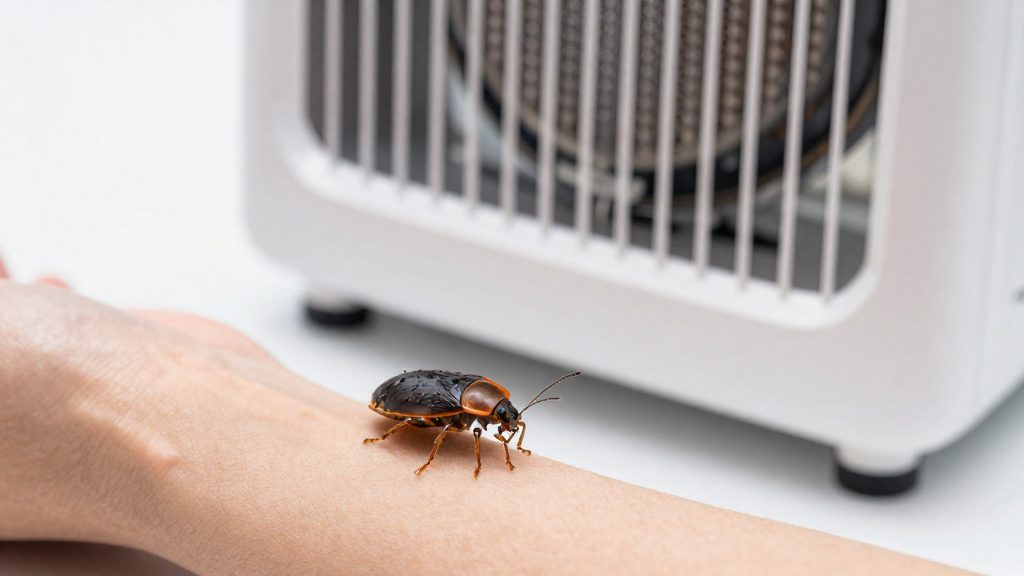
Identify a live bed bug by close visual examination of its size, colour and body shape rather than by a quick glance.
Eggs and eggshells
Eggs are very small, and empty eggshells remain after nymphs hatch. Both are easy to overlook, so examine surfaces at close range before concluding that no eggs are present.
Shed skins
Bed bugs leave shed skins behind as they molt. Look for these alongside live insects and eggshells, since finding any one of the three signs is a reason to examine the room more carefully.
Dark Spots and Blood Stains on Bedding
Bed bug droppings appear as dark spots that may bleed into fabric like marker ink, so they can soak into a sheet rather than sitting on the surface. Check the fabric itself, not just the top layer, by turning back the sheet and looking at the mattress cover and the underside of the bedding.
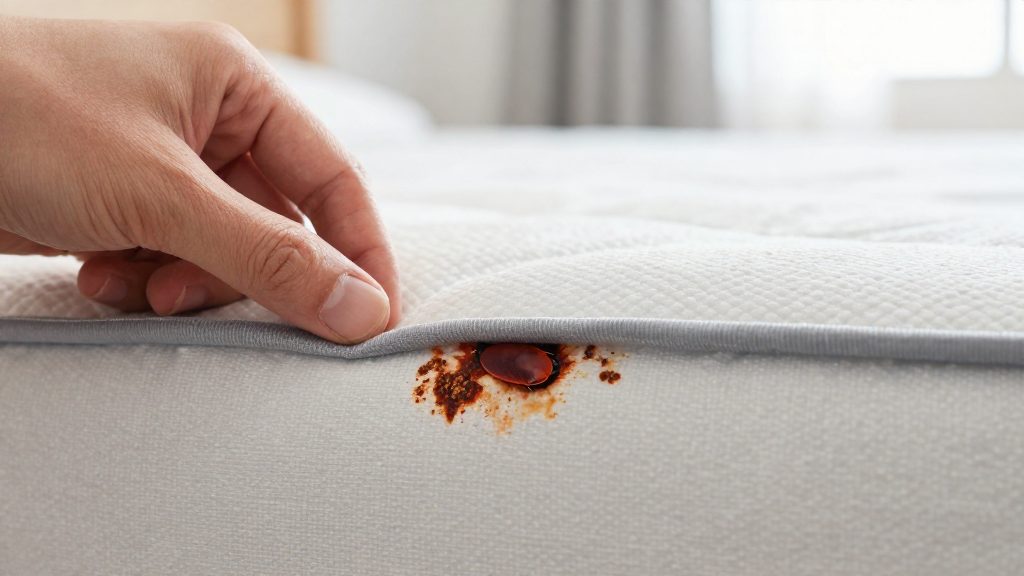
Rusty or reddish stains can result from crushed bed bugs. When a bug is squashed against a sheet or mattress, its blood leaves a rust-coloured mark. Look for these rusty or reddish stains on sheets and mattresses.
Telling Marks Apart
| Mark | Appearance | Likely origin |
|---|---|---|
| Dark spot that bleeds into the fabric | Dark, spreads into the fibres like marker ink | Bed bug droppings |
| Rusty or reddish stain | Rust-coloured or reddish | Crushed bed bugs |
Apply these checks before deciding what a mark is:
- Look at the spread. Droppings can bleed into the fabric; the EPA describes them as dark spots that may bleed like marker ink.
- Note the colour. Rusty or reddish marks point to crushed bugs.
- Compare several marks. A single stain does not establish an active infestation; the cited sources do not provide a reliable standalone diagnostic test for either stains or musty odors.
Where Should You Look for Bed Bugs?
Bed bugs most often hide in the bed itself and in the furniture around it. The U.S. Environmental Protection Agency (2026) lists mattress seams, piping and tags, box springs, and cracks in bed frames and headboards as common hiding places.
Mattress Seams, Piping and Tags
Check the mattress seams, the piping (the raised cord along the edges), and the mattress tag. Run your hand or a flashlight along each seam and fold rather than only inspecting the top surface.
Box Springs and Bed Frame Cracks
Inspect the box spring and the area between it and the mattress. Examine any cracks and joints in the bed frame as well.
Headboards and Wall Fixtures
Check the headboard cracks and joints, along with the space behind the headboard.
Can Bites or Smells Confirm an Infestation?
Bites are one of the weakest signs of a bed bug problem, and a sweet, musty odor is not a reliable test either. Bed bug bites look much like bites from other insects and common skin conditions, and some people do not react at all. Confirming an infestation therefore depends on physical evidence such as live bugs, droppings, eggshells and shed skins, not on how the skin looks or how the room smells.
Why Bites Are Unreliable
Bed bug bites resemble those of other insects and several skin conditions, so a rash alone cannot identify the cause. According to the U.S. Environmental Protection Agency (2026), some people show no reaction to bites at all, which means a guest may be bitten without noticing any mark.
The timing is also unreliable. According to the Centers for Disease Control and Prevention (2024), bite marks can take up to 14 days to develop in some people, so a bite that appears after a hotel stay may have come from an exposure earlier or elsewhere. Bite appearance and timing cannot reliably establish which hotel caused an exposure.
Odor as a Possible Sign
The CDC (2024) lists a sweet, musty odor among the possible signs of an infestation. Treat it as a prompt to look further, not as proof. A smell can also come from other sources; the cited sources do not provide a reliable standalone diagnostic test that confirms bed bugs from odor alone.
When to Rely on Physical Evidence
How to Inspect Your Hotel Room
Follow this sequence:
- Inspect before unpacking. Keep bags in the hallway and open nothing inside the room yet.
- Start at the bed. Pull back the bedding and check the sheets for rusty or reddish stains.
- Look for droppings.
- Use a flashlight along the mattress. Sweep the beam across the mattress edges and seams to look for live bed bugs, tiny eggs, eggshells, and shed skins.
- Work outward from the bed. Move to the headboard, the nightstands, then the furniture and walls nearest the bed, checking each surface in the same way.
- Probe with a card. Run a stiff card, such as a key card or credit card, along seams and into cracks to dislodge anything hidden, then check what falls onto a light surface.
If you find any sign, report it to hotel staff and ask for a different room before unpacking.
Protecting Your Luggage During Your Stay
Bed bugs can spread by hiding in the seams and folds of luggage, bags and clothing, according to the CDC (2024). A suitcase can carry them from one room to the next, so how you handle your belongings matters as much as the room itself.
Keep Luggage Off the Bed and Floor
Texas DSHS recommends keeping suitcases on luggage racks rather than the floor. Place your case on the rack when you arrive and keep it closed when you are not taking items out. Do not set bags on the bed, where they can touch bedding.
Check Seams and Folds Before Repacking
Before repacking, go through the seams and folds of each bag and every garment. Shake out clothing and check folded sleeves, collars and cuffs. Repack only items you have checked.
Seal Worn Clothing and Inspect Before Departure
Texas DSHS advises sealing worn clothing in airtight bags. Seal worn items as soon as you take them off so they stay apart from clean clothing. Before you leave, inspect the empty suitcase, paying particular attention to its seams and folds, and then check the bag again at home.