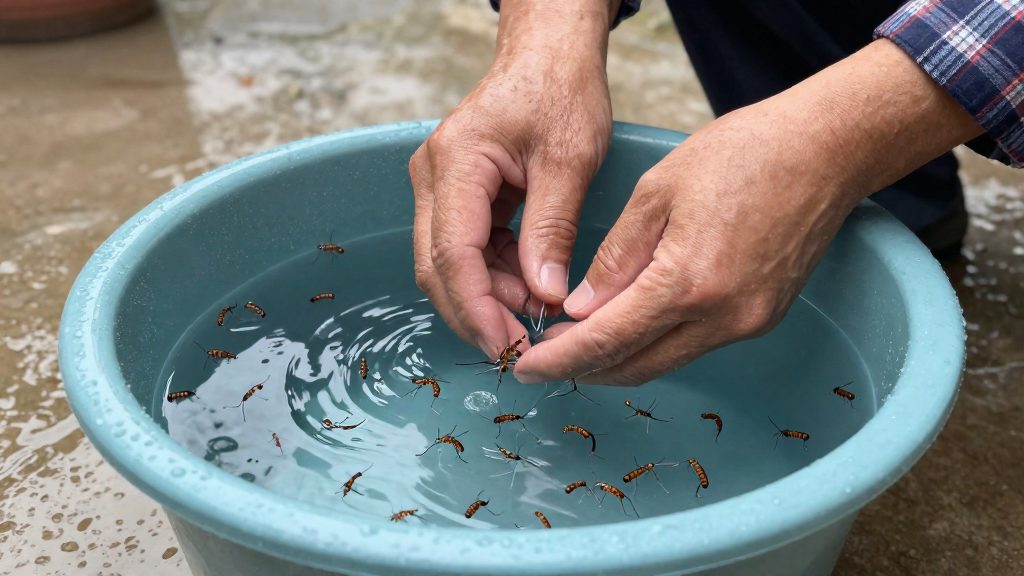
Mosquitoes need water for their larvae and pupae to develop. Aedes mosquitoes lay eggs on container walls above the waterline; the eggs hatch when water covers them. The water does not need to be large. According to the U.S. Environmental Protection Agency (EPA), Aedes aegypti can lay eggs in water-holding sites as small as a bottle cap, so a small, forgotten volume of water inside or around a home can support a breeding site.
Small Containers, Tree Holes, and Plant Crevices
The EPA identifies Aedes aegypti as a mosquito that can use water-holding sites as small as bottle caps, so include even small containers in your inspection.
Outdoor breeding sites are not limited to manufactured items. The EPA also identifies two natural sites:
- Tree holes: cavities in trees that can hold water.
- Plant crevices: gaps between leaves, stems, or other plant parts where water collects.
When checking a property, include these natural sites alongside household containers, since they are easy to overlook.
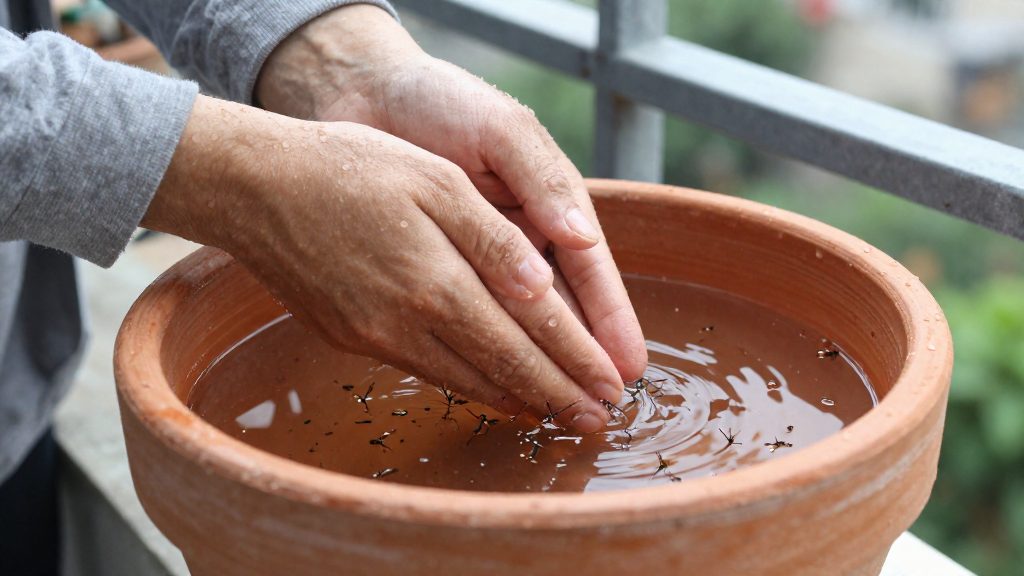
Common Containers That Become Breeding Sites
Buckets, tires, toys, trash containers, planters, and flowerpot saucers can all hold water where mosquitoes breed. The Centers for Disease Control and Prevention (CDC, 2024) gives one routine for these items: empty and scrub them, overturn them, cover them, or discard them, at least once a week.
Buckets, Tires, Toys, and Trash Containers
Check these objects after each rainfall and store them upside down or under cover when they are not in use. Discard any item you no longer need, because an empty-but-upright container can collect water again within days. Tires and toys left outdoors fall into the same category as buckets.
Planters and Flowerpot Saucers
Planters and flowerpot saucers collect rainwater in the base and in the rim.
Hidden Water in Gutters and Tarps
Outdoor items and roof drainage can hold standing water long enough for mosquitoes to breed. According to the Wisconsin Department of Health Services (2026), leaves can form pools in gutters and downspouts, so keeping these drainage routes clear helps prevent breeding sites. Remove leaves from gutters by hand and check that each downspout still drains freely.
Other household locations to inspect for standing water include:
- Tarps: check low points and folds where rainwater settles.
- Wheelbarrows: check the basin and any dips in the body where water collects.
- Air conditioning units: check the area around the unit for water that has collected and is not draining.
Birdbaths, Pools, and Rain Barrels
Birdbaths, unused swimming pools, and rain barrels are among the household water sources that mosquitoes use for breeding. The CDC lists birdbaths and pools alongside buckets, tires, and planters as containers that can hold water where mosquitoes breed. Preventing breeding here relies on two actions: emptying or covering the water, and blocking access to it.
Birdbaths
Birdbaths are outdoor standing water fixtures that need regular attention. Guidance on water changes varies between agencies: the CDC and EPA advise weekly action, Wisconsin recommends at least twice weekly, and New York City recommends every three to four days. Follow the most frequent interval where mosquito pressure is high.
Unused Pools and Pool Covers
Water can collect in unused swimming pools and on pool covers, creating breeding sites (New York City Department of Health and Mental Hygiene).
Rain Barrels and Water-Storage Containers
Tight lids are the primary control for rain barrels, cisterns, and other water-storage containers. According to the CDC (2024), these should be covered tightly to prevent mosquitoes from entering. Where a container has no lid, mesh screening can be fitted instead. The CDC specifies mesh smaller than an adult mosquito, so screening must have openings finer than the insect’s body size.
Can Mosquitoes Breed Inside Your Home?
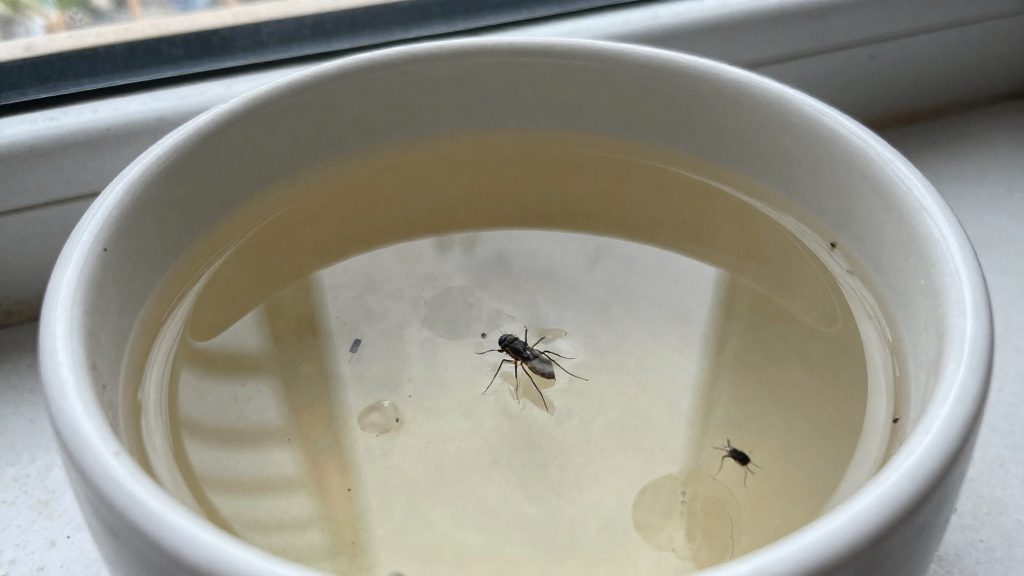
Yes. Mosquitoes can breed in standing water indoors, including water in flowerpot saucers and vases.
Flowerpot Saucers and Indoor Plants
Indoor vases follow the same weekly routine.
- Empty each saucer after watering so no water remains in it.
- Scrub the saucer surface to remove eggs and larvae.
- Turn over or discard saucers you do not use.
Water Beneath Homes and in Crawlspaces
Water that collects under a house can produce mosquitoes out of sight. The San Mateo County Mosquito and Vector Control District recommends maintaining sump pumps and plumbing and draining standing water to prevent this. Check crawlspaces for pooled water and leaking pipes, and confirm that any sump pump is working so water does not sit in the space.
A Weekly Standing Water Inspection Checklist
Weekly Actions by Item
| Item | Weekly action |
|---|---|
| Buckets, toys, planters, trash containers | Empty, scrub, then overturn or discard |
| Flowerpot saucers and indoor vases | Empty and scrub, then cover, overturn, or discard |
| Tires | Empty, then overturn or discard |
| Birdbaths | Change the water (interval varies, see below) |
| Rain barrels and cisterns | Keep tightly covered |
| Containers without lids | Screen with mesh smaller than an adult mosquito |
The CDC and EPA advise changing birdbath water weekly. Wisconsin Department of Health Services (2026) recommends at least twice weekly, and NYC Health recommends every three to four days. No single interval applies everywhere, so use the shortest interval you can maintain.
Logging Inspection Findings
Record each water-holding item you find, its location, and the action taken, with the date of inspection. Repeated entries for the same item or spot show where water returns. If an item repeatedly refills, empty and scrub it, then overturn, cover, or store it where it cannot collect water; discard it if it is no longer needed.
What If You Cannot Drain the Water?
The right choice depends on where the water collects.
Overwatered Lawns
Overwatered lawns are a recognised source of mosquito breeding sites, according to the San Mateo County Mosquito and Vector Control District. Reduce irrigation so water does not stand on the grass, and check for puddles after each watering session.
Water can accumulate in unused swimming pools and on pool covers, according to the New York City Department of Health and Mental Hygiene. The U.S. Environmental Protection Agency recommends keeping pool water treated and circulating rather than leaving it still. Remove water that collects on covers so it does not become a standing site.
Temporary Pools of Water
The U.S. Environmental Protection Agency recommends draining temporary pools of water or filling them with dirt. Filling is the option to use when a temporary pool cannot be drained.
Water That Cannot Be Removed
New York City Health recommends Bti larvicides for water that cannot be removed. Use the product only according to the manufacturer’s directions, and check the label before application. Removing breeding habitats alone is unlikely to give complete control, so the U.S. Environmental Protection Agency advises adding other control methods when needed.