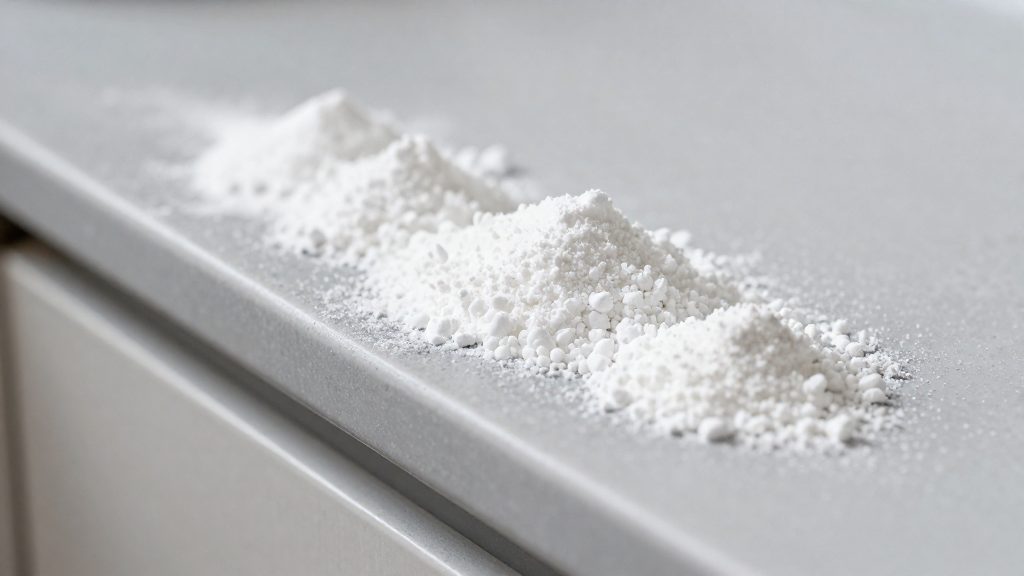
Boric acid is still legal for pest control in Canada, but only under the conditions set by Health Canada. Products containing it are regulated under the Pest Control Products Act, and the label is the legal reference for every use. The products still on the market fall into two groups: registered domestic products and commercial products. Households can use boric acid only in sealed bait stations or localized gel treatments. Dust and granular formulations are no longer permitted for home use.
Is boric acid powder legal for pest control in Canada?
Registered domestic products
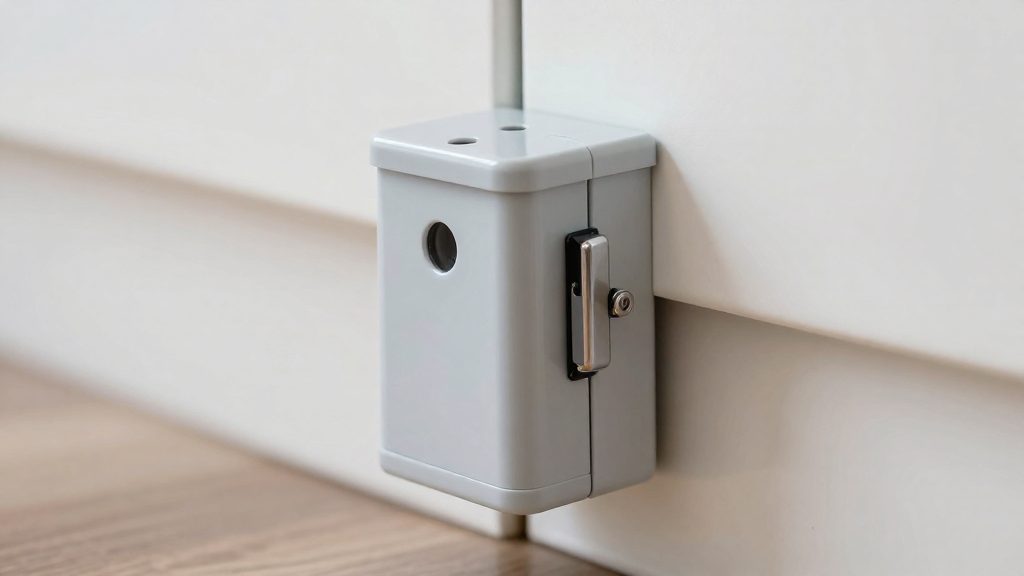
Registered domestic products are limited to sealed bait stations and localized gel treatments. Domestic dust and granular boron products were cancelled as of 22 July 2019, and domestic solution products were also cancelled, except those in sealed bait stations or localized gels. Sale of the cancelled products was prohibited from 22 July 2018. Domestic bait stations and gels that remain on the market must be used only in areas that children and pets cannot reach. Consumers should stop using any cancelled product and follow the label on the product they still have.
Commercial products
Commercial products containing boron remain available under three restrictions, and domestic products are limited to the formats shown below:
| Category | Permitted use | Conditions |
|---|---|---|
| Domestic | Sealed bait stations, localized gels | Only where children and pets cannot reach |
| Commercial | Registered commercial boron products | No broadcast application; visible dust removed after application; updated protective equipment requirements |
Broadcast application, meaning spreading the product across an open area, is excluded for commercial users.
The regulatory framework
Health Canada based these changes on the risk that overexposure to boric acid may cause developmental and reproductive health effects.
Using a product against its label
Using a pesticide contrary to its label violates the Pest Control Products Act (Health Canada, 2025). Before each use, check that the product is a currently registered domestic or commercial product and that the intended use appears on its label.
What Health Canada cancelled and why
Health Canada’s re-evaluation decision RVD2016-01, published on 22 July 2016, covers five borate substances: boric acid, borax (pentahydrate), borax (decahydrate), disodium octaborate tetrahydrate and zinc borate. In 2016, 112 registered products contained boric acid. Of these, 25 were scheduled for cancellation, and the remaining 87 had to meet new labelling requirements within 24 months (Health Canada, 2016).
The restrictions on domestic products were applied in three stages:
| Date | Measure for domestic products |
|---|---|
| 22 July 2016 | Re-evaluation decision RVD2016-01 published |
| 22 July 2018 | Sale of the cancelled products prohibited |
| 22 July 2019 | Boron dust and granular products cancelled; solution products cancelled, except those in sealed bait stations or localized gel treatments |
Health Canada (2025) states that the cancelled products must no longer be used.
The stated health rationale is that developmental and reproductive effects may result from overexposure to boric acid. The agency’s concern is cumulative exposure: the total dose a person receives from many sources, not only from a single pest control product.
Which boric acid products can you still use at home?
Only two home formats are still on the market: sealed bait stations and localized gel treatments. Dust, granular and open solution products are no longer among the permitted domestic options, so a boric acid powder should not be assumed to be an acceptable home product. Check the product’s form before purchase.
Domestic products: sealed bait stations and gels
Domestic bait stations and gels that remain on the market must be used only in areas that children and pets cannot reach.
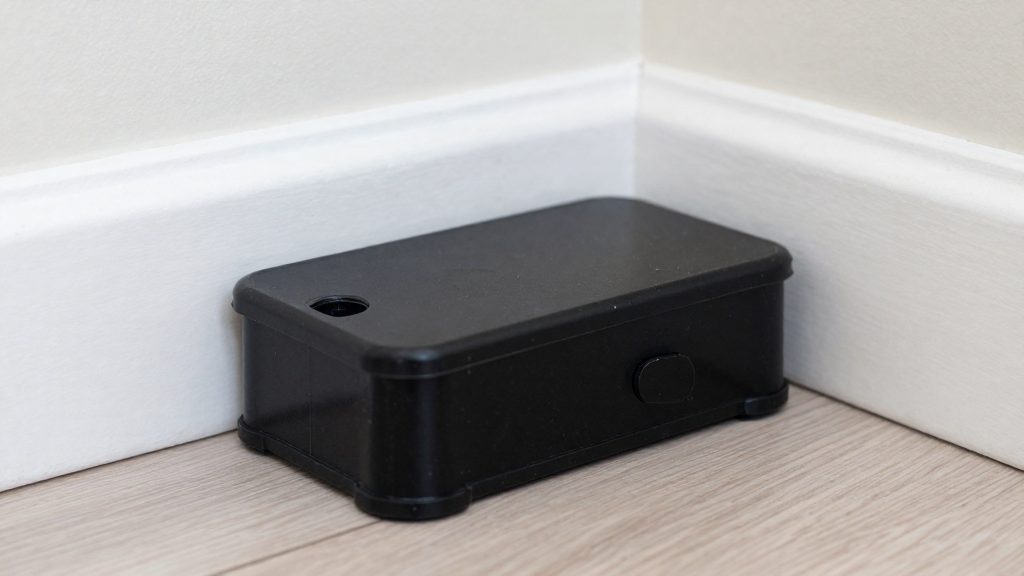
- Sealed bait stations keep the boric acid enclosed within a closed unit rather than spread across the room.
- Localized gel treatments are applied to a limited spot, not across a general area.
Both formats must be used strictly as directed on the label. Using a pesticide contrary to its label is a violation of the Pest Control Products Act, according to Health Canada (2025). Where the label specifies application points or amounts, those instructions are the only permitted use.
Commercial products: restricted use
Commercial boron products remain available, but they carry three conditions set by Health Canada (2025):
- No broadcast application. The product cannot be scattered over open surfaces or whole areas.
- Visible dust must be removed after application. Any residue visible on surfaces must be cleaned up once treatment is complete.
- Updated protective equipment requirements. These requirements appear on the commercial label. Read the label and use the specified gear before handling the product.
Commercial products are intended for professional or licensed use under these conditions. A household user should not attempt to apply a commercial formulation in a way that breaks any of these restrictions.
How do you use bait stations and gels safely?
Health Canada (2025) states that the label governs every use of the two remaining domestic formats.
| Domestic format | Status | Rule for use |
|---|---|---|
| Dust and granular products | Cancelled as of 22 July 2019 | Stop using |
| Solution products | Cancelled, except in sealed bait stations or localized gels | Stop using unless the product is a sealed station or gel |
| Sealed bait stations and localized gels | Still on the market | Use as the label directs |
Sale of the cancelled formats was prohibited from 22 July 2018, so leftover containers bought earlier should be checked before use.
Placement rules
- Identify every area children and pets can reach, including floor level, low shelves and pet feeding zones, before placing any product.
- Position stations in spaces they cannot access, such as inside closed cabinets or behind fixed appliances.
- Keep gels off surfaces a child or pet could touch, such as floors, countertops and food-preparation areas.
- Follow the label for the number of stations, spacing and application amount. Do not add extra units to “strengthen” a treatment.
Handling cancelled products
- Check the product name and label to confirm it is a sealed bait station or a localized gel.
- If it is a dust, granular or open solution product, stop using it.
- Follow the label on every product you keep.
Storing bait and gel products
- Keep unused stations and gels in their original, closed packaging.
- Store them out of reach of children and pets, in a location separate from food.
- Keep the label with the product so the instructions stay available during use.
Boric acid risks for children and pets
Children and pets are exposed to boric acid by swallowing it, breathing in dust, or touching residue on skin and fur. According to Health Canada (2025), overexposure may cause developmental and reproductive health effects, so the main protection is keeping every product out of their reach. Domestic dust and granular products were cancelled in Canada as of 22 July 2019.
Exposure routes
- Ingestion: Children and pets can swallow powder from open containers, spilled residue, or a bait they can reach.
- Dust inhalation: Powder that rises during application can be breathed in.
- Skin and fur contact: Residue on floors, skirting boards, and bedding transfers to hands, paws, and coats.
Pet exposure from grooming and licking
Pets can lick treated surfaces or groom powder from their paws and fur. Keep animals out of treated rooms until visible dust has been removed, and wipe down floors and surfaces where pets walk or sleep.
Symptoms and first aid
Do not wait for symptoms before acting. If a child or pet may have swallowed boric acid, contact a poison control centre or a doctor immediately, or a veterinarian for animals, and seek emergency care right away if the person or animal is unwell. Keep the product label so that the exact product can be identified. Keep the product label so the exact product and its active ingredient can be identified. For skin contact, remove contaminated clothing and rinse the skin with water. For eye contact, rinse the eye with water and seek medical advice.
Why you shouldn’t make homemade boric acid mixes
Health Canada advises Canadians not to make homemade pesticides with boric acid and not to use it in crafts such as homemade slime (Health Canada, 2016).
Homemade pesticide mixtures
A do-it-yourself mix of boric acid with sugar, flour or water is a pesticide made outside any registration. A registered product is approved with a label that specifies the target pests, where it can be used and the protective measures to follow. A homemade mixture has no label, so no approved directions, dosage or safety instructions apply to it. Each batch also has a different concentration, so a household cannot know how much boric acid it is actually applying or how much it is adding to its overall exposure.
Craft uses
Health Canada names homemade slime as a use to avoid. Slime recipes can bring boric acid into direct contact with hands and surfaces, which may add to a household’s overall exposure, the cumulative exposure Health Canada is concerned about.
Why label-free mixes fall outside the rules
A homemade mix has no label to follow, so any use of it sits outside the rules that govern registered products, whatever the pest. The same logic applies to the restricted domestic boron products that remain on the market: their permitted uses are defined by their labels, and they must not be used beyond those conditions. If a pest problem persists, the lawful option is a registered product used exactly as its label directs.
Non-boric options for ants and cockroaches
For ants and cockroaches, the practical question is which non-boric method fits the infestation and the household. Three approaches cover most situations: registered gel baits, enclosed bait stations with perimeter treatments, and traps combined with sanitation.
Gel baits with registered active ingredients
Check the registered active ingredient on the label before buying. A gel bait is appropriate only when the label lists the pest you have and specifies where the product can be placed. Apply small spots along the routes where you see insects, not across open surfaces, and follow the stated reapplication interval.
Bait stations and perimeter treatments
Enclosed bait stations keep the product sealed off from direct contact, which matters in homes with children or pets. Perimeter treatments apply a registered product around the outside of the building, only where the label allows it, to intercept ants before they enter. Both methods depend on label instructions: a product used outside its registered use is not a compliant treatment, and a station placed within reach of children or pets defeats its purpose.
Cockroach traps and sanitation
Traps capture cockroaches and show whether activity is falling over time. Traps work best alongside sanitation: storing food in sealed containers, cleaning crumbs and grease residue, and repairing leaks that supply water. Without sanitation, the food and water that sustain the population remain available, so traps alone rarely end an infestation.