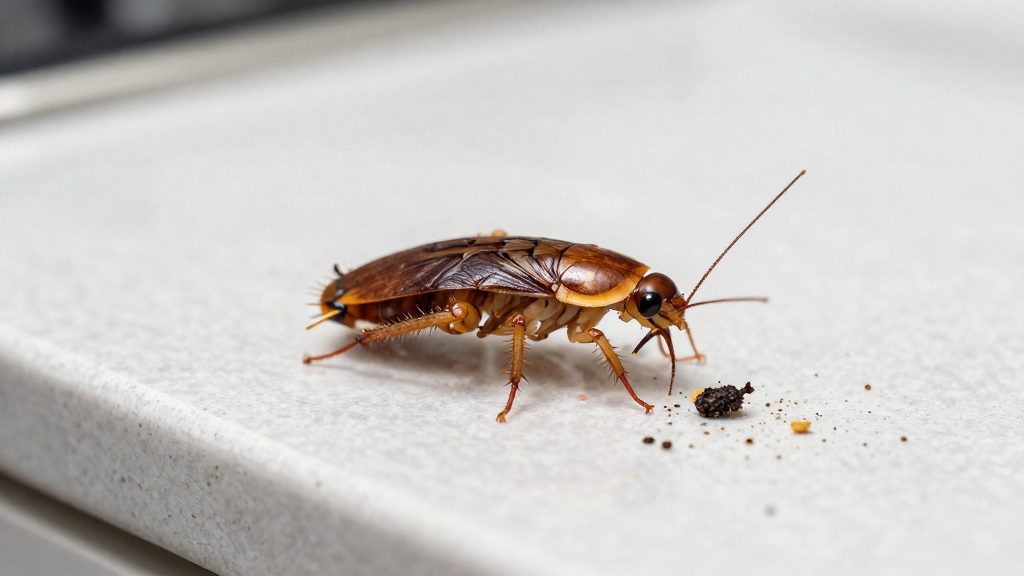
Right after treatment, the priority is to remove what cockroaches leave behind, mainly droppings, crumbs and egg capsules. Their droppings carry allergens and can aggravate asthma, and the insects can carry Salmonella, so debris should be handled with care. Pesticides used alone give poor results, so cleaning must be combined with hygiene and changes to the environment (Health Canada, 2026).
What to do right after eliminating cockroaches?
Remove eggs and debris
- Crush any egg capsules you find, then sweep them up or throw them away.
- Vacuum regularly to remove crumbs and eggs. Then place the vacuum bag in soapy water to kill any cockroaches still inside.
- Vacuum behind large appliances, where crumbs collect.
Treat objects and surfaces
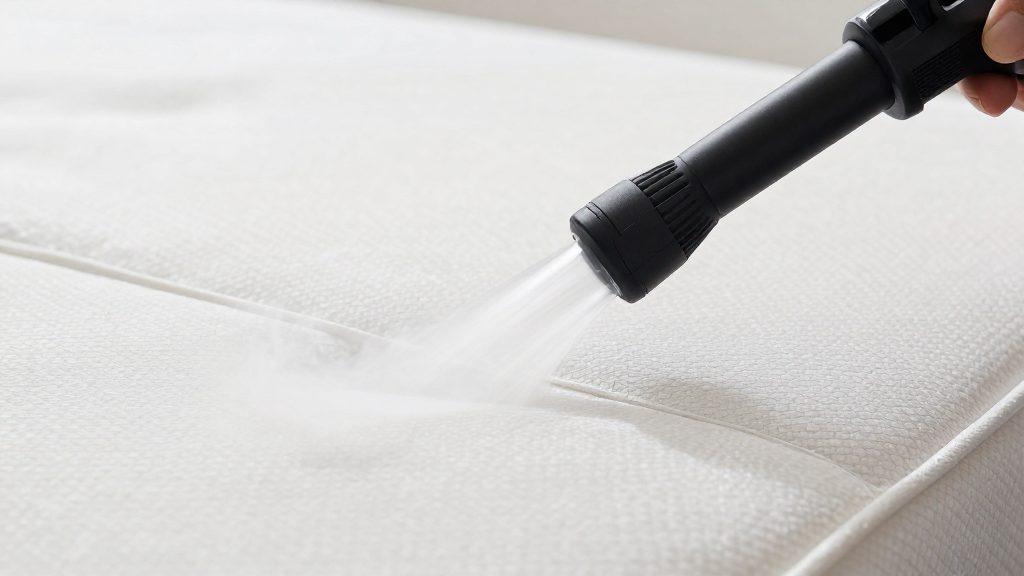
Steam cleaning suits only materials that withstand moisture and heat. Steam cleaning suits only materials that withstand moisture and heat. Intense cold lasting at least one day can eliminate insects on infested objects.
Prevent a return
- Store food in airtight containers made of plastic or glass.
- Clean spills immediately.
- Seal cracks and hiding places.
- Repair leaking taps quickly, since water sources attract cockroaches.
- Do not leave pet food in the bowl overnight.
- Check that product labels show a registration number.
Check results with sticky traps
Place sticky traps under the sink, near the refrigerator and inside closed cabinets. They show whether the treatment and cleaning are working (Government of Manitoba, 2026).
What Health Risks Remain After an Infestation?
One of the lasting health concerns is cockroach droppings. According to Alberta Health Services (MyHealth Alberta, 2026), they contain allergens that settle in dust, circulate in the air or reach food, and can worsen asthma. Cockroaches can also carry Salmonella, so food-contact areas need attention even after the insects are gone.
| Risk | Exposure route | Practical measure |
|---|---|---|
| Allergens in dust and air | Droppings settle on surfaces and become airborne | Vacuum regularly to remove crumbs and eggs |
| Salmonella | Cockroaches carry the bacterium | Store food in sealed plastic or glass containers |
Vacuuming should be done regularly, since it removes crumbs and eggs. The vacuum bag should then be placed in soapy water to kill surviving cockroaches (Health Canada, 2026). Egg capsules that are found should be crushed, then swept up or thrown away. Sticky traps placed under the sink, near the refrigerator or in closed cabinets can show whether the problem persists. Diatomaceous earth is not toxic to humans or pets, but its dust should not be inhaled.
How to clean kitchen, furniture and appliances
Pesticides used alone give poor results, so cleaning and hygiene measures must accompany any treatment (Health Canada, 2026). The work goes room by room, starting with the kitchen.
Kitchen and food storage
- Store food in sealed plastic or glass containers.
- Clean spills immediately.
- Do not leave pet food in the bowl overnight.
- Seal cracks and hiding places, and repair leaking taps quickly (Alberta Health Services, MyHealth Alberta, 2026; Government of Manitoba, 2026).
Vacuuming furniture and appliances
Vacuuming regularly removes crumbs and eggs (Health Canada, 2026). Droppings carry allergens that settle in dust and can aggravate asthma, so vacuum thoroughly. Vacuum behind and under appliances, as the Government of Manitoba advises (2026). Then dip the vacuum bag in soapy water to kill any cockroaches left inside (Health Canada, 2026).
Crush any egg capsules you find, then sweep them up or throw them away (Alberta Health Services, MyHealth Alberta, 2026).
Heat and cold treatments
Steam cleaning suits only materials that resist moisture and heat, so test surfaces before using it (Health Canada, 2026). Intense cold lasting at least one day can eliminate insects on infested objects (Health Canada, 2026).
Checking results
Place sticky traps under the sink, near the refrigerator and inside closed cabinets to check whether treatment and cleaning are working (Government of Manitoba, 2026).
Check that product labels show a registration number (Health Canada, 2026).
Vacuum, steam, cold: which to choose?
| Method | Documented use | Constraint |
|---|---|---|
| Vacuuming | Removes crumbs and eggs when done regularly | The bag must be treated afterward |
| Steam cleaning | Suitable for materials that resist moisture and heat | Not suitable for materials that cannot tolerate either |
| Intense cold | At least one day of intense cold can eliminate insects on infested objects | Requires a full day of cold exposure |
Vacuuming is the starting point because it removes crumbs and eggs in one pass. According to Health Canada (2026), vacuuming regularly removes crumbs and eggs. Vacuum thoroughly behind large appliances, as the Government of Manitoba (2026) advises. Afterward, immerse the vacuum bag in soapy water to kill any cockroaches still inside.
Egg capsules found during cleaning should be crushed, then swept up or thrown away, according to Alberta Health Services (2026). Crushing them first prevents the eggs from being dispersed during sweeping.
Steam should only be used on surfaces that resist both moisture and heat. Check the material before treating an item, because steam can damage materials that do not meet these criteria.
Cold is an option for infested objects. Health Canada (2026) states that an intense cold lasting at least one day can eliminate insects on these items.
When to call a professional
Call a professional when cleaning, sealing and do-it-yourself treatment have not brought the problem under control. Health Canada (2026) notes that pesticides used alone give poor results and must be combined with hygiene and changes to the environment, so a professional plan should address all three at once.
Manitoba’s government (2026) recommends hiring authorized technicians and advises against relying on over-the-counter chemical products, which it considers less effective and dangerous when misused. If you do buy a product, check that its label carries a registration number, as Health Canada (2026) advises.
Signs that outside help is needed include:
- Cockroaches still appearing on sticky traps placed under the sink, near the refrigerator or inside closed cabinets after several rounds of cleaning and treatment.
- Egg capsules still turning up after you have crushed them and swept or discarded them.
- Infestation spreading to several rooms or to areas you cannot access or clean properly.
Health risk also affects urgency. Cockroach droppings contain allergens that settle in dust, circulate in the air and can worsen asthma. Cockroaches can also carry Salmonella, according to Alberta Health Services (2026). Prioritize a professional visit when asthma sufferers or young children live in the home.
If you rent
In Manitoba, the government (2026) states that the landlord is responsible for keeping dwellings free of insects. Tenancy rules vary by province and territory, so check your local rules or seek legal advice if a dispute arises. In Manitoba, tenants must notify their landlord, who is responsible for keeping dwellings free of insects. Rules differ by province, so if the landlord does not act, contact your provincial tenancy authority or seek legal advice. Report any leaking taps at the same time, since Manitoba advises repairing them quickly.
Preparing for the visit
Before the technician arrives, store food in sealed plastic or glass containers, clean up spills immediately, and seal cracks. Vacuum behind appliances, then place sticky traps in the same spots so the technician can compare catches before and after treatment.
How to Prevent Cockroaches from Returning
Pesticides used alone give poor results. According to Health Canada (2026), they must be combined with hygiene measures and changes to the environment, which remove the food, water and hiding places that keep cockroaches in a home.
| Measure | Action |
|---|---|
| Food storage | Keep food in airtight containers made of plastic or glass |
| Spills and crumbs | Clean them up immediately, and vacuum regularly, including behind appliances |
| Cracks and hiding places | Seal them |
| Water sources | Repair leaking taps quickly, and do not leave pet food in the bowl overnight |
| Egg capsules | Crush them, then sweep them up or throw them away |
| Vacuum bag | Soak it in soapy water to kill any surviving cockroaches |
According to Alberta Health Services (2026), these steps address the places where cockroaches feed and breed, and sealing cracks and fixing water leaks reduce the shelter available to them.
Checking That the Measures Work
Sticky traps placed under the sink, near the refrigerator and inside closed cabinets show whether the treatment and cleaning are working, according to the Government of Manitoba (2026). Replace them as they fill, and keep monitoring after the visible activity stops.
Heat and Cold Treatments
Steam cleaning suits only materials that resist moisture and heat. Health Canada (2026) notes that intense cold lasting at least one day can eliminate insects on infested objects.
Professional Help and Landlords
The Government of Manitoba (2026) advises against relying on store-bought chemical products, which it considers less effective and hazardous when misused, and recommends licensed technicians for serious infestations. In Manitoba, tenants should inform their landlord, who is responsible for keeping the dwelling free of insects. Elsewhere in Canada, check your provincial tenancy rules or seek legal advice.
How to Check Whether the Infestation Is Over
The sources do not give a way to confirm with certainty that an infestation has ended. According to the Government of Manitoba (2026), sticky traps help show whether treatment and cleaning are working, but an empty trap does not prove the infestation is over. According to the Government of Manitoba (2026), sticky traps help show whether treatment and cleaning are working. Place them in the areas where cockroaches are most likely to hide and feed.
Where to Place Monitoring Traps
- Under the sink
- Near the refrigerator
- Inside closed cabinets
Checks to Run During Monitoring
- Egg capsules: Crush any capsules you find, then sweep them up or throw them away. Alberta Health Services (2026) recommends this step.
- Entry points: Seal cracks and fix leaking taps quickly, since water sources attract cockroaches.
- Food access: Do not leave pet food in the bowl overnight.
- Hidden debris: Vacuum behind appliances to remove crumbs and eggs.
- Food storage: Keep food in sealed plastic or glass containers, and clean up spills immediately.
Limits of Chemical Treatment
Pesticides used alone give poor results. Monitoring should therefore confirm that hygiene and environmental changes are being carried out alongside any chemical product. Health Canada (2026) also advises checking that a product label carries a registration number before use.
The Government of Manitoba (2026) advises against relying on store-bought chemical products, which it considers less effective and hazardous when misused, and recommends licensed technicians. In Manitoba, tenants should notify their landlord, who is responsible for keeping dwellings free of insects. Elsewhere, check your provincial tenancy rules or seek legal advice.
Frequently asked questions
Are cockroach droppings dangerous if I leave them after treatment?
Yes. According to Alberta Health Services (MyHealth Alberta, 2026), droppings contain allergens that settle in dust and food and can worsen asthma. Cockroaches can also transmit Salmonella, so areas where food is prepared need extra attention.
Can I steam-clean everything, or do some items need another method?
Steam only suits materials that tolerate moisture and heat, so it is not an option for every item. For objects that cannot be steamed, intense cold lasting at least one day can kill insects on infested objects, according to Health Canada (2026).
How can I tell whether my cleanup and treatment are working?
Place sticky traps under the sink, near the refrigerator and inside closed cabinets. They show whether the treatment and cleaning are having an effect (Government of Manitoba, 2026).