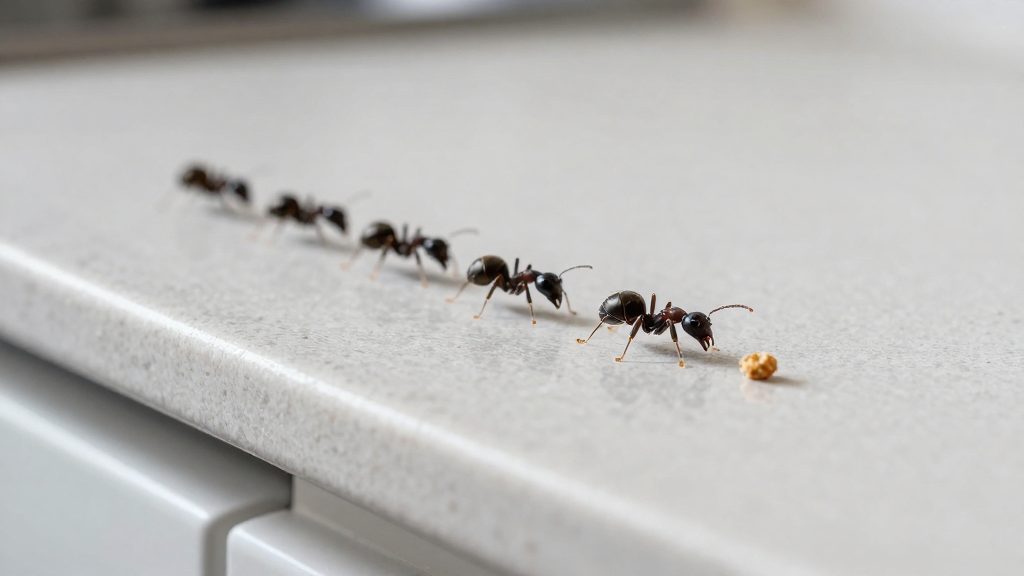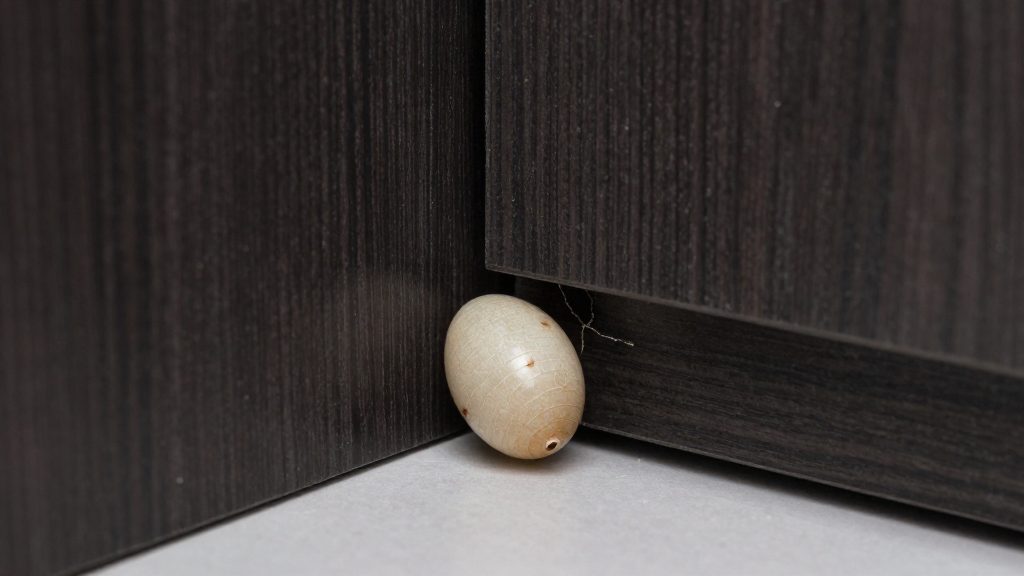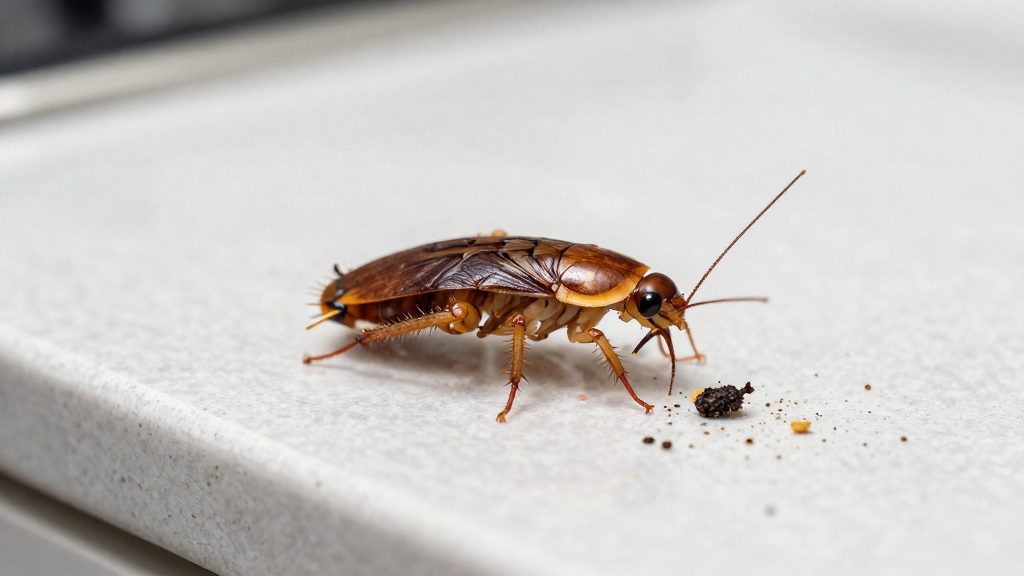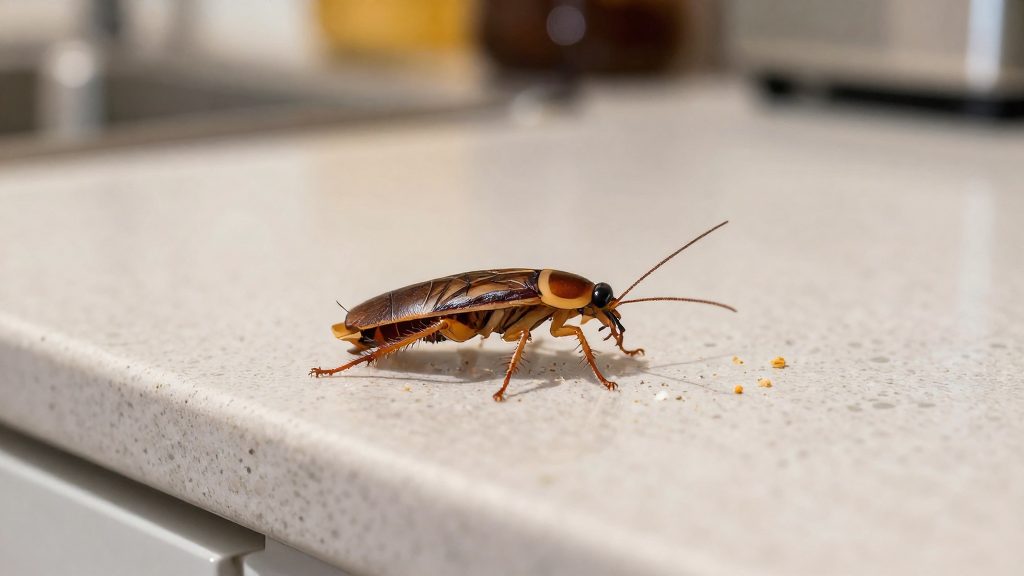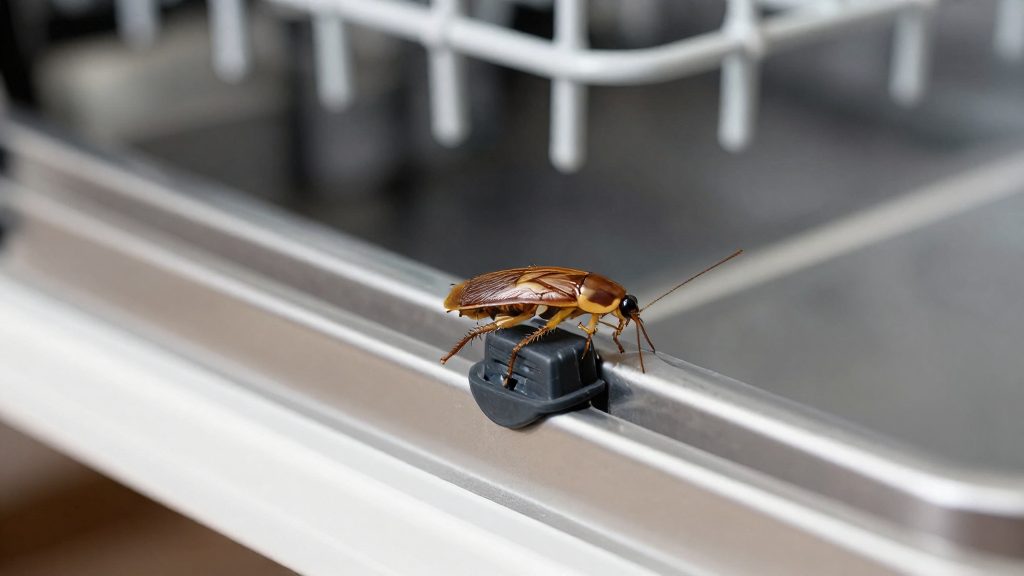
Cockroaches usually settle under a dishwasher, not inside it, because the space beneath the appliance is warm, dark and damp, and that is where its plumbing sits. Entry points are worn seals and gaps in the floor around the unit. The treatment is to remove food residue, seal the entry points, and dust the void with a dry powder, with no sprays or foggers inside the machine.
Why Are There Cockroaches in the Dishwasher?
Where cockroaches nest
Cockroaches rarely live inside the tub, which runs too hot for them. According to Today’s Homeowner (2026), the warm void under and behind the appliance is the usual nest, and the insects enter through worn door gaskets and gaps around the drain line. A cockroach problem does not mean a dirty home. The insects also arrive in used furniture, groceries, empty bottles and shipping boxes.
The German cockroach is the most common species in homes. Health Canada (2026) reports that it measures 1.3 to 1.6 cm, is pale brown to beige, and has two dark parallel lines behind the head. It has wings but does not fly.
Treating the area under the dishwasher
- Place sticky traps and gel bait under and around the appliance. Traps also show which routes the insects use.
- Remove the kick panel to inspect the void.
- Reseal the gaskets and gaps with caulk.
- Vacuum the debris.
- Dust the space under and behind the unit with diatomaceous earth or borax powder.
Diatomaceous earth works only when it is dry, and its dust should not be inhaled during application. Bait stations kill insects 48 to 96 hours after ingestion, according to Health Canada (2026).
Cleaning and preventing reinfestation
Do not spray insecticide or fogger inside the dishwasher, since these products are not made for surfaces that touch food. White vinegar repels cockroaches but does not kill them. Combat (Henkel) (2026) recommends the following cleaning routine:
- Wipe the interior and remove food residue.
- Clean the filter.
- Run an empty cycle at high temperature.
- Vacuum around the appliance.
Remove clean dishes as soon as the cycle ends, and do not leave dirty dishes on counters or in the sink overnight.
How to Spot Them Under and Around the Appliance
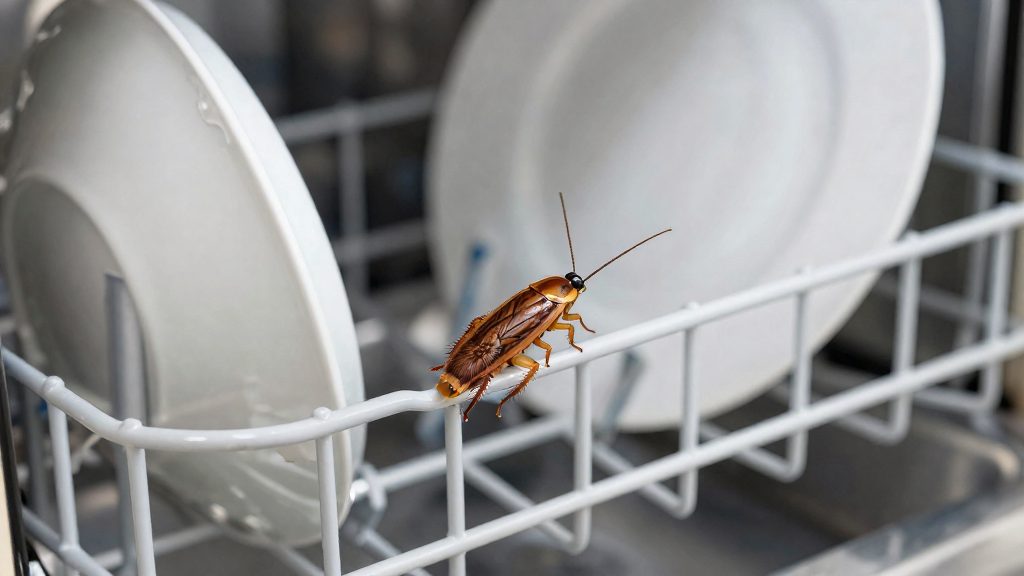
Dishwasher infestations are usually hidden. Cockroaches rarely live inside the tub because it runs too hot, so they settle under and behind the unit. The most common household species is the German cockroach. It measures 1.3 to 1.6 cm, is pale brown to beige, and has two dark parallel lines behind its head. It has wings but does not fly, according to Health Canada (2026). Finding one does not necessarily mean the home is dirty, since these insects also arrive in used furniture, groceries, empty bottles and shipping boxes (Health Canada, 2026).
Check the following points in order:
| Check point | Location | What to look for |
|---|---|---|
| Kickplate void | Under and behind the unit | A warm, dark, damp space created by the plumbing |
| Door gasket | Door edge | Worn or cracked seals that let insects in |
| Drain line | Back and underside of the unit | Gaps around the pipe |
| Sticky traps | Floor under and around the unit | Captured insects that show where they move |
To inspect the void, remove the kickplate (the panel at the base of the cabinet) and look behind and beneath the appliance (Today’s Homeowner, 2026). Place sticky traps under and around the dishwasher before you start, because they show movement and help determine where control measures should go (Health Canada, 2026). Check the traps regularly so that the catches show the active routes.
Cleaning the Dishwasher and Its Filter
According to Combat (Henkel) (2026), keeping the dishwasher clean removes the food residue that draws cockroaches in. Cleaning takes five steps:
- Wipe down the interior of the dishwasher.
- Remove any food residue from the tub.
- Clean the filter, where food particles collect.
- Run an empty cycle at a high-temperature setting.
- Vacuum the area around the appliance.
Vacuuming around the appliance is the step that targets the nesting zone. Today’s Homeowner (2026) reports that cockroaches usually avoid the hot cavity of the tub. They nest under and behind the unit, where the plumbing creates a warm, dark, damp void, and they enter through worn door gaskets or gaps around the drain hose. Vacuuming that space removes the debris that attracts them, and you can then check the gaskets for wear.
Prevention depends on how quickly dishes are handled. Combat (Henkel) (2026) advises taking clean dishes out as soon as the cycle ends and not leaving dirty dishes on the counters, since both give cockroaches a food source close to the machine.
Do not use white vinegar as a substitute for these steps. Today’s Homeowner (2026) notes that it only repels cockroaches and does not kill them, so it cannot clear an existing infestation.
Which traps and baits to use?
Cockroaches nest under and behind the dishwasher, not in the wash tub, so traps and baits belong in that space. According to Today’s Homeowner (2026), the recommended approach is to place sticky traps and gel bait under and around the appliance, then treat the void with a dust. Sticky traps also serve to monitor movement, so their catches show where control measures should go.
| Option | How to use it | Key details |
|---|---|---|
| Sticky trap | Place under and around the appliance | Tracks cockroach movement and shows where to place control measures |
| Homemade trap | Dark container coated with petroleum jelly inside the rim, with tape on the outside to climb and bait inside | Captured cockroaches die when drowned in soapy water or frozen for at least 24 hours |
| Tamper-resistant bait station | Place where cockroaches travel | Kills insects 48 to 96 hours after ingestion |
| Gel bait | Apply under and around the dishwasher | Placed alongside the sticky traps |
| Diatomaceous earth or borax powder | Apply under and behind the appliance | Dehydrates insects, but only works when dry |
Application sequence
- Place sticky traps and gel bait under and around the dishwasher.
- Remove the kick plate to inspect the void.
- Reseal the door gaskets and gaps with caulk.
- Vacuum debris from the area.
- Apply a dry insecticidal powder, such as diatomaceous earth or borax, under and behind the appliance.
Diatomaceous earth can irritate the lungs, so do not inhale its dust during application. Keep the powder dry, because moisture reduces its effect.
What Not to Do Inside the Dishwasher
Most treatment mistakes come from targeting the tub itself. German cockroaches rarely live inside the dishwasher because its interior runs too hot. According to Today’s Homeowner (2026), they nest under and behind the appliance, where the plumbing creates a warm, dark, damp void, and they enter through worn door gaskets or the gaps around the drain line. Treatment effort aimed at the cavity or the racks is wasted.
Three errors come up most often:
- Do not spray insecticide or use a fogger inside the dishwasher. These products are not designed for surfaces that contact food. Apply treatments under and behind the unit instead.
- Do not rely on white vinegar. It repels cockroaches but does not kill them, so the infestation remains.
- Do not use a pesticide without checking its registration. Read the label, follow the directions, and confirm the registration number, which shows approval by Health Canada (2026).
The right approach is to work on the gaps around the unit. Pull the kickplate to inspect, reseal the gaskets with caulk, vacuum the debris, then dust the area underneath and behind the appliance with diatomaceous earth or borax. Diatomaceous earth only works when it is dry, and its dust should not be inhaled during application (Health Canada, 2026). Keep the interior clean by wiping it down, clearing food residue, cleaning the filter, and running an empty hot cycle.
Sealing, Drying and Preventing a Return
Cockroaches usually nest under and behind the dishwasher rather than in the tub, which runs too hot for them. The warm, dark, damp void created by the plumbing is where they settle, and they enter through worn door gaskets and the gaps around the drain line. Sealing these entry points is the first step. Replace or repair worn gaskets, then fill the gaps around the drain line with caulk.
Before sealing, remove the toe-kick panel to inspect the cavity. Vacuum out the debris you find, then check the space around the appliance and the surrounding pipes.
Because cockroaches are drawn to warm, humid areas, dryness matters as much as sealing. Repair any leak under the sink or around the appliance. Inside the dishwasher, wipe the interior, remove food residue, clean the filter, and run an empty cycle at high temperature.
Health Canada (2026) lists these prevention measures, and Combat (Henkel) (2026) adds the dish-handling advice:
- Clean up spills immediately, and repair leaks.
- Store food in sealed containers.
- Take out garbage every day.
- Remove clean dishes as soon as the cycle ends, and never leave dirty dishes overnight.
- Vacuum regularly, including the floor around the dishwasher.
When to call an exterminator?
Professional help is warranted when monitoring and sealing do not stop the problem. Check the sticky traps placed under and around the dishwasher, since they show whether cockroaches are still moving and where. Keep bait stations in place for 48 to 96 hours before judging them, because that is how long the insects take to die after ingestion.
Consider calling a pest-control professional if:
- Traps keep catching German cockroaches after you have replaced worn door gaskets and sealed the gaps around the drain line and pipes.
- Cockroaches reappear after you have cleaned the interior, removed food residue, cleaned the filter and vacuumed around the unit.
- Cockroaches are found in other rooms. German cockroaches also travel in used furniture, groceries, empty bottles and shipping boxes, so those items need inspection as well as the appliance.
- You cannot determine whether a product is suitable. Before buying any pesticide, check the label for a registration number, which confirms Health Canada approval, and choose a product designed for cockroaches.
Under the dishwasher, the plumbing creates a warm, dark, damp void where cockroaches nest. According to Today’s Homeowner (2026), inspecting the void means removing the kick panel. If you cannot reach the area, or the problem keeps coming back, a pest-control professional can inspect and treat it.
Frequently asked questions
How do I make a homemade cockroach trap?
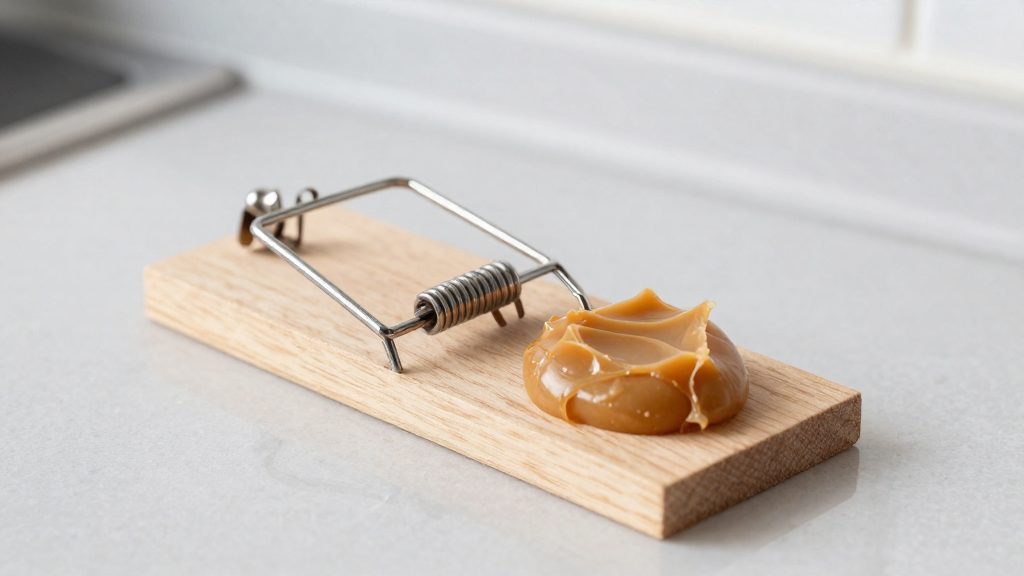
Use a dark container and coat the inside of its rim with petroleum jelly, so insects cannot climb back out. Tape the outside so roaches can climb in, and place bait inside. Drown captured insects in soapy water, or freeze them for at least 24 hours.
Do I have to throw out items that roaches have touched?
Usually not. Steam clean objects that tolerate heat and moisture, and freeze infested items at -8 °C for at least 24 hours, a method Health Canada (2026) describes as pesticide-free. Empty vacuum bags into soapy water rather than emptying them loose.
How do I choose a roach product that is safe to buy?
Read the label, choose a product made for the pest you are targeting, and follow its directions. Look for a registration number, which confirms that Health Canada has approved the product.