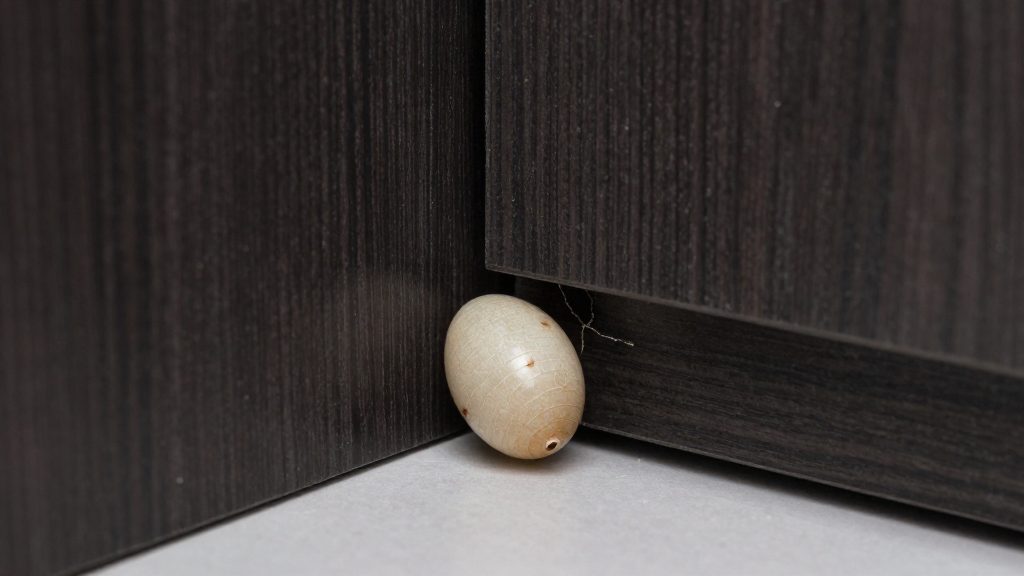
Cockroach egg cases, called oothecae, are sealed capsules that each hold a full clutch of eggs. According to Orkin Canada (2026), they are reddish-brown to dark brown, measure 5 to 13 mm long depending on the species, and contain 10 to 60 eggs each. A female may produce 5 to 30 cases in her lifetime. In kitchen cabinets, cases are most often found inside cabinets and pantries, behind refrigerators and stoves, and under sinks near plumbing.
What are cockroach egg cases?
An ootheca is oval or rectangular, with ridges or seams along one side. The nymphs leave through that seam when they hatch, according to Catchmaster (2026). Hatching takes about 20 to 60 days, after which the nymphs leave behind brown, oblong empty casings.
How long a case stays attached depends on the species:
| Species | Case behaviour | Typical location |
|---|---|---|
| German cockroach | Female carries the case until shortly before hatching; one case releases up to 50 nymphs | Carried on the female, so no fixed spot |
| American cockroach | Case is dropped hours or days after it forms | Loose in its hiding place |
| Brown-banded cockroach | Case is glued in place | Furniture, walls and ceilings |
Cases are usually hidden in hard-to-reach places such as cracks, wall voids, under furniture and behind cabinets. This is why it is worth checking these hidden spots carefully.
Eggs resist many surface-level treatments, so the case itself is hard to eliminate with a spray alone. Monitoring and moisture control under sinks and appliances are the practical starting points for detection.
What do cockroach egg cases look like?
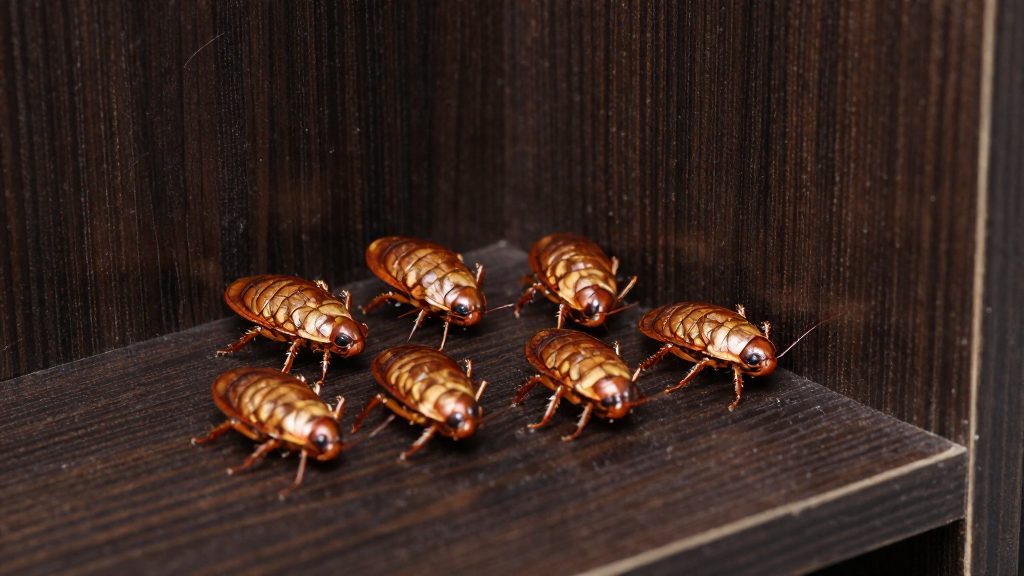
Cockroach egg cases, called oothecae, are visible to the naked eye. They are reddish-brown to dark brown and measure 5 to 13 mm long, depending on the species. Each case holds 10 to 60 eggs, again depending on the species (Orkin Canada, 2026).
The shape is oval or rectangular, with ridges or seams along one side, which is where the nymphs emerge (Catchmaster, 2026). How a female handles her case varies by species:
| Species | How the case is handled |
|---|---|
| German cockroach | Carried by the female until shortly before hatching; a single case can release up to 50 nymphs |
| American cockroach | Dropped hours or days after it forms |
| Brown-banded cockroach | Glued to furniture, walls and ceilings |
Because a case is often glued or dropped rather than carried, it can end up in any sheltered spot. In kitchens, cases are commonly found behind refrigerators and stoves, inside cabinets and pantries, and under sinks near plumbing (Catchmaster, 2026). Nymphs take about 20 to 60 days to hatch after the case forms (Orkin Canada, 2026).
Why are kitchen cabinets affected?
Kitchen cabinets offer the hidden, sheltered spaces where cockroach egg cases are most often found. According to Catchmaster (2026), egg cases are commonly placed inside cabinets and pantries, behind refrigerators and stoves, and under sinks near plumbing. Orkin Canada (2026) adds that cases are usually tucked into cracks, wall voids and spots behind cabinets, which are hard to reach and rarely inspected.
Species differ in how they handle their cases, which affects where they turn up:
- German cockroach females carry the case until shortly before hatching. A single case can release up to 50 nymphs, so a case found in a cabinet may be close to hatching.
- American cockroach females drop the case hours or days after it forms, so cases can be left in place with no adult nearby.
- Brown-banded cockroach females glue cases to furniture, walls and ceilings, so cabinet tops, undersides and back panels are all possible locations.
Cases are reddish-brown to dark brown and measure 5 to 13 mm long, depending on the species. After hatching, nymphs leave brown, oblong empty casings, which can be a sign of past activity.
Kitchens also combine the two conditions prevention advice targets: food residue and moisture. Orkin Canada (2026) recommends cleaning up food and spills, reducing clutter and storing food in airtight containers. Catchmaster (2026) notes that fixing moisture problems under sinks and appliances helps prevention.
Because eggs resist many surface-level treatments, monitoring traps placed along walls, under sinks and behind appliances can reveal activity before it spreads.
What to do if you find cockroach egg cases
Confirm what you have before acting. Cockroach egg cases, called oothecae, are reddish-brown to dark brown and 5 to 13 mm long depending on the species. They are oval or rectangular, with ridges or seams along one side where the eggs hatch. Empty casings are brown and oblong, which means nymphs have already emerged from that case.
Identify the species from where the case is found
Casing behaviour differs by species, so the location of a case can point to the likely pest. According to Orkin Canada (2026):
| Species | Casing behaviour |
|---|---|
| German cockroach | The female carries the case until shortly before hatching, and one case can release up to 50 nymphs. |
| American cockroach | The case is dropped hours or days after it forms. |
| Brown-banded cockroach | The case is glued to furniture, walls and ceilings. |
Search the usual hiding spots
Cases are usually hidden in cracks, wall voids, under furniture and behind cabinets. Check these areas first:
- Behind refrigerators and stoves
- Inside cabinets and pantries
- Under sinks, near plumbing
- Behind and under furniture, including tight gaps
Remove food, moisture and clutter
Reduce the conditions that support the pest:
- Seal cracks and gaps around the affected area.
- Clean up food and spills promptly.
- Store food in airtight containers.
- Reduce clutter that creates hiding places.
- Fix moisture problems under sinks and around appliances.
Monitor and escalate
Place monitoring traps along walls, under sinks and behind appliances to reveal ongoing activity. Eggs resist many surface-level treatments, so they are not cleared by a single spray. Remove the cases you can see: wearing gloves, pick up intact or empty cases with a vacuum or a damp paper towel, seal them in a bag, discard it outside the home, then clean the spot. This does not reach hidden cases, so for long-term control, use professional control.
Do traps and over-the-counter products work?
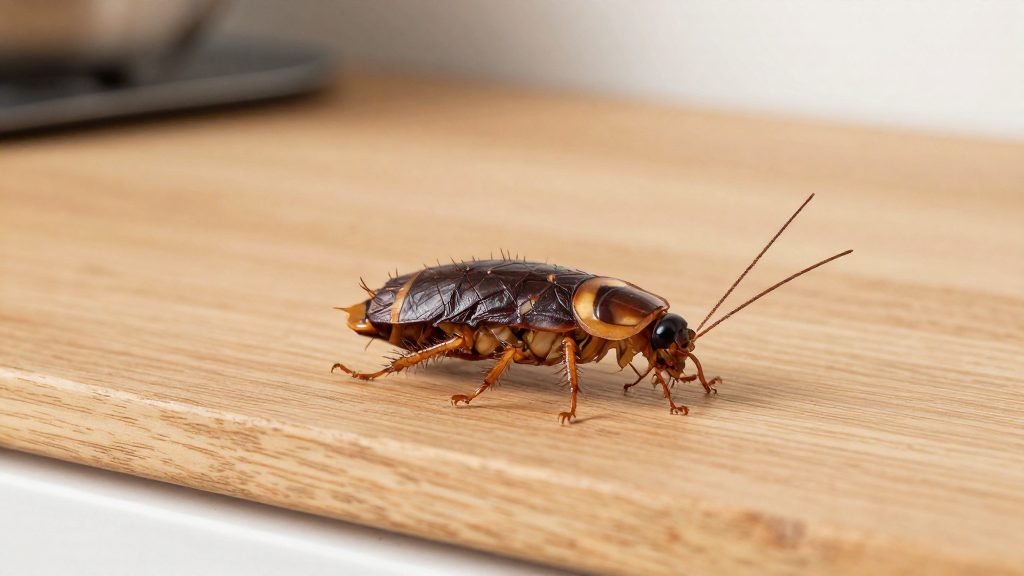
Traps and sprays give only short-term relief against cockroach egg cases. Orkin Canada (2026) recommends a professional for long-term control. Cases are usually hidden in cracks, wall voids, under furniture and behind cabinets, so a spray on visible surfaces rarely reaches them. Catchmaster (2026) adds that eggs resist many surface-level treatments.
How a case is handled depends on the species:
| Species | Case behaviour |
|---|---|
| German cockroach | Female carries the case until shortly before hatching; one case releases up to 50 nymphs |
| American cockroach | Case is dropped hours or days after it forms |
| Brown-banded cockroach | Case is glued to furniture, walls or ceilings |
Because a German female keeps her case with her, that case moves around the home. Cases that are dropped or glued in place stay where they were laid.
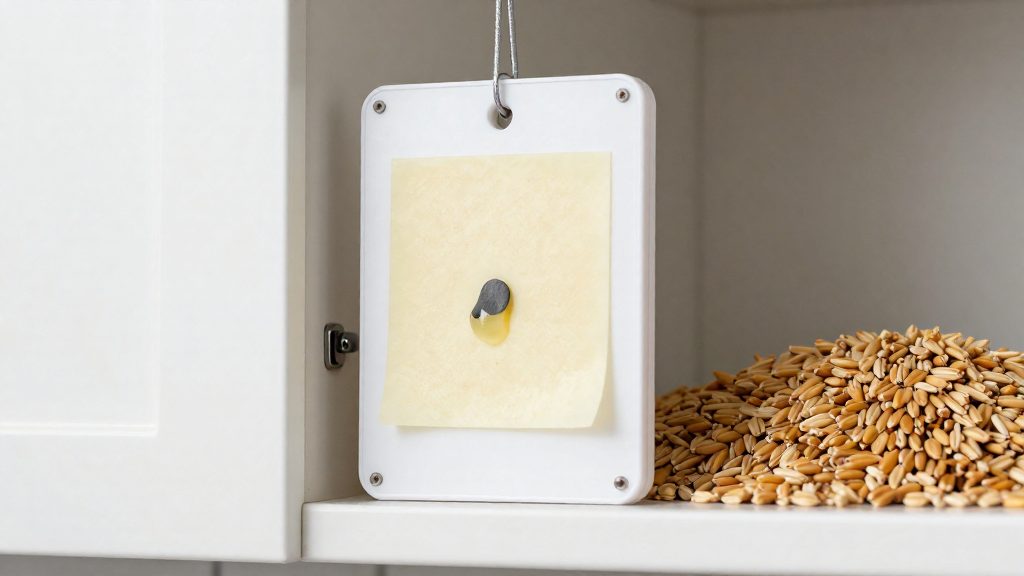
Monitoring traps are more useful for finding activity than for control. Catchmaster (2026) recommends placing them along walls, under sinks and behind appliances. Results show where cockroaches are active, which tells you where to focus prevention.
Prevention steps that reduce the conditions cases need:
- Seal cracks and gaps around cabinets, pipes and walls.
- Clean up food and spills promptly.
- Reduce clutter that hides cases.
- Store food in airtight containers.
- Fix moisture problems under sinks and around appliances.
How to Prevent Cockroaches in the Kitchen
Kitchen prevention focuses on the spots where egg cases are most often placed: behind refrigerators and stoves, inside cabinets and pantries, and under sinks near plumbing. According to Orkin Canada (2026), cases are usually hidden in cracks, wall voids, under furniture and behind cabinets, so inspecting and sealing these areas is the first step.
Seal Gaps and Inspect Hidden Areas
Seal cracks and gaps around cabinets, sinks and wall voids. Check behind furniture and in tight spaces for brown, oblong empty casings, which show that nymphs have already hatched. Inspect ceilings and wall surfaces as well, since brown-banded cockroaches glue their cases to furniture, walls and ceilings.
Remove Food, Spills and Clutter
Clean up food and spills promptly and reduce clutter, which gives cockroaches fewer places to hide. Store dry goods in airtight containers so food is not left exposed in cabinets and pantries.
Control Moisture Under Sinks and Appliances
Fix leaks and moisture problems under sinks and around appliances. Catchmaster (2026) identifies moisture control as a key part of prevention in these areas.
Monitor With Traps
Place monitoring traps along walls, under sinks and behind appliances to reveal activity early. Catchmaster (2026) notes that eggs resist many surface-level treatments, so monitoring helps show where cockroaches are present.
Traps and sprays provide only short-term relief, according to Orkin Canada (2026). For long-term control, a professional treatment is the recommended option.
When to call an exterminator
Traps and sprays give only short-term relief from cockroach egg cases, according to Orkin Canada (2026), which recommends a professional for long-term control. Calling one becomes the logical step when the signs point to a hidden, established problem rather than a few isolated sightings.
Eggs resist many surface-level treatments, so a spray on visible surfaces will not reach cases tucked into wall voids or behind appliances. Before booking a visit, inspect the kitchen and note what you find:
- Check behind refrigerators and stoves, inside cabinets and pantries, and under sinks near plumbing.
- Look in cracks, under furniture and behind cabinets, where cases are usually hidden.
- Identify the shape: cases are oval or rectangular, with ridges or seams along one side.
- Look for casings, which are brown, oblong and empty after the nymphs hatch.
Monitoring traps placed along walls, under sinks and behind appliances show whether activity is confined to one spot or spread across the kitchen. Activity in several of these locations, or cases that keep reappearing after you have sealed gaps and cleaned up spills, indicates a problem that household methods are unlikely to clear.
The urgency also depends on the species. A single German cockroach case can release up to 50 nymphs, and the female carries it until shortly before hatching, so a case found in the kitchen may already represent a large group. Brown-banded cockroaches glue their cases to furniture, walls and ceilings, so check those surfaces.
When you call a professional, report every location where you found hidden egg cases and casings, along with the spots where monitoring traps caught activity. This gives the technician a precise map of where the infestation is established.
Frequently asked questions
What should I do if I find a cockroach egg case in my kitchen cabinet?
Check its condition first. An empty, brown, oblong casing means the nymphs have already hatched, while a sealed case still holds its clutch. Place monitoring traps at that spot and along the nearby walls to see whether activity continues.
Will a spray kill the eggs inside a cockroach egg case?
Probably not on its own. The case is a sealed capsule, so the eggs resist many surface-level treatments. Sprays and traps give only short-term relief, and for lasting results a pest control professional is the more reliable route.
How can I tell which cockroach species left a case?
The attachment point is a useful clue. A case glued to furniture, walls or ceilings points to the brown-banded cockroach, while a case loose in a hiding place suggests the American cockroach. A German cockroach female carries her case until shortly before hatching, so you will not find it lying in a fixed spot.