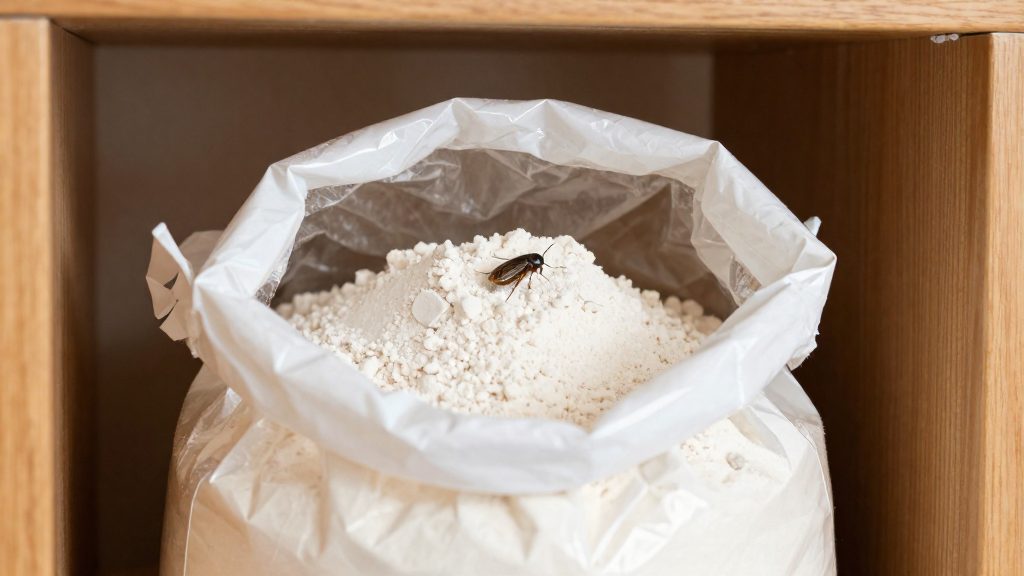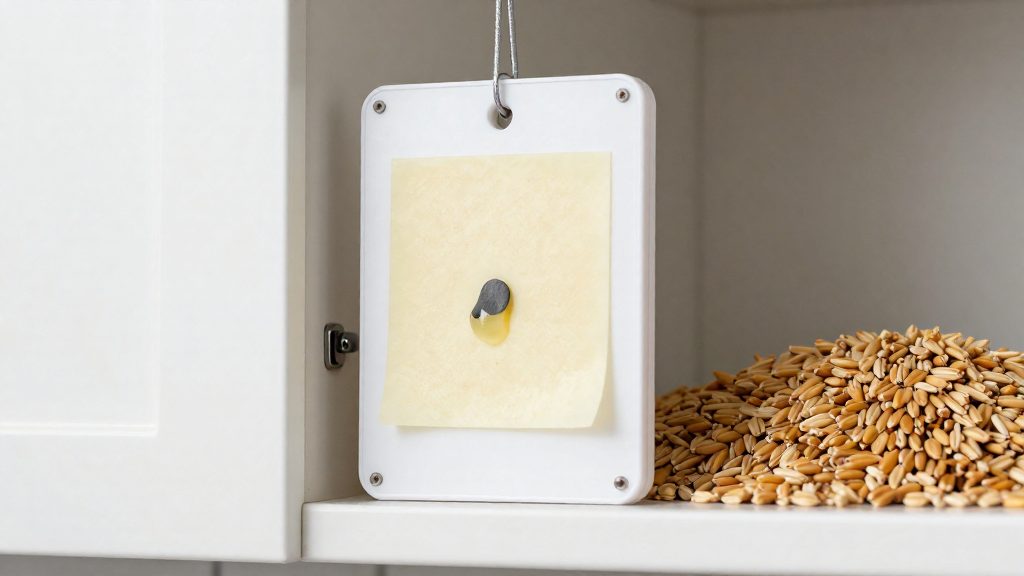
Pheromone traps for pantry moths work by imitating the sex pheromone that females release to attract males. The lure draws males into the trap, where they stick to an adhesive surface. Because the traps catch only males, they reveal where moths are active but do not remove the females that lay eggs.
How Pheromone Traps Work
Each moth species produces its own pheromone, so a lure works only on the species it was designed for. Before buying, confirm that the trap is labelled for the moth in your pantry. Pheromone lures generally stay active for about 2 to 3 months, so they need replacing on that schedule to keep attracting males.
Trapping males affects breeding only indirectly. Without males, females cannot mate and lay eggs, but traps do not capture females and eggs already laid will still hatch. However, eggs that have already been laid will still hatch, so existing larvae and adults must be removed physically. This is why traps work best as a monitoring tool to locate infested areas rather than a standalone fix.
According to Colorado State University’s Department of Agricultural Biology, pheromone traps help locate the worst-infested areas, but because they do not capture females, they are unlikely to reduce an infestation on their own. Catch counts therefore indicate where to focus inspection and cleaning.
To use traps effectively:
- Place them in the pantry, close to shelves holding stored food.
- Check them regularly and record catches to see whether the number of males is falling.
- Replace the adhesive surface and lure when they are exhausted or past their active period.
- Combine trapping with the removal of infested food and the cleaning of storage areas.
Monitoring and population control are distinct goals. Traps indicate where moths are present, while removing infested items and cleaning storage areas reduces the number of moths that are already breeding.
Which Pantry Moths Do Pheromone Traps Attract?
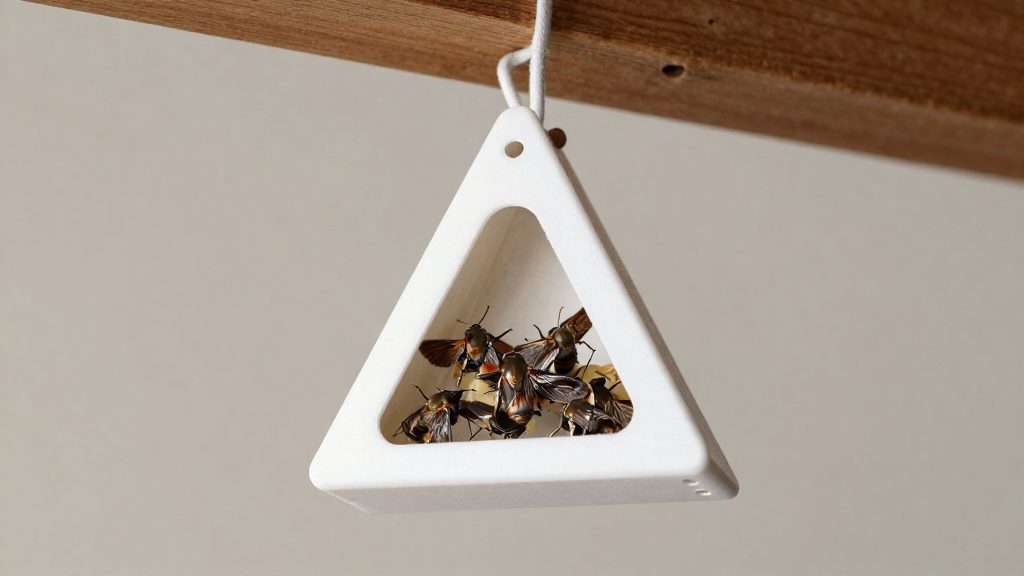
Pheromone traps attract only adult male moths of the species the lure was made for. Each pantry moth species uses its own sex pheromone, so a lure made for one species will not reliably draw another. According to PestHQ.ca, a Canadian pest-control retailer, the species match should be checked on the packaging before purchase. The table shows what a trap catches and what it leaves behind.
| Life stage | Caught by trap? | Effect on the infestation |
|---|---|---|
| Adult males | Yes, they stick to the adhesive | Without males, females cannot mate or lay eggs |
| Adult females | No | Not removed, so the trap alone is unlikely to reduce an infestation |
| Eggs already laid | No | Still hatch, so moths must also be physically removed and excluded |
Colorado State University’s Department of Agricultural Biology describes traps as a way to locate the worst-infested areas, not as a control method on their own. Place them near the spots you have already inspected, such as long-stored or loosely sealed pantry items, pet food, bird seed and dried flowers, where webbing signals an infestation.
Replace the lure on a fixed schedule. Lure life is generally about 2 to 3 months, so a lure left in place beyond that period should be swapped out, or the trap may stop catching males reliably.
Where to Place Pheromone Traps in the Pantry
Pheromone traps show where a pantry infestation is concentrated, but they do not eliminate it. According to Colorado State University’s Department of Agricultural Biology, the lures attract only male moths, and without females capturing males, a trap alone is unlikely to reduce the population. Placement therefore starts with finding the source, and the trap is used to confirm it and track activity.
Locate the Source First
Finding every source of infestation is the most important step, so inspect before placing any trap:
- Check long-stored items and anything with a loose or damaged seal, such as flour, grains, cereals, nuts and dried pasta.
- Check pet food, bird seed and dried flowers, which are common sources according to Colorado State University.
- Look for webbing. It is a clear sign of infestation.
Empty each shelf in turn, inspect the items, and discard or treat infested food.
Position Traps Near Suspect Items
Once a shelf or container is identified, place the trap close to it so the lure can draw males away from the food. Put one trap in each area where you found infested or suspect items, rather than spreading traps randomly across the room. Use the trap designed for your species, because different moth species respond to different pheromones.
Use Traps Alongside Sanitation
Do not rely on insecticides in food areas, which Colorado State University does not recommend. Instead, combine trap placement with sanitation:
- Vacuum up spilled food from shelves and crevices.
- Store susceptible foods in tight, thick containers or in the refrigerator.
- Keep bulk pet food and bird seed out of the pantry.
Why Pheromone Traps Alone Are Not Enough
Pheromone traps attract only male pantry moths, which become stuck on the adhesive. They do not capture females, so they mainly show where the worst infestation is. According to Colorado State University’s Department of Agricultural Biology, they are unlikely to reduce an infestation on their own. Without males, females cannot mate and lay eggs, but eggs already laid still hatch, so the moths must also be physically eliminated and excluded.
Locating the infestation source is the most important step. Check long-stored or loosely sealed pantry items first, then pet food, bird seed and dried flowers. Webbing is a sign of infestation.
Infested food can be discarded. Eggs and larvae in food that you want to keep can be killed in one of two ways:
| Method | Conditions | Note |
|---|---|---|
| Freezing | 2 to 3 days | Kills eggs and larvae |
| Heating | 120–140 °F (about 49–60 °C) for 20 minutes | May damage the item |
Insecticides are not recommended in food areas. Household insecticides may be used only in cracks and crevices near food storage, and only alongside thorough cleaning and treatment of infested items.
Sanitation prevents reinfestation. Vacuum up spilled food, store susceptible foods in tight, thick containers or in the refrigerator, inspect incoming food, and keep bulk pet food and bird seed out of the pantry.
Pheromone lures generally stay active for about 2 to 3 months. Each moth species has its own pheromone, so confirm that the trap is designed for the species you have before relying on it.
How to Eliminate the Source of the Infestation?
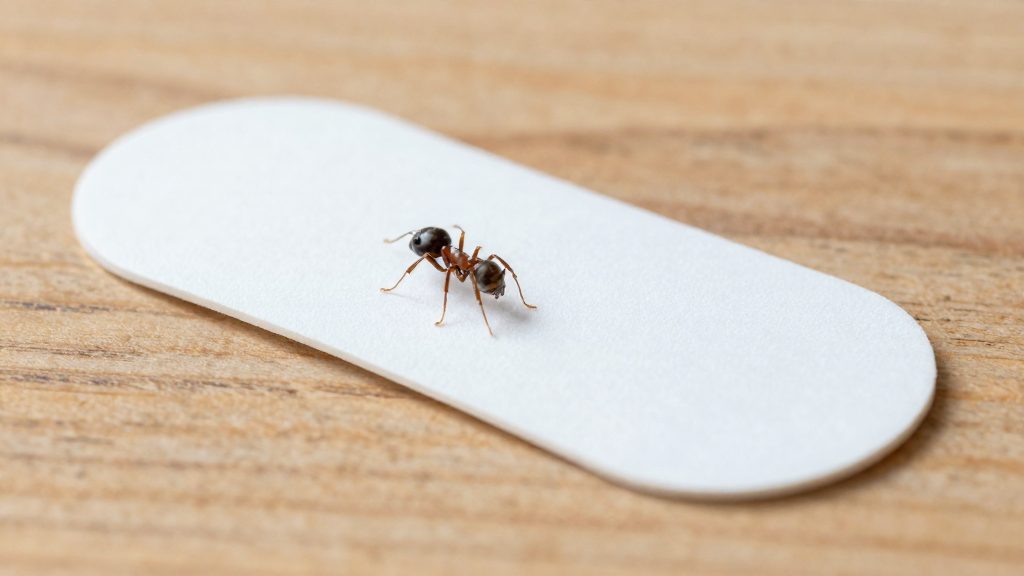
Finding and removing every infested item is the most important step in controlling a pantry moth problem, according to Colorado State University’s Department of Agricultural Biology. Start with long-stored or loosely sealed dry foods, then check pet food, bird seed and dried flowers, which are often overlooked. Webbing on or inside a package is a clear sign of infestation.
Inspect and Sort Every Item
Open each suspect package and look for webbing, larvae or adult moths. Bag any infested item and remove it from the kitchen before handling other foods, so that moths do not spread to neighboring packages.
Discard, Freeze or Heat
Infested food can simply be thrown away. If you want to keep an item, freezing or heating kills eggs and larvae:
| Treatment | Condition | Effect |
|---|---|---|
| Freezing | 2 to 3 days | Kills eggs and larvae |
| Heating | 120–140 °F (about 49–60 °C) for 20 minutes | Kills eggs and larvae; may damage the item |
Because heating may damage the item, check whether the food can tolerate heat before choosing it.
Clean and Tighten Storage
Vacuum up spilled food from shelves, corners and cracks, since residue left behind keeps the pantry attractive to moths. Store susceptible foods in tight, thick containers or in the refrigerator. Keep bulk pet food and bird seed out of the pantry entirely, and inspect every new purchase before shelving it.
When to Replace Pheromone Lures
Pheromone lures wear out on a schedule, so the replacement date should be set when the lure is installed, not judged by how full the trap looks. According to PestHQ.ca, a pheromone lure generally stays active for about 2 to 3 months. A spent lure no longer draws males onto the adhesive, so the trap becomes an ordinary sticky surface that catches fewer moths, even though it still looks in use.
The replacement lure must also match the species. Different moth species use different pheromones, so a lure made for one species will not reliably attract another. Before reordering, compare the species named on the packaging with the moths you have actually found.
Replacing the lure does not end the infestation. Traps capture only males, and females that have already mated will still lay eggs, and eggs already laid will still hatch. Lure replacement therefore works only alongside removing infested food and sealing storage.
| Step | Action |
|---|---|
| 1 | Record the installation date on each trap |
| 2 | Replace the lure once it reaches about 2 to 3 months |
| 3 | Confirm the new lure is designed for the species present |
| 4 | Count and remove captured moths at each check |
Preventing pantry moths from returning
Trapping removes adult males, but an infestation comes back as long as its food source remains. Recurrence usually traces to items that were never checked, so the work after the first catch matters as much as the trap. Check long-stored or loosely sealed pantry items first, then pet food, bird seed and dried flowers, since webbing is a sign of infestation.
Clear infested items
Infested food can be discarded, or treated to kill eggs and larvae before reuse. The two treatments in the source are:
| Treatment | Conditions |
|---|---|
| Freezing | 2 to 3 days |
| Heating | 120–140 °F (about 49–60 °C) for 20 minutes |
Check whether an item tolerates heat before choosing heating, because heating can damage it.
Block re-entry through storage
- Keep susceptible foods in tight, thick containers, or in the refrigerator.
- Keep bulk pet food and bird seed out of the pantry.
- Inspect new food before shelving it, and check items bought in bulk.
Clean up spilled food
Vacuum up spilled food promptly. Crumbs and residue in shelf corners and seams give larvae food between treatments, so vacuum shelves as well as the floor below them.
Maintain the trap
Pheromone lures generally stay active for about 2 to 3 months. Replace them on that cycle so the trap keeps catching males throughout the period when adults are emerging. Confirm the lure matches your moth species, because different species use different pheromones.
Frequently asked questions
Can I spray insecticide in the pantry alongside the traps?
Colorado State University’s Department of Agricultural Biology does not recommend insecticides in food areas. Household insecticides may be applied only in cracks and crevices near food storage, and only together with thorough cleaning and treatment of infested items.
How do I deal with infested food once I find it?
Discard it, or kill the eggs and larvae by freezing the item for 2 to 3 days or heating it to 120–140 °F (about 49–60 °C) for 20 minutes. Heat can damage some items, so check whether the product tolerates it before trying.
Where should I check first for the source of an infestation?
Start with long-stored items and packages with loose seals, then look at pet food, bird seed and dried flowers. Silky webbing on food or packaging is a sign that moths are present.