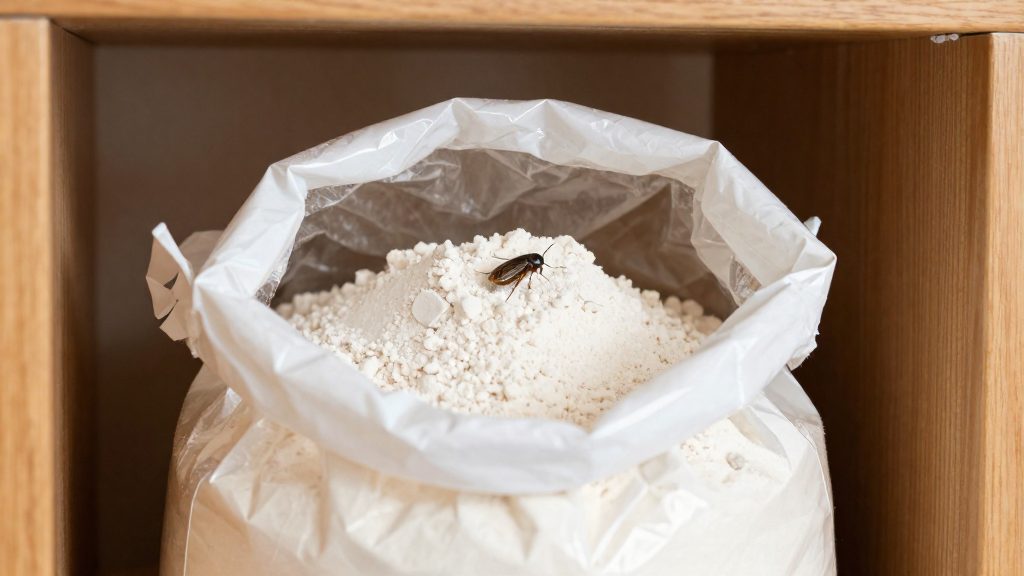
What are pantry moths and how do they get in?
Pantry moths are small moths whose larvae feed on stored dry food, and infestations often begin with a product that already carries them. The Indian meal moth (Plodia interpunctella) is a common pantry species. Its larvae feed on dry goods such as grains, nuts, dried fruit, spices, pet food and birdseed, so these are the first items to check.
Entry through pre-infested packaging
Infestations usually arrive with the groceries themselves. A bag of grain, nuts or dried fruit can already contain eggs or larvae when it is bought. Pet food and birdseed kept in the pantry are another source.
Life cycle from egg to adult
The pantry moth develops in four stages:
- Egg: laid in or on food, usually in the same product the adult moth found.
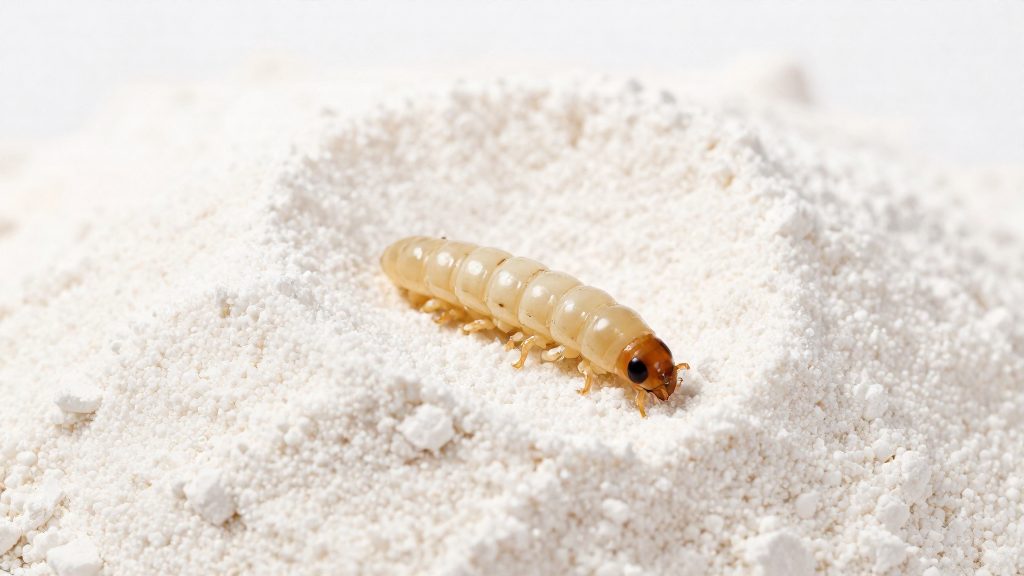
- Larva: the damaging stage. Larvae feed inside the food and can crawl far from the original source, reaching cupboard corners, hinges and shelf undersides.
- Pupa: the larva stops feeding and changes form, usually in a sheltered spot.
- Adult moth: emerges, mates and lays eggs, which restarts the cycle.
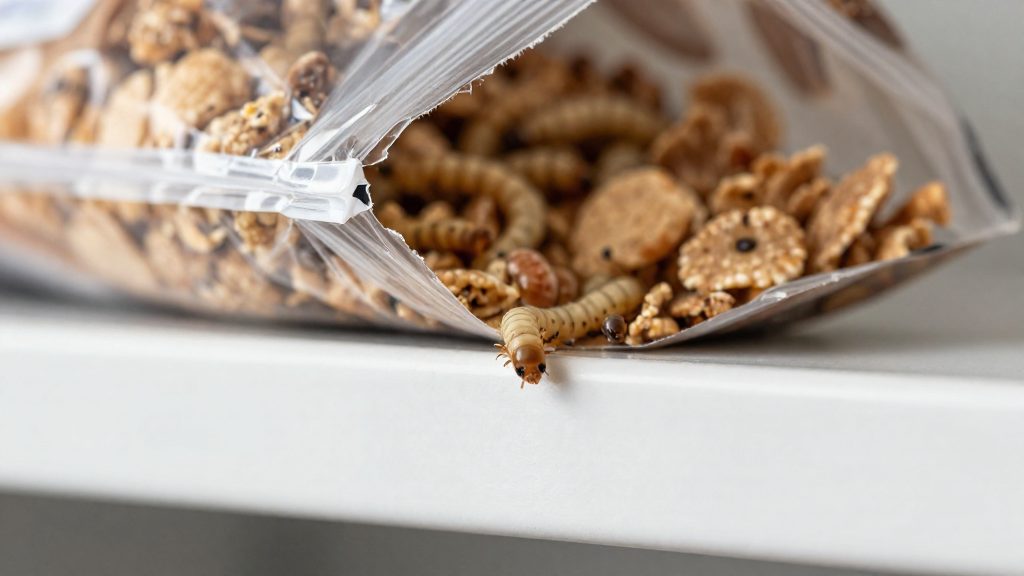
How do you spot an early infestation?
Early signs of pantry moths appear in three places: the air around the cupboard, the inside of food packaging, and the texture of the stored food. Check all three each time you put groceries away, and look through the dry-goods cupboards regularly.
Adult moths around lights and cupboard openings
Watch for small moths fluttering near kitchen lights and close to the open cupboard door, especially when you are unloading shopping. Adults that appear inside the house are a warning sign, because they can indicate that a moth population has started in the stored food. Check the items in the cupboard as soon as you see them, rather than only swatting the moths.
Silk webbing and larval cocoons inside packages
Open packets of flour, cereal, pasta, rice, dried fruit and nuts, and look for fine silk webbing stretched across the contents. Check the corners, folds and seams of the packaging for small cocoons. Webbing and cocoons show that larvae are active in that product. Remove the affected package from the cupboard and check the packages stored next to it.
Frass and clumped flour
Frass, the dry, powdery waste left by feeding larvae, looks like fine dust or small specks. Look for it at the bottom of packets, on shelf surfaces and in container corners. Flour, cereal or grain that has formed lumps or clumped flour that feels webbed together has been eaten by larvae. To confirm, tip a small sample onto a white plate. Frass shows up as dark specks, and webbing or clumps are easy to see against the white surface.
Inspect groceries before they enter your cupboards
Checking each item before it goes on a shelf stops infested food from spreading moths into your cupboards. Larvae can be carried inside products that look normal from the outside, so the inspection should happen at home, before anything is unpacked onto the shelves. According to the Old Farmer’s Almanac (2024), bulk goods should be checked for openings or chew holes before they are stored.
Bulk nuts, fruits and grains
Open each bag or box of bulk nuts, dried fruit or grains over a clean tray or sink. Then:
- Look for chew holes, which are small openings made by larvae feeding inside the food.
- Look for any other openings in the bag, box or lid.
- Sift the contents through your fingers and look for webbing, clumps or small larvae.
If you find any of these signs, keep that container separate from the rest of your groceries and inspect the other items in the same purchase.
Sealed packets
Sealed packets can hide entry points that are harder to see than bulk-bin damage, so examine them under good light and check the following areas:
- Pinholes: tiny punctures in the film or paper.
- Tears: splits in the wrapping, most often at folds, corners and the top edge.
- Seam gaps: places where a heat-sealed or glued edge has come apart.
Do not place a damaged packet on a shelf. Open it, check the contents, and discard it if it shows any sign of infestation.
A quick routine for every shopping trip
- Inspect bulk goods and packets at home before unpacking.
- Set aside anything with a chew hole, opening, pinhole, tear or seam gap.
- Check the set-aside items and their contents before deciding whether to keep them.
- Only shelve items that pass the check.
Store dry goods in airtight containers
Larvae that hatch inside an open packet can crawl out and move into neighbouring products, so a sealed container is the main barrier between one infested item and the rest of the cupboard. According to the Old Farmer’s Almanac (2024), pantry food should go into sealed glass or metal containers as soon as it comes home.
Transfer goods at the point of purchase instead of leaving them in their original paper or cardboard packaging. Choose containers with lids that close fully, and press each lid down on its rim before shelving it. Keep every item that goes into a container sealed, and reopen containers only to take out what you need.
Pet food and birdseed need different handling. They should stay out of the pantry altogether and be kept in covered metal containers in the laundry room, garage or shed. Small bags of spices belong in the refrigerator or freezer rather than on a cupboard shelf.
| Item | Where to store it |
|---|---|
| Pantry food | Sealed glass or metal container, inside the cupboard |
| Pet food and birdseed | Covered metal container in the laundry room, garage or shed |
| Small bags of spices | Refrigerator or freezer |
Before transferring anything, empty the container you are replacing and wipe the inside so no residue or stray larvae remain. Label each container with the date it was filled so you can use the oldest stock first and spot any product that has been left for a long time.
Clean cupboards the right way
A full clearout is the most thorough way to reach larvae that have settled into shelves and crevices. According to the Old Farmer’s Almanac (2024), larvae can wander far, so cleaning only the visible surfaces leaves some behind. Work through each cupboard in the same order every time so that no shelf or corner is skipped.
Empty and vacuum
Remove everything from the cupboard and set items on a clean surface elsewhere in the kitchen. Vacuum every shelf, the back and side panels, the cupboard floor and the door edges. Vacuum before wiping, so that loose larvae, webbing and food debris are removed rather than pushed into the joins.
Scrub every surface
Wipe all surfaces with a damp cloth or a brush, paying particular attention to the joins between shelves and walls. Let every surface dry completely before anything goes back in.
Replace torn shelf liners
Pull out any liner that is torn, stained or chewed, and discard it. Fit fresh liner flat on each shelf so that it covers the full surface with no loose edges.
Check corners, hinges and shelf undersides
Inspect the corners, the gaps around the hinges and the underside of each shelf. These spots need a close look, and a vacuum’s crevice attachment reaches them more easily than a cloth. Vacuum any larvae or debris you find there before moving on.
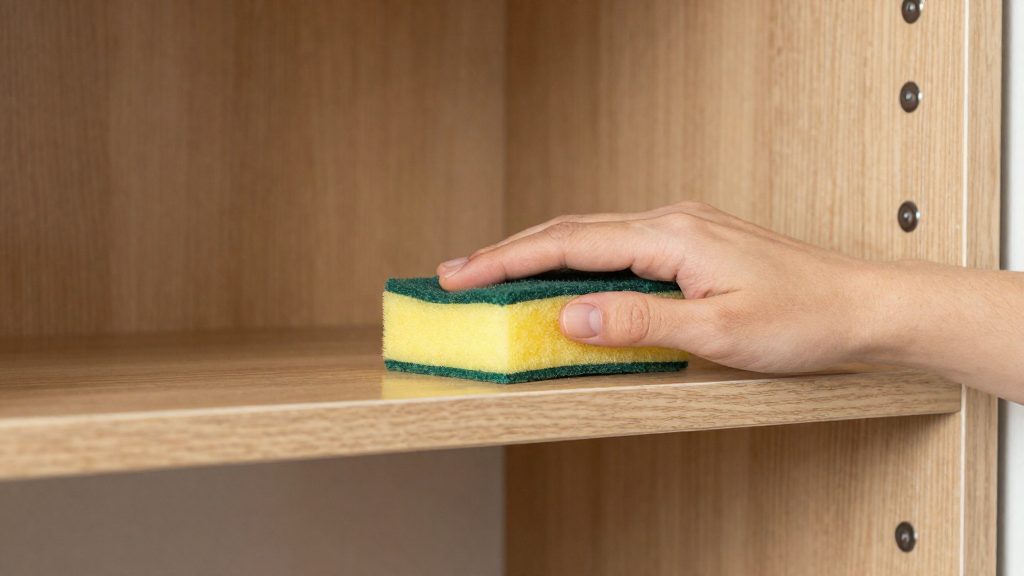
Can freezing food prevent pantry moths?
According to the Old Farmer’s Almanac (2024), freezing intact items for about four days kills any eggs present, provided the freezer is at −18 °C (0 °F) or colder. This suits unopened goods, including those taken from an infested cupboard.
How to apply the freezer treatment
- Place intact packages in the freezer, including unopened bags, boxes and jars.
- Confirm the freezer is at −18 °C (0 °F) or colder before loading.
- Leave the items in the freezer for about four days.
- Remove them and return them to storage.
Limits of the treatment
- Only intact items are covered by this treatment.
- Freezing targets eggs, so it does not remove larvae that may have spread to shelves, corners and hinges. Clean the cupboard as well.
- After thawing, return items only to a cleaned cupboard and keep them sealed in containers.
Do pheromone traps work, and should you use insecticide sprays?
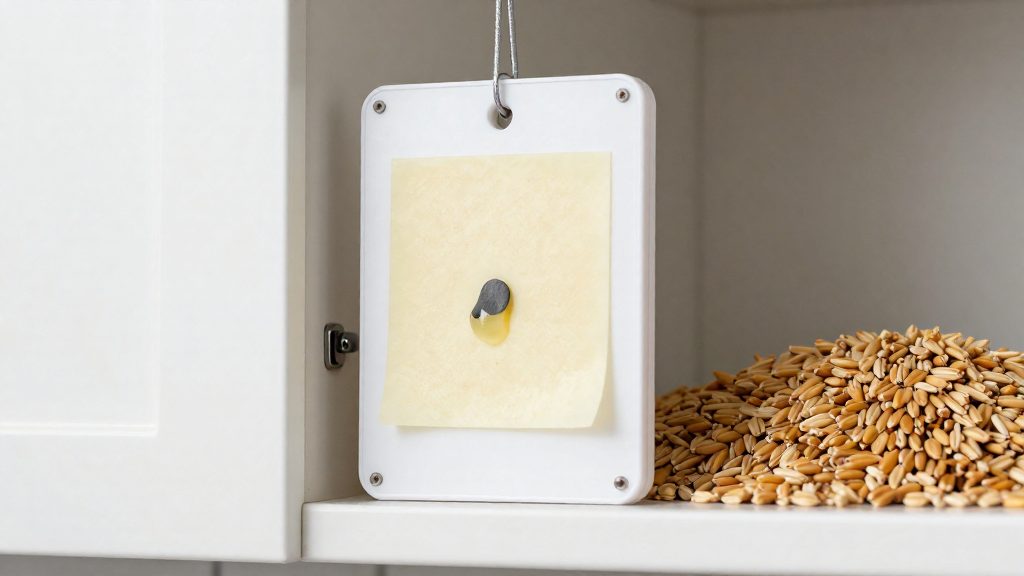
Pheromone traps are a monitoring and reduction tool, not a cure for a pantry infestation. According to the Old Farmer’s Almanac (2024), pheromone glue boards attract male moths onto a sticky surface, so they cannot fertilize females. Trapping shows whether moths are present and reduces the number of males, but it does not remove larvae that have spread through cupboard corners, hinges or shelf undersides. Moths caught on a board may be other species, so identify the insect before concluding that the trap is working.
Capture counts are most useful as an indicator. A falling number of catches alongside cleaning and sealed storage gives a clearer picture than the trap alone.
Natural repellents: for control, rely on cleaning, inspection and sealed storage rather than repellents.
Insecticide sprays are unlikely to work in the pantry and are often unsafe around food. Avoid using them on shelves where dry goods are stored.
When should you throw food out or call a pro?
Infested food is the first decision to make. According to Old Farmer’s Almanac (2024), packaged food showing webbing, larvae or holes should be discarded.
Intact items from the same cupboard do not always need to go. The same source advises freezing them to kill any eggs present, which is a practical way to save unopened goods.
| Item | Action |
|---|---|
| Packaged food with webbing, larvae or holes | Discard |
| Intact items from an infested cupboard | Freeze for about four days at −18 °C (0 °F) or colder |
Once the affected stock is removed, inspect the neighbouring cupboards and any other room where food is stored.
If the infestation keeps returning after you have discarded contaminated food and sealed the rest in containers, or if signs appear in several rooms, a pest control professional can assess the situation. Repeated sightings across different areas of the home indicate the problem has moved beyond what routine stock removal can address.
Frequently asked questions
Can a pheromone trap get rid of a pantry moth problem?
No. A pheromone trap lures male moths onto a glue board, which stops them from mating with females, so it works best for monitoring and reducing numbers. Moths that you catch may belong to a different species than the pantry moth, so check what you have trapped before drawing conclusions (Old Farmer’s Almanac, 2024).
Should I spray insecticide in the cupboard when I see moths?
No. Old Farmer’s Almanac (2024) advises against insecticides in the pantry because they are unlikely to work and are often unsafe around food. Use cleaning and sealed storage instead, since they remove the larvae and the food they feed on.
Does freezing food kill pantry moth eggs?
Yes, if the freezer is set to −18 °C (0 °F) or colder and the items stay there for about four days, which kills any eggs present (Old Farmer’s Almanac, 2024). Freezing only treats the items placed inside, so larvae that have spread to shelves, corners and hinges must still be removed by cleaning the cupboard.