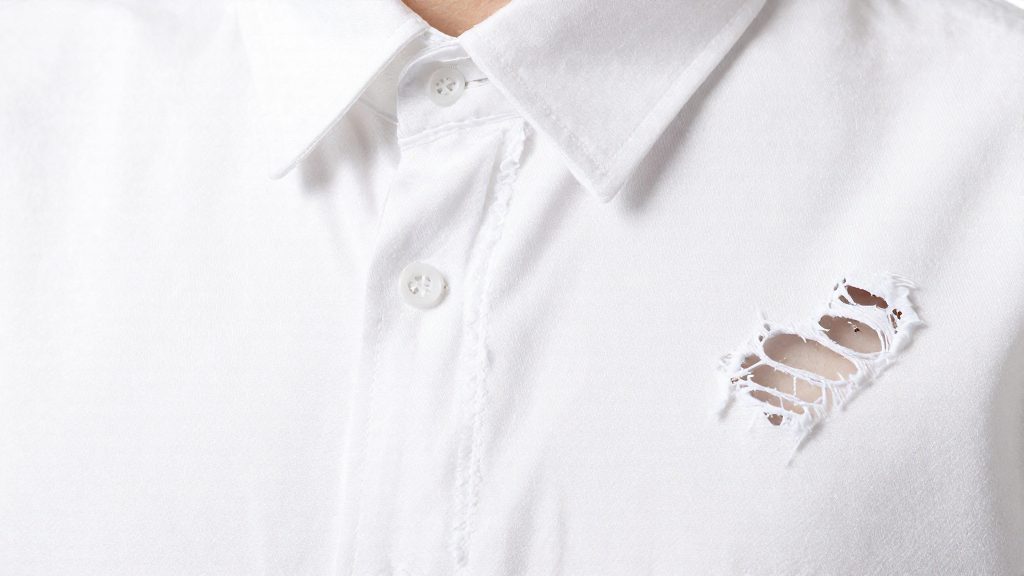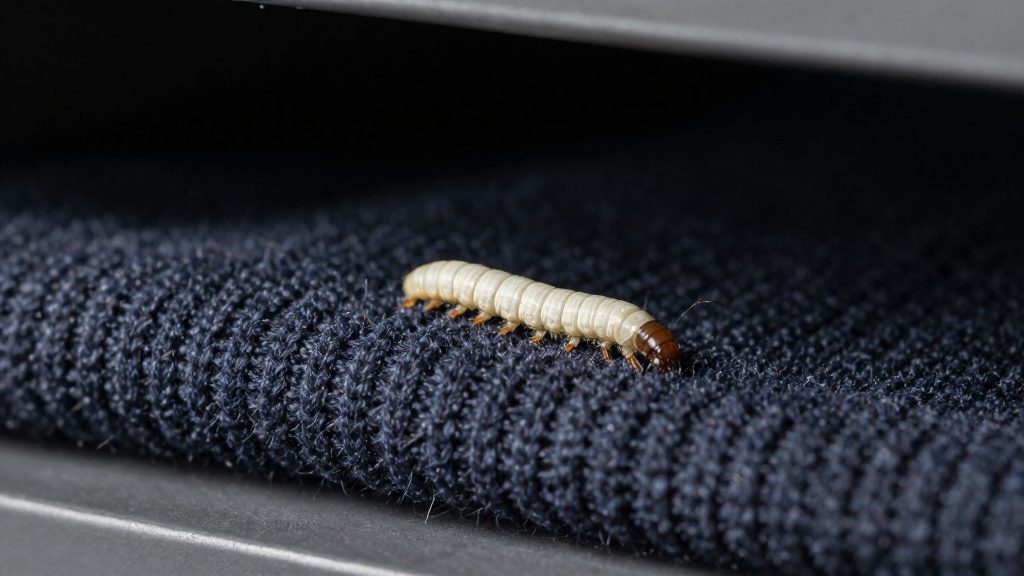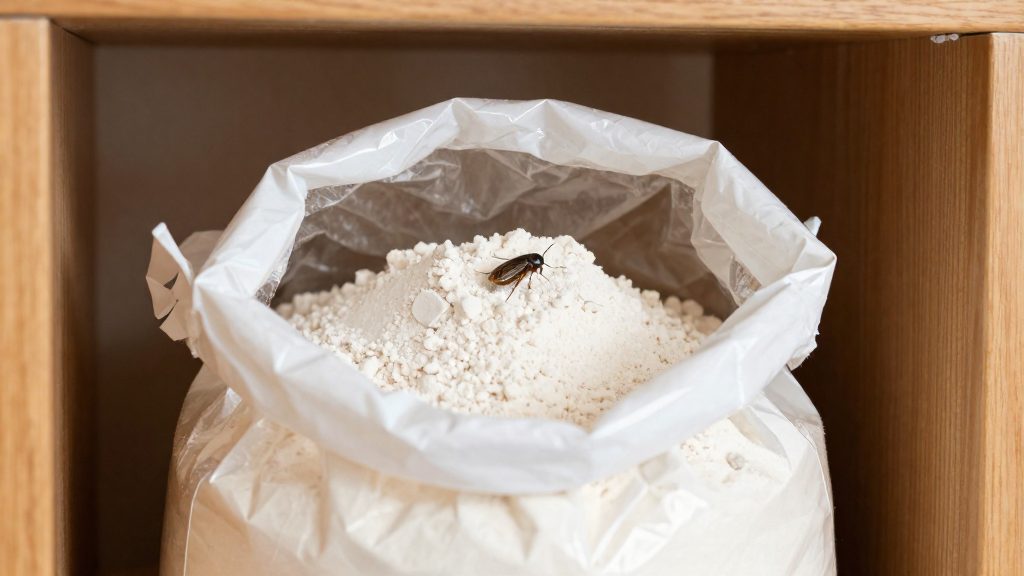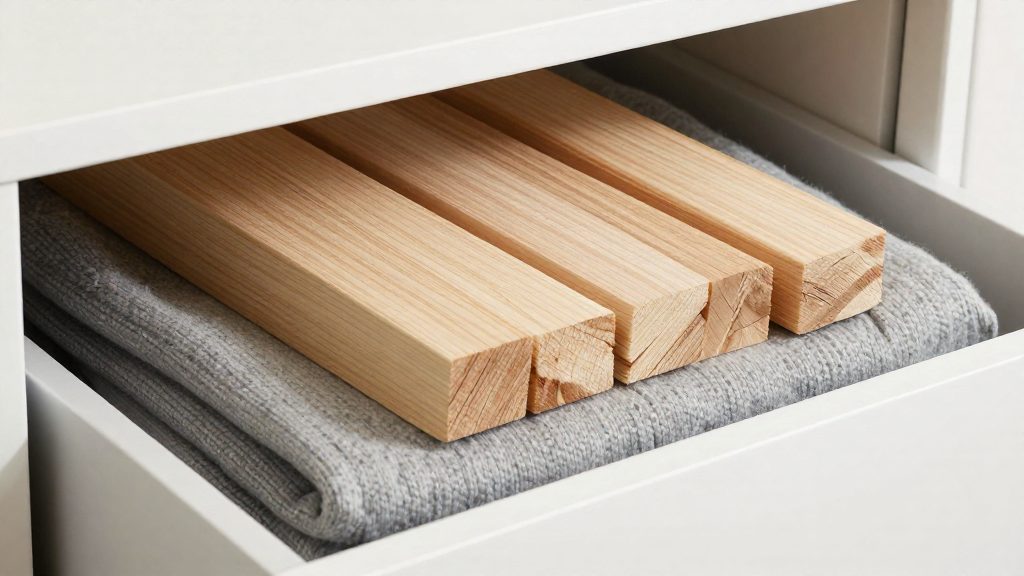
Cedar does not repel clothes moths. According to Oregon State University Extension, cedar chips or balls do nothing to repel them, so cedar chests or blocks should not be relied on to protect wool, silk or other stored garments. Protection depends on cleaning, sealing and periodic treatment of the clothing itself.
Cedar or lavender: what does the science say?
Oregon State University Extension recommends the following routine, none of which depends on scent:
- Clean clothing before storage. Wash or clean garments before putting them away.
- Store clean clothing in airtight containers. Sealed containers are the storage method the extension recommends for clean items.
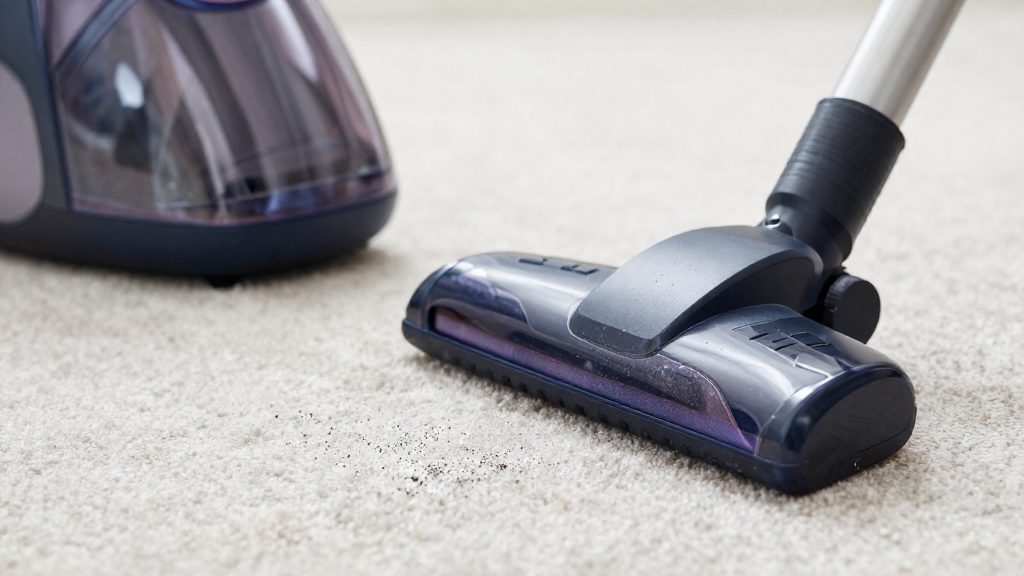
- HEPA-vacuum drawers and closets. Vacuuming with a HEPA filter removes debris from storage spaces.
- Treat unsealed stored clothing regularly. Garments kept outside airtight containers should go in the dryer or into the sun once or twice a month.
Because cedar has no repellent effect, a cedar block placed in a closet does not replace these steps. Use it, if at all, as a pleasant-smelling addition, not as moth control.

Do Cedar Blocks Really Repel Clothes Moths?
According to Oregon State University Extension, cedar chips or balls do nothing to repel clothes moths. Placing cedar in a closet or drawer should not be treated as a control measure. Cedar already in storage can stay, but it should not count as protection for your clothes. The extension recommends a sequence of steps that removes moths and blocks their access to fabric.
Clean the clothing first. Moths are controlled by clearing the textiles they use, so garments should be cleaned before they go into storage.
Seal clean clothing in airtight containers. Store clean items in airtight containers.
Vacuum storage areas with a HEPA vacuum. Vacuum drawers and closets with a HEPA vacuum to remove debris.
Treat stored clothing outside airtight containers. Any clothing that is not sealed should go into the dryer or into direct sun once or twice a month. This is the only step the extension gives a fixed schedule for, so it should be repeated on that cycle for as long as the clothing stays in storage.
Used together, these steps address the clothing, the container and the storage space, rather than relying on a scent to deter moths.
Is lavender effective against clothes moth larvae?
The Oregon State University Extension publication cited here does not evaluate lavender, so there is no evidence from this source that lavender sachets protect clothes. Do not rely on them in place of the steps below.
Clothes moth larvae feed on natural fibres such as wool, so the most effective approach removes the larvae and eggs from stored textiles and limits access to them. According to Oregon State University Extension, the priority is:
- Clean clothing before storage. Wash or dry-clean garments before putting them away, since larvae and eggs can be present on soiled items.
- Store clothing in airtight containers. Sealed containers prevent adult moths from laying eggs on the fabric inside.
- HEPA-vacuum drawers and closets. A HEPA vacuum removes larvae, eggs and debris from surfaces and crevices where they accumulate.
- Treat stored clothing that is not in airtight containers. Put it in the dryer or expose it to sun once or twice a month.
The dryer or sun step matters most for garments kept in open hanging storage or loose drawers, because clothing kept outside airtight containers has no other barrier. Repeat the vacuuming routine whenever you rotate wardrobes, so that any stray larvae are removed before they reach clean stored items.
Replacing cedar blocks does not add protection
Cedar has no protective lifespan against clothes moths. According to Oregon State University Extension, cedar chips or balls do nothing to repel them, so refreshing or replacing the blocks on any schedule does not change the outcome. Whatever scent is placed in a drawer, the routine below is what protects stored clothing.
Oregon State University Extension recommends these steps, in order:
- Clean clothing before storage. Clothes should be cleaned before they are put away.
- Seal clothing in airtight containers. Sealed containers are the primary storage control.
- HEPA-vacuum drawers and closets. This removes debris where moths may be present.
- Heat-treat unsealed clothing once or twice a month. Stored clothing that is not in airtight containers should go into the dryer or into the sun on that schedule.
| Storage condition | Action | Frequency |
|---|---|---|
| Clothing in airtight containers | Keep sealed | Ongoing |
| Clothing not in airtight containers | Run through the dryer or expose to sun | Once or twice a month |
What to do during an active infestation
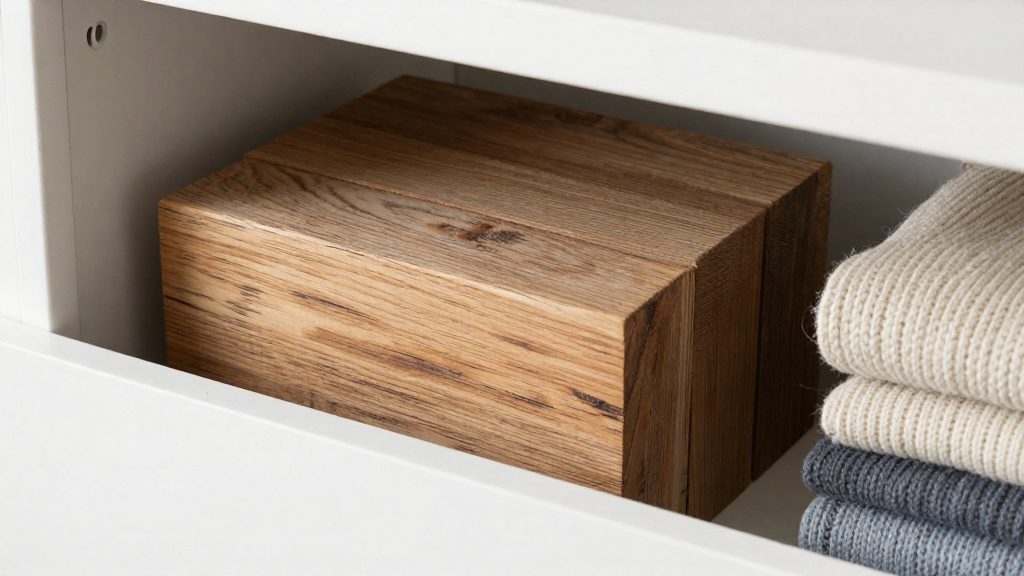
Cedar does not help once moths are present. According to Oregon State University Extension, cedar chips or balls do nothing to repel clothes moths, so an active infestation requires direct measures.
Clean the clothing first
Start by cleaning the garments themselves. The same publication lists clean clothing as the first control step, before any change to storage.
Seal clean items in airtight containers
Once clothing is clean, store it in airtight containers. This is the storage method the publication recommends for clothing that will be kept for a longer period.
Vacuum drawers and closets with a HEPA vacuum
Work through the storage area with HEPA vacuuming of drawers and closets. Remove everything from each drawer or shelf, vacuum the surfaces, then return only the items that are cleaned and sealed.
Treat unsealed stored clothing on a schedule
Clothing stored outside airtight containers needs regular treatment. Put it in the dryer or expose it to sunlight once or twice a month. Treat this as a recurring routine, once or twice a month.
Repeat the full sequence of cleaning, sealing, vacuuming and scheduled treatment until no further damage appears in stored garments. Keep a note of the date of each treatment so the monthly interval is easy to follow.
Cedar is not a substitute for mothballs: what to do instead
Cedar is often presented as a natural alternative to mothballs, but according to Oregon State University Extension, cedar chips or balls do nothing to repel clothes moths. A wardrobe that relies on cedar gets no moth protection from it, so the controls below need to do that work.
The publication recommends a sequence of steps:
- Clean the clothing first. Clean garments before storing them, so that stored items are not carrying moths into the storage space.
- Store clean clothing in airtight containers. Sealed containers are the primary storage method the publication recommends.
- HEPA-vacuum drawers and closets. A HEPA vacuum removes moths and debris from the storage spaces themselves.
- Treat unsealed stored clothing with heat or sun. Clothing that is not in airtight containers should go in the dryer or into the sun once or twice a month.
Steps 2 and 4 cover different situations. Airtight storage is the preferred method, while the dryer or sun routine applies to clothing that stays in open storage such as hanging closets or open drawers.
Prevention: storage and cleaning
Clothes moth prevention relies on three measures: cleaning textiles before storage, sealing them away, and removing debris from the places where they are kept. Oregon State University Extension recommends these controls as the basis of a prevention routine.
Clean clothing before storage
Clean garments before putting them away. The Extension lists clean clothing as the first step, ahead of any storage method, so soiled items should not go directly into a closet or drawer.
Store clothing in airtight containers
Place cleaned clothing in airtight containers. This is the storage method the Extension recommends for clothing kept over time.
Vacuum drawers and closets
Use HEPA vacuuming on drawers and closets. Work through the full interior, including corners, shelf surfaces and the floor of each drawer, so that debris is removed from every storage location, not only from the spaces where clothing is visibly stored.
Heat or sun for items outside containers
Clothing stored without an airtight container should go into the dryer or into the sun once or twice a month. Apply this routine to wardrobe pieces kept on open shelves or hanging rails, where they are not sealed.
Frequently asked questions
Does a cedar block keep clothes moths out of my wardrobe?
No. According to Oregon State University Extension, cedar chips and balls have no repellent effect on clothes moths, so a cedar block works only as a scent. Protection comes from the steps that stop moths from reaching the fabric.
Is lavender a better option than cedar against moths?
Lavender is not among the methods Oregon State University Extension recommends, so a lavender sachet should not be counted as moth control. The extension’s approach relies on physical measures such as HEPA vacuuming of storage spaces.
If my clothes are already in sealed boxes, do I still need to vacuum the drawers?
Yes. Oregon State University Extension lists HEPA vacuuming of drawers and closets as its own step, separate from storing clothes in airtight containers. Sealed containers do not make the vacuuming step unnecessary.