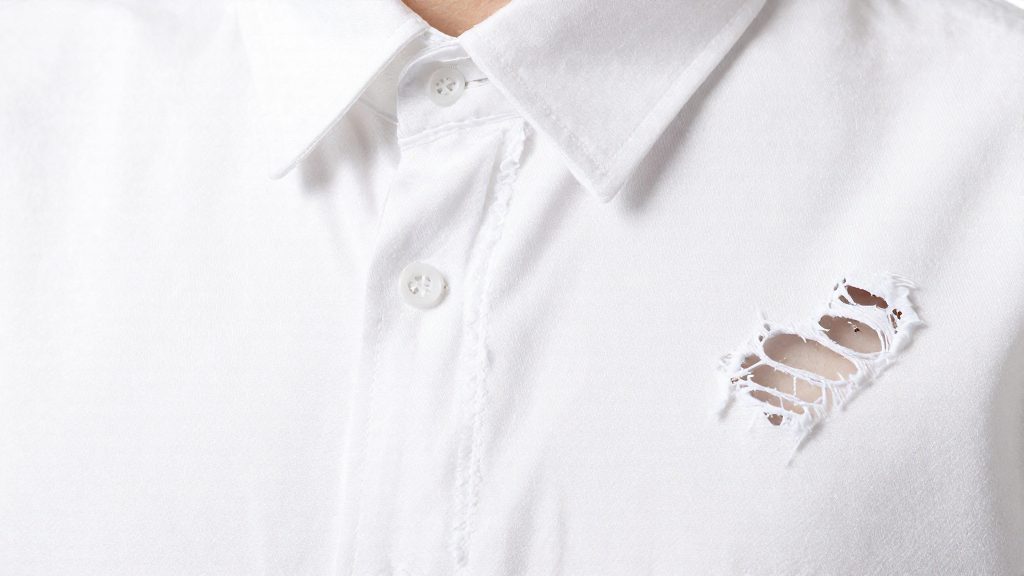
Clothes moths do not normally eat pure cotton shirts. According to University of Kentucky Entomology (Cooperative Extension) (2026), clothes moth larvae feed mainly on animal-derived materials, and cotton and synthetic fibres are rarely attacked. A cotton shirt becomes a target only when it contains wool or is heavily soiled, so the fibre content of each garment matters more than the fact that it is cotton.
Do clothes moths really eat cotton shirts?
Fibres that moths feed on
Clothes moths digest the protein in animal fibres. The materials they attack are animal-derived materials such as wool, fur, silk, feathers, felt and leather. Plant and synthetic fibres are a poor food source.
| Fibre or material | Clothes moth risk |
|---|---|
| Wool, silk, fur, feathers, felt, leather | Feed on these materials |
| Pure cotton | Rarely attacked |
| Polyester | Rarely attacked |
| Rayon | Rarely attacked |
| Cotton-wool blend | Vulnerable, because the wool content is a food source |
When a cotton shirt becomes vulnerable
A cotton shirt is at risk when it is a wool blend. Blended fabrics combine cotton with wool, so the wool fibres in the weave give larvae something to eat, even though cotton on its own is rarely attacked. The same reasoning applies to any garment that mixes cotton with wool.
Soiling is the second trigger. Cotton and synthetics are rarely attacked unless heavily soiled, which means a cotton shirt carrying food or body residue can attract larvae even without wool. Check the fibre composition on the care label of every shirt before storing it, and treat any shirt containing wool as a vulnerable garment.
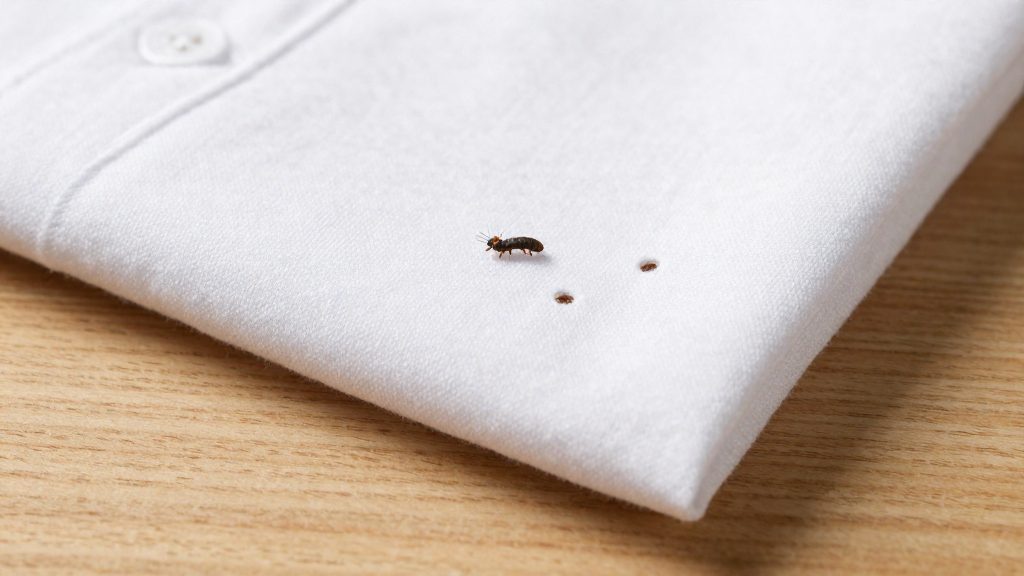
What does clothes moth damage look like?
Clothes moth damage on a cotton shirt usually appears as irregular holes and thinning patches in the fabric. A cotton shirt with holes is therefore less likely to be moth damage unless its label lists a wool content or the shirt is heavily soiled with sweat, food or stains.
Inspecting the fabric
Hold the shirt up to a light source and look for:
- Holes with irregular outlines, rather than neat cuts or tears
- Thin, sheer patches around the holes or in areas that rub against other fabric
- Damage on the wool component of a blend, which can be visible as holes in one fibre type while the cotton remains intact
Where damage is usually found
Damage tends to be concentrated in sheltered areas that are rarely handled. Check these spots first:
- Closets, especially dark back corners and lower shelves
- Folds in stacked shirts, which are often hidden inside drawers
- Shirts stored for long periods without being worn or washed
Unfold stacked shirts and inspect each fold, as the damage may only be visible on the inner layers.
Why are soiled cotton shirts more at risk?
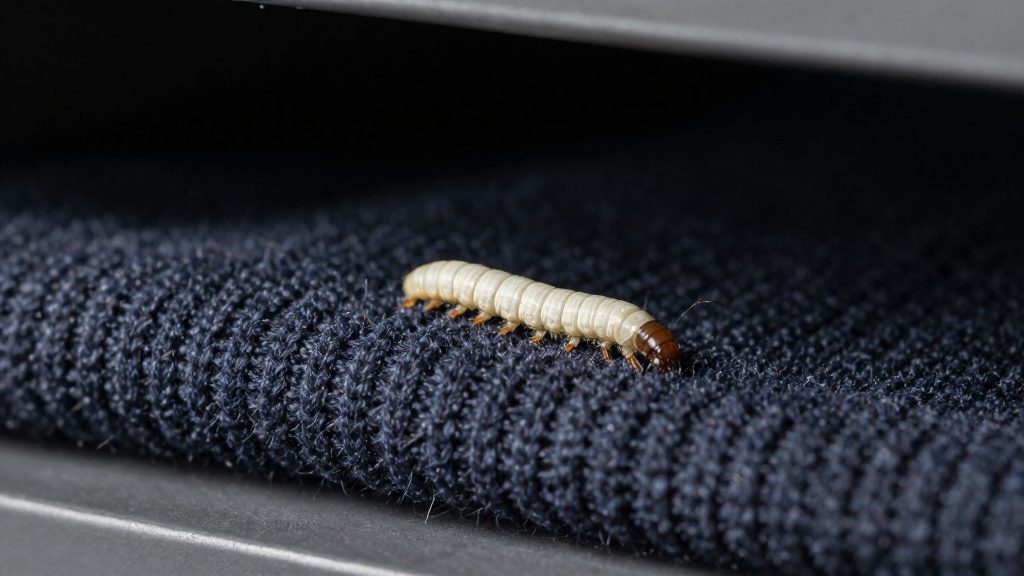
Body residue is what makes a cotton shirt attractive. In Canada, according to Terminix Canada (Rentokil) (2026), the casemaking larva (Tinea pellionella) lives in a portable silken case and prefers clothing with sweat or stains, so the larva feeds on the organic traces left in the fabric.
The parts of a shirt that accumulate the most sweat residue are the areas to check first:
- Collars: the inner band and fold collect sweat and skin oils with each wear.
- Cuffs: contact with hands and food transfers oils and stains.
- Underarms: sweat concentrates here.
A shirt that is stored unwashed for a long period keeps these residues in place for the entire storage time.
Is it a moth or a carpet beetle?
The silken case is the most reliable sign of a clothes moth. The casemaking clothes moth, Tinea pellionella, builds a portable case of silk around its larva and drags it along the fabric as it feeds. According to Terminix Canada (Rentokil, 2026), this larva is the one that causes the damage in Canada. If you find the case, the damage is from a moth. If you do not, the cause is less certain.
To narrow it down:
- Check soiled areas first.
- Look for the case. Inspect the damaged area and the surrounding fabric, including seams and folds, for a small silken tube.
- Read the care label. Damage on a plain cotton shirt is a weaker sign of a moth.
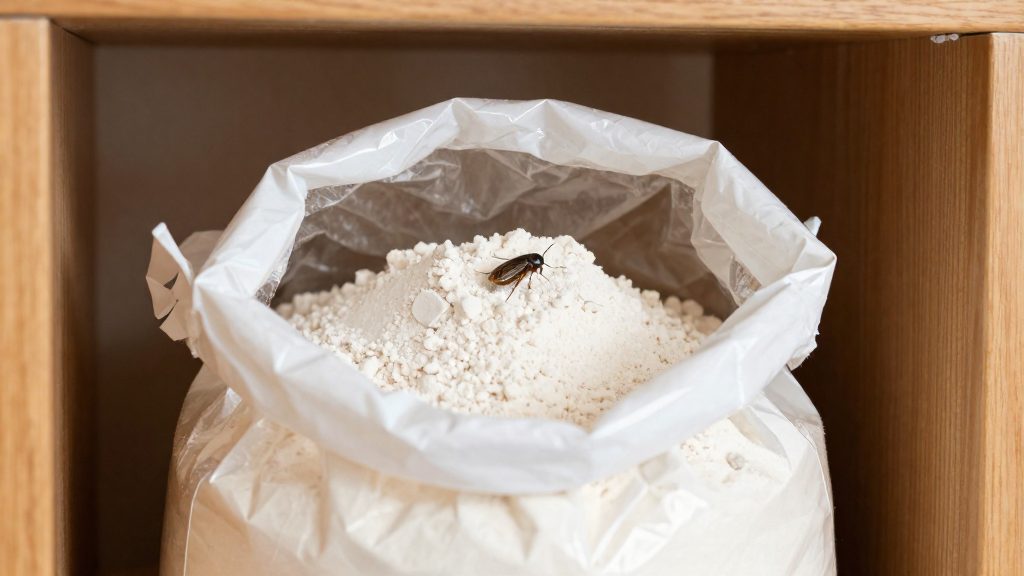
- Consider carpet beetles. According to the University of Kentucky Entomology (Cooperative Extension, 2026), damage blamed on clothes moths may actually come from carpet beetles. These insects feed on many of the same materials as moths but look quite different from them, so confirm which pest you have, for example by having a specimen identified by a pest professional, before choosing a treatment.
Because the absence of a case does not rule out moths, particularly if the shirt is soiled, examine the item and the storage area for signs of other pests, including carpet beetles, before deciding on a treatment.
How do you treat infested shirts?
Heat, cold and cleaning are the methods that kill clothes moth eggs and larvae on cotton shirts. Insecticides are not part of the treatment.
Hot laundering and dryer heat
Hot laundering kills clothes moth eggs and larvae, and so does heat from a clothes dryer. Wash each shirt in the hottest water its care label allows, then tumble dry it on a hot setting. Shirts with visible stains or yellowed underarms should go through this process before any other step, since stains attract larvae.
Dry cleaning
Dry cleaning also kills eggs and larvae. It is a practical option for shirts you do not want to machine wash, but it only works on the items that actually go through the cleaning cycle. Bring every infested shirt to the cleaner, not just the most damaged ones.
Freezing
Freezing works only when the temperature stays at the required level for long enough. Use a freezer thermometer to confirm the setting before you start the timer.
| Freezer temperature | Minimum duration | Result |
|---|---|---|
| -18°C (0°F) or below | At least one week | Treatment works |
| -29°C (-20°F) | 72 hours | Can kill all life stages |
A freezer that cycles above these thresholds, or is opened often, does not meet the requirement, so count the hold time only while the shirts stay at or below the target temperature, and restart it if the freezer warms up.
How do you prevent moth holes in your closet?
Storage habits matter most for shirts kept near woollens or shirts that have not been washed.
Clean woollens before long-term storage
Clean woollens before putting them away for a long period, since soiled fabric is more exposed to damage. Wash or dry clean shirts before storing them, and keep any shirt that has not been washed apart from clean garments and woollens.
Seal garments in tight containers
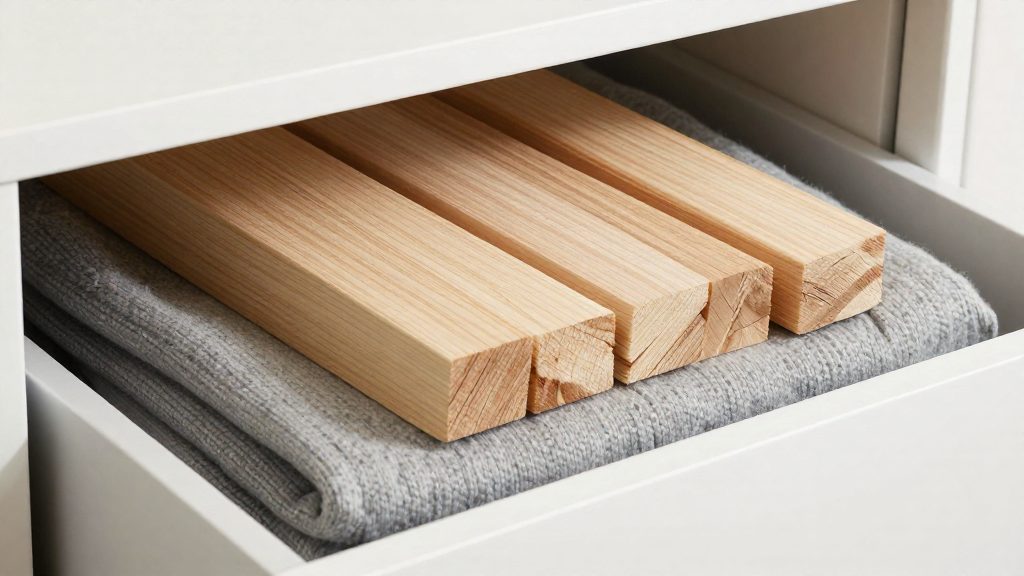
Sealed storage is the storage method the source recommends. Place cleaned woollens and blended items in tight plastic bags or containers rather than leaving them open on a shelf or hanging rail. Keep cotton shirts in a separate sealed space from unwashed woollens.
Do not rely on cedar or naphthalene
Cedar closets are seldom effective against clothes moths, so cedar lining should not be treated as a prevention method. Naphthalene and paradichlorobenzene (PDB) products are another common shortcut, but they can be hazardous if misused, and the source recommends sealed storage instead.
When should you call a pest professional?
Home measures are usually enough when damage is confined to a few garments in one storage area. Call a licensed pest control operator when the treatments no longer stop the damage, because clothes moth larvae can keep feeding on items hidden in closets, drawers and storage boxes.
Infestation persists after washing and freezing
If new holes or larvae still appear after items have been laundered and frozen, the infestation probably extends beyond the garments you treated. Hot laundering, clothes-dryer heat and dry cleaning kill clothes moth eggs and larvae, so continued activity points to untreated items or a source you have not located. A professional can inspect the whole storage area and find where the moths are breeding.
Damage spreads to carpets, upholstery or other rooms
Damage that moves into carpets, upholstery or other rooms suggests a wider infestation. It can also mean the cause is not a clothes moth. A professional can confirm the pest before any treatment starts.
Repeat damage despite sealed storage and cleaning
Cedar closets are seldom effective. If shirts are cleaned, sealed and damaged again, a professional should assess the storage space itself.
Frequently asked questions
Can hot washing or drying kill clothes moths in a cotton shirt?
Yes. Hot laundering, clothes-dryer heat and dry cleaning all kill clothes moth eggs and larvae, so an infested shirt can be treated this way before storage.
How long does freezing need to last to kill moths in clothing?
Items must stay at 0°F (-18°C) or below for at least one week, and this hold time only counts while the items remain at that temperature. A freezer reaching -20°F (-29°C) can kill all life stages within 72 hours.
Could the damage on my shirt come from something other than clothes moths?
Yes. Carpet beetles feed on many of the same materials as clothes moths but look quite different, so identify the pest before choosing a treatment.