How to tell clothes moth larvae from other pests
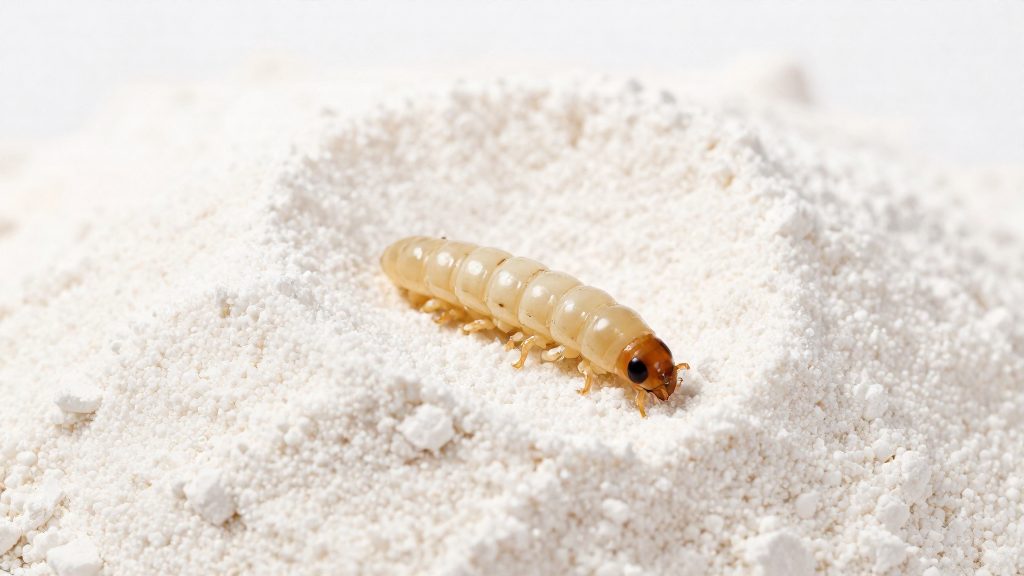
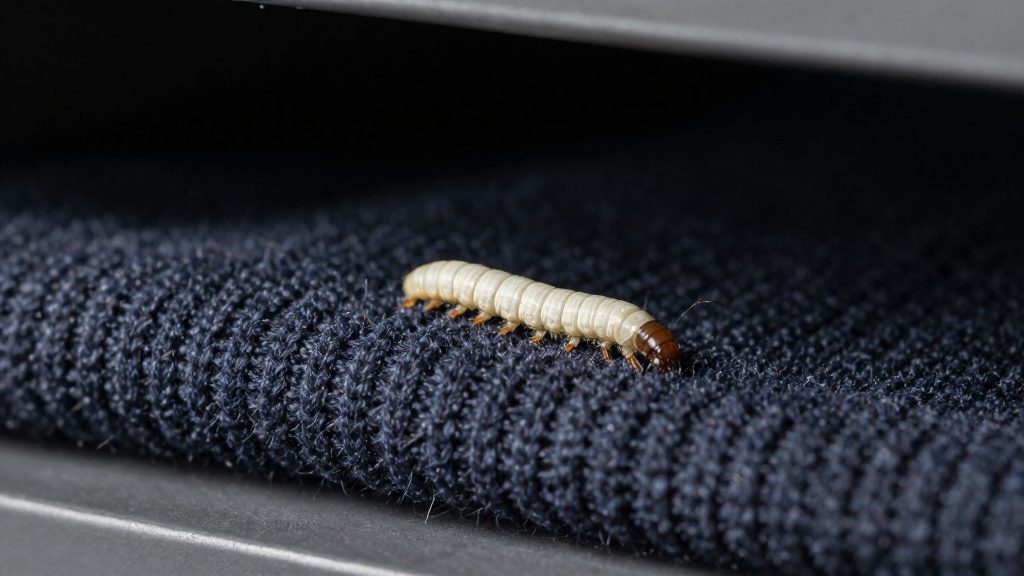
Clothes moth larvae are identified by three features checked together: a body about 3/8 inch long, a small caterpillar shape, and a dark head capsule. According to Terminix Canada (Rentokil Terminix, 2026), the clothes moth Tinea pellionella has larvae of this size, and they live inside a portable silken case. Checking all three features gives a more reliable identification than relying on any one of them.
Size and body shape
The larva measures about 3/8 inch. Compare a suspect specimen against a ruler or a coin rather than estimating by eye. The body is a small, soft caterpillar, so the larva has a segmented, worm-like form with short legs at the front end.
Head capsule and portable case
The dark head capsule is the most visible identifying feature at the front of the body. Use a magnifier or a phone camera zoomed in to check it, since the head is small. The portable silken case is a distinctive feature of the casemaking clothes moth (Tinea pellionella): the larva drags a tube-shaped case that it builds from silk and fibres.
| Feature | Clothes moth larva | How to check |
|---|---|---|
| Length | About 3/8 inch | Compare with a ruler |
| Body shape | Small caterpillar | Look for a soft, segmented body |
| Head | Dark head capsule | Examine the front end under magnification |
| Case | Portable silken case | Look for a tube the larva drags |
Separating clothes moth larvae from other closet larvae
Work through the features in order. First look for the case: a larva carrying a portable silken case, with a dark head capsule and a body about 3/8 inch long, matches the casemaking clothes moth (Tinea pellionella). A larva with no case may be a webbing clothes moth, which feeds in silk-lined tunnels, but it may also be a different fabric pest. Look for those tunnels, and keep or photograph the specimen so a pest professional can confirm the identification.
What do clothes moth larvae eat?
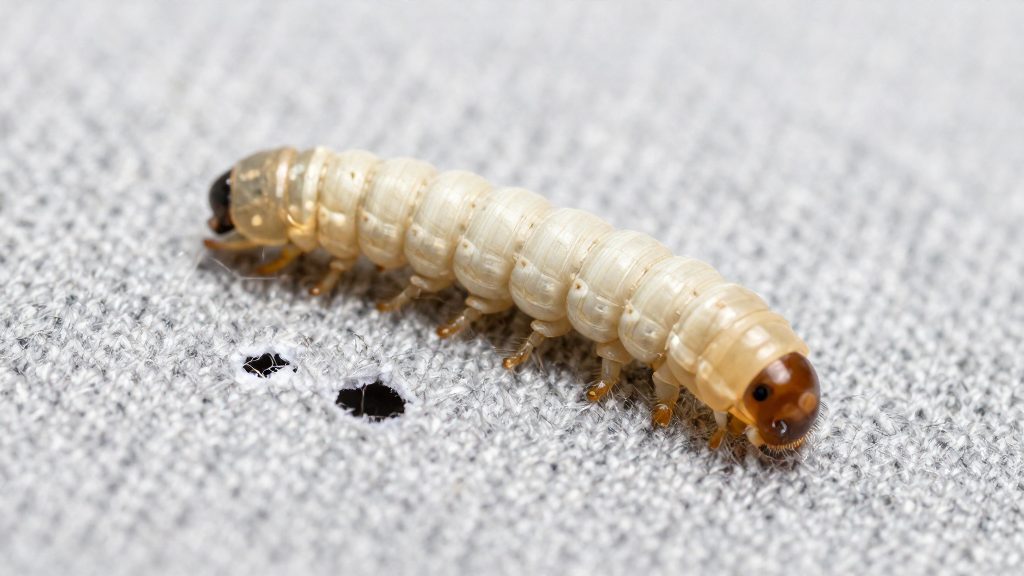
Clothes moth larvae feed on animal-based materials. The adult moths do not feed at all. The damage comes from larvae that hatch from eggs laid on wool, fur, silk and feathers. According to PestHQ (2026), larvae eat wool, cashmere, silk, leather, feathers and fur. Terminix Canada (Rentokil Terminix) (2026) lists the materials they prefer as wool, rugs, feathers, felt, skins and fur.
Materials larvae eat
- Wool and cashmere
- Silk
- Leather
- Feathers
- Fur
Materials larvae prefer
The preferred list overlaps with the eaten list but adds three items that the eaten list does not name:
- Rugs
- Felt
- Animal skins
Rugs, felt and skins are therefore worth inspecting alongside clothing, especially in rooms where woollen or fur-lined textiles are stored together.
Sweat-stained fabrics
Sweat-stained fabrics are especially attractive to larvae, which makes worn animal-fibre garments a higher risk than clean ones stored in the same place.
Signs of an infestation in your closet
Larvae stay hidden inside folds and storage, so their signs usually appear before you see the insects.
Sand-like droppings
Larvae leave sand-like droppings close to where they feed. Look for granular specks resembling fine sand on shelves, in the folds of sweaters, at the bottom of drawers and on stored rugs. Droppings usually sit near the damaged textile, so check the garment directly beneath any pile of specks.
Silken feeding tunnels versus tubular cases
Larvae build two kinds of silk structures, and each one points to a different behavior:
| Sign | Identifying feature |
|---|---|
| Silken feeding tunnels (webbing clothes moth) | Silk-lined tunnels or webbing on the fabric surface, where the larva feeds |
| Tubular cases (casemaking clothes moth) | Small tube-shaped silken cases that the larva carries with it |
A tubular case that is moving across a surface indicates a live larva, whereas a stationary case may be empty. Finding either structure on or beside a garment suggests that larvae are or were active in that spot.
Irregular holes and thinning
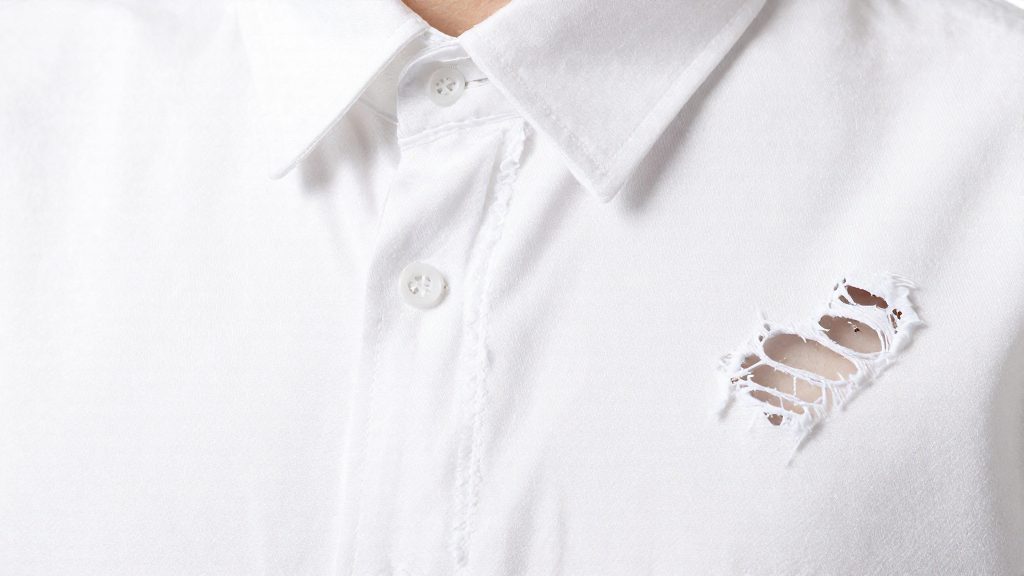
Damage shows as irregular holes and thin patches in wool, cashmere, silk, leather, feathers and fur. Check the areas where larvae prefer to feed, such as underarms, collars and cuffs.
How do you get rid of clothes moth larvae?
Removal starts with isolation. Any garment or textile that shows signs of infestation should be separated from clean storage before anything else is done.
Inspection priorities:
- Check collars, underarms, hems and seams of wool and fur items first.
- Shake out and inspect rugs, felt and feather-filled items on a light surface.
Because development takes a long time, one clean-out is rarely enough. The timings below set how long monitoring must continue.
| Stage | Duration |
|---|---|
| Egg to adult | 46 to 116 days |
| Larval feeding | 33 to 90 days |
As a precaution, repeat checks at regular intervals for at least the 116-day upper limit of the egg-to-adult development period, and keep watching for new activity afterwards.
Discarding damaged items: Garments with extensive holes, heavy larval activity or fibres that are largely eaten away are usually not worth recovering. Remove them from the closet immediately, so that any remaining larvae cannot move to nearby items.
Do pheromone traps work against clothes moths?
Pheromone traps work against one stage of the clothes moth life cycle. They attract male moths and interrupt breeding, according to PestHQ (2026). A trap can reduce future egg-laying, but it does not remove the larvae already present in a closet.
What a trap catches and what it cannot stop
| Stage or target | Effect of a pheromone trap |
|---|---|
| Adult male clothes moths | Attracted to the trap, which interrupts breeding |
| Adult female clothes moths | Not targeted by the lure |
| Eggs already laid | Can still hatch after the trap is set |
| Larvae feeding on textiles | Not attracted, so the trap does not remove them |
Because eggs already laid can still hatch, traps must be combined with cleaning and other mechanical controls (PestHQ, 2026). The trap is a monitoring and disruption tool, not a standalone treatment.
Placement in closets and storage areas
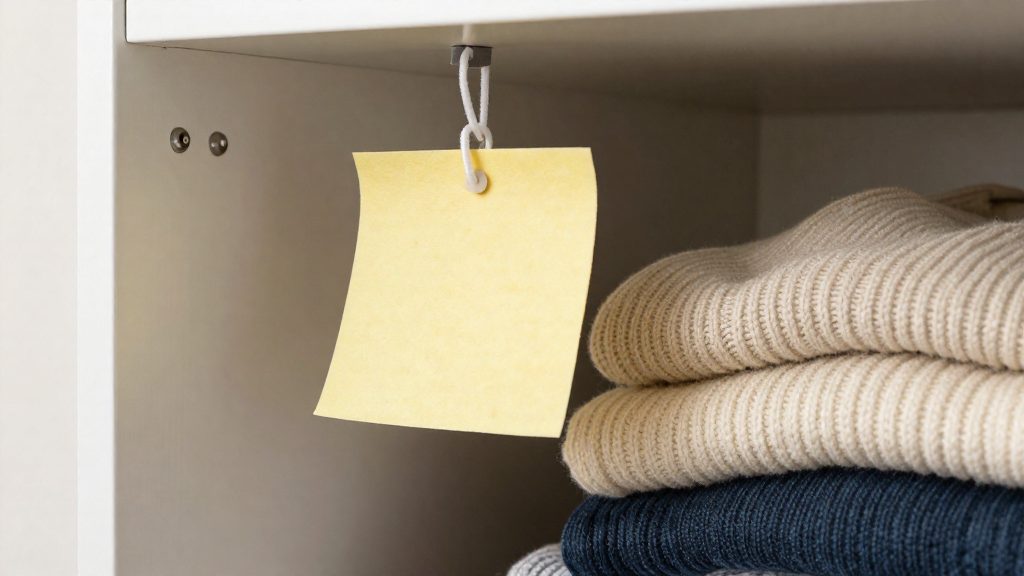
- Set traps inside the closet or storage area that holds wool, fur, feather or leather items, since those materials are where eggs are laid.
- Keep the trap accessible by placing it on a shelf or floor space where it is not blocked by stored clothing, so that moths can reach it.
- Position traps near second-hand textiles. Items from thrift stores, flea markets and garage sales can carry eggs or larvae, so areas where they are kept are a priority.
- Use one trap per enclosed space rather than clustering several in the same spot, so that each closet or storage area is covered on its own.
Check each trap for catches during routine closet inspections. A trap that catches moths confirms adult activity in that space, while an empty trap does not confirm that larvae are absent.
Cleaning, washing and freezing: what works?
Laundering, dry cleaning and vacuuming are the sourced cleaning steps, and freezing is a possible non-chemical addition.
Laundering and dry cleaning before storage
Launder or dry clean garments before putting them away (PestHQ, 2026), starting with sweat-stained fabrics. Wash items the care label allows, and send wool, silk, leather or other non-washable pieces to a dry cleaner.
Vacuuming closets and debris
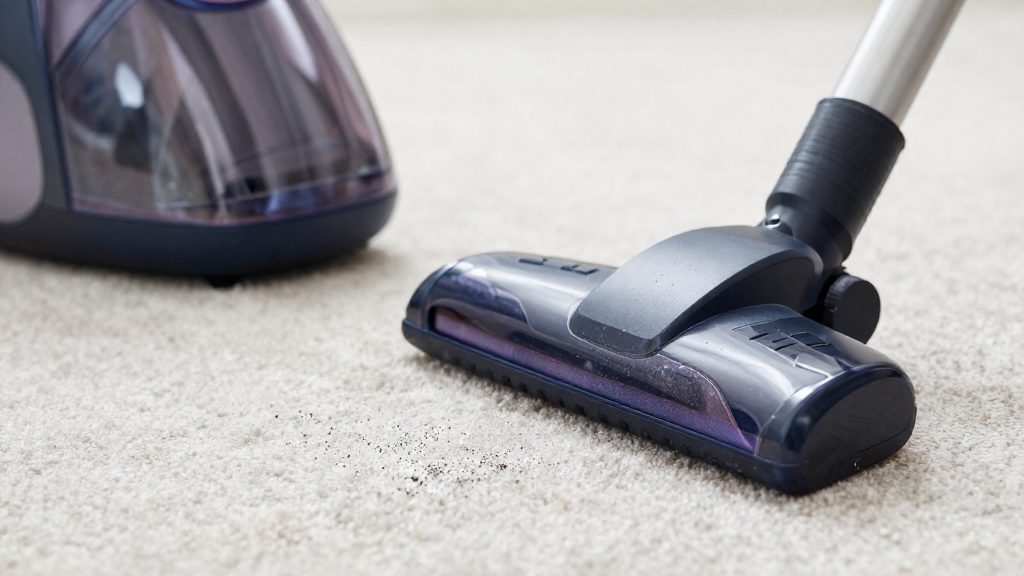
Vacuum closets thoroughly, including shelves, corners, baseboards and the floor under hanging garments. Vacuum up debris and empty the canister or bag outside the home.
A single session may miss stages that are still developing, so repeat vacuuming over several weeks rather than relying on one pass.
Freezing as a non-chemical option
Freezing is a non-chemical option sometimes used against larvae, but its effectiveness depends on temperature and duration. Seal garments in airtight bags, place them in a freezer and keep them there until fully frozen. Freezing is sometimes used as a non-chemical option, but the sources supplied here give no temperature or holding time. Ask a pest control professional for the exact parameters before relying on it, especially for valuable or heavily infested pieces. Freezing treats the items themselves, so it works best alongside laundering and vacuuming.
How can you prevent moths from coming back?
Preventing a return of clothes moths depends on storing the materials their larvae eat in closed containers, keeping closets free of clutter, and checking anything new before it enters the home. According to PestHQ (2026), wool, fur, feather and leather items are the ones to protect, and second-hand goods are a common way eggs or larvae enter a home.
Store vulnerable items in sealed containers
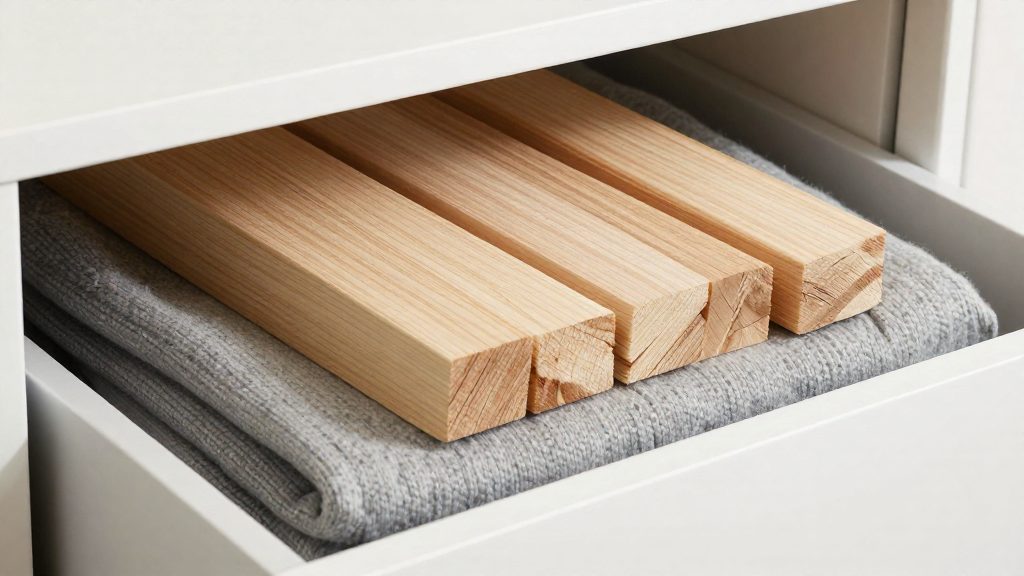
Wool, cashmere, silk, leather, feathers and fur are the materials larvae feed on, so these items should go into sealed bins or zippered organizers rather than hanging open or sitting in piles. Keep stored textiles in the same containers for the whole storage period, and do not reopen them to add unchecked items.
Reduce hiding places in closets
Clutter gives moths and their larvae places to remain unnoticed. Clear the floor and the back of shelves, keep only the clothing you wear or have stored in containers, and check seams and folds of stored textiles during regular closet checks. Items left in unused corners are harder to inspect and easier to overlook.
Inspect second-hand items before bringing them in
Used clothing, bedding and furnishings from thrift stores, flea markets and garage sales can carry eggs or larvae. Inspect second-hand items before they join the closet, and keep them apart from stored goods until the check is complete.
Signs can appear well after an item arrives. A single female can lay up to 300 eggs, which means one overlooked item can reintroduce an infestation to a closet that was already treated.
When should you call a professional?
Home treatment is usually enough when the damage stays in one closet or a few items. Call a professional pest control company when new signs keep appearing after you have cleaned and sealed affected items. Fresh sand-like droppings or new silken tunnels and tubular cases after that clean-up suggest that clothes moth larvae are still living in a spot you have not reached.
Persistent infestation is the first trigger. If signs return despite repeated cleaning and isolation of infested items, a technician can inspect the room, find hidden sources such as seams, rug undersides and the backs of cabinets, and advise on treatment.
Damage to valuable items is the second. When a valuable rug, upholstered piece or heirloom textile shows holes or feeding damage, have it assessed by a specialist before cleaning or storing it. Avoid applying untested products to these items, since they can stain or damage the material.
Spread across rooms or furniture is the third. If signs appear in several rooms, in upholstered furniture or in drawers beyond the original closet, the infestation has moved past its first source.
Frequently asked questions
How do I know a larva in my closet is a clothes moth?
Check for a portable silken case first, since the casemaking clothes moth larva drags a tube-shaped case as it moves. A larva without a case cannot be confirmed as a clothes moth, so look for silk-lined tunnels and ask a pest professional to confirm the identification.
Can clothes moths come in on second-hand items?
Yes. Second-hand clothing, bedding and furnishings from thrift stores, flea markets and garage sales can carry moth eggs or larvae, so inspect them before they join your other clothes. Check the second-hand clothing and bedding in particular.
Do pheromone traps get rid of an infestation?
No. Pheromone traps attract male moths and interrupt breeding, but eggs already laid can still hatch, so they must be combined with cleaning and other mechanical controls.