This guide does not rank products or declare any pesticide risk-free for children. It explains how to choose a registered product and use it safely around children. Health Canada registration is the first test for any pesticide used around children. Buy only products registered by Health Canada, check the label for a Pest Control Product (PCP) number, and confirm that the label lists the pest you are treating. Safety then depends on following the label directions, storing the product correctly, and controlling when people can re-enter the treated area.
What does “child-safe” mean in Canada?
Registration and label directions set the limits of safe use. Each stage of a treatment has its own rule.
| Stage | Rule |
|---|---|
| Purchase | Buy only pesticides registered by Health Canada. Find the Pest Control Product (PCP) number on the label and confirm that it lists your pest. |
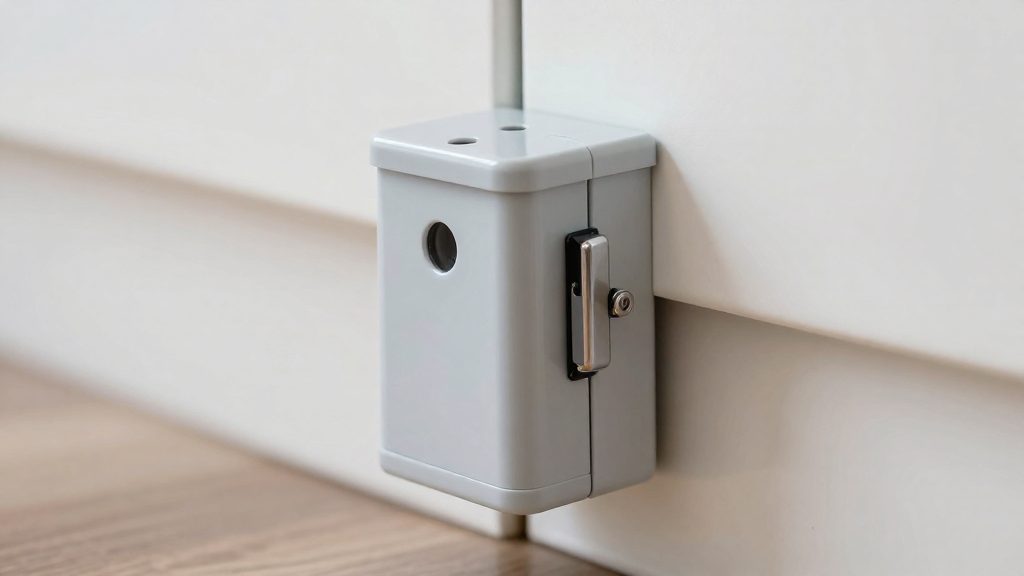
| Storage | Keep pesticides in their original containers, out of sight and out of children’s reach. Keep baits in locked bait stations. |
| Application | Keep children away from treated areas during application and until the areas are dry. |
| Re-entry | Ventilate the home after indoor use. Stay out of the treated area for at least 12 hours after application, or longer if the label says so. Let children back in only once the product has fully dried. (Health Canada, 2023-02-10) |
| Disposal | Do not reuse empty containers. |
Infants and young children are more exposed than adults because they breathe near the ground and put their hands, toys and other objects in their mouths. After a treatment, wash toys that have touched pesticides. If a child will be in contact with a recently treated lawn or carpet, place a barrier such as a blanket between the surface and the child’s skin. (Health Canada, 2019-03-27)
Bedbug control is best left to a licensed pest control operator, not a do-it-yourself product. (Health Canada, 2019-03-27)
If a child is poisoned, call a poison control centre right away. Bring the product label or container to the doctor or emergency room so staff can identify the active ingredients. (Health Canada, 2023-02-10)

How to Recognise a Registered Product
Health Canada registration is the first test for a pesticide sold for home pest control. Marketing claims on the front of a package do not confirm registration, so check the label. Buy only pesticides registered by Health Canada, and look for the Pest Control Product (PCP) number printed on the label, which identifies the registered product (Health Canada, 2019).
Use this three-step check before you buy and before you apply:
- Locate the PCP number. If the label carries no PCP number, do not buy the product.
- Confirm the target pest. The label must list the pest you are treating. Do not use a product against a pest its label does not name.
- Follow the label directions exactly. Do not apply a pesticide to people or bedding unless the label allows it (Health Canada, 2023). Keep the label or container, because a poison control centre or doctor will need it if a poisoning occurs (Health Canada, 2023).
Keep the product in its original container, since empty containers must not be reused (Health Canada, 2023). Store it out of sight and out of reach of children, and keep baits in locked bait stations (Health Canada, 2019).
Where to Store Insecticides and Baits
According to Health Canada (2023), store every pesticide in its original container, out of sight and out of children’s reach. Keeping products in the container they came in ensures the label stays with the product. Baits need an extra layer of protection: they belong in locked bait stations, kept out of children’s reach at all times.
Keep Products Out of Sight
Storage out of sight matters because young children often explore cabinets and lower shelves. Place insecticides, sprays and granules on a high shelf or in a locked cabinet, away from food, medicines and cleaning products. Keep the containers closed between uses.
Lock Up Baits
Bait stations are designed to restrict access, so use them for every bait product, including ant and rodent baits. Keep unused bait in its locked station rather than loose in a drawer or on a shelf. Check that each station is locked after you refill it.
Discard Empty Containers Safely
Do not reuse empty pesticide containers for food, drink or storage of other substances. An empty container can still hold residue, so dispose of it rather than keeping it in the home.
Act Quickly After Exposure
If a child swallows a product or gets it on the skin or in the eyes, call a poison control centre right away. Bring the label or container to the doctor or emergency room so staff can identify the product and its ingredients.
How Long to Keep Children Away?
Children should stay out of a treated area during application and until the surface is fully dried. After application, they must stay away for at least 12 hours, or longer if the label specifies a longer interval (Health Canada, 2023). The label is the controlling reference: a longer interval on the label always applies.
| Stage | Rule |
|---|---|
| During application | Keep children and pets out of the treated area |
| Until dry | Keep children away from the treated surface |
| Minimum after application | 12 hours |
| Longer intervals | Follow the label if it specifies one |
| After indoor use | Ventilate the home before re-entry |
Children are more exposed than adults because they breathe closer to the ground and often put their hands, toys and other objects in their mouths. Treated floors, carpets and lawns are the surfaces that need the most attention. Wash any toy that has touched a pesticide, and place a barrier, such as a blanket, between a recently treated lawn or carpet and a child’s skin (Health Canada, 2019).
Keep pregnant women and elderly people out of the treated area too, as well as children and pets.
For bed bugs, Health Canada (2019) recommends a licensed pest control operator rather than a do-it-yourself treatment, Health Canada (2019) recommends a licensed pest control operator rather than a do-it-yourself treatment for bed bugs.
Prevention first: reducing pests without products
Removing the conditions that attract pests is the lowest-risk approach in a home with children, because it reduces how often any product must be used indoors. These methods need no chemicals:
- Exclusion: seal gaps around pipes, doors and windows, and store food in closed containers.
- Sanitation: clean crumbs, grease and spills promptly, and do not leave pet food out between meals.
- Moisture control: fix leaks and dry damp areas, since standing water attracts insects and rodents.
- Clutter reduction: clear storage areas, the space under sinks and the gaps behind appliances, where pests shelter.
- Monitoring: place physical traps along the routes pests use, out of children’s reach, and check them regularly to see whether activity continues.
When a product is still needed, Health Canada (2019) advises buying only pesticides registered in Canada, checking that the label lists the pest being treated, and following every label direction. Look for the PCP number on the label. Keep the product in its original container, out of sight and out of children’s reach, and store baits in locked bait stations. Do not reuse empty containers. Bedbug control is the exception: it is best handled by a licensed pest control operator rather than a home treatment.
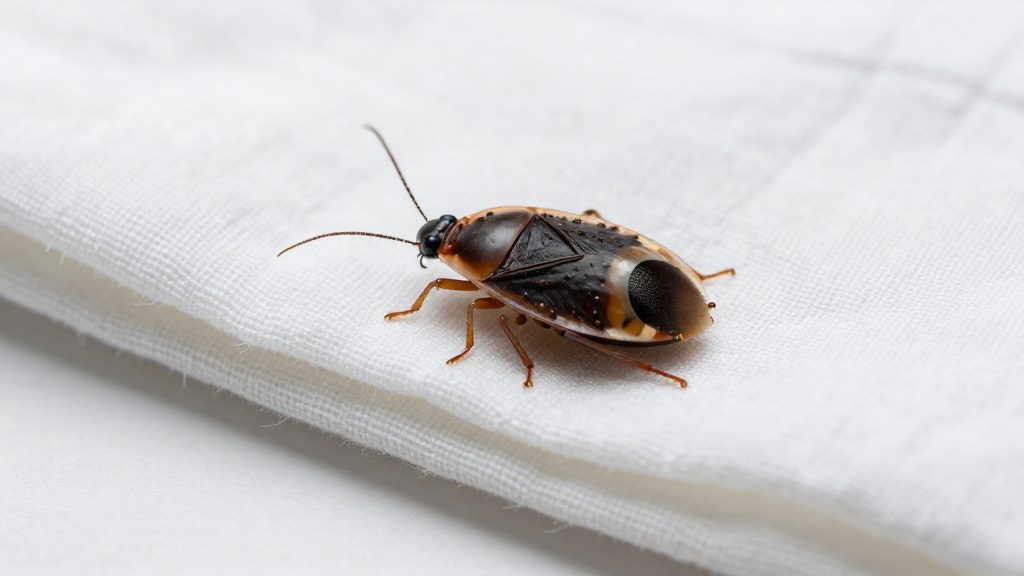
What to do about bed bugs?
According to Health Canada (2019), bed bug control is best left to a licensed pest control operator. Health Canada’s advice is to leave bed bug control to a licensed pest control operator. Any homeowner who does use a product should first confirm that the label lists bed bugs as a target pest and carries a Pest Control Product (PCP) number, then follow every direction on it.
Preparing the room
- Keep people and pets out of the room during treatment. Health Canada (2023) specifically advises children, pregnant women and older adults to leave the area.
- Keep children away from treated areas during application and until they are dry.
- Store all pesticides in their original containers, out of sight and out of children’s reach.
After treatment
- Stay out of the treated area for at least 12 hours after application, or longer if the label says so.
- Let children back in only once the product has fully dried.
- Ventilate the home before going back in after indoor use.
- Wash toys that have touched the product. Infants and young children often breathe near the ground and put their hands and objects in their mouths, so a blanket can serve as a barrier between a recently treated carpet and a child’s skin.
Handling and disposal
- Do not apply the product to people or bedding unless the label allows it. Bed bug treatments often involve bedding, so check this point before starting.
- Do not reuse empty containers.
- In case of poisoning, call a poison control centre right away and bring the label or container to the doctor or emergency room.
Are Homemade Products Safer?
Homemade mixtures are not automatically safer for children. The safety rules Health Canada sets out apply to registered pest control products, which carry a Pest Control Product (PCP) number and a label with directions. According to Health Canada (2019), a registered product should be bought only after checking two things on its label: the PCP number is present, and the pest you are treating is listed. All label directions must then be followed. A homemade mixture has no PCP number and no label, so these checks cannot be made on it, and no label sets the limits on child contact or re-entry time.
Before using any product in a home with children, check the label for:
- The PCP number, which confirms the product is registered
- The target pest, which confirms it is approved for your problem
- The directions on child contact, dry time, and re-entry
Whatever the product, keep it in its original container, out of sight and out of children’s reach. Do not reuse the empty container. Baits belong in locked bait stations, also out of reach (Health Canada, 2019; Health Canada, 2023).
What to do in case of poisoning
If pesticide poisoning is suspected, call a poison control centre right away. Health Canada (2023) identifies this call as the first step in any poisoning, so do not delay it to see whether symptoms develop.
Steps to follow
| Step | Action |
|---|---|
| 1 | Call a poison control centre right away. |
| 2 | Take the product’s label or container to the doctor or emergency room. |
| 3 | Keep the container out of children’s reach while you wait. |
The label identifies the product and carries its PCP number, the Pest Control Product number that Health Canada registers for each approved product. Check the label before an emergency so the product name and PCP number are easy to read out over the phone.
Limiting further exposure
- Keep children away from treated areas until the areas are dry.
- Ventilate the home before going back in after indoor use.
- Stay out of treated areas for at least 12 hours after application, or longer if the label says so.
- Wash toys that have touched pesticides.
- Place a barrier, such as a blanket, between a recently treated lawn or carpet and a child’s skin.
- Do not apply pesticides to people or bedding unless the label allows it.
Frequently asked questions
Does a Health Canada registration mean a product is safe for my children?
No. A registration and a PCP number confirm that a product is authorized in Canada and that its label lists your pest, but safe use around children also depends on following the label, storing the product correctly, and waiting for the treated area to dry before children return.
How do I keep children away from baits and traps?
Keep baits in locked bait stations that children cannot reach. Place physical traps out of children’s reach as well, and check them regularly to see whether pest activity continues.
Can a parent treat bed bugs with a do-it-yourself product if young children live at home?
Health Canada advises that bed bug control is best handled by a licensed pest control operator, not a do-it-yourself product.