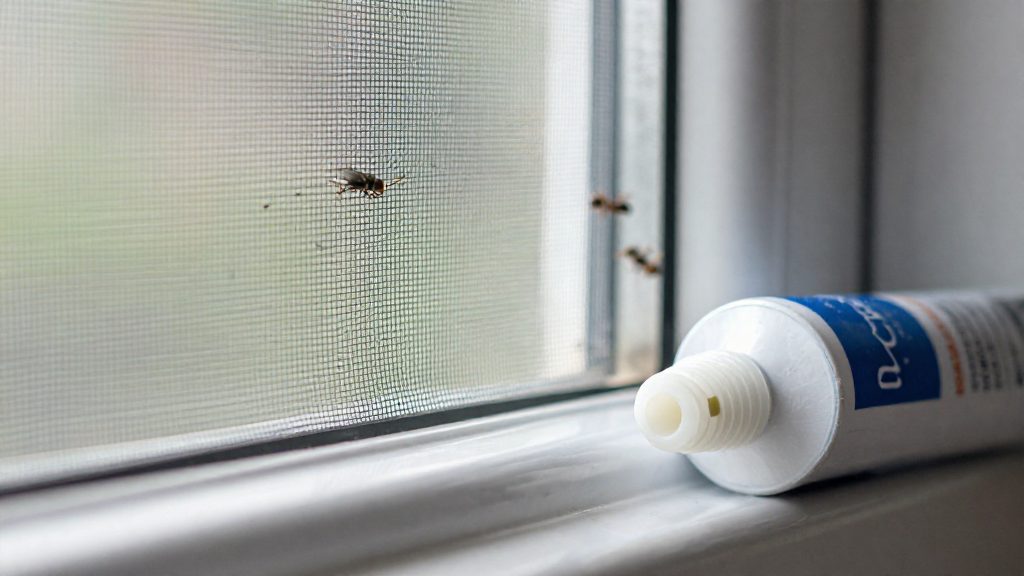
Insects get past screen doors mainly through damaged screens, gaps around the frame, and doors that do not close tightly. Health Canada’s Pest Management Regulatory Agency (PMRA) and CAA-Québec both identify these entry routes. A screen limits entry but cannot stop insects when the frame or door lets them through.
Why do insects get past screen doors?
Damaged screens are the most direct route. Health Canada (2006-10-27) advises repairing or replacing old or torn screens on doors, windows and vents to block mosquitoes, and repairing any other access point into the home. Check each screen for tears before the warm season.
Doors and frames matter as much as the mesh. CAA-Québec (2018-06-14) recommends checking the condition of window and door screens and making sure exterior doors close tightly. A door that does not seal leaves an opening that a screen cannot cover.
Mesh density also affects results. CAA-Québec recommends fine-mesh screens in rural areas.
Outdoor attractants increase the number of insects reaching the door. CAA-Québec recommends:
- Removing standing water from gutters, plant saucers and paddling pools
- Changing the water in bird baths and pet bowls at least twice a week
- Using low-intensity outdoor lighting, such as LED or yellow bulbs
Three Canadian sources give recommendations on screen maintenance and mosquito entry points.
| Source | Date | Recommendation |
|---|---|---|
| Health Canada, Pest Management Regulatory Agency (PMRA) | 2006-10-27 | Repair or replace old or torn screens on doors, windows and vents, and seal any other entry point into the home to block mosquitoes. |
| CAA-Québec | 2018-06-14 | Check the condition of window and door screens, use fine-mesh screens in rural areas, and make sure exterior doors close tightly. |
| CAA-Québec | 2018-06-14 | Remove standing water from gutters, plant saucers and paddling pools; change water in bird baths and pet bowls at least twice a week; use low-intensity outdoor lighting (LED or yellow bulbs). |
| Standards Council of Canada (SCC), CAN/CGSB-79.1-M91 “Insect Screens” | 1991-02-27 | Covers window and door screens in residential and commercial buildings; aims to limit insect entry, not to provide security. Status: cancelled. |
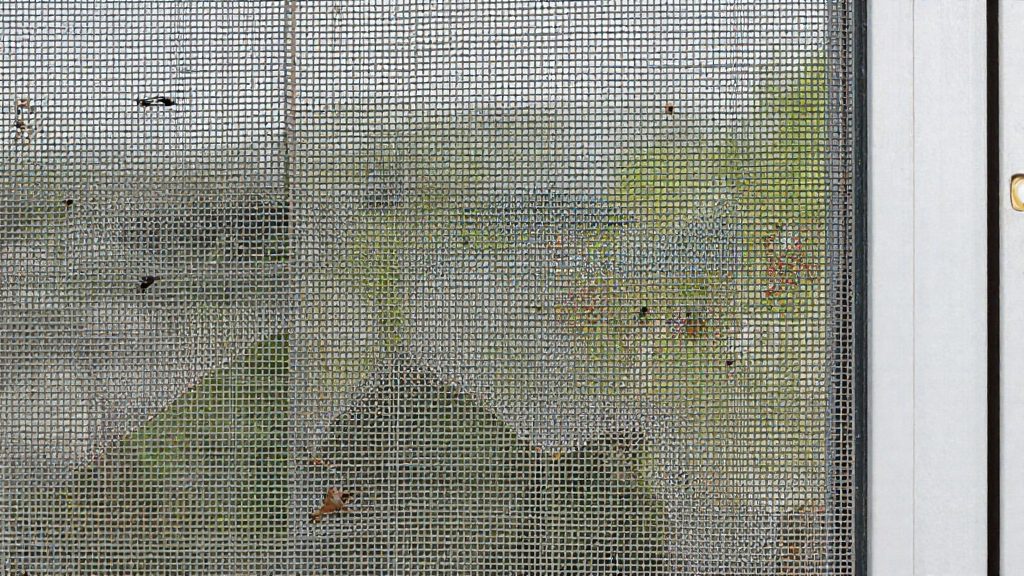
Checking the Screen Mesh and Frames
Health Canada’s Pest Management Regulatory Agency (PMRA) advises repairing or replacing old or torn screens on doors, windows and vents, and sealing any other access point into the home to block mosquitoes (Health Canada, PMRA, archived 2006-10-27). Inspect each screen across its full surface, not only the centre of the mesh, and check the following points in order:
- Mesh surface: look for tears, holes, and areas where the mesh has sagged or pulled away from the frame.
- Frame edges: check the spline or channel along the perimeter, the corners, and the junction with the sill.
- Vents and side openings: inspect any vent or secondary opening that has its own screen.
- Exterior doors: confirm that they close tightly. A door that does not seal leaves a gap regardless of the condition of its screen.
CAA-Québec recommends checking the condition of window and door screens, ensuring that exterior doors close tightly, and using fine-mesh screens in rural areas (CAA-Québec, 2018-06-14). Replace a screen panel when the mesh is damaged across most of its surface, and repair isolated tears or loose frame edges before the next season.
How to Repair a Torn Screen Door
Health Canada advises repairing or replacing old or torn screens on doors, windows and vents, and blocking any other entry point into the home. A torn mesh gives mosquitoes and other insects a direct route indoors, so a patch is a quick fix when the damage is limited to one area.
Assess the damage first. A small tear can be patched. A frame that is bent, loose or rotted, or mesh that is worn across its whole surface, calls for a full replacement. Check the door itself as well. According to CAA-Québec (2018), exterior doors should close tightly, because a gap at the sides or bottom lets insects in whatever the condition of the mesh.
Patching a small hole
- Clean the area around the tear and lay the screen flat.
- Trim any frayed threads so the edges sit flush with the surrounding mesh.
- Cut a patch of matching screen mesh that extends beyond the tear on every side.
- Secure the patch over the hole, overlapping the sound mesh, and check that no gap remains at the edges.
Replacing the mesh
- Remove the spline, the rubber cord that holds the mesh in the frame groove, and take out the damaged screen.
- Stretch the new mesh flat across the frame, keeping it taut without distorting the frame.
- Press the spline back into the groove with a roller tool, working around the frame.
- Trim the excess mesh along the groove.
Choosing replacement mesh
CAA-Québec recommends fine-mesh screens in rural areas. The Canadian standard CAN/CGSB-79.1-M91, “Insect Screens,” covers window and door screens in residential and commercial buildings. It is designed to limit insect entry, not to provide security, so a repaired screen should not be relied on to keep people out.
Sealing gaps around the door
Mosquitoes enter through any opening, so a screen door only works if the space around it is closed too. Health Canada’s Pest Management Regulatory Agency advises repairing or replacing old or torn screens on doors, windows and vents, and repairing any other access point into the home, to block mosquitoes (Health Canada, 2006-10-27, archived by Library and Archives Canada).
Work through the door in this order:
- Inspect the screen mesh. Check the full panel for holes, tears and loose edges. Replace any torn section, since Health Canada advises repairing or replacing old or torn screens.
- Test the closing seal. Shut the exterior door and look for daylight around the edges. Any visible light marks a gap. CAA-Québec recommends that exterior doors close tightly (CAA-Québec, 2018-06-14).
- Choose fine mesh where relevant. CAA-Québec recommends fine-mesh screens in rural areas (CAA-Québec, 2018-06-14).
- Close the other openings. Repair any other route into the home, including gaps around vents and windows near the entrance, so the door is not the only barrier.
- Re-check after repairs. Repeat the light test once the door and frame are fixed.
The Canadian standard CAN/CGSB-79.1-M91, “Insect Screens,” covers window and door screens for residential and commercial buildings. It aims to limit insect entry, not to provide security. It was published on 1991-02-27 and is listed as cancelled (Standards Council of Canada, 1991-02-27).
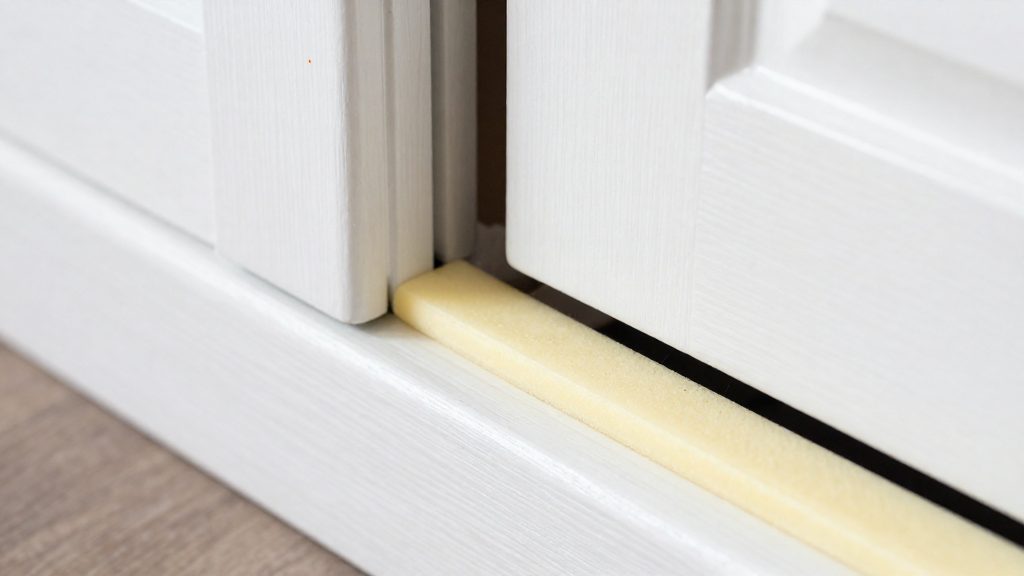
How to judge any screen: mesh fineness, condition and door closure
Compare screens on three points: mesh fineness, screen condition and door closure. Start with the mesh. CAA-Québec (2018) recommends fine-mesh screens in rural areas, without stating a reason, and recommends checking the condition of window and door screens.
Next, check for damage. Health Canada’s Pest Management Regulatory Agency (2006) advises repairing or replacing old or torn screens on doors, windows and vents, and sealing any other entry point into the home. A torn panel or a gap at the frame defeats a fine mesh, so repair these before buying a new type.
Then check door closure. CAA-Québec (2018) recommends making sure exterior doors close tightly, since a door that does not seal leaves a gap even when its screen is intact.
Magnetic and retractable models should be judged by the same criteria: mesh fineness, a tear-free panel, and a frame that fits the opening without gaps. Test the fit by closing the door with the screen in place and looking for light or movement at the edges.
For reference, CAN/CGSB-79.1-M91, “Insect Screens,” published on 27 February 1991, covers window and door screens for residential and commercial buildings. It is designed to limit insect entry, not to provide security. Its status is listed as cancelled, so use it as background only and not as a current purchasing benchmark.
Reducing the Entrance’s Appeal: Light and Standing Water
Outdoor lighting and standing water both attract mosquitoes, so reducing them near the door lowers the number of insects gathering where they could find a way inside. According to CAA-Québec (2018), this comes down to two measures: eliminating standing water near the entrance and using low-intensity exterior lighting.
Eliminating standing water
Standing water is the more direct breeding risk, and it often collects in places homeowners overlook. Check these locations within the immediate area of the door:
- Gutters, where leaves can trap water
- Plant saucers, which should be emptied or removed
- Paddling pools, which should not hold water left standing
- Bird baths and pet bowls, whose water should be changed at least twice a week
Water in these containers is easy to miss, so a walk around the entrance at least twice a week helps catch new collections before they become a problem.
Choosing the right exterior lighting
Bright lights draw insects toward the entrance. CAA-Québec (2018) recommends replacing them with lower-intensity fixtures, specifically LED or yellow bulbs. Keep light fixtures at the door to the level needed for safety and visibility, rather than flooding the entry area.
Combining both measures
Lighting and water work together. CAA-Québec recommends tackling both standing water and bright lighting near the entrance. Address the water first, since it is the factor that supports breeding, and then switch the lighting to a low-intensity option. Repeat the checks after heavy rain, when gutters and containers are most likely to refill.
When to Call a Specialist?
Call a professional when the problem is structural rather than a simple repair. Health Canada’s Pest Management Regulatory Agency (2006) advises repairing or replacing old or torn screens on doors, windows and vents, and repairing any other route into the home. Check these items yourself first. CAA-Québec (2018) recommends inspecting window and door screens, using fine-mesh screens in rural areas, and confirming that exterior doors close tightly.
Escalate to a contractor in three situations:
- Structural problems: a door frame that is warped or no longer closes tightly, or a screen frame that cannot be re-tensioned or replaced without modifying the opening.
- Entry points you cannot reach safely: vents, gaps around pipes or openings high on the facade that require a ladder or access equipment.
- Continued entry after sealing: insects still get in after every screen is repaired, every gap is closed and standing water has been removed.
When you request a quote, ask which specification the product meets. The Canadian standard for residential and commercial insect screens, CAN/CGSB-79.1-M91 “Insect Screens” (Canadian Standards Council, 1991-02-27), is listed as cancelled, so ask the installer which current specification applies rather than assuming the old one does.
Frequently asked questions
Which screen problem should I check first?
Torn or old mesh is the most direct entry point. Health Canada/PMRA (2006-10-27) advises repairing or replacing torn or aging screens on doors, windows and vents, and sealing any other access point into the home.
How tight does my exterior door need to close?
CAA-Québec (2018-06-14) recommends that exterior doors close fully and tightly, so the frame does not leave an opening that the screen cannot cover.
Are these recommendations only about mosquitoes?
Yes. Both Health Canada/PMRA (2006-10-27) and CAA-Québec (2018-06-14) frame their screen and entry-point advice around mosquitoes, so applying it to other insects is an extension of that advice.