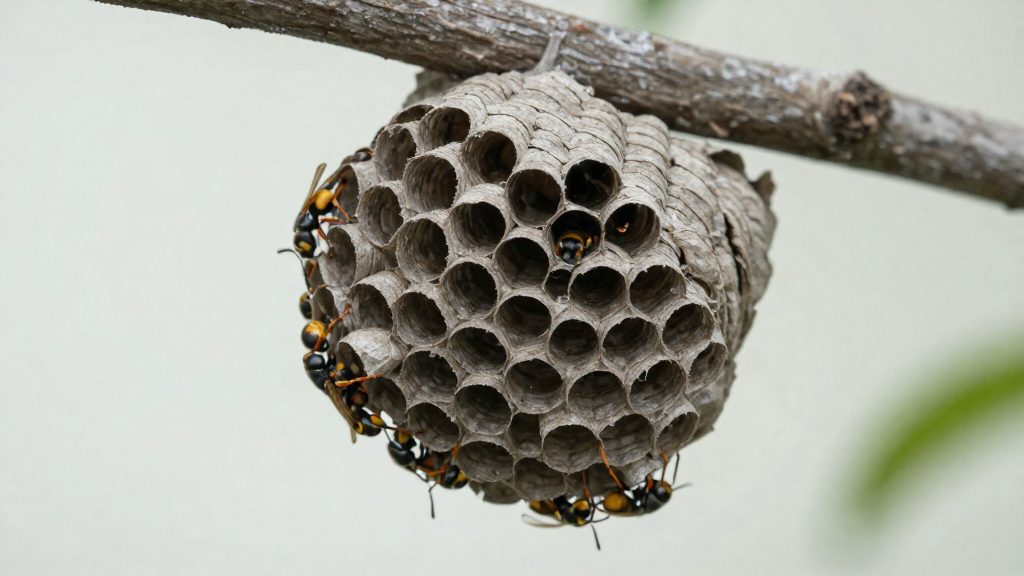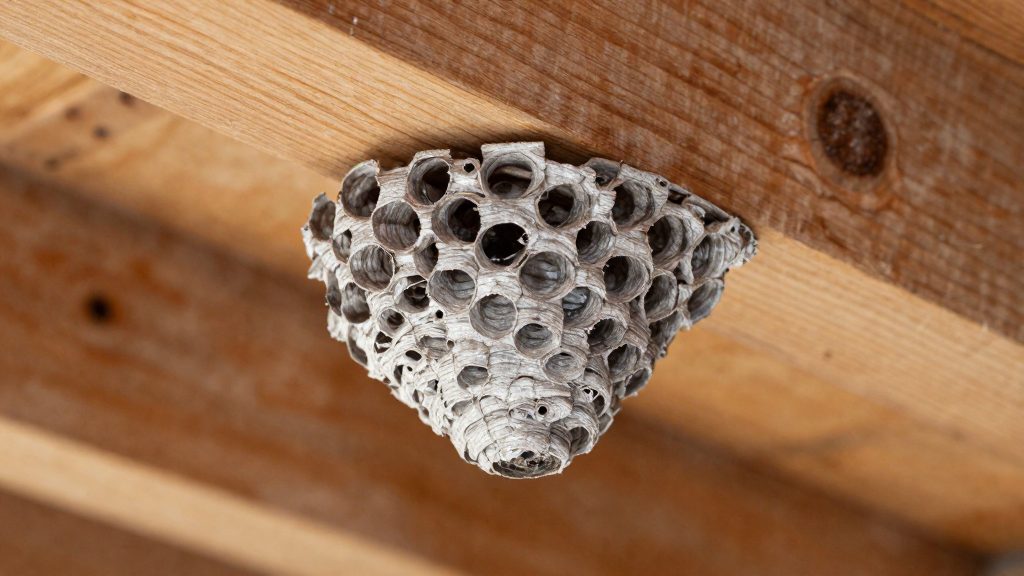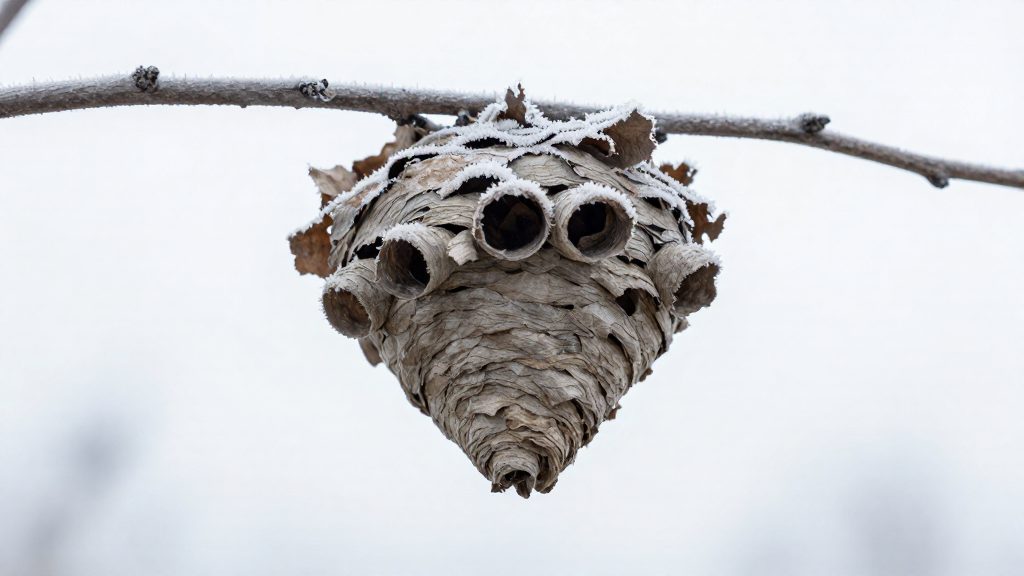
Wasp colonies in Canada die off in the fall, with the timing depending on the first frost; in Montréal, the colony dies with the first frost. In Montréal, the colony dies with the first frost. Only new, mated queens survive the cold, and each one starts a new nest in spring. Individual wasps become inactive well before that point, at roughly 7–10°C.
When do wasp nests die off in Canada?
Late-summer peak
Wasp numbers are highest in late summer, not spring, according to Time Out Montréal, citing Espace pour la vie (2025). According to Time Out Montréal, citing Espace pour la vie (2025), this peak reflects the insect life cycle more than a real population boom.
Fall decline
In late summer, queens stop producing workers. The remaining workers age, struggle to find food and die off over the fall, according to The Weather Network (2024). Wasps become inactive once temperatures fall to roughly 7–10°C, but they only die once temperatures reach freezing, which in Montréal corresponds to the first frost.
Winter and spring
Mated queens overwinter in sheltered spots such as houses, attics, cracks in tree bark or, according to Time Out Montréal (citing Espace pour la vie, 2025), in the ground. In spring, they emerge and start new colonies. Spring is also the best time to find and remove a nest while it is still small. Removal can be done with insecticide or by a professional.
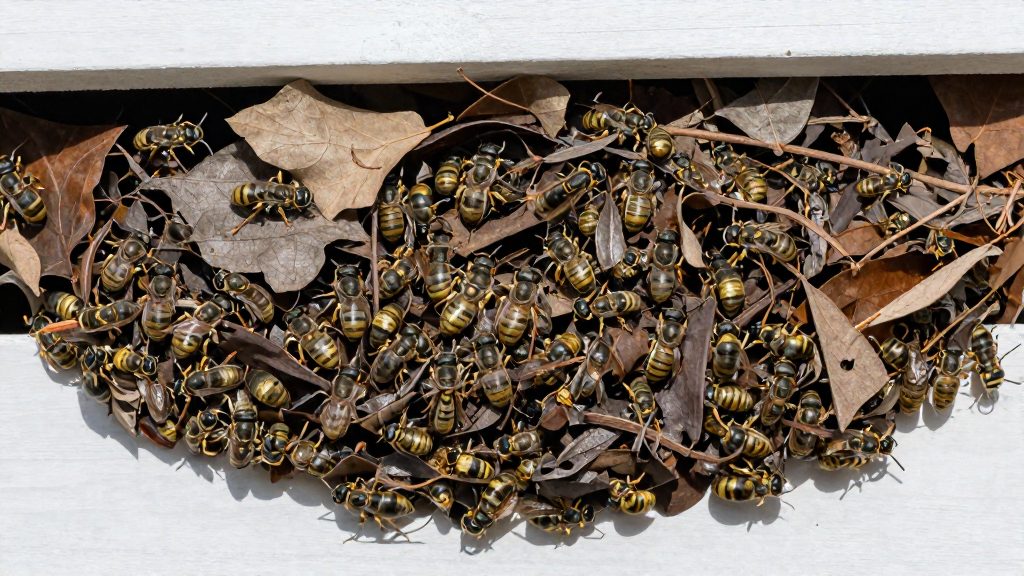
The life cycle of a wasp colony
A wasp nest does not survive the winter. According to The Weather Network (2024), wasps become inactive once temperatures fall to roughly 7–10°C, but they die only when temperatures reach freezing. In Montréal, the colony ends with the first frost, and only mated queens survive the cold season to found new nests the following spring.
| Stage | Timing | What happens |
|---|---|---|
| Peak | Late summer | Queens stop producing workers, and adult numbers are far higher than in spring |
| Decline | Fall | Remaining workers age, struggle to find food and die off |
| Colony die-off | First frost or freezing temperatures | The colony dies, and only new queens remain |
| Overwintering | Winter | Mated queens shelter in houses, attics, cracks in tree bark or the ground |
| Restart | Spring | Each queen emerges and starts a new nest |
The late-summer surge looks like a population boom, but it reflects the insect life cycle. Warm weather speeds colony growth, and food waste feeds the larvae, so adult numbers climb well above spring levels before the decline begins (Time Out Montréal, citing Espace pour la vie, 2025).
Spring is the most effective window for control, because a nest is still small and easier to deal with. Removal can be done with an insecticide or by a professional.
What Happens to Queens Over Winter?
Only mated queens survive the cold season. The rest of the colony dies off in stages, and the timing depends on temperature and the first frost.
| Stage | What happens |
|---|---|
| Late summer | Queens stop producing workers. |
| Fall | Remaining workers age, struggle to find food and die off. |
| About 7–10°C | Wasps become inactive. |
| Freezing temperatures | Inactive wasps die. |
| Winter | Mated queens shelter in houses, attics or cracks in tree bark. |
| Spring | Queens emerge and start new colonies. |
Where Queens Overwinter
Mated queens are the only wasps that carry a colony into the next year. They choose sheltered sites such as houses, attics and cracks in tree bark. In Montréal, the colony dies with the first frost, and only new queens survive the winter, sheltering in the ground or under tree bark, according to Time Out Montréal (2025), citing Espace pour la vie.
What Happens in Spring
Each surviving queen builds a new nest in spring, which is why nests are rarely reused from one year to the next. Because the new nest starts small, it is easier to deal with early. The Weather Network (2024) identifies spring as the best time to find and remove a nest while it is still small, using insecticide or a professional.
Do wasps reuse an old nest?
A wasp colony does not carry over into the next year. Its nest is not reoccupied by the same colony, because the colony ends in autumn and only a small group of mated queens survives the winter. According to The Weather Network (2024), wasps become inactive once temperatures fall to roughly 7–10°C, but they only die once temperatures reach freezing. The timeline below shows how the colony runs its course.
| Season | What happens to the colony |
|---|---|
| Late summer | Queens stop producing workers |
| Fall | Remaining workers age, struggle to find food and die off |
| First frost | The colony dies, according to Time Out Montréal (2025), citing Espace pour la vie |
| Winter | Mated queens shelter in houses, attics, cracks in tree bark or the ground |
| Spring | Each queen emerges and starts a new nest |
Why the old nest is abandoned
Only new queens survive the winter, so the nest built in one season is not the one used the next. Each overwintering queen builds a fresh nest in spring, which means an empty nest from last year does not signal a colony returning. Time Out Montréal (2025), citing Espace pour la vie, also notes that the late-summer surge in wasp numbers reflects the insect life cycle more than a real population boom, since warm weather speeds colony growth and food waste feeds the larvae.
Removing a new nest in spring
Spring is the best time to find and remove a nest while it is still small, according to The Weather Network (2024). Removal can be done with insecticide or by a professional. Because queens overwinter in buildings, checking the attic and the home’s exterior in early spring helps catch a founding nest before its population grows.
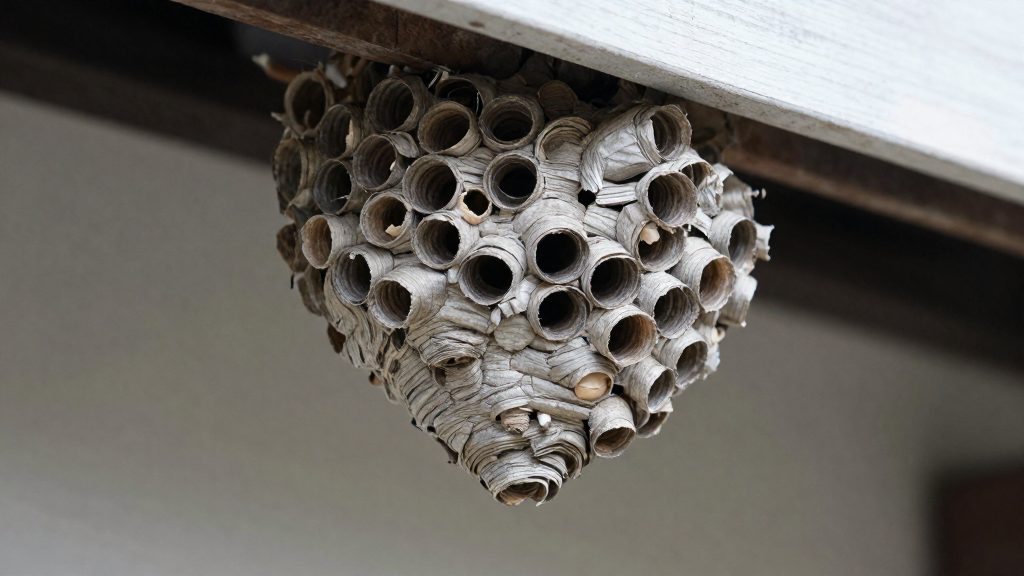
Why Are There More Wasps at the End of Summer?
The late-summer rise in wasps reflects the insect’s life cycle more than a real population boom. According to Time Out Montréal, citing Espace pour la vie (2025), warm weather speeds up colony growth, so adult wasp numbers are far higher in late summer than in spring. Each nest has been expanding through the warm months, which makes the same colony larger and more visible by the end of the season.
How Food Waste Feeds the Growth
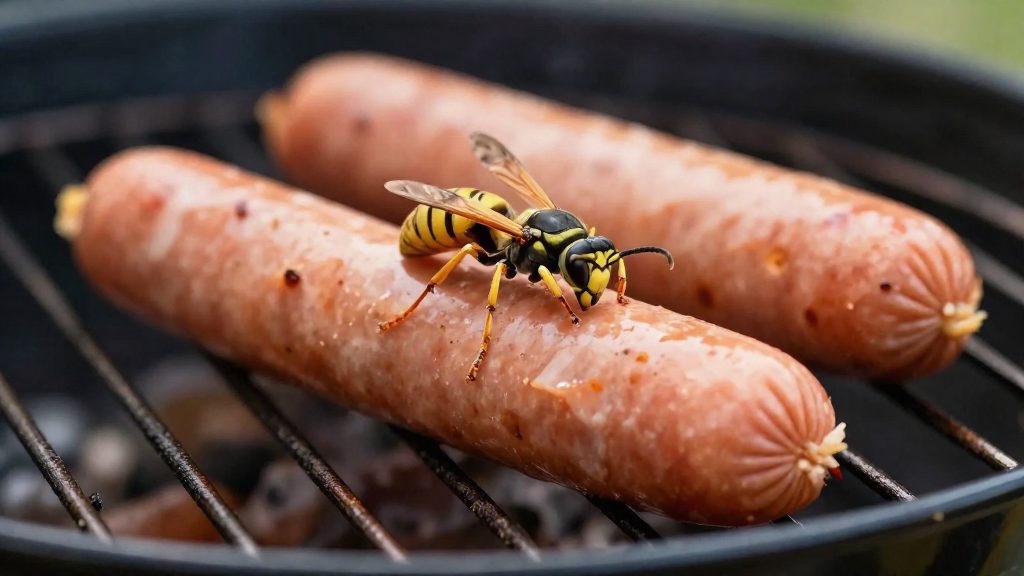
Espace pour la vie, as reported by Time Out Montréal (2025), also identifies food waste as a driver of the surge: it feeds the larvae, which accelerates development. The practical implication is that food sources near the home directly affect how quickly a colony grows. As general good practice, keeping bins closed, removing fallen fruit and wiping up sugary spills reduces the food available around the house and garden.
Workers in the Late Season
According to The Weather Network (2024), queens stop producing workers in late summer. The remaining workers age, struggle to find food and die off over the fall. The visible peak is therefore followed by a decline, not a continued increase, and the number of wasps seen in early autumn does not indicate a growing colony.
Why Late-Summer Nests Are Harder to Deal With
The colony’s size is the main difference between seasons. The Weather Network (2024) notes that spring is the best time to find and remove a nest, while it is still small. Removal can be done with insecticide or by a professional. A nest found in late summer has had a full season of growth, so it is likely to be larger than one discovered in spring.
Should you destroy a wasp nest in autumn?
According to The Weather Network (2024), spring is the best time to find and remove a nest. In autumn the colony is already declining, so a nest that is not a hazard can usually be left alone. According to The Weather Network (2024), wasps become inactive once temperatures fall to roughly 7–10°C and die only when temperatures reach freezing. Queens stop producing workers in late summer, and the remaining workers age and die off over the fall.
| Period | Colony status |
|---|---|
| Late summer | Queens stop producing workers |
| Autumn | Remaining workers age, struggle to find food and die off |
| First frost | In Montréal, the colony dies; only new queens survive |
| Winter | Mated queens shelter in houses, attics or cracks in tree bark |
| Spring | Queens emerge and start new colonies |
The real concern in autumn is the overwintering queens, not the nest. Check attics, wall voids and gaps around window frames and vents for wasps entering or settling, and seal openings you find. This leaves fewer sheltered spots for queens to use over winter.
For an existing nest, plan removal for spring removal, when the nest is still small. Insecticide or a professional can be used for removal. Avoid approaching an active nest in autumn. If it is in a high-traffic area or near an entrance, have a professional deal with it.
How to Prevent a New Nest in Spring
Prevention in spring targets mated queens. These queens overwinter in sheltered spots such as houses, attics and cracks in tree bark, then emerge in spring to start new colonies. Each queen starts a new nest, so checking her overwintering sites in early spring helps you spot new colonies while they are still small. According to The Weather Network (2024), spring is also the best time to find and remove a nest while it is still small.
Checking likely overwintering sites
Inspect these areas in early spring, when queens emerge and nests are still small:
| Location | What to do |
|---|---|
| Attics and roof voids | Look for wasps entering through vents, eaves or gaps, and for early paper nest starts. |
| Wall, window and door cracks | Seal gaps with exterior filler or caulk once you are sure no wasps are inside. |
| Tree bark and the ground | Check trunks and loose soil near the house, where new queens shelter over winter. |
Removing a small nest
A nest found in spring is easier to remove than one found later in the season. Removal can be done with an insecticide product or by a professional. Wear protective clothing and keep a safe distance, or leave the removal to a professional.
Keep the removal step simple: once a nest is located, treat it promptly with an insecticide or call a professional, and do not leave it to grow over summer.
Frequently asked questions
Will a wasp nest from last year come back?
No. Only mated queens survive winter, and each one starts a new nest in spring, so the old colony does not return. Removing a nest in spring, while it is still small, avoids a new one forming nearby.
Why are wasps still flying around after the first cold days?
Wasps become inactive at roughly 7–10°C, so they can stay present but sluggish well before the colony ends. Death comes only at freezing, so a quiet yard before the first frost does not mean the nest is gone.
Is late summer the right time to remove a nest?
Usually not. According to Time Out Montréal (2025), adult numbers peak in late summer, so a nest then holds the most wasps. Removal is easier while the colony is small, which is why spring is the recommended window.